Strokes often hit out of nowhere, particularly for older people. When blood flow to the brain stops, it starts losing oxygen right away, so you really can’t afford to wait. Spotting those red flags and calling 911 immediately is the best way to prevent permanent damage and give someone a better shot at recovery. People often expect a stroke to be a massive, obvious event, but for seniors, the symptoms can actually be pretty quiet. You might notice a parent suddenly acting confused or slurring their words.
They might have a hard time staying steady on their feet or mention that one side of their body feels heavy or weak. Memorizing the FAST acronym is a simple way for families to stay prepared and move quickly if a medical emergency happens.
What Is a Stroke?
A stroke occurs when blood flow to part of the brain is blocked or interrupted. Without oxygen-rich blood, brain cells begin to die within minutes.
There are two main types of strokes:
- ischemic stroke, caused by a blockage
- hemorrhagic stroke, caused by bleeding in the brain
Both types require immediate medical attention.
Because strokes affect the brain, symptoms often involve:
- speech
- movement
- memory
- balance
- vision
- coordination
Quick treatment may help reduce permanent brain damage.
Why Seniors Are More at Risk for Stroke
As people age, the body’s blood vessels and circulation system naturally change over time, which can increase the risk of stroke in older adults. Seniors are also more likely to develop chronic health conditions that affect healthy blood flow to the brain, including high blood pressure, heart disease, diabetes, and high cholesterol.
Lifestyle factors such as smoking, obesity, and lack of regular physical activity may further increase stroke risk in elderly adults. Certain heart rhythm disorders, including atrial fibrillation (AFib), are also more common in seniors and can significantly increase the chance of blood clots forming and traveling to the brain.
According to the Centers for Disease Control and Prevention (CDC), stroke risk increases with age, especially after age 55. Understanding stroke warning signs and managing chronic health conditions early may help reduce complications and improve outcomes for older adults.
Families should seek emergency medical attention immediately if a senior begins showing symptoms of a stroke.
What Does FAST Mean for Stroke Symptoms?
The FAST method is an easy, simple way for friends and family to help identify the major signs of stroke quickly in the event of a stroke. Being able to recognize these fast (meaning ‘quickly’) signs of a stroke may help senior citizens get emergency medical care faster and improve their chances of recovery, since every minute can make a difference.
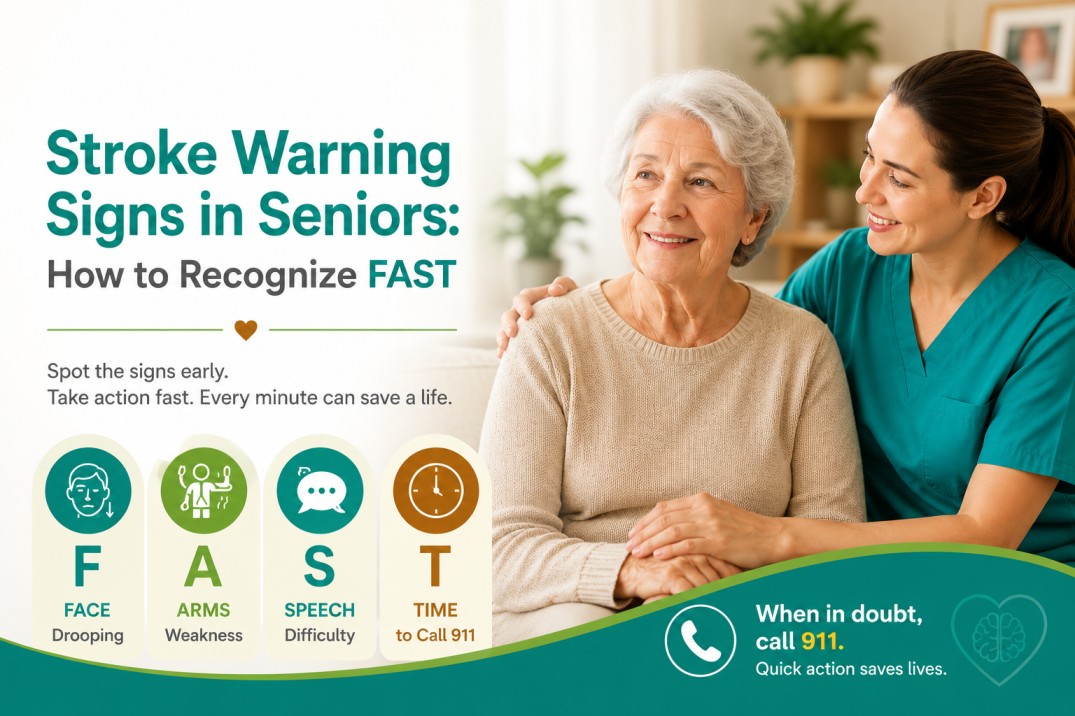
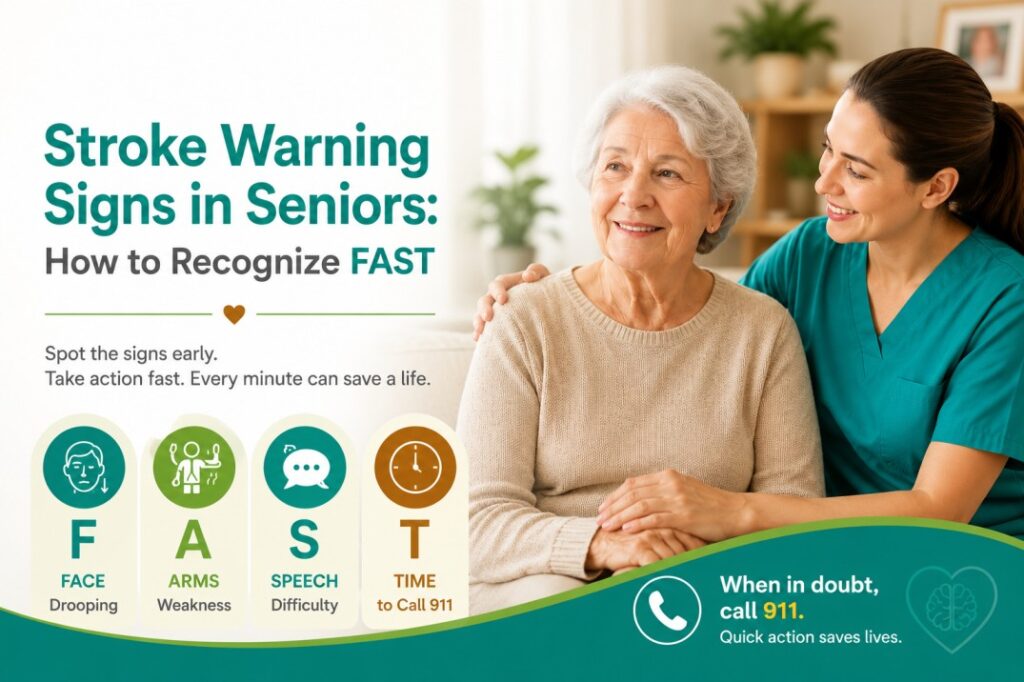
Those four letters in the word “FAST” symbolise the following focal points: Face, Arms, Speech, and Time.
F — Face Drooping
One side of the face may suddenly droop or appear uneven during a stroke. A senior may have difficulty smiling normally, or part of the face may look numb or weak.
Families may notice:
- uneven smile
- facial numbness
- drooping on one side of the face
- difficulty moving the mouth properly
Even mild facial drooping should be treated seriously.
A — Arm Weakness
Having sudden weakness/numbness in one arm is another critical warning sign of a stroke. A senior citizen may report that their one arm has been extremely heavy/weak or unable to lift fully as part of experiencing symptoms of a stroke.
Older adults will often experience the following sensations when suffering from stroke symptoms:
- Dropping objects suddenly and without warning; and/or
- I experienced sudden loss of strength; and/or
- I have difficulty gripping objects; and/or
- I have numbness on one side of my body.
S — Speech Difficulty
Speech changes due to a stroke can happen in a matter of moments, so that a senior citizen might suddenly be heard slurring their words, having difficulty speaking, sounding confused, having difficulty forming sentences, and having difficulty understanding/conversing.
Speech-related warning signs may include:
- slurred speech
- trouble speaking clearly
- confusion
- difficulty understanding simple questions
Even temporary speech problems should never be ignored.
T — Time to Call 911
If any FAST symptoms are noticed, families should call 911 instantly. Quick medical treatment is extremely important because strokes can rapidly injury brain tissue.
Waiting to see if symptoms improve may delay life-saving care and increase the risk of long-term complications.
What are the additional Stroke Symptoms in Seniors?
Not all strokes present with the classic FAST warning signs. In some seniors, symptoms may appear more subtle or unusual at first, which can sometimes delay emergency treatment.
Older adults experiencing a stroke may suddenly develop:
- confusion or disorientation
- dizziness
- severe headache
- blurred or double vision
- trouble walking
- balance or coordination problems
- sudden weakness or numbness
- unusual fatigue
- difficulty swallowing
Some seniors may simply appear “off,” confused, unusually tired, or unsteady without obvious facial drooping or speech problems.
Because stroke symptoms can appear differently in elderly adults, families should take any sudden physical, mental, or behavioral change seriously and seek emergency medical attention immediately.
Can Stroke Symptoms Come and Go?
They can be. Many elderly people experience transient ischemic attacks (TIAs), commonly known as “mini-strokes,” which are temporary strokes that resolve completely after a brief period of time (often a few minutes to a couple of hours).
TIAs should be taken very seriously because they could indicate that someone may soon have an actual stroke. Even if someone has a TIA and seems to be feeling better, it is still vitally important for them to be evaluated by a healthcare provider right away.
When Should Families Call 911 for Stroke Symptoms?
If an older adult suddenly shows signs of a possible stroke, families should immediately call 911 as fast medical response is crucial since strokes can start damaging brain cells as soon as they begin occurring.
Warning signs such as facial drooping, arm weakness, slurred speech, sudden confusion, severe dizziness, difficulty walking, vision changes, lack of feeling, or a severe headache should never be ignored. Even if symptoms seem mild at first or begin improving quickly, emergency medical evaluation is still necessary.
Some seniors may not recognize that they are having a stroke, which is why family members and caregivers often play a key role in detecting symptoms early.
It is always safer to seek emergency care right away rather than wait to see if symptoms go away. Early treatment can significantly improve recovery outcomes and may help reduce long-term complications or disability after a stroke.
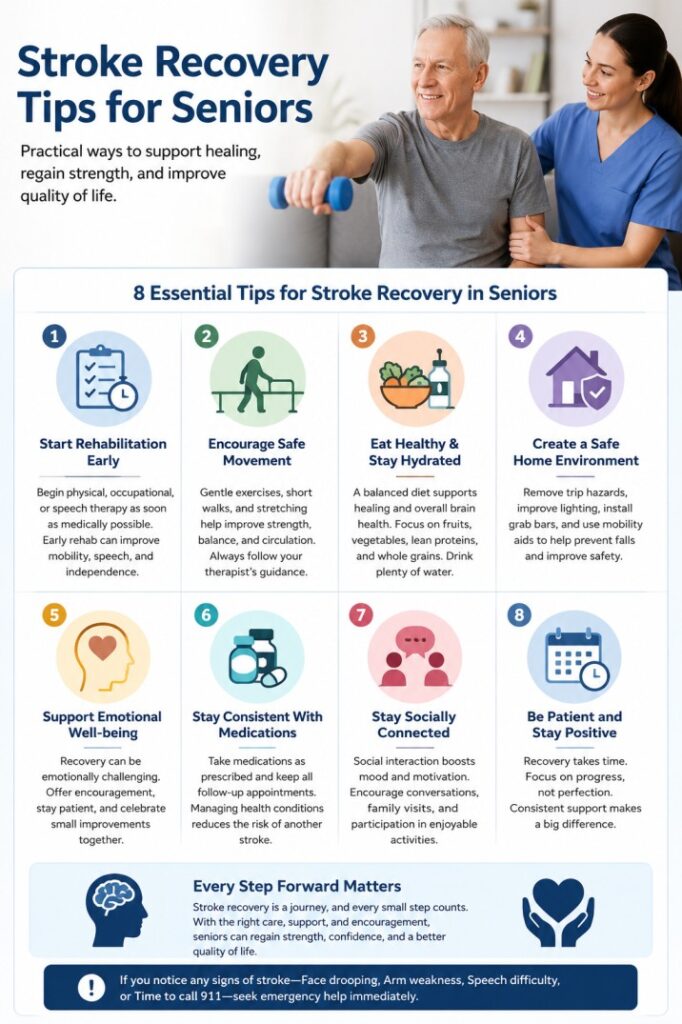
What are the Stroke Recovery Tips for Seniors
Recovering from a stroke can be challenging and often requires time, patience & support. Each senior’s recovery varies based on several variables including the type of stroke, their age & the time when treatment started. Some seniors recover quickly enough to return to independence while others require assistance with moving, talking or doing things around the house during long-term recovery.
Medical professionals and rehabilitation professionals recommend starting therapy as soon as possible; this may assist in improving mobility, strength, language ability & quality of life. American Stroke Association
Families can also assist in supporting their recovery by following recommended routines, complying with physician’s recommendations, helping & focusing on progress over time rather than expecting results immediately.
Start Rehabilitation Early
As a rule, physical, occupational, or speech therapy should begin as soon as possible after first becoming medically stable. Early rehabilitation can assist in regaining balance, coordination, speech, and movement during recovery.
Encourage Safe Movement and Exercise
Gentle movement and exercise help improve circulation, muscle strength, balanced mobility, and flexibility during recovery from a stroke. Many doctors and therapists urge seniors to maintain an as active lifestyle as possible during recovery.
Focus on Healthy Nutrition and Hydration
Healthy eating habits can support healing and overall brain health during stroke recovery. Seniors may require additional assistance to maintain sufficient nutrition and hydration during recovery, particularly in instances of swallowing disorders.
Make the Home Safer
After a stroke, many seniors experience weakness, balance problems, or mobility limitations that increase fall risk. Creating a safer home environment may help prevent injuries during recovery.
Support Emotional Health
Stroke recovery can feel emotionally overwhelming for many older adults. Seniors may experience frustration, anxiety, sadness, or depression as they adjust to physical and lifestyle changes.
Stay Consistent With Medications and Appointments
Managing medications and attending follow-up appointments are important parts of stroke recovery. Doctors may prescribe medications to help reduce the risk of another stroke or manage related health conditions such as high blood pressure or diabetes.
How In-Home Care Can Help Seniors Recover After a Stroke
Many seniors need extra support after returning home from the hospital or rehabilitation center. In-home caregivers can help older adults recover more safely and comfortably while maintaining independence whenever possible.
Caregivers may assist with:
- mobility support
- fall prevention
- meal preparation
- medication reminders
- transportation to appointments
- companionship
- personal care
- light housekeeping
Consistent support may help reduce stress for both seniors and family caregivers during stroke recovery.
Frequently Asked Questions
What are the first warning signs of a stroke?
Common early stroke signs include facial drooping, arm weakness, speech problems, dizziness, confusion, and sudden trouble walking.
What should you do if someone shows stroke symptoms?
Call 911 immediately. Quick medical treatment is extremely important during a stroke.
Can seniors recover from a stroke?
Yes. Many seniors improve with rehabilitation, therapy, medical treatment, and supportive care.
What is a mini-stroke?
A mini-stroke, or TIA, is a temporary blockage of blood flow to the brain that causes short-term stroke symptoms.
Can home care help seniors after a stroke?
Yes. In-home caregivers can help seniors with mobility, fall prevention, meals, medication reminders, and daily activities during recovery.