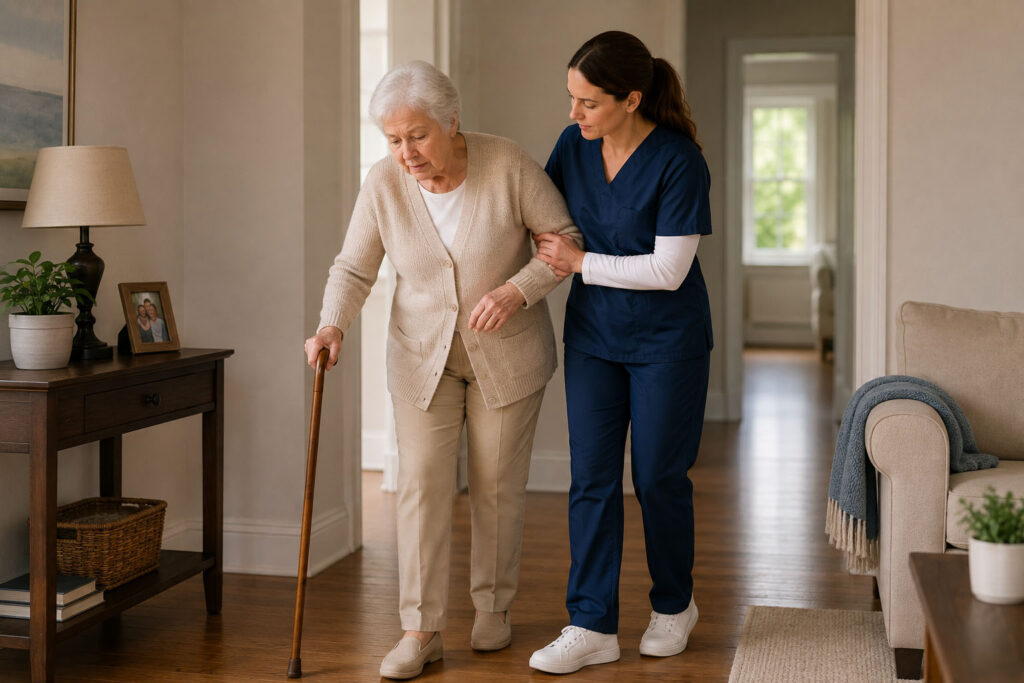
Post-Hospital Home Care in Jacksonville, AR : Helping Seniors Recover Safely at Home

Warm Caregiver Connection

Coming home from the hospital is often a relief, but it can also be the point when families realize just how much help an older loved one still needs.

A senior may be medically stable enough to leave the hospital but still feel weak, tired, unsteady, or overwhelmed by everyday tasks. Bathing may take more effort. Preparing meals may be difficult. Walking from one room to another may feel less secure than it did before the hospital stay.

For families in Jacksonville, AR this is where post-hospital home care can help bridge the gap between discharge and a more comfortable return to everyday life.

Post-hospital home care provides non-medical assistance with daily activities, routines, mobility, meals, transportation, and companionship while a senior recovers at home. It can also give family caregivers added support during a period when a loved one may need more attention than usual.

Why Can the First Days at Home Be Difficult After a Hospital Stay?

The first days after discharge can be challenging because a senior may be home before they have fully regained their normal strength, mobility, or confidence.

Hospital discharge means the care team has determined that the patient no longer needs that level of hospital care. It does not necessarily mean the person is ready to immediately return to everything they were doing before.

CMS emphasizes the importance of discharge planning and making sure patients and caregivers understand the care plan that should be followed after leaving the hospital.

At home, families may suddenly find themselves responsible for questions such as:

  • Who will stay with Mom during the day?
  • Can Dad safely get to the bathroom on his own?
  • Who will prepare meals?
  • How will we get to follow-up appointments?
  • Is someone available to remind them about their medication schedule?
  • What happens when family members have to return to work?

These are not necessarily medical problems. They are often practical day-to-day needs that become more noticeable during recovery.

Is Post-Hospital Home Care the Same as Home Health Care?

No. Non-medical home care and home health care serve different purposes, although a senior may receive both at the same time.

Home health care generally refers to skilled services such as nursing or therapy provided under qualifying circumstances. Medicare, for example, has specific eligibility and coverage requirements for home health services.

Non-medical home care focuses on the parts of daily life that may still be difficult during recovery.

For example, a physical therapist may work with a senior on improving strength or walking technique. A home caregiver may then help the person safely get ready in the morning, prepare lunch, move around the house, and maintain the routine recommended by the care team.

Who May Benefit From Home Care After Hospital Discharge?

A senior may benefit from post-hospital home care when they are medically stable but still need help managing daily life safely at home.

Common situations include recovery after:

  • Surgery
  • A fall or injury
  • A hospital stay related to illness
  • Joint replacement
  • A stroke
  • A cardiac event
  • A respiratory illness
  • A period of significant weakness or deconditioning

Sometimes the need is obvious. Other times, families only recognize it once their loved one returns home.

A person who previously managed independently may now need help standing, bathing, cooking, or getting around safely for several days or weeks.

What Signs Suggest a Senior May Need Extra Help at Home?

Having difficulty walking safely, managing personal care, preparing meals, or following the discharge routine may indicate that additional support would be helpful.

Families should pay attention to changes such as:

Increased Weakness or Unsteadiness

A hospital stay can leave an older adult feeling weaker than expected. If your loved one is holding onto furniture, struggling to stand, or hesitating to move around the house, they may need additional assistance.

Home safety is particularly important during recovery. The National Institute on Aging recommends measures such as good lighting, reducing tripping hazards, securing rugs, and using appropriate safety equipment to lower fall risks for older adults.

Difficulty With Bathing or Dressing

Activities that once took ten minutes may suddenly require much more effort.

A caregiver can provide respectful assistance while allowing the senior to continue doing whatever they can comfortably manage on their own.

Skipping Meals

Fatigue can make cooking feel like too much work.

A senior may rely on snacks, skip meals altogether, or struggle to keep groceries in the home. Meal preparation support can make the recovery routine easier.

Confusion About the Daily Routine

Discharge instructions can involve new appointments, medication schedules, activity restrictions, or therapy routines.

Caregivers do not provide medical advice, but they can help seniors stay organized around the routine established by their healthcare providers.

Family Members Cannot Be There Throughout the Day

Many adult children can help before work, in the evening, or on weekends but cannot provide continuous support.

Home care can help fill those gaps without requiring one family member to manage everything.

How Can a Caregiver Help Make the Home Safer After Discharge?

A caregiver can support safer daily routines by assisting with mobility, keeping commonly used areas organized, and helping a senior avoid unnecessary strain while recovering.

Small adjustments can make everyday movement feel much more manageable.

A caregiver can also be present during routine activities that may temporarily feel less secure, such as showering, dressing, or walking through the house.

Can Home Care Help With Follow-Up Appointments?

Yes. Non-medical home care can help with transportation and practical support for follow-up appointments when transportation is included in the care plan.

Recovery often involves more than simply resting at home.

A senior may need to return for:

  • Physician follow-ups
  • Physical therapy
  • Occupational therapy
  • Specialist visits
  • Laboratory testing
  • Other outpatient services

For families balancing work and other responsibilities, arranging transportation for every appointment can quickly become difficult.

Having reliable assistance can help keep the recovery schedule more manageable.

How Can Post-Hospital Care Help Family Caregivers?

Home care can reduce the amount of day-to-day responsibility placed on a spouse, son, daughter, or other family caregiver during recovery. The weeks after a hospital stay can be intense.

A family member may be coordinating appointments, picking up prescriptions, preparing food, checking on the home, talking with healthcare providers, and worrying whenever the senior is alone.

The National Institute on Aging offers caregiving resources specifically designed to help families coordinate responsibilities and divide caregiving tasks among others. Professional home care can become another part of that support system.

Instead of one person trying to cover everything, a caregiver can handle certain daily needs while family members remain involved in the areas that matter most to them.

When Should Families Arrange Home Care?

Ideally, families should begin discussing home care before the discharge date whenever it appears that a senior will need help with everyday activities.

You do not need to wait for a crisis. If the discharge team says your parent will need supervision, if mobility has changed, or if family members already know they cannot cover the necessary hours, it makes sense to start planning early.

Even temporary support can make the transition home feel less overwhelming.

Post-Hospital Home Care in Jacksonville, AR

For families in Jacksonville, AR and surrounding communities, returning home after a hospital stay can bring both relief and uncertainty.

The goal does not have to be doing everything immediately.

Sometimes a safer recovery begins with accepting help with the ordinary parts of the day — getting dressed, preparing breakfast, moving through the house, getting to an appointment, or simply having someone nearby.

A Place At Home provides non-medical post-hospital home care for seniors and adults who need additional support after returning home. Care can be personalized around the person’s routine, abilities, family involvement, and changing needs.

If your loved one is preparing to leave the hospital or has recently returned home, discussing the care plan early can help your family determine what kind of support would make the transition easier.

Why Do Seniors Lean to One Side When Walking?

Why Do Seniors Lean to One Side When Walking

When an older adult begins leaning to one side while walking, the change can be easy to overlook at first. A family member may notice that Mom is drifting toward one side of the hallway, Dad is holding onto furniture more often, or a loved one appears tilted when getting up and moving around the home.

There are many possible reasons for this type of walking change. Muscle weakness, pain, balance problems, vision changes, medications, inner-ear disorders, spinal changes, and neurological conditions can all affect how an older adult stands and walks.

A noticeable lean is not a diagnosis by itself. However, when it is new, persistent, getting worse, or accompanied by other symptoms, it is worth discussing with a healthcare professional.

Is Leaning While Walking Just Part of Getting Older?

Not necessarily. Some changes in gait are common with aging. Older adults may walk more slowly, take shorter steps, or become more cautious when using stairs or walking on uneven surfaces.

A persistent sideways lean, however, should not automatically be attributed to age.

Mobility depends on strength, balance, gait, vision, sensation, and coordination. The National Institute on Aging emphasizes that changes in these areas can affect independence and increase fall risk.

If the change is new or interfering with normal activities, finding out why it is happening is more useful than simply encouraging the person to “stand up straighter.”

How Can Muscle Weakness Change the Way a Senior Walks?

Weakness in the legs, hips, and core can make it harder to keep the body centered while walking.

If one side is weaker, an older adult may shift their upper body to compensate. This may make the person appear crooked or cause them to favor one leg.

Weakness can become especially noticeable after surgery, hospitalization, illness, or a period of inactivity.

Age-related loss of muscle mass can also contribute to gait and balance problems and is recognized as one factor that may increase fall risk in older adults.

What If Hip, Knee, or Back Pain Is Causing the Lean?

Pain can significantly change walking mechanics.

An older adult with arthritis or another painful condition may unconsciously move weight away from the uncomfortable side. Someone with right hip pain, for example, may begin shifting their weight differently to reduce pressure on that joint.

Over time, compensation can make the gait look uneven and may put additional stress on other parts of the body.

The important question is not simply whether the person is leaning, but whether the lean is associated with pain, stiffness, difficulty standing, or reduced ability to move comfortably.

Why Do Balance Problems Make Someone Drift to One Side?

Maintaining balance is more complicated than it looks.

The brain continuously receives information from the eyes, inner ears, muscles, joints, and nerves. These systems work together to tell the body where it is in space and how to remain upright.

If that information becomes disrupted, an older person may begin swaying, staggering, drifting, or leaning.

The National Institute on Aging identifies symptoms of balance disorders that can include dizziness, feeling as though you may fall, staggering while walking, blurred vision, and lightheadedness.

Family members may also notice that their loved one is reaching for walls, avoiding stairs, moving more slowly, or becoming nervous about walking without assistance.

Could an Inner-Ear Problem Be Responsible?

Yes.

The inner ear contains structures that help control balance. When this system is disrupted, a person may experience vertigo, dizziness, or a sensation that the environment is moving.

That can make it difficult to walk in a straight line.

The National Institute on Aging specifically identifies inner-ear problems as one potential cause of balance difficulties in older adults.

Because dizziness can have many different causes, persistent or severe symptoms should be evaluated rather than assumed to be an ear problem.

What Role Does Vision Play in Walking and Balance?

Vision helps the body understand where it is in relation to surrounding objects.

Older adults rely on eyesight to judge depth, recognize steps, identify uneven flooring, and avoid obstacles. When vision becomes impaired, staying balanced may become more difficult.

Poor lighting can make the problem worse, particularly in hallways, bathrooms, stairways, and unfamiliar environments.

This is one reason regular vision care and good lighting throughout the home can be important parts of fall prevention.

How Can Parkinson’s Disease Affect Posture and Walking?

Parkinson’s disease can cause changes in walking, balance, posture, and movement.

According to the Parkinson’s Foundation, people with Parkinson’s may experience smaller steps, slower movement, difficulty turning, reduced arm swing, shuffling, and changes in posture.

Some people also develop a forward or stooped posture. Muscle stiffness and reduced control of automatic movement can contribute to these changes.

A sideways or forward lean alone does not mean someone has Parkinson’s disease. Diagnosis requires evaluation by an appropriate healthcare professional and consideration of other symptoms.

Can a Stroke Make a Senior Suddenly Lean to One Side?

Yes, and a sudden change should be taken seriously.

A stroke can affect strength, coordination, balance, and the ability to walk normally.

The CDC lists sudden trouble walking, dizziness, loss of balance, or lack of coordination among the warning signs of stroke. Other symptoms may include sudden one-sided weakness or numbness, difficulty speaking, vision changes, confusion, or a severe headache.

If a loved one suddenly begins leaning or walking abnormally along with any of these symptoms, call 911 immediately.

What Can Families Do at Home Right Now?

While the underlying cause is being evaluated, reducing everyday fall hazards can make the home easier to navigate.

Keep frequently used walking paths clear and well lit. Loose rugs, cords, clutter, slippery bathroom surfaces, and poorly lit stairs can all create additional challenges for someone whose balance is already changing.

Secure handrails and appropriately installed grab bars can also provide additional support where needed.

The goal is not to restrict the older adult unnecessarily. It is to create an environment that allows them to continue moving as safely and independently as possible.

How Can Home Care Support Someone With Mobility Challenges?

Mobility changes often affect more than walking.

A senior who feels unstable may begin having difficulty bathing, dressing, preparing meals, moving between rooms, getting to appointments, or completing household tasks.

A non-medical caregiver can provide day-to-day assistance with these activities while offering companionship and another source of support in the home.

Caregivers may also notice changes in mobility or routines that relatives who visit occasionally might not see.

Home care does not diagnose or treat the cause of leaning, and it does not replace medical care or physical therapy. Instead, it can complement the care plan by helping with everyday needs.

In-Home Support From A Place At Home – Little Rock

When changes in walking, balance, or mobility begin affecting everyday routines, families may need additional support at home.

A Place At Home – Little Rock provides personalized, non-medical in-home care for older adults who need help maintaining their daily routines and independence.

Caregivers can assist with personal care, companionship, meal preparation, light housekeeping, medication reminders, transportation, mobility-related assistance, respite care, and other everyday needs based on the individual’s care plan.

A Place At Home – Little Rock proudly supports seniors and families throughout Little Rock, Bryant, Benton, Maumelle, Sherwood, and surrounding Arkansas communities.

Contact A Place At Home – Little Rock to learn more about personalized in-home care for your loved one.