
Purple Feet in the Elderly: Causes, and Treatments

Purple Feet in the Elderly Causes, and Treatments

Purple feet in elderly adults can range from a benign response to cold or inactivity all the way to an early warning sign of peripheral artery disease, blood clots, or diabetic vascular damage. The color alone does not tell you which one it is. This guide answers the questions families are actually asking, with specific information on each cause and what treatment looks like.

What Causes Purple Feet in the Elderly?

There are eight medically recognized causes of purple or bluish feet in older adults. Poor circulation is the umbrella explanation, but the specific mechanism matters because each cause has different treatment.

Chronic Venous Insufficiency

Chronic venous insufficiency is the leading cause of purple feet in seniors, affecting an estimated 30 to 40 percent of people over age 70. The one-way valves inside leg veins weaken with age. Blood that should travel back up toward the heart leaks downward and pools in the feet and ankles. As that pooled blood loses oxygen, it darkens, and the discoloration shows through the skin.

What it looks like: Both feet, worse by evening, improved after elevating legs for 20 to 30 minutes. Often accompanied by ankle swelling and a heavy or tight feeling in the lower legs.

Peripheral Artery Disease (PAD)

PAD is caused by plaque buildup narrowing the arteries that deliver oxygenated blood to the legs. According to the American Heart Association, PAD affects approximately 8 to 10 million Americans, with prevalence rising sharply after age 65. Unlike venous insufficiency, PAD is an incoming blood flow problem. The feet are not getting enough fresh blood to begin with.

What it looks like: Feet that are cool to the touch, pale or purple, with pain when walking that eases at rest. Wounds on the feet or toes that do not heal are a serious warning sign and require urgent evaluation.

Deep Vein Thrombosis (DVT)

DVT is a blood clot in a deep vein, most often in the calf or thigh. It blocks normal blood return and can cause sudden discoloration, swelling, and pain in one leg or foot. DVT is a medical emergency. Studies estimate that DVT affects 1 in 1,000 adults annually, with rates three times higher in adults over 70.

What it looks like: Sudden change in one foot or lower leg. Warmth, swelling, and pain alongside the discoloration. If these symptoms appear together, call 911 or go to an emergency room immediately.

Peripheral Neuropathy

Nerve damage disrupts the signals that control blood vessel dilation in the feet. Small vessels stay dilated, blood pools, and the skin takes on a bluish or purple color. Neuropathy is most common in diabetics, affecting roughly 50 percent of people who have had diabetes for 25 or more years, but it also occurs from vitamin B12 deficiency, alcohol use, and certain medications. Nutrition is one of several physical needs that shift significantly in older adults. See our related guide on the 7 Physical Needs of Older Adults That Change With Age

What it looks like: Purple or mottled feet with numbness, tingling, or burning. Because neuropathy reduces sensation, wounds can develop undetected, which makes daily foot inspection essential.

Acrocyanosis

Acrocyanosis is a persistent purplish or blue discoloration of the extremities caused by small blood vessel spasms, typically triggered by cold temperatures. In elderly adults, the circulatory response to cold is already slower, so this condition tends to appear more pronounced. Primary acrocyanosis is harmless. Secondary acrocyanosis can indicate an underlying autoimmune or connective tissue condition.

What it looks like: Both feet turn blue or purple in cool environments and return to a more normal color with warming and elevation. There is typically no pain and no swelling.

Diabetes-Related Vascular Damage

Uncontrolled blood sugar damages both large arteries and the tiny capillaries that supply the feet. The CDC reports that adults with diabetes are 10 times more likely to face lower limb complications than adults without the condition. Any foot discoloration in a diabetic senior should be evaluated by a physician the same week it is noticed.

What it looks like: Purple, red, or darkening feet, often paired with reduced sensation. Any sore or wound that is not healing in a diabetic senior is a medical emergency.

Medication Side Effects

Certain medications commonly prescribed to older adults can reduce blood flow to the extremities or cause fluid retention that shows up as discoloration. The most frequently implicated are beta-blockers, calcium channel blockers, anticoagulants, and some antidepressants. If purple feet appeared after starting or changing a medication, report it to the prescribing doctor.

What to do: Do not stop any medication without medical guidance. A pharmacist can review the full medication list and flag potential interactions or side effects.

Prolonged Inactivity and Dependent Edema

Seniors who spend most of the day sitting or in bed experience dependent edema, where gravity keeps blood pooled in the feet. Without the pumping action of walking, the blood sits longer, loses oxygen, and creates that purple or mottled appearance. This cause is often underestimated but is extremely common in seniors recovering from illness or surgery.

What it looks like: Both feet, often with some ankle puffiness, that noticeably improve with leg elevation or a short walk. This is one of the more manageable causes once identified.

How Do You Treat Purple Feet in the Elderly?

Treatment depends on the underlying cause, which a physician must identify. Here is what current clinical guidance recommends for each major cause, along with practical steps families and caregivers can take at home.

Medical Treatments by Cause

Chronic Venous Insufficiency:

  • Compression stockings at 20 to 30 mmHg worn daily, applied before getting out of bed
  • Leg elevation above heart level for 30 minutes, three to four times per day
  • Venoactive medications in moderate cases
  • Procedures like sclerotherapy or endovenous ablation for advanced disease

Peripheral Artery Disease:

  • Supervised walking therapy, which research shows can increase walking distance by 50 to 200 percent over 12 weeks
  • Medications to manage blood pressure, cholesterol, and clotting risk
  • Smoking cessation, which is the single most impactful lifestyle change for PAD
  • Angioplasty or bypass surgery in limb-threatening cases

Deep Vein Thrombosis:

  • Anticoagulant medications to prevent clot growth and new clots
  • Hospitalization may be required in the acute phase
  • Compression therapy and controlled movement during recovery

Diabetes-Related Foot Issues:

  • Tighter blood sugar control, which is the foundational intervention
  • Daily foot inspections to catch wounds before they become infected
  • Diabetic footwear to prevent pressure points and skin breakdown
  • Referral to a wound care specialist if any sore is present

What Families Can Do at Home Right Now

These below steps are safe and appropriate for most causes of purple feet. They should complement, not replace, a medical evaluation.

  • Elevate the feet: Legs should be raised above the level of the heart using firm pillows. Twenty to thirty minutes of elevation three or four times daily can visibly reduce pooling-related discoloration.
  • Keep feet warm: Warmth causes blood vessels to dilate, improving circulation. Warm socks or slippers help, particularly for acrocyanosis. Avoid heating pads, which can burn skin with reduced sensation.
  • Encourage movement: Even five to ten minutes of walking activates the calf muscle pump, which is responsible for pushing blood back up toward the heart. Seated ankle circles work for seniors with limited mobility.
  • Daily foot checks: Inspect both feet every day, including between the toes and the soles. Look for color changes, sores, blisters, swelling, or skin that is breaking down. This is especially critical for diabetics.
  • Hydration: Dehydration thickens blood and worsens circulation. Many seniors underdrink because they do not feel thirsty. Aim for six to eight glasses of water per day unless a doctor has restricted fluid intake.
  • Compression stockings: If a doctor has recommended these, application technique matters. Stockings must be put on before the senior gets out of bed, when swelling is lowest. They should fit snugly but not cut into the skin.
  • Medication review: Ask a pharmacist to review all current medications, including over-the-counter drugs and supplements, for anything that could be affecting circulation.
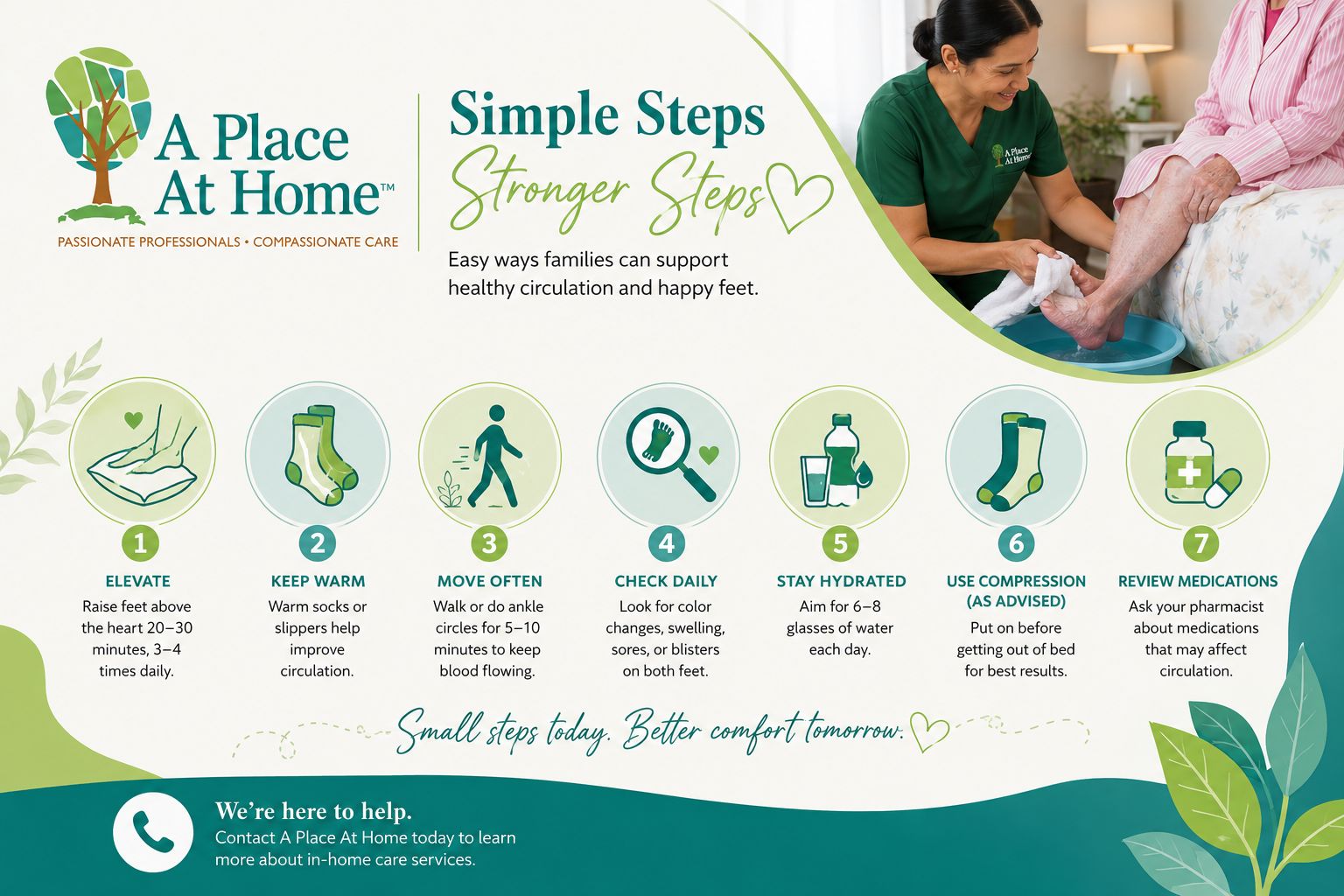
What families can do at home Right Now to treat purple feet in seniors

Schedule a Doctor Appointment This Week If:

The discoloration is new or worsening. The senior has diabetes and any foot change has occurred. There is a wound or sore that is slow to heal. The feet feel cold or numb. The senior has a history of heart disease, PAD, or blood clots. These situations are not emergencies, but they do require prompt medical evaluation, not a wait-and-see approach.

How Can In-Home Care Help a Senior With Purple Feet or Circulation Problems?

This is the question most medical websites skip entirely, and it is one of the most practical questions a family can ask.

Research published in the Journal of Aging and Health found that seniors receiving regular professional home care are 25 percent less likely to be hospitalized for conditions that were first detectable as minor symptoms. Purple feet, untreated wounds, and missed medications fall squarely in that category.

The issue is not that families do not care. It is that no one is there consistently enough to notice gradual changes, and seniors often downplay symptoms to avoid worrying their children.

What a Professional Caregiver Does Daily That Makes a Medical Difference

  • Daily foot inspection: A caregiver checks both feet every morning and evening. Any change in color, new sore, swelling, or skin breakdown is reported to the family and documented the same day. Early detection is the single most powerful intervention for diabetic foot complications.
  • Correct compression stocking application: Studies show that up to 60 percent of compression stockings prescribed to elderly patients are not worn correctly or consistently. A caregiver applies them before the senior gets out of bed every morning as part of a structured routine.
  • Scheduled elevation breaks: Rather than hoping the senior remembers to elevate their feet, a caregiver builds three to four elevation sessions into the daily routine, ensuring they actually happen.
  • Hydration tracking: A caregiver monitors and encourages fluid intake throughout the day, a simple intervention that directly supports blood viscosity and circulation.
  • Supervised movement: Short walks around the home, seated ankle exercises, and gentle position changes throughout the day activate the calf muscle pump that keeps blood moving.
  • Medication reminders: Missed doses of blood pressure or circulation medications are a common and preventable cause of worsening symptoms. A caregiver ensures medications are taken at the correct times.
  • Same-day family communication: When something changes, the family hears about it the same day. This replaces the weeks-long lag that often exists when a senior lives alone and underreports symptoms.

Seniors with consistent in-home support are 3x more likely to have foot problems detected in early, treatable stages

About A Place At Home-Eatontown

A Place At Home-Eatontown provides professional in-home senior care throughout Monmouth County, New Jersey, including Eatontown, Red Bank, Tinton Falls, Long Branch, Middletown, and surrounding communities.

Our caregivers are trained to observe and report on exactly the kinds of health changes described in this guide, including foot color changes, skin breakdown, swelling, and mobility shifts. We coordinate directly with families and healthcare providers so that nothing falls through the cracks between doctor visits.

In Home Care Services We Provide:

  • Personal care: bathing, dressing, and grooming assistance
  • Companion care and daily engagement
  • Medication reminders and health monitoring
  • Mobility support and fall prevention
  • Meal preparation and light housekeeping
  • Transportation to medical appointments
  • Respite care for family caregivers
  • 24-hour and live-in care options

Ready to learn more?

If you are caring for an older adult in Eatontown, Tinton Falls, Red Bank, Neptune, or anywhere in Monmouth County and feel like you need more support, we are here to help. Call us at (732) 702-5710 or visit our website to schedule a free, no-obligation in-home assessment.


Contact Us Today

FAQs Related to Purple Feet in Seniors

Are purple feet in elderly adults always serious?

No, but they always deserve a medical evaluation. Mild, bilateral discoloration that improves with elevation and warmth is often related to benign venous pooling or cold sensitivity. Sudden discoloration in one foot, discoloration with pain or numbness, or any foot changes in a diabetic senior are more urgent and should not wait for a routine appointment.

How quickly should I get my parent seen by a doctor?

Same day or 911 if the discoloration is sudden, in one foot only, or accompanied by pain, numbness, or shortness of breath. Within the week if the discoloration is gradual, affects both feet, and the senior is otherwise comfortable. Do not wait for the next annual physical if something has visibly changed.

Can purple feet in the elderly lead to amputation?

In untreated severe cases of PAD or diabetic vascular disease, yes. Reduced blood flow that goes unaddressed can lead to tissue death, infection, and in advanced cases, the need for amputation. The CDC reports that approximately 73,000 lower extremity amputations occur in diabetic patients annually in the United States, the vast majority of which were preceded by detectable warning signs that went unaddressed. This is exactly why regular foot monitoring matters.

Do compression stockings actually work for purple feet?

Yes, for venous insufficiency specifically. Multiple clinical trials have shown that properly fitted and consistently worn compression stockings reduce venous pooling, lower swelling, and slow the progression of chronic venous disease. The key words are properly fitted and consistently worn, both of which are genuine challenges for elderly adults managing this on their own.

My parent refuses to let me look at their feet. What should I do?

This is a common situation. Many seniors are private about their bodies or do not want to worry their children. Framing foot checks as part of a practical routine rather than a health inspection tends to work better. A professional caregiver can often take over this role in a way that feels more natural and less like surveillance. If a caregiver is already involved, ask them to incorporate foot observation into the daily dressing or bathing routine.

Can heart problems cause purple feet?

Yes. When the heart does not pump efficiently, blood moves more slowly through the body. That slower blood loses oxygen before reaching the feet, turning them purple, blue, or mottled.

The three heart conditions most linked to purple feet in seniors are:

  • Congestive Heart Failure (CHF): Fluid backs up into the legs and feet when the heart cannot pump effectively. The CDC reports that approximately 6.7 million Americans over 65 live with heart failure, and swollen, discolored feet are one of its most common visible signs.
  • Atrial Fibrillation (AFib): An irregular heartbeat causes blood to pool in the lower legs. AFib also raises the risk of blood clots, which can cause sudden foot discoloration.
  • Coronary Artery Disease (CAD): Narrowed arteries reduce the heart’s pumping output, meaning less oxygenated blood reaches the feet.

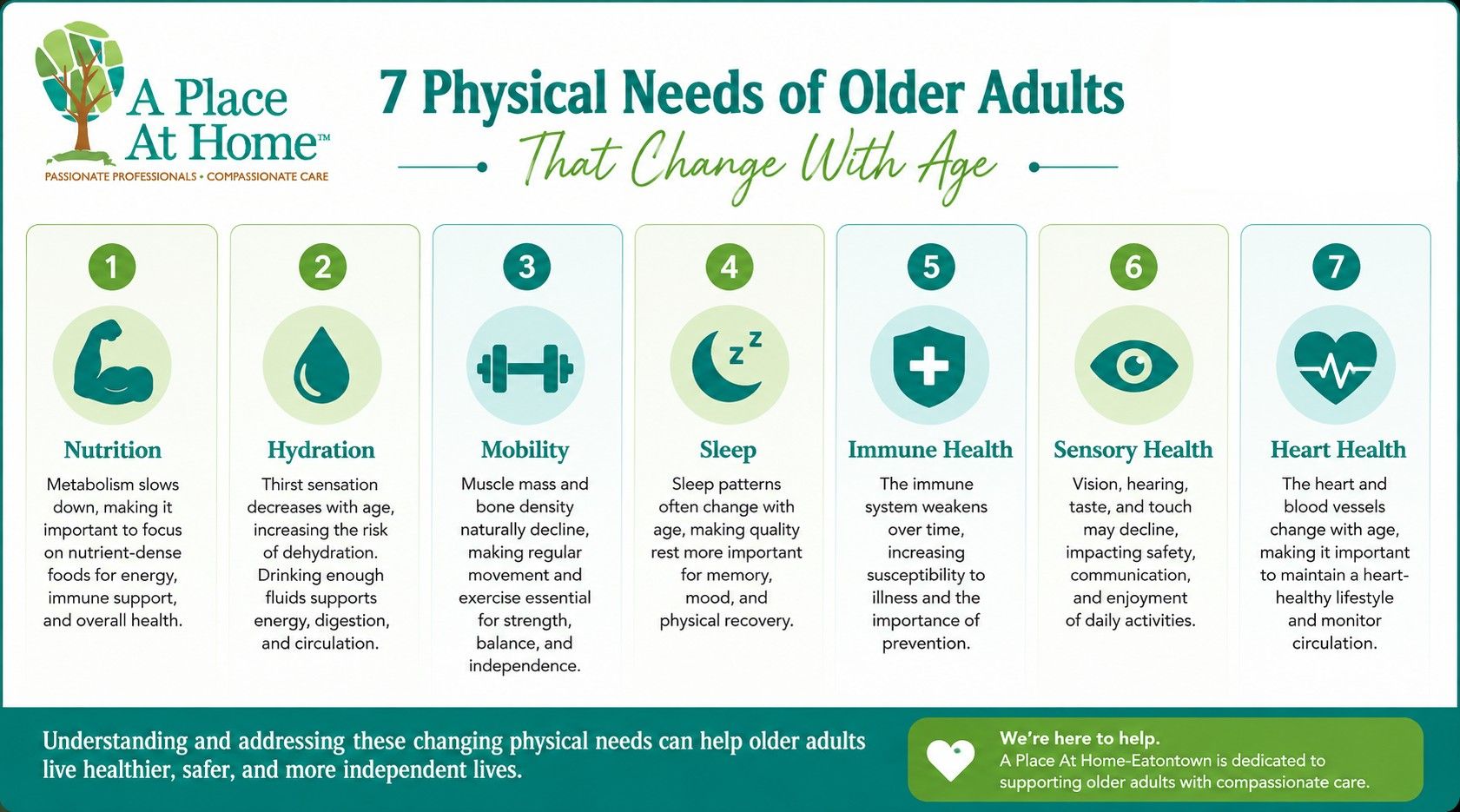
7 Physical Needs of Older Adults That Change With Age (and What to Do About Each One)

7 physical needs of an elderly what to do

Caring for an older adult well is one of the most human things we can do, and one of the most misunderstood. The conversation too often focuses on what seniors can no longer do, skipping past the more important question: what does the body of an older adult actually need to thrive?

Physical needs in older adults are not simply the same as those in younger people, turned down a notch. The aging body changes in specific, well-documented ways, digestion slows, muscle mass decreases, thirst signals weaken, sleep architecture shifts. Meeting physical needs effectively requires understanding how those needs change, not just that they exist. According to CDC Healthy Aging data, more than 85% of older adults are living with at least one chronic condition that directly affects how those physical needs must be managed.

This guide covers the seven foundational physical needs of older adults: what they are, why they matter more with age, what happens when they go unmet, and concrete actions that make a difference.

The 7 Core Physical Needs of Elderly and Senior Adults

Adequate Nutrition

Nutrition is arguably the most complex physical need in older adults because the changes are often invisible. Caloric needs typically decrease with age as metabolism slows and physical activity often reduces, but the requirement for nutrients does not decrease correspondingly, and in several cases actually increases.

Protein needs go up, not down. Older adults need more dietary protein to maintain muscle mass and support immune function, yet many eat less protein than younger adults due to reduced appetite, dental issues, or cost. Calcium and vitamin D requirements increase to protect bone density. B12 absorption becomes less efficient as gastric acid production declines, meaning supplementation may be necessary even for adults with an otherwise healthy diet.

Appetite suppression in older adults is well-documented and has multiple causes: medications that alter taste or smell, social isolation (eating alone reduces enjoyment and motivation), depression, and the natural decline of hunger hormones. The risk isn’t just undernutrition, it’s hidden undernutrition, where caloric intake appears adequate but key nutrients are chronically deficient.

Warning signs to watch for:

  • Noticeable weight loss over weeks or months without a clear cause
  • Declining interest in food or consistently leaving meals unfinished
  • Fatigue, confusion, or weakness disproportionate to activity level
  • Increased frequency of infections or slow wound healing

What you can do:

Prioritize nutrient density over volume. Small, frequent meals of protein-rich foods, vegetables, whole grains, and healthy fats are more sustainable than three large meals. Social mealtimes, eating with others, even occasionally, have been shown to meaningfully improve food intake in older adults.

Hydration

Hydration is one of the most underestimated physical needs in older adults. The physiological mechanism that tells the brain “I’m thirsty” becomes less sensitive with age, which means an older adult can be significantly dehydrated and feel no particular thirst at all. This is not a matter of willpower or forgetfulness; it is a direct neurological change.

Compounding this, the kidneys become less efficient at concentrating urine, so more fluid is lost per day. Many seniors also deliberately restrict fluid intake to avoid nighttime trips to the bathroom, creating a difficult but common tradeoff. Certain medications, diuretics, laxatives, some blood pressure drugs, add further fluid loss.

Even mild dehydration in an older adult can cause significant cognitive effects: confusion, poor concentration, and memory difficulties that may be mistaken for early dementia. It also contributes to constipation, urinary tract infections, dizziness, and falls.

Warning signs to watch for:

  • Dark-coloured urine (should be pale yellow most of the time)
  • Sudden confusion, dizziness, or unusual fatigue
  • Dry mouth, chapped lips, or skin that “tents” when pinched gently
  • Infrequent urination or complaints of headaches without other cause

What you can do

Don’t rely on thirst as a signal. Build hydration habits into daily routines, a glass of water at each meal, herbal teas, broth, and water-rich foods like cucumber, watermelon, and soups. Many older adults find flavored water or drinks at room temperature more palatable than cold water. Aim for approximately 6,8 cups (1.5,2 litres) of fluid daily, adjusted for body size, climate, and any medical conditions.

Physical Movement

Physical activity is not optional for healthy aging, it is one of the most powerful interventions available. The CDC and World Health Organization both recommend that adults aged 65 and older get at least 150 minutes of moderate-intensity aerobic activity per week, plus muscle-strengthening activity on at least two days per week. Balance exercises are also specifically recommended to reduce fall risk.

The consequences of inactivity in older adults compound quickly. Muscle tissue lost through disuse is harder to rebuild as age advances. Reduced activity lowers bone density, increasing fracture risk. Cardiovascular fitness declines. Constipation and circulation problems worsen. And importantly, cognitive function, particularly memory and executive function, is strongly linked to physical activity levels, even in later life.

The good news is that the threshold for meaningful benefit is lower than many expect. Walking, gentle swimming, chair yoga, and even daily housework or gardening contribute to activity goals. What matters most is regularity and safety, movement that is consistent, appropriate for the individual’s fitness level, and ideally enjoyable enough to sustain.

Warning signs of inactivity to watch for:

  • Difficulty rising from chairs or climbing stairs that were manageable before
  • Shuffling gait, narrower walking stance, or increased stumbling
  • Reports of stiffness, joint pain, or extreme fatigue after minimal activity
  • Progressive withdrawal from activities previously enjoyed

What you can do

Focus on three dimensions: aerobic endurance (walking, swimming), strength (resistance bands, light weights), and balance (standing on one foot, tai chi, yoga). Start where the person is, not where guidelines suggest they should be. A ten-minute daily walk is far more valuable than a perfect workout plan that doesn’t happen.

Restorative Sleep

There is a common assumption that older adults need less sleep. The research does not support this. Most healthy adults over 65 still need 7 to 8 hours of sleep per night. What changes is not the need, but the ability to get it.

The structure of sleep shifts with age. Older adults spend less time in the deeper, more restorative stages of non-REM sleep. They tend to fall asleep and wake earlier (a shift in circadian rhythm). Sleep becomes more fragmented, with more frequent waking during the night. The result is that an older adult may spend eight hours in bed and still wake feeling unrefreshed.

Poor sleep in older adults is not just uncomfortable, it has serious health consequences. Chronic sleep disruption impairs immune function, increases inflammation, elevates cardiovascular risk, and contributes significantly to cognitive decline. It also worsens mood and reduces pain tolerance, creating a difficult feedback loop with other health conditions.

Contributing factors often include untreated pain, sleep apnoea (frequently undiagnosed in older adults), medication side effects, nocturia (nighttime urination), anxiety, and daytime inactivity. Identifying and addressing the underlying cause is more effective than simply increasing time in bed.

What you can do

Consistent sleep and wake times, even on weekends, are more effective than most sleep aids. Exposure to natural daylight in the morning helps anchor circadian rhythm. Keep bedrooms cool, dark, and quiet. Limit screen use before bed and reduce caffeine after midday. If sleep apnoea is suspected (snoring, gasping, excessive daytime sleepiness), a medical assessment is warranted.

Personal Hygiene

Personal hygiene encompasses bathing or showering, oral care, grooming, skin care, and toileting. While these may seem straightforward, they become more complex with age, and declining hygiene is often one of the first visible signs that an older adult needs more support.

Physical barriers are the most common reason hygiene suffers: arthritis making grip and movement difficult, reduced balance creating fear of falling in the bath or shower, reduced flexibility limiting reach, or fatigue making the effort feel overwhelming. Cognitive changes can also affect the recognition that hygiene is needed at all.

Oral health deserves special attention and is frequently overlooked. Poor oral hygiene in older adults contributes not just to tooth loss and discomfort, but to serious systemic conditions, including heart disease and pneumonia from aspiration of oral bacteria. Daily brushing and regular dental care remain important regardless of whether the person has their own teeth or dentures.

Skin care is another underappreciated dimension. Older skin is thinner, drier, and more vulnerable to breakdown, particularly in individuals with limited mobility. Pressure injuries (bed sores) can develop rapidly and are both painful and difficult to treat. Regular moisturising, repositioning for those with limited mobility, and prompt attention to any skin changes are all important parts of physical care.

What you can do

Approach hygiene assistance with respect for autonomy and privacy. Grab bars, shower chairs, handheld shower heads, and long-handled tools allow many older adults to maintain independence longer. When assistance is needed, allow the person to do as much as they comfortably can. Dignity in hygiene is not a luxury. It is a fundamental part of quality of life.

Ongoing Medical Care

The majority of adults over 65 live with at least one chronic health condition, most live with two or more. Managing these conditions consistently and proactively is a fundamental physical need, not an optional extra. The shift from reactive to preventive care is one of the most important changes in how older adults approach their health.

Medication management is often the central challenge. Older adults are more likely to be taking multiple medications, and the risk of interactions or side effects increases with the number of drugs prescribed. Polypharmacy (the use of five or more medications simultaneously) affects a large proportion of older adults and requires regular review. Some medications that are standard in younger adults carry higher risks in older people due to changes in kidney and liver function.

Regular health monitoring includes blood pressure checks, blood glucose monitoring for diabetics, vision and hearing assessments, and dental care. Vaccinations remain important, influenza and pneumococcal vaccines in particular carry significant protective benefit for older adults. Falls prevention is also a clinical concern, with many GP and geriatric services now offering specific assessment and intervention programmes.

What you can do

Maintain an up-to-date medication list including all prescriptions, over-the-counter drugs, and supplements. Attend regular scheduled reviews with GPs and specialists. Don’t dismiss symptoms as “just aging”, new or worsening symptoms always deserve evaluation. Advocate clearly with healthcare providers, and if possible, have a trusted person present at appointments to help remember information and ask questions.

A Safe Physical Environment

The physical environment in which an older adult lives is not a background consideration, it directly shapes their physical safety, independence, and wellbeing. As balance, vision, strength, and reaction time change with age, a living space that was once entirely safe can become a landscape of hazards.

Falls are the single leading cause of injury-related hospitalization in adults over 65. Hip fractures alone carry significant mortality risk, and the fear of falling, even after a minor fall, can cause older adults to restrict their activity to the point that their physical condition deteriorates. Falls prevention is therefore one of the highest-impact areas of elder care.

Environmental safety extends beyond falls. Adequate heating and cooling matter because older adults are more vulnerable to both hyperthermia and hypothermia due to reduced thermoregulatory function. Clear pathways, good lighting, and accessible design allow older adults to move more freely and maintain independence longer. Smoke and carbon monoxide detectors, secure medication storage, and reliable communication (a phone that can be reached from the floor, or a personal alarm device) round out the picture of a safe home environment.

High-priority home safety checks:

  • Non-slip mats in bathroom and kitchen; no loose rugs elsewhere
  • Handrails on both sides of all staircases
  • Adequate lighting in every room, especially at night (motion-activated nightlights)
  • Frequently used items stored within easy reach, no need to use step stools
  • A clear, unobstructed path from bedroom to bathroom

What you can do

Conduct a home safety walk-through: remove loose rugs and trailing cables, ensure lighting is bright enough in all areas including stairwells and bathrooms, install grab bars near the toilet and in the shower, and consider a bed rail if getting in and out of bed is challenging. A personal emergency response system (wearable alert devices) gives older adults and their families peace of mind without sacrificing independence.

Infographic showing 7 physical needs of older adults including nutrition, hydration, movement, sleep, immune, sensory, and heart health

Your Loved One Deserves Care That Covers All 7 of These Needs

eeting the physical needs of an aging parent or spouse is not a part-time responsibility. It takes consistency, knowledge, and someone who genuinely understands how the aging body works. That is exactly what non-medical home care is designed to provide.

A Place at Home-Eatontown supports older adults living independently throughout Monmouth County with personalised, non-medical home care. Whether your loved one needs help with nutrition and meals, personal hygiene, safe mobility at home, or simply a reliable presence that keeps daily routines on track, our caregivers are trained to address the full picture of physical wellbeing.

  • Non-medical home care tailored to older adults in Eatontown and across Monmouth County
  • Support with nutrition, hydration, personal hygiene, mobility, and daily routines
  • Consistent, vetted caregivers who build genuine relationships with your family
  • Care plans reassessed as needs change, so nothing important gets missed

FAQs

How much water should an elderly person drink each day?

Most older adults should aim for approximately 6 to 8 cups (1.5 to 2 litres) of fluid per day, though this varies based on body size, climate, activity level, and any existing health conditions. The challenge is that the thirst mechanism weakens significantly with age, meaning seniors can be meaningfully dehydrated without feeling thirsty at all. This is why hydration for elderly adults should be built into routines rather than left to thirst cues. Water-rich foods like soups, cucumbers, and watermelon also count toward daily fluid intake.

How much exercise do seniors need each week?

The CDC and World Health Organization both recommend that adults aged 65 and older get at least 150 minutes of moderate-intensity aerobic activity each week, plus muscle-strengthening activities on at least two days per week. Balance exercises are also specifically recommended to reduce fall risk. That said, even small amounts of consistent movement are far better than no activity at all. A daily 10-minute walk, chair yoga, light resistance band exercises, or gentle swimming all count and can make a meaningful difference to strength, mood, and independence.

What are the signs that an elderly person’s physical needs are not being met?

Warning signs vary by need but some of the most important to watch for include: unexplained weight loss or reduced appetite (nutrition), dark urine or sudden confusion (dehydration), shuffling gait or increasing difficulty with stairs (movement), waking unrefreshed despite adequate time in bed (sleep), declining personal hygiene or body odour (hygiene), missed medications or worsening chronic conditions (medical care), and unexplained bruises or a recent fall (home safety). Any of these signs warrants a closer look and, where appropriate, a conversation with a healthcare provider.

Do elderly adults need less sleep than younger people?

No. This is one of the most common misconceptions about aging and sleep. Most healthy adults over 65 still need 7 to 8 hours of sleep per night. What changes is not the need for sleep, but the ability to achieve good quality sleep. Older adults spend less time in deep, restorative sleep stages, tend to wake more frequently during the night, and often shift to earlier sleep and wake times. Chronic poor sleep in seniors is linked to cognitive decline, weakened immunity, and higher cardiovascular risk, so it should always be taken seriously rather than dismissed as a normal part of aging.

What is non-medical home care and how does it help with elderly physical needs?

Non-medical home care provides assistance with the practical, day-to-day tasks that support an older adult’s physical wellbeing, without requiring a licensed medical professional. This includes help with meal preparation and nutrition, hydration reminders, personal hygiene and grooming, light housekeeping and home safety, medication reminders, and companionship that encourages routine and activity. For seniors living independently in Eatontown, Monmouth County, and surrounding areas, non-medical home care is often the difference between managing well at home and a decline that leads to hospitalisation or facility care.

What is the most drastic physical change that occurs with old age?

While every system in the body changes with age, most clinicians and researchers point to the loss of muscle mass and function (sarcopenia) as the most consequential single physical change. Muscle is not just about strength. It regulates metabolism, supports bone density, aids in blood sugar control, and is the primary reason older adults can or cannot carry out daily activities independently. By the age of 80, some individuals have lost up to 50% of their peak muscle mass. This directly drives fall risk, reduced mobility, longer recovery from illness, and loss of independence.

A close second is the decline in cardiovascular function. The heart and blood vessels change structurally with age, reducing the body’s ability to respond to physical exertion, regulate temperature, and recover from physical or emotional stress. Together, these two changes account for the majority of functional decline seen in elderly adults.

What is the 3-3-3 rule for health in seniors?

The 3-3-3 rule is a practical daily wellness framework sometimes used in senior care settings to help older adults and caregivers track the basics of physical health. While different organisations phrase it slightly differently, the core version covers three key daily targets across three areas:

  • 3 balanced meals per day, prioritising protein, vegetables, and adequate calories to support muscle, energy, and immune function
  • 3 periods of movement throughout the day (even short 10-minute walks or gentle stretching sessions count), reducing the health risks of prolonged sitting
  • 3 meaningful social or mental engagements, such as a conversation with a friend or family member, reading, a hobby, or any activity that keeps the mind active and connected

The appeal of the 3-3-3 rule is its simplicity. Rather than overwhelming elderly adults or their caregivers with complex regimens, it provides a memorable daily checkpoint. Meeting these three sets of three each day addresses nutrition, physical activity, and mental wellbeing in a manageable way, which aligns directly with the seven physical needs covered throughout this guide.

Ready to learn more?

If you are caring for an older adult in Eatontown, Tinton Falls, Red Bank, Neptune, or anywhere in Monmouth County and feel like you need more support, we are here to help. Call us at (732) 702-5710 or visit our website to schedule a free, no-obligation in-home assessment.


Contact Us Today