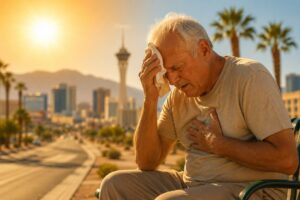

Las Vegas summers are no joke. With temperatures regularly climbing above 100°F, the extreme desert heat can pose serious health risks—especially for seniors.
The Centers for Disease Control and Prevention emphasizes that staying hydrated is one of the most effective ways to prevent heat-related illnesses, especially during extreme temperatures.
For families in Summerlin and across Las Vegas, keeping aging loved ones safe during the summer months isn’t just important—it’s critical.
Whether your parent lives alone or you’re checking in regularly, understanding how to prevent heat-related issues can make all the difference.
Why Are Seniors More Vulnerable to Heat?
Seniors are more vulnerable to heat because the body becomes less efficient at regulating temperature with age. According to the National Institute on Aging, older adults are at a higher risk for heat-related illnesses due to changes in how the body responds to temperature and certain medications.
Seniors are more likely to experience:
- Dehydration
- Heat exhaustion
- Heat stroke
- Medication-related sensitivity to heat
In Las Vegas, where temperatures often exceed 100°F, this risk is significantly higher, making preventive care essential.
How to Prevent Dehydration in Seniors
Preventing dehydration in seniors requires consistent fluid intake throughout the day, even if they don’t feel thirsty. Older adults are more prone to dehydration because their sense of thirst decreases with age, making it essential to proactively monitor hydration—especially during extreme heat in places like Las Vegas.
Seniors can become dehydrated quickly, which may lead to dizziness, confusion, urinary issues, or even hospitalization if not addressed early.
Best Ways to Prevent Dehydration
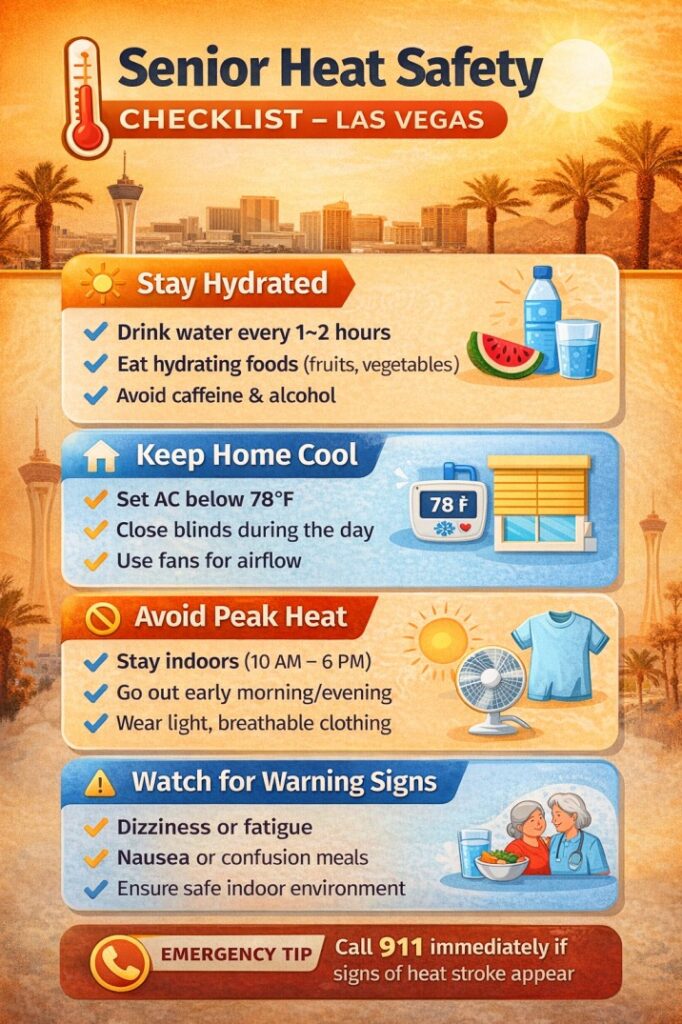
- Encourage small, frequent sips of water throughout the day
- Offer hydrating foods like watermelon, cucumbers, oranges, and soups
- Limit caffeine and alcohol, which can increase fluid loss
- Set reminders or use alarms to prompt regular hydration
- Keep water easily accessible in multiple areas of the home
- Monitor urine color (light yellow = well hydrated)
Staying ahead of dehydration is one of the simplest and most effective ways to protect seniors during extreme heat conditions.
How to Keep a Senior’s Home Cool During Summer
Keeping a senior’s home cool during summer is essential to prevent heat exhaustion and heat stroke, especially in extreme climates like Las Vegas. Seniors are more sensitive to temperature changes, so maintaining a consistently cool indoor environment can significantly reduce health risks.
A properly cooled home not only improves comfort but also helps prevent dehydration, fatigue, and other heat-related illnesses.
Key Steps to Keep the Home Cool
- Keep air conditioning set at or below 78°F for safe indoor temperatures
- Close blinds or curtains during the day to block direct sunlight
- Use fans to improve air circulation throughout the home
- Avoid using ovens or heat-generating appliances during peak heat hours
- Seal windows and doors to prevent cool air from escaping
- Use lightweight bedding and breathable fabrics
What to Do If the AC Stops Working
If air conditioning fails, act quickly to prevent dangerous heat exposure:
- Move to a cooler location such as a shopping center or cooling center
- Visit a family member or friend’s home
- Use fans, cold compresses, and hydration as temporary relief
- Contact an HVAC professional immediately
When Should Seniors Avoid Going Outside?
Seniors should avoid going outside during extreme heat, especially between 10 AM and 6 PM in Las Vegas, when temperatures are at their highest. During these peak hours, the risk of heat exhaustion and heat stroke increases significantly, even with short exposure.
Limiting outdoor activity during these times is one of the most effective ways to protect seniors from dangerous heat-related illnesses.
Safe Tips If Going Outside Is Necessary
- Go out early in the morning or later in the evening when temperatures are lower
- Wear lightweight, loose-fitting, and breathable clothing
- Stay in shaded areas as much as possible
- Limit time outdoors and take frequent breaks indoors
- Bring water and stay hydrated at all times
- Avoid strenuous activities during hot weather
What Are the Signs of Heat Exhaustion and Heat Stroke?
The signs of heat exhaustion and heat stroke in seniors include symptoms like dizziness, nausea, confusion, and changes in body temperature. Recognizing these warning signs early is critical, as heat stroke can become a life-threatening emergency if not treated immediately.
Seniors in hot climates like Las Vegas are especially at risk, making it important for caregivers and family members to monitor symptoms closely during extreme heat.
Following guidance from Ready.gov can help families recognize warning signs early and respond quickly to prevent serious complications.
Signs of Heat Exhaustion
- Heavy sweating
- Weakness or fatigue
- Dizziness or lightheadedness
- Nausea or vomiting
- Cool, pale, or clammy skin
Signs of Heat Stroke (Medical Emergency)
- High body temperature (103°F or higher)
- Confusion or disorientation
- Rapid or strong pulse
- Hot, dry, or flushed skin
- Possible loss of consciousness
What to Do in an Emergency
- Call 911 immediately if heat stroke is suspected
- Move the person to a cooler area
- Apply cool cloths or ice packs
- Offer water only if they are conscious
Do Medications Increase Heat Risk for Seniors?
Yes, certain medications can increase heat risk for seniors by affecting hydration levels, body temperature regulation, or the ability to sweat. These side effects can make older adults more vulnerable to dehydration, heat exhaustion, and heat stroke—especially in extreme heat conditions like Las Vegas.
Understanding how medications interact with heat is an important step in preventing serious health complications.
Common Medications That Increase Heat Risk
- Blood pressure medications – May reduce the body’s ability to respond to heat
- Diuretics (water pills) – Increase fluid loss, raising the risk of dehydration
- Antihistamines – Can interfere with sweating and cooling mechanisms
- Antidepressants and antipsychotics – May impact temperature regulation
- Heart medications – Can affect circulation and heat tolerance
How to Reduce Heat Risk from Medications
- Review all medications with a healthcare provider before summer
- Ask about side effects related to heat sensitivity
- Monitor for signs of dehydration or overheating
- Increase fluid intake as recommended
- Avoid prolonged exposure to high temperatures
Why Regular Check-Ins are Critical During Extreme Heat
Regular check-ins are critical for seniors during extreme heat because they help detect early signs of dehydration, overheating, or home safety issues like AC failure. Seniors who live alone are at a much higher risk, especially in hot climates like Las Vegas, where conditions can quickly become dangerous.
Consistent communication ensures that small issues are addressed before they turn into serious health emergencies.
Helpful Strategies for Checking In
- Schedule daily phone calls or in-person visits
- Use smart monitoring devices or alert systems
- Coordinate with neighbors, friends, or nearby family members
- Set reminders for hydration and meals
- Check indoor temperature and AC functionality
How Caregivers Help Protect Seniors in Las Vegas Heat
Caregivers help protect seniors during extreme Las Vegas heat by monitoring hydration, maintaining a safe indoor environment, and identifying early signs of heat-related illness. Their support reduces the risk of dehydration, heat exhaustion, and other serious health complications.
In high-temperature climates like Las Vegas, having consistent caregiver support can make a significant difference in a senior’s safety and overall well-being.
How Caregivers Keep Seniors Safe
At A Place At Home- Summerlin, caregivers provide essential support by:
- Monitoring hydration levels and encouraging regular fluid intake
- Preparing nutritious meals to support overall health
- Ensuring the home stays cool and comfortable
- Assisting with daily activities to reduce physical strain
- Minimizing the need for outdoor exposure during peak heat
- Recognizing early warning signs of heat exhaustion or heat stroke
This proactive care helps seniors stay safe, comfortable, and independent at home—even during extreme Las Vegas temperatures.
Is In-Home Care a Good Option During Summer?
Yes, in-home care is one of the safest and most effective options for seniors during extreme Las Vegas heat. It allows older adults to remain in a cool, familiar environment while receiving the support they need to stay safe, hydrated, and comfortable.
In-home care reduces exposure to high temperatures and ensures that seniors are monitored throughout the day.
Sources & References
- Centers for Disease Control and Prevention – Heat Safety Guidelines
- National Institute on Aging – Hot Weather Safety for Older Adults
- Ready.gov – Extreme Heat Preparedness