
El Niño is strengthening heading into fall and winter 2026–27. Here is a practical preparedness checklist for families of seniors and adults with disabilities in Summerlin and the Las Vegas Valley.
Continue reading
El Niño is strengthening heading into fall and winter 2026–27. Here is a practical preparedness checklist for families of seniors and adults with disabilities in Summerlin and the Las Vegas Valley.
Continue reading

Las Vegas summers are no joke. With temperatures regularly climbing above 100°F, the extreme desert heat can pose serious health risks—especially for seniors.
The Centers for Disease Control and Prevention emphasizes that staying hydrated is one of the most effective ways to prevent heat-related illnesses, especially during extreme temperatures.
For families in Summerlin and across Las Vegas, keeping aging loved ones safe during the summer months isn’t just important—it’s critical.
Whether your parent lives alone or you’re checking in regularly, understanding how to prevent heat-related issues can make all the difference.
Seniors are more vulnerable to heat because the body becomes less efficient at regulating temperature with age. According to the National Institute on Aging, older adults are at a higher risk for heat-related illnesses due to changes in how the body responds to temperature and certain medications.
Seniors are more likely to experience:
In Las Vegas, where temperatures often exceed 100°F, this risk is significantly higher, making preventive care essential.
Preventing dehydration in seniors requires consistent fluid intake throughout the day, even if they don’t feel thirsty. Older adults are more prone to dehydration because their sense of thirst decreases with age, making it essential to proactively monitor hydration—especially during extreme heat in places like Las Vegas.
Seniors can become dehydrated quickly, which may lead to dizziness, confusion, urinary issues, or even hospitalization if not addressed early.
Staying ahead of dehydration is one of the simplest and most effective ways to protect seniors during extreme heat conditions.
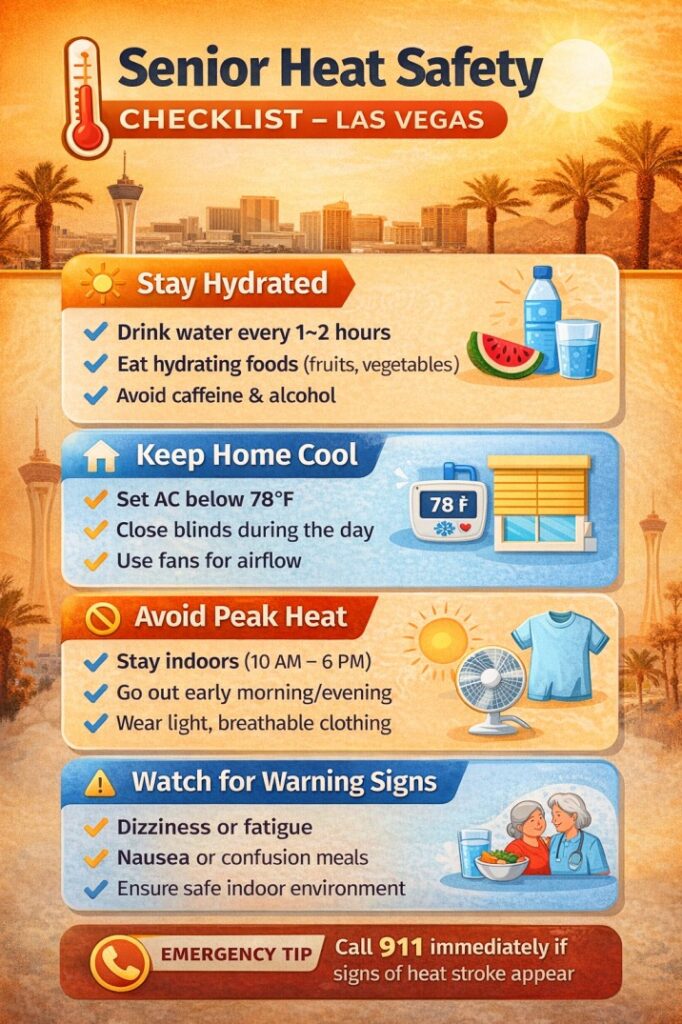
Keeping a senior’s home cool during summer is essential to prevent heat exhaustion and heat stroke, especially in extreme climates like Las Vegas. Seniors are more sensitive to temperature changes, so maintaining a consistently cool indoor environment can significantly reduce health risks.
A properly cooled home not only improves comfort but also helps prevent dehydration, fatigue, and other heat-related illnesses.
If air conditioning fails, act quickly to prevent dangerous heat exposure:
Seniors should avoid going outside during extreme heat, especially between 10 AM and 6 PM in Las Vegas, when temperatures are at their highest. During these peak hours, the risk of heat exhaustion and heat stroke increases significantly, even with short exposure.
Limiting outdoor activity during these times is one of the most effective ways to protect seniors from dangerous heat-related illnesses.
Safe Tips If Going Outside Is Necessary
The signs of heat exhaustion and heat stroke in seniors include symptoms like dizziness, nausea, confusion, and changes in body temperature. Recognizing these warning signs early is critical, as heat stroke can become a life-threatening emergency if not treated immediately.
Seniors in hot climates like Las Vegas are especially at risk, making it important for caregivers and family members to monitor symptoms closely during extreme heat.
Following guidance from Ready.gov can help families recognize warning signs early and respond quickly to prevent serious complications.
Yes, certain medications can increase heat risk for seniors by affecting hydration levels, body temperature regulation, or the ability to sweat. These side effects can make older adults more vulnerable to dehydration, heat exhaustion, and heat stroke—especially in extreme heat conditions like Las Vegas.
Understanding how medications interact with heat is an important step in preventing serious health complications.
Regular check-ins are critical for seniors during extreme heat because they help detect early signs of dehydration, overheating, or home safety issues like AC failure. Seniors who live alone are at a much higher risk, especially in hot climates like Las Vegas, where conditions can quickly become dangerous.
Consistent communication ensures that small issues are addressed before they turn into serious health emergencies.
Caregivers help protect seniors during extreme Las Vegas heat by monitoring hydration, maintaining a safe indoor environment, and identifying early signs of heat-related illness. Their support reduces the risk of dehydration, heat exhaustion, and other serious health complications.
In high-temperature climates like Las Vegas, having consistent caregiver support can make a significant difference in a senior’s safety and overall well-being.
At A Place At Home- Summerlin, caregivers provide essential support by:
This proactive care helps seniors stay safe, comfortable, and independent at home—even during extreme Las Vegas temperatures.
Yes, in-home care is one of the safest and most effective options for seniors during extreme Las Vegas heat. It allows older adults to remain in a cool, familiar environment while receiving the support they need to stay safe, hydrated, and comfortable.
In-home care reduces exposure to high temperatures and ensures that seniors are monitored throughout the day.
Sources & References

As people live longer, healthier lives, the question of when someone is considered elderly has become less clear. Is it 60? Is it 65? Or does age alone even tell the full story?
Understanding just what defines an age-for seniors, families, and caregivers-can help with planning, decision-making, and conversations about aging and health independence and eventual care needs. The short answer is that both 60 and 65 are in common use, depending on context. The longer answer is more complicated:
Yes, in some settings-60 is considered the beginning of older adulthood, but not necessarily “elderly” in the traditional sense.
It is used by, commonly: Age 60
Many senior centers, wellness programs, and public health discussions begin using the term older adult or senior at age 60. However, most people at this age are still active, independent, and working or newly retired.
Because of this, age 60 is more accurately described as the start of later adulthood rather than old age.
The age of 65 was quite arbitrary, as this is usually considered the age when one is labeled elderly, primarily because it coincides with retirement, senior benefits, and age-related healthcare planning. However, it is less of a rule and more of an outline than an actual measure of health or competency. The majority of people at age 65 live active, independent, and productive lives.
This is largely because age 65 marks eligibility for major milestones such as:
For decades, age 65 has been used as a benchmark in healthcare, policy, and retirement planning. As a result, it has become the most widely accepted definition of when someone is considered elderly—at least administratively.
Still, many adults at 65 remain healthy, active, and fully independent.
There is no definition of the word elderly, since aging is a different process for each person.
Chronological age, or the age a person is, does not always reflect:
Two persons aged 70 years may have very different health profiles and support needs. That is why many professionals today focus less on age alone and more on functional aging.
Functional age describes how well a person functions in daily life, other than how old they are by years. It is a reflection of factors such as one’s mobility and balance, the ability to manage activities of everyday living, memory and decision-making, and overall health and stamina. From a care perspective, functional age often means more than chronological age. Whereas some people in their late 70s are still fully independent, some others in their early 60s may require daily support as a result of illness, injury, or health changes.
No–an increase in years does not make any person pop into the care category. Many adults remain independent, living in their communities well into their 80s and beyond. The basis for most care decisions includes:
Age may be a reference point, but care needs are driven by function and safety, not a number.
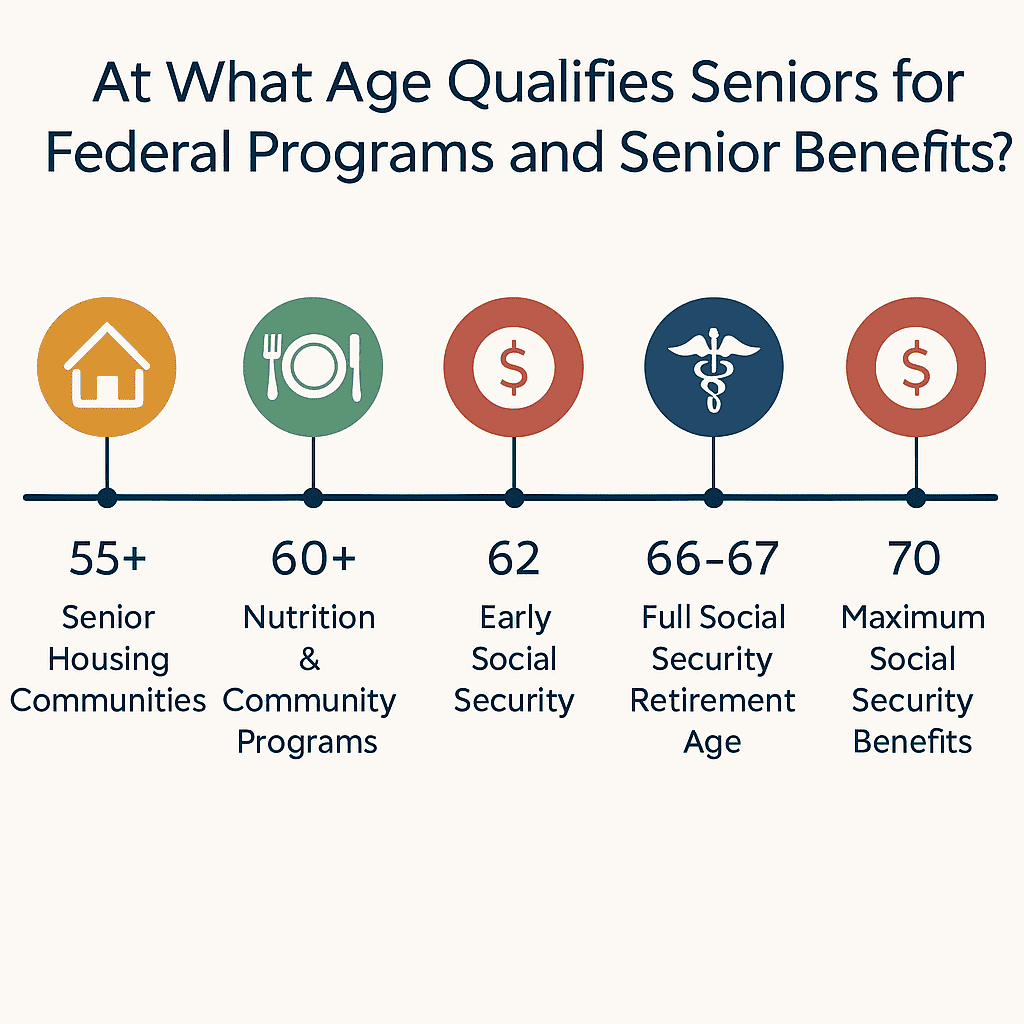
Most of the senior benefits are attached to an age threshold instead of a single definition of “elderly” in the United States. These programs are made for healthcare access, income security, housing, and daily living as one is aging. The most widely applied benchmark is 65, although under or over this level of age, eligibility can begin for different programs.
Attains Medicare eligibility at an elderly stage of life, which begins at 65 years, providing them with health insurance. The programs offered under Medicare cover hospital and medical treatment and prescription drugs. Attaining Medicare is one of the reasons why a person attains senior status when they reach 65 years.
Benefits for retirement under Social Security can be drawn from as early as 62 years of age, but they are reduced if one wishes to start taking them before attaining full retirement age. Benefits are available from 66 to 67 years of age, with an option to raise them if one delays taking them until 70 years of age.
SSI offers financial assistance to senior citizens with limited income and resources. Although eligibility can start at 65, some people can become eligible before this time if they have a disability. Assistance from this social service will cover basic living needs such as food and shelter.
Eligibility for Medicaid benefits is determined by income and resources, but not by age, and many people can become eligible when their care requirements escalate in old age. Medicaid benefits include assistance with long-term healthcare such as in-home and SNF care.
Numerous government and local programs exist for senior citizens beginning at either age 55 or 62 years. Such programs can include rent subsidies, senior-only apartment buildings, and senior-friendly living communities.
Veterans may be eligible for healthcare benefits, pensions, and assistance programs when they reach advanced age. Benefits come with eligibility based on age, military service, financial need, or disability.
Programs such as congregate meal services, home-delivered meals, and senior community services often begin at age 60. These services support nutrition, social engagement, and independent living for older adults.
Apart from benefits and eligibility, other dimensions of life in which aging might be considered include phases of life in order to address varying requirements at different stages.
Often, people will use these terms interchangeably, but “older adult” or “senior” can be a better option because it sounds more respectful and less concentrated on vulnerability. “Elderly” may be a common term in a medical or a government setting, but usage is moving toward someone-first languages.
Although it does not in itself define aging or need, age is a factor in establishing eligibility for two very important government programs.
Aging can be described in terms of phases in order to have a better understanding of health, autonomy, and function. Although different authors describe phases in different ways, a generally accepted model consists of four phases:
These stages aren’t strict rules. They’re a helpful way to talk about aging in a realistic, respectful way—because people age differently based on health, environment, and support systems.
There is no specific age at which someone suddenly needs care. Most support needs develop gradually and are driven by functional changes, not birthdays. Challenges such as loss of mobility, balance problems, forgetfulness, managing daily activities, taking medications, or safety in and around the dwelling are more likely considerations before support is actually required. Some people can continue to look after themselves well into their 80s, where others will require support in their early 60s.
The best time to plan for senior care is before a crisis occurs. Families often benefit from starting conversations and exploring options once a loved one begins experiencing falls, trouble managing medications, difficulty cooking or keeping up with household tasks, or needs extra support after a hospital stay. Early planning allows families to make thoughtful, less stressful decisions and put the right support in place before safety or health becomes urgent.
The word elderly is increasingly being replaced with terms like:
This shift reflects a more respectful and accurate view of aging. Many people associate “elderly” with frailty, which does not represent most adults in their 60s or even 70s.
Using people-first language helps focus on ability, not limitation.
Every individual grows old in a different way, and when they need help, it is not based on a certain age. The most important factor is safety, independence, and a good life at home. A Place At Home – Summerlin residents will have access to tailor-made senior home care, which will address each individual in a manner in which they can be assisted either occasionally or on a continual basis.
Our caregivers assist senior citizens in being comfortable and self-reliant in their homes by providing assistance with personal care, meal service, medication reminders, mobility support, friendship, and post-illness recuperation. We assist the family in adjusting this support based on their evolving requirements, keeping in mind their dignity and continuity of care.
If you are just starting to think about planning for the future or if you notice some signs that a loved one in your life may need a little extra assistance, our local team is available to walk you through this next step.
Final Takeaway
Whether a person can be labeled as senior at 60 or at 65 can very much depend on the context in which they are being assessed. The truth is, aging is far more a function of health, independence, and functionality relative to a number.

In 2025, Clark County, Nevada, continues to experience one of the fastest-growing senior populations in the western U.S. Once known primarily for the bright lights of Las Vegas, the region has become a popular destination for retirees drawn to its warm climate, tax advantages, and active-living communities like Summerlin, Henderson, and Green Valley.
According to Nevada’s Department of Health and Human Services, adults aged 65 and older now make up more than 15.5% of Clark County’s population, and that figure is projected to approach 17% by the end of the decade. (UNR Cooperative Extension)
Yet, as the population ages, one reality becomes increasingly clear: Nevada’s care economy isn’t fully keeping up with the growing demand for home-based support, caregiving staff, and affordable long-term care options.
Across Clark County, from Las Vegas to Summerlin and Boulder City, families are feeling the pressure of an evolving care landscape. The demand for qualified caregivers, home health aides, and memory care professionals continues to surge, but the supply hasn’t kept pace.
A 2024 report from the Las Vegas Sun highlighted that while the state celebrates its thriving senior population, the “care economy”—the network of professionals who provide daily living support, home health, and companionship—remains underfunded, undertrained, and overstretched.
For families seeking in-home assistance, this combination creates both access barriers and uncertainty—especially for middle-income households who don’t qualify for Medicaid but can’t afford full-time private care.
Take the example of Mary, a 72-year-old widow in Summerlin whose eyesight and mobility have declined since developing diabetes. Her daughter, Rachel, manages her care from across town while working full time. Finding reliable caregivers has been a challenge. “We went through three agencies in one year,” Rachel shares. “Everyone was kind, but scheduling and consistency were constant problems. Mom needs routine, and every time we had a new caregiver, it set her back.”
Stories like Mary’s are increasingly common across Clark County, where more than one in four seniors live alone (U.S. Census, 2024). For many, in-home care isn’t just about convenience—it’s about preserving dignity, safety, and connection in the place they call home.
In-home care providers play an essential role in bridging the gap between medical services and independent living. Agencies like A Place At Home – Summerlin are part of a growing movement that focuses on preventative, relationship-based care—helping seniors stay in their homes longer and avoid unnecessary hospitalizations.
These services don’t just ease the strain on families—they also reduce healthcare costs by preventing accidents, malnutrition, and hospital readmissions.
| Statistic | Insight | Source |
|---|---|---|
| 15.58% | Clark County residents aged 65+ (2024) | Neilsberg Demographics |
| 17% | Projected 65+ share of Nevada’s population by 2025 | UNR Cooperative Extension |
| +8% | Increase in average home care costs since 2023 | Genworth Cost of Care Survey |
| 25% | Seniors in Clark County living alone | U.S. Census Bureau, 2024 Data |
| 2,000+ | Estimated shortage of qualified caregivers statewide | Las Vegas Sun, 2024 |
Experts say Nevada must invest in its caregiving infrastructure to meet the growing needs of its residents. That includes:
Until those systemic changes happen, local in-home care providers and family caregivers remain the backbone of Clark County’s care economy.
A local perspective from a place at home – Summerlin
“Families don’t just need someone to show up—they need consistency, compassion, and understanding,” says a local care coordinator at A Place At Home – Summerlin.
“Our caregivers aren’t just performing tasks—they’re building relationships that restore confidence and peace of mind.”
As Clark County’s senior population continues to rise, those personal connections will play an increasingly critical role in ensuring older adults can live safely and happily in the homes they love.