

One moment, everything feels manageable — and the next, it isn’t.
A loved one is suddenly discharged from the hospital in Reston.
A fall at home in Sterling or Herndon changes mobility overnight.
A caregiver cancels, and there’s no backup in Chantilly or Fairfax.
When these situations happen, families don’t have weeks to plan. They need help now.
The good news is that immediate home care is possible, and with the right local provider, care can often begin within 24 hours. This guide explains how urgent home care works, when to seek it, and what families across Northern Virginia should know when time is critical.
What Is Immediate In-Home Care?
Immediate in-home care is short-notice support designed for situations where families cannot wait days or weeks for help. It is most often needed after an unexpected hospital discharge, a fall that changes mobility overnight, surgery, sudden illness, or when a family caregiver becomes overwhelmed or unavailable. The goal is to stabilize the situation quickly, keep the senior safe at home, and prevent avoidable complications while longer-term plans are put in place.
Can Home Care Really Start Within 24 Hours?
Yes, immediate home care can often begin within 24 hours when families work with a local, established agency. Providers with caregivers already serving the community can complete intake quickly, assess basic needs by phone, and match an available caregiver without delays. Local agencies are able to move faster than national call centers because they manage staffing, scheduling, and care coordination directly.
Local providers in Reston, Fairfax County, Herndon, Sterling, and Chantilly can often:
- Complete a same-day intake call
- Assess general care needs quickly
- Match an available caregiver
- Begin care within 24 hours when staffing allows
Large national call centers often move more slowly because they rely on centralized systems and wider coverage areas. Local agencies can respond faster because caregivers are already working within the community.
What Families Should Do When Care Is Needed Urgently
Urgent home care is often needed when a discharge date arrives before a clear plan is in place. Seniors returning home after surgery, illness, or rehabilitation may struggle with mobility, fatigue, medication routines, or basic daily tasks. If a loved one cannot safely manage bathing, meals, walking, or being alone during the day, immediate care helps bridge the gap between medical care and independent living.
When time is limited, a few simple steps help move things forward quickly:
- Call instead of relying only on online forms
Ask clear questions such as:
- “How soon can care begin?”
- “Do you currently have caregiver availability in my area?”
- Be prepared to describe basic needs (hours, level of assistance, safety concerns)
Detailed medical information can be reviewed securely once care planning begins. The first goal is confirming speed and availability.
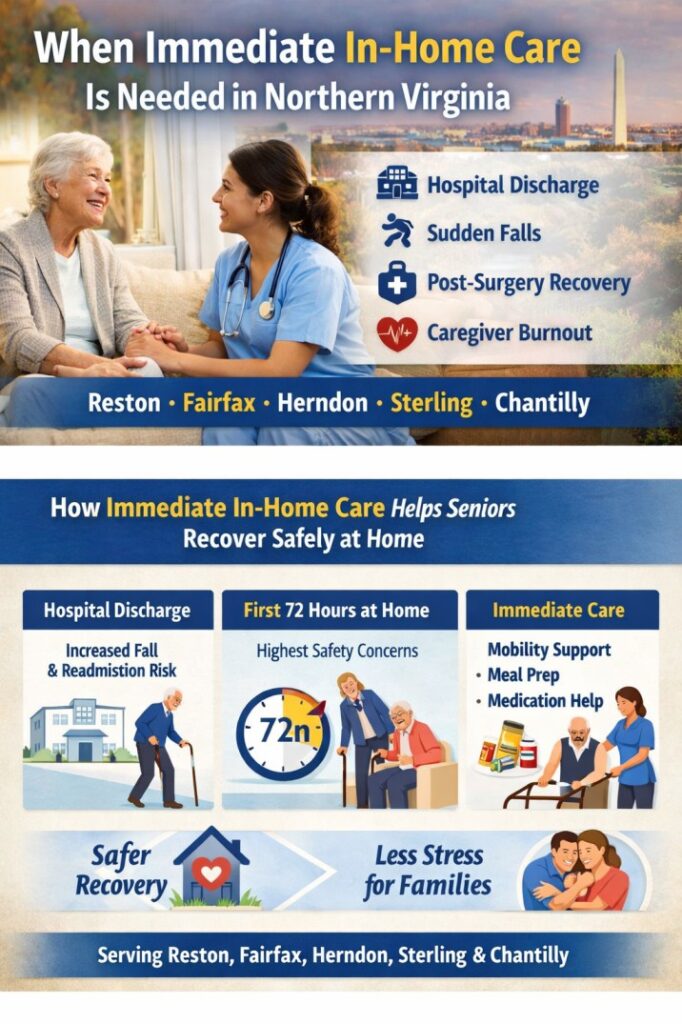
Why the First 72 Hours After Discharge Matter Most
The first few days after returning home are when seniors face the greatest risk of falls, medication errors, dehydration, and readmission to the hospital. New medications, weakness from bed rest, and unfamiliar routines can quickly lead to complications. Immediate in-home care provides extra eyes, hands, and support during this critical transition period, reducing stress for both the senior and their family.
Without proper support, seniors are more likely to experience:
- Falls
- Medication errors
- Missed follow-up instructions
- Preventable hospital readmissions
Immediate in-home care helps by reinforcing discharge instructions, monitoring mobility, supporting daily routines, and ensuring the home environment is safe during recovery. This is especially important for families in busy Northern Virginia households where work and commuting limit availability.
When Should You Seek Urgent In-Home Care?
If daily life no longer feels safe or manageable, it’s time to reach out.
Urgent home care is often needed when:
- A discharge date is approaching with no care plan
- A spouse or family caregiver feels overwhelmed
- Daily tasks are unsafe to manage alone
- A loved one should not be left home alone
If you’re asking, “How are we going to manage this?” that question itself is a signal to seek support.
Why Local, Clinically Guided Home Care Makes a Difference
Local leadership and clinical oversight improve speed, safety, and outcomes.
Agencies with local management and clinical guidance are better equipped to:
- Start care quickly
- Adjust care plans as recovery changes
- Communicate clearly with families and providers
- Support safe transitions home
For families in Reston, Fairfax, Herndon, Sterling, and Chantilly, this local responsiveness can make the difference between a smooth recovery and a return to the hospital.
Why Local, Clinically Guided Home Care Makes a Difference
Local leadership and clinical oversight improve speed, safety, and outcomes.
Agencies with local management and clinical guidance are better equipped to:
- Start care quickly
- Adjust care plans as recovery changes
- Communicate clearly with families and providers
- Support safe transitions home
Need Immediate In-Home Care in Northern Virginia?
When care is needed urgently, families in Northern Virginia don’t have time to wait or sort through uncertainty. A Place At Home – Reston provides dependable in-home care for seniors and adults in Reston, Fairfax, Herndon, Sterling, and Chantilly, helping families respond quickly when a loved one needs support at home.
Our caregivers assist with the everyday needs that matter most during recovery or sudden health changes, including meal preparation, light housekeeping, fall prevention support, medication reminders, and companionship. Whether someone is returning home after a hospital stay, recovering from surgery, or simply no longer safe managing daily routines alone, our care helps reduce risk while supporting comfort and independence at home.
If you’re concerned about a loved one being home alone or struggling after a recent change in health, A Place At Home – Reston is here to help. Call today to talk through what’s happening and learn how in-home care can start when you need it most.