
What Nutrients Are the Elderly Lacking? Common Deficiencies in Seniors

What Nutrients are Seniors Deficient in - A Place At Home

What Nutrients are Seniors Deficient in - A Place At Home

As we age, our bodies process and absorb nutrients differently. Appetite often decreases, digestion slows, and certain medications can interfere with nutrient absorption. Because of these changes, many seniors unknowingly develop deficiencies that can impact energy, bone health, cognitive function, and overall well-being. These changes are often some of the first signs families notice when a loved one begins to need additional support at home.

Among the most common nutrient deficiencies in older adults are vitamin D, vitamin B12, calcium, magnesium, protein, and potassium, all key to maintaining strength, immunity, and independence. In this guide, we’ll explore why these deficiencies happen, the warning signs to watch for, and how seniors can stay nutritionally balanced.

What Nutrients Are the Elderly Most Commonly Lacking?

Older adults are most commonly deficient in:

  • Vitamin D – supports bone strength and immune health
  • Vitamin B12 – essential for brain and nerve function
  • Calcium – helps maintain bone density
  • Magnesium – supports muscle and heart function
  • Protein – preserves muscle mass and strength
  • Potassium – regulates blood pressure and heart health

These deficiencies are often caused by reduced appetite, changes in digestion, medications, chronic conditions, and limited sun exposure.

Why Seniors Are at Higher Risk for Nutrient Deficiencies

As the body ages, several natural changes increase the risk of nutrient deficiencies, even when eating habits seem normal. Understanding these root causes is key to preventing long-term health issues.

Reduced Appetite and Calorie Intake

Many seniors experience a decrease in appetite due to changes in taste, smell, or digestion. This often leads to lower food intake and fewer essential nutrients.

Changes in Nutrient Absorption

The stomach produces less acid with age, making it harder to absorb nutrients like vitamin B12 and calcium. The body also becomes less efficient at processing nutrients overall.

Medication Interactions

Common medications such as antacids, diuretics, and blood pressure drugs can interfere with nutrient absorption or increase nutrient loss.

Read: Medication Management Tips for Seniors and Caregivers

Chronic Health Conditions

Conditions like diabetes, kidney disease, and digestive disorders can affect how nutrients are absorbed and used by the body.

Limited Mobility or Food Access

Difficulty shopping or cooking can lead to reliance on processed or low-nutrient foods, increasing the risk of deficiencies. Having help with daily routines, including grocery shopping and meal preparation, can make a meaningful difference.

Vitamins for Seniors - A Place At Home

Most Common Nutrient Deficiencies in Seniors

Even with a balanced diet, many older adults fall short on certain key nutrients that are critical for bone health, energy, and overall wellness. The following are the nutrients seniors most commonly lack, including what they do for the body, why they’re important, and the potential health consequences when intake is insufficient.

Vitamin D

According to the National Institutes of Health (NIH), older adults are at higher risk of vitamin D deficiency due to reduced skin synthesis and limited sun exposure.

Why it matters: Supports bone strength, immune function, and muscle health

Why seniors lack it: Reduced sun exposure and decreased skin synthesis

Signs of deficiency: Fatigue, bone pain, frequent illness, muscle weakness

Recommended intake: 800–1,000 IU daily (or as advised by a doctor)

Best sources: Salmon, mackerel, fortified dairy, egg yolks

Vitamin B12

Why it matters: Supports brain health, nerve function, and red blood cell production

Why seniors lack it: Lower stomach acid reduces absorption

Signs of deficiency: Memory issues, fatigue, numbness or tingling

High-risk groups: Adults over 60, vegetarians, those on acid-reducing medications

Recommended intake: 2.4 mcg daily

Best sources: Meat, dairy, fortified cereals

Calcium

Why it matters: Maintains bone density and reduces fracture risk

Why seniors lack it: Lower intake and reduced absorption

Signs of deficiency: Bone loss, increased fracture risk

Recommended intake: 1,200 mg daily (especially for women 50+)

Best sources: Dairy products, leafy greens, fortified foods

Magnesium

Why it matters: Supports muscle, nerve, and heart function

Why seniors lack it: Poor diet, medications, and chronic conditions

Signs of deficiency: Muscle cramps, fatigue, irregular heartbeat

Recommended intake: 320–420 mg daily

Best sources: Nuts, seeds, whole grains

Protein

Why it matters: Preserves muscle mass and prevents weakness

Why seniors lack it: Reduced appetite, chewing difficulty, dietary habits

Signs of deficiency: Muscle loss, fatigue, weight loss

Recommended intake: 1.0–1.2 g per kg of body weight

Best sources: Eggs, poultry, fish, beans, protein shakes

Potassium

Why it matters: Regulates blood pressure and supports heart health

Why seniors lack it: Low intake of fruits and vegetables

Signs of deficiency: Muscle cramps, weakness, irregular heartbeat

Recommended intake: 2,600–3,400 mg daily

Best sources: Bananas, potatoes, beans, leafy greens

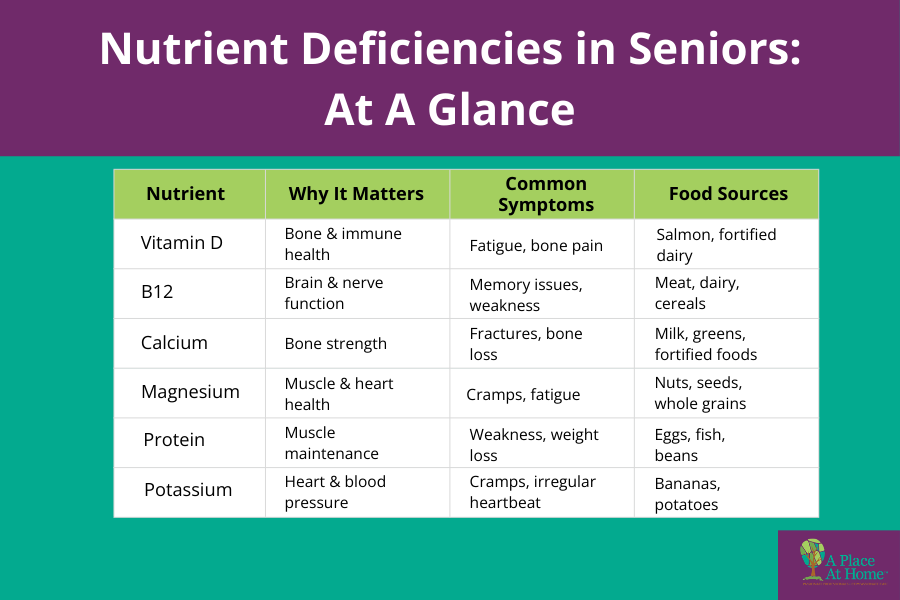
Nutrient Deficiencies in Seniors: At A Glance

The table below summarizes the most common nutrient deficiencies in seniors, including their symptoms and food sources.
Nutrient Deficiencies in the Elderly - A Place At Home

Warning Signs of Nutrient Deficiencies in Older Adults

Nutrient deficiencies in seniors can develop gradually and may go unnoticed at first. Watch for these common warning signs:

  • Unexplained fatigue: Feeling unusually tired despite adequate rest.
  • Frequent falls: Loss of muscle strength or balance issues.
  • Muscle weakness: Difficulty performing daily tasks or reduced mobility.
  • Memory problems: Forgetfulness or trouble concentrating.
  • Poor wound healing: Cuts or bruises that take longer than usual to heal.
  • Loss of appetite: Reduced interest in eating or skipping meals regularly.

If you’re noticing these changes in a parent or loved one, it may be time to look beyond nutrition and evaluate their overall daily support needs.

Real-Life Signs Families Often Notice First

Family members often notice subtle changes before a diagnosis:

  • Clothes fitting looser
  • Less interest in meals
  • Increased daytime sleeping
  • Forgetting to eat or shop
  • Declining strength or mobility

These early signs often point to underlying nutritional gaps.

Why Nutrient Deficiencies Are Dangerous for Seniors

Left unaddressed, nutrient deficiencies can lead to:

  • Increased risk of falls and fractures
  • Weakened immune system
  • Cognitive decline
  • Delayed recovery after illness
  • Loss of independence

Proper nutrition plays a critical role in maintaining quality of life as we age.

How Seniors Can Prevent Nutritional Deficiencies

Maintaining proper nutrition becomes increasingly important with age, but it doesn’t have to be overwhelming. There are practical steps seniors can take to reduce the risk of deficiencies and support overall health.

Focus on Nutrient-Dense Meals

The U.S. Department of Agriculture’s Dietary Guidelines for Americans recommends focusing on nutrient-dense foods to meet daily vitamin and mineral needs as we age. Prioritize foods rich in protein, vitamins, and minerals at every meal. Incorporate items like lean meats, fish, eggs, dairy, whole grains, leafy greens, nuts, and beans. Smaller, frequent meals can also help seniors meet their nutrient needs, especially if appetite is reduced.

Consider Doctor-Recommended Supplements

Sometimes diet alone isn’t enough. Vitamin D, B12, calcium, magnesium, and protein supplements may be recommended by a healthcare provider to fill gaps. Always consult a doctor before starting any supplement routine.

Stay Hydrated

Dehydration can affect appetite, digestion, and overall nutrient absorption. Seniors should aim to drink water regularly throughout the day and include fluids from soups, teas, or hydrating fruits and vegetables.

Schedule Regular Health Screenings

Routine blood tests can identify nutrient deficiencies early. Monitoring vitamin levels, kidney function, and other key indicators helps seniors take action before minor deficiencies become serious health issues.

Get Help With Meal Preparation

Limited mobility, chronic conditions, or fatigue can make cooking and grocery shopping challenging. In-home care support can help seniors plan balanced meals, prepare nutrient-rich dishes, and ensure they’re eating enough each day, making it easier to stay healthy and independent.

Nutritional deficiencies in Seniors - A Place At Home

Best Diet for Seniors to Prevent Deficiencies

A balanced senior diet should focus on nutrient-dense, whole foods, including:

  • Lean proteins (fish, eggs, poultry)
  • Fruits and vegetables
  • Whole grains
  • Dairy or fortified alternatives
  • Healthy fats (nuts, seeds, olive oil)

Smaller, more frequent meals can help seniors meet their nutritional needs more easily.

When to Consider Professional Help

Sometimes, even with the best intentions, seniors may struggle to maintain proper nutrition on their own. Professional support can make a meaningful difference in these situations. Consider seeking help if you or a loved one experiences:

  • Difficulty cooking: Challenges with meal preparation due to mobility issues, fatigue, or chronic conditions.
  • Unintended weight loss: Losing weight without trying can be a sign of inadequate nutrition or underlying health issues.
  • Forgetting meals: Skipping meals regularly, whether due to memory problems or routine changes, increases the risk of deficiencies.
  • Recovery after hospitalization: Post-hospitalization recovery often requires extra nutrients to regain strength, support healing, and prevent complications.

Engaging professional caregivers or nutrition support services can ensure seniors receive balanced meals, proper supplementation, and consistent monitoring, helping them maintain health, energy, and independence.

Taking Action: Support for Seniors and Families

Recognizing and addressing nutrient deficiencies is an important step toward healthier aging. But sometimes, the challenges that come with preparing balanced meals, remembering to eat regularly, or managing recovery at home require a little extra help. If you’re noticing warning signs like unintended weight loss, skipped meals, or difficulty cooking, it might be time to consider professional support.

At A Place At Home – Dublin, our caregivers can assist with nutritious meal planning and preparation, medication reminders, encouragement around hydration and eating, safe mobility, and daily routines to help seniors stay comfortable, nourished, and independent in the place they love most. Comprehensive senior home care not only promotes better nutrition but also brings peace of mind to families.

For families in Central Ohio, A Place At Home – Dublin offers compassionate, personalized in‑home care designed to help older adults remain safe, healthy, and thriving at home. Whether you’re looking for a few hours of assistance each week or more regular care, connecting with a professional care provider can ensure your loved one gets the support they need to maintain good nutrition, health, and quality of life.

Contact A Place At Home – Dublin today to schedule a free in‑home consultation and learn how we can help your senior loved one stay nourished, supported, and independent.


Frequently Asked Questions (FAQs)

Seniors are more likely to develop nutrient deficiencies due to decreased appetite, reduced nutrient absorption, chronic health conditions, and medications that interfere with how the body processes vitamins and minerals.

Common signs of malnutrition in seniors include unintentional weight loss, fatigue, muscle weakness, poor appetite, frequent illness, and difficulty concentrating. These symptoms often develop gradually and may be overlooked without regular monitoring.

The most common vitamin deficiencies in older adults are Vitamin D and Vitamin B12. Vitamin D deficiency is often caused by limited sun exposure, while B12 deficiency is linked to reduced stomach acid and absorption issues.

Yes, deficiencies in nutrients like vitamin B12, vitamin D, and magnesium can contribute to memory problems, confusion, and cognitive decline. Proper nutrition plays an important role in maintaining brain health as we age.


Medication Management Tips for Seniors and Caregivers

How to Help Seniors Manage Medications Safely - A Place At Home

How to Help Seniors Manage Medications Safely - A Place At Home

Managing medications is one of the most common and stressful responsibilities caregivers face when supporting seniors at home. Nearly half of adults over 65 take five or more prescription medications daily, increasing the risk of missed doses, dangerous drug interactions, and preventable hospitalizations. Without a clear medication management system, even well-meaning families can overlook critical details that affect a senior’s safety, independence, and long-term health.

Senior medication management helps caregivers ensure that medications are taken correctly, consistently, and safely, thereby reducing complications and supporting overall wellness and aging in place.

What is Medication Management for Seniors?

Senior medication management refers to the process of organizing, monitoring, and safely administering prescription and over-the-counter medications for older adults. Whether done by professional caregivers or family members, medication management ensures consistent treatment, reduces the risk of errors, and helps seniors maintain their well-being, especially when taking multiple medications daily.

Why Proper Medication Management Is Critical for Senior Safety and Health

Medication-related problems are a leading cause of emergency room visits and hospitalizations among older adults. Studies consistently show that seniors taking multiple prescriptions face a significantly higher risk of adverse drug events, especially when medications are not closely monitored. Many of these incidents are preventable with proper organization, caregiver oversight, and regular medication reviews with healthcare providers.

Medications are often the first line of treatment for chronic conditions that affect older adults, such as diabetes, arthritis, heart disease, and hypertension. Seniors respond differently to medications due to age-related changes, including slower metabolism, reduced kidney function, and decreased muscle mass. Standard doses can sometimes cause unexpected side effects, making careful oversight by caregivers and healthcare providers crucial.

What Are Common Medication Challenges for Seniors?

Older adults face several obstacles in managing medications safely:

  • Vision difficulties: Tiny print on pill bottles can cause confusion and increase the risk of taking the wrong medication or dose.
  • Similar-looking medications: Pills with similar size, shape, or color increase the likelihood of dangerous medication errors.
  • Physical limitations: Arthritis or tremors can make opening bottles difficult, leading seniors to skip doses entirely.
  • Drug interactions: Medications prescribed by different specialists can interact, causing dizziness, falls, or serious health complications.

Recognizing these challenges is the first step toward safer medication routines.

How Caregivers Can Support Safe and Consistent Medication Management

Safe Medication Management Tips for Seniors - A Place At Home

The following medication management tips help seniors reduce medication errors, avoid dangerous interactions, and maintain consistent treatment routines:

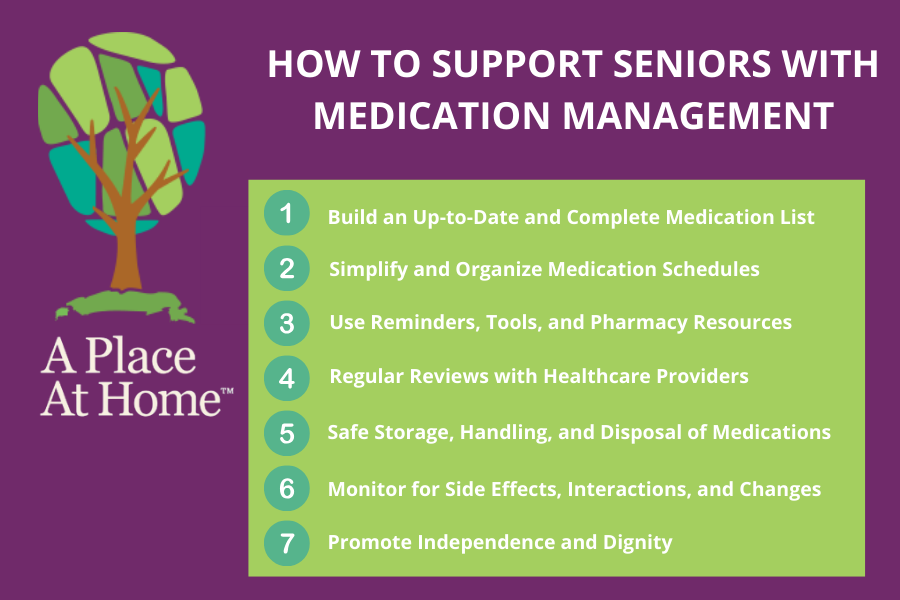
1. Build an Up‑to‑Date and Complete Medication List

Seniors and caregivers should maintain a current list of all prescription medications, over-the-counter drugs, vitamins, supplements, and non-pill medications like creams, patches, or inhalers. Include dosage, frequency, and purpose. Keep both digital and paper copies to ensure accuracy.

2. Simplify and Organize Medication Schedules

A consistent schedule helps medications remain effective. Organize doses by time of day or with meals as appropriate. Using a water cup or small tray can make taking medications easier for seniors.

3. Use Reminders, Tools, and Pharmacy Resources

Color-coded pill organizers, smartphone reminder apps, and alarms help seniors stay on track. Pharmacists can clarify instructions and guide difficult-to-open bottles or complex regimens.

4. Establish Communication and Regular Review with Healthcare Providers

Regularly review all medications with doctors or pharmacists. This prevents unnecessary prescriptions, reduces side effects, and lowers the risk of interactions. Caregivers should maintain open communication with the healthcare team to support safe administration.

5. Safe Storage, Handling, and Disposal of Medications

Store medications in a cool, dry place, ideally not in the bathroom. Keep drugs in their original labeled containers. Dispose of expired or unused medications through pharmacy take-back programs to prevent accidental ingestion.

6. Monitor for Side Effects, Interactions, and Changes Over Time

Caregivers should watch for new symptoms like dizziness, fatigue, or confusion and report them to healthcare providers promptly. Monitoring prevents complications and ensures timely medical intervention.

7. Promote Independence and Dignity While Providing Support

Encourage seniors to participate as much as possible in their own medication routines. Ask how much help they want and explain the purpose of each drug. For those who struggle with bottle caps, pharmacists can provide easy-open containers, or caregivers can assist.

Caregivers should never adjust dosages or stop medications without medical guidance. Regular medication reviews with physicians or pharmacists help ensure prescriptions remain appropriate as a senior’s health needs change.

Medication Management Checklist for Caregivers

  • Maintain an updated list of all medications, supplements, and dosages
  • Review medications with a doctor or pharmacist at least annually
  • Use pill organizers or reminder systems to prevent missed doses
  • Watch for new symptoms or side effects after medication changes
  • Safely dispose of expired or unused medications

Risks of Non-Adherence

Failing to follow a prescribed medication regimen can have serious consequences for seniors. Understanding these risks highlights the importance of consistent medication management.

  • Reduced treatment effectiveness: Missing doses can prevent medications from working as intended, leading to uncontrolled conditions such as high blood pressure or diabetes.
  • Increased risk of hospitalizations: Medication errors or missed doses are a leading cause of preventable hospital visits among older adults.
  • Drug interactions and overdose risks: Taking extra doses to “catch up” can cause dangerous interactions or toxicity.
  • Complications from chronic conditions: Skipping blood thinners, insulin, or heart medications can lead to stroke, heart attack, or other life-threatening events.

Encouraging adherence through reminders, caregiver support, and professional medication management services helps seniors maintain health, independence, and safety.

Medication Management Tips for Seniors - A Place At Home

When to Consider Professional Help or Medication Management Services

Medication management services are invaluable for seniors with cognitive decline, physical limitations, or multiple chronic conditions. Professional caregivers ensure medications are taken correctly, reducing the risk of harmful drug interactions and emergency room visits.

Caregivers should watch for potentially inappropriate medications, including those identified by the American Geriatrics Society, which outlines drugs that pose higher risks for older adults. They can ask healthcare providers about a medication’s purpose and age-appropriateness, advocating for the senior’s safety.

Signs of Medication Problems to Watch For

Monitoring seniors for medication-related issues is essential for safe medication management. Early recognition of warning signs can prevent serious health complications.

  • Dizziness or fainting: Could indicate low blood pressure or interactions with other drugs.
  • Fatigue or confusion: May signal that medications are causing central nervous system effects.
  • Allergic reactions: Rash, swelling, or breathing difficulties require immediate medical attention.
  • Digestive issues: Nausea, vomiting, or stomach pain can indicate side effects or drug interactions.
  • Unusual behavior changes: Agitation, sleep disturbances, or memory lapses may be medication-related.

Caregivers should document symptoms and notify healthcare providers promptly to adjust medication plans safely.

In-Home Senior Care and Medication Support from A Place At Home

Families in Central Columbus, Ohio, seeking professional senior medication management and in-home senior care services can trust A Place At Home – Dublin for compassionate, personalized support. Our experienced caregivers provide timely medication reminders, assist seniors in following doctor instructions accurately, and can even pick up prescriptions from local pharmacies, ensuring safe and consistent medication routines.

In addition to medication management, our caregivers help with essential daily living activities, including bathing, dressing, grooming, meal preparation, and companionship. We offer flexible care options to meet each senior’s unique needs: non-medical respite care, specialized memory care for Alzheimer’s and dementia, 24-hour in-home care, and overnight support. With our services, seniors maintain independence, dignity, and overall well-being, while families gain peace of mind knowing their loved ones’ medications and daily needs are managed safely and reliably.

Schedule a free in-home consultation today to discover how A Place At Home – Dublin can support your loved one’s health, happiness, and safety with expert medication management for seniors and personalized in-home care.


Frequently Asked Questions (FAQs)

Caregivers can help by creating a complete medication list, setting up reminders, organizing pillboxes, and monitoring for side effects or interactions. They also communicate with healthcare providers to adjust dosages or schedules and provide transportation or support when picking up prescriptions.

Common mistakes include skipping doses, taking double doses to catch up, mixing medications incorrectly, and misreading labels. Physical limitations, poor vision, or complex schedules can increase the risk of errors, making caregiver support essential.

Smart pill organizers, reminder apps, alarms, and automated dispensers help seniors follow their medication schedules accurately. These tools reduce missed doses, prevent errors, and give caregivers peace of mind while supporting independent senior living.

In-home caregivers assist with timely medication reminders, proper dosage administration, organization of prescriptions, and coordination with healthcare providers. They also support daily living activities, helping seniors maintain independence, safety, and overall well-being.

Caregivers can help seniors avoid missed doses by using pill organizers, setting reminders or alarms, maintaining an updated medication list, and coordinating with pharmacists and healthcare providers for regular medication reviews.

Families should consider professional medication management when seniors have memory issues, take multiple medications, experience side effects, or struggle with physical tasks like opening pill bottles or following complex schedules.

* This content is for educational purposes only and should not replace professional medical advice. Caregivers should always consult a physician or pharmacist before making changes to a senior’s medication routine.

How Home Care Supports Seniors With Mobility Challenges

How Home Care Helps with Mobility Challenges

How Home Care Helps with Mobility Challenges

Mobility is the foundation of independence. As older adults age, even simple movements, standing up, walking across a room, or climbing stairs, can become difficult. These challenges often affect confidence, safety, and the ability to live independently at home. That’s where compassionate, professional home care becomes essential.

According to the U.S. Census Bureau, mobility limitations are the most common disability among adults aged 65+, affecting millions of seniors who struggle with walking, balance, and strength. Without proper support, mobility issues can quickly impact a senior’s physical health, emotional well-being, and quality of life.

Home care offers a safe, practical solution for seniors experiencing mobility challenges by providing daily assistance, fall-prevention strategies, and personalized support that helps older adults remain in the comfort of their own homes.

Why Mobility Challenges Increase the Need for Home Support

Difficulty moving safely affects nearly every part of a senior’s daily routine. Many older adults with mobility issues face challenges such as:

  • Difficulty getting to doctors’ appointments
  • Trouble shopping for groceries or household necessities
  • Reduced ability to cook or maintain a clean home
  • Increased fear of falling
  • Lower confidence and physical inactivity
  • Social withdrawal due to limited mobility

These obstacles make independent living harder and often unsafe, without additional support. Home care helps fill these gaps while improving overall quality of life.

Understanding Mobility Challenges in Older Adults

Older adults naturally lose muscle and develop weaker bones as they age, which decreases their mobility. Additional age-related causes of mobility issues include balance problems and the development of arthritis and osteoporosis. Joint problems lead to slower movement and stiffness.

Certain chronic conditions, such as heart disease, Parkinson’s, multiple sclerosis, and diabetes, affect the elderly and are behind their worsened mobility. Sedentary seniors experience decreased strength and endurance. Illnesses and factors like these adversely affect an older person’s level of independence.

The Risks of Mobility Challenges Without Support

Seniors with mobility issues are at increased risk for:

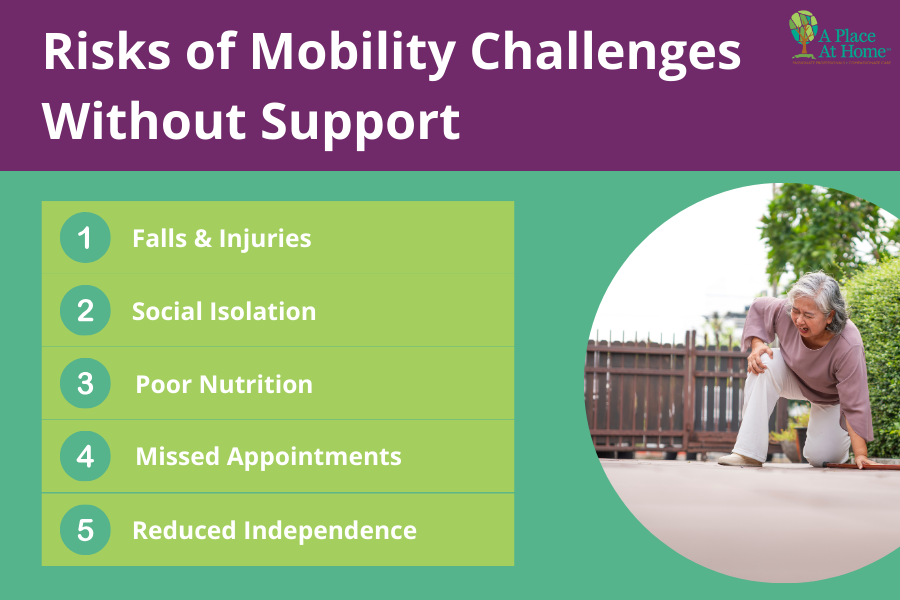
1. Falls and Injuries

Falls are the leading cause of injury among older adults. According to the CDC, 1 in 3 seniors fall each year, increasing the probability of more falls in the future. Without proper assistance, unsafe transfers and unsteady walking can quickly lead to ER visits or hospitalization.

2. Social Isolation

Limited mobility often reduces a senior’s ability to leave the home, see friends, or participate in activities they enjoy.

3. Poor Nutrition and Health Decline

When cooking, shopping, or moving around the kitchen becomes difficult, seniors may skip meals or rely on unhealthy options.

4. Missed Medical Appointments

Difficulty getting to doctor visits leads to untreated conditions and delayed care.

5. Reduced Independence

Fear of falling or difficulty moving often causes seniors to rely more heavily on others or attempt unsafe movements alone.

Home care counters these risks by providing consistent, preventive support.

Senior Fall Challenges

How Home Care Helps Seniors with Mobility Challenges

In-home care services are designed to keep seniors safe, comfortable, and active at home. Professional caregivers provide hands-on assistance that reduces fall risk, improves daily functioning, and supports long-term independence.

Core Home Care Services That Improve Mobility and Safety

  • Assistance with Activities of Daily Living (ADLs): Bathing, dressing, grooming, toileting, and safe transferring.
  • Safe Transfer Assistance: Support with sitting, standing, getting out of bed, or moving from room to room.
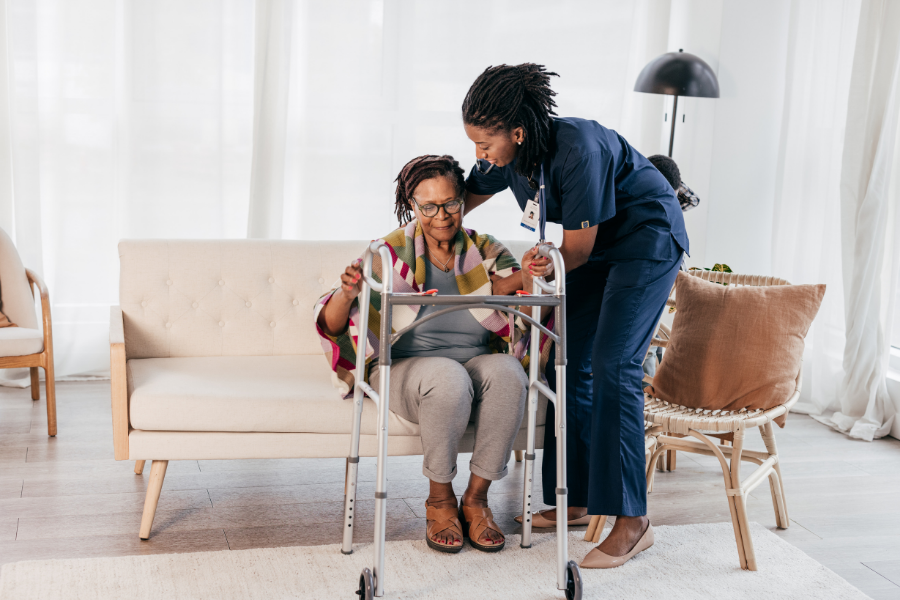
  • Mobility Support: Caregivers help seniors use canes, walkers, or mobility aids correctly and safely.
  • Light Strength and Range-of-Motion Exercises: Gentle movements such as seated leg lifts, shoulder rolls, and guided stretching improve flexibility and reduce stiffness.
  • Meal Preparation for Strength and Balance: Nutritious meals help maintain muscle mass and energy.
  • Home Safety & Fall Prevention: Caregivers clear pathways, remove clutter, and identify hazards that could cause a fall.
  • Monitoring Chronic Conditions: Caregivers observe mobility changes and notify families of early warning signs.
  • Medication Reminders: Helping seniors take medications on time to support health and stability.
  • Transportation & Errand Support: Getting to appointments, shopping trips, and community outings safely.
  • Assistance with Home Modifications: Recommending grab bars, improved lighting, nonslip mats, shower chairs, and other safety upgrades.

Home care makes daily life manageable and reduces the anxiety seniors often feel about moving around the home.

Signs It’s Time to Consider Home Care for Mobility Challenges

Families should consider home care when a senior with mobility challenges experiences frequent falls, fatigue upon moving, or difficulty with everyday tasks, such as climbing stairs or getting up. Observe the senior for indications of decreased strength, such as holding onto furniture for balance.

If mobility issues prevent the older person from participating in activities they once enjoyed, home care can provide the support they need to restart their hobbies and live a more fulfilling life. Difficulty walking is another sign that a mobility aid should be introduced to promote their independence.

How Home Care Supports Long-Term Aging in Place

Aging in place is a meaningful goal for many seniors. With the right support, even those with mobility challenges can remain at home safely for years. Home care helps by:

  • Reinforcing safe, proper use of mobility aids
  • Encouraging movement, exercise, and healthy routines
  • Reducing fall risks through daily supervision
  • Providing companionship to combat loneliness
  • Supporting healthy habits and balanced meals
  • Offering early detection of mobility changes
  • Creating a safer home environment tailored to the senior’s needs

A gradual decline in mobility is normal with aging, but sudden changes always require medical attention. Home care ensures seniors have the daily support needed to stay safe and engaged.

Fall Prevention Senior Home Care - A Place At Home

How Senior Home Care from A Place At Home Can Help

When the older adult in your life struggles with mobility, introduce quality senior home care from A Place At Home. We offer home care services that give the elderly the support they need to thrive. Our hands-on care promotes the physical, emotional, and social health of the elderly we serve.

In-home care services include transfer assistance to reduce the risk of falls and support mobility. Our fall prevention services identify hazards around the home and ensure their prompt removal. Home monitoring with regular safety inspections is included in all home care plans. Caregivers also help with personal care tasks, such as toileting, dressing, and bathing. We provide wellness monitoring and medication reminders to keep them on track with their health. Our continual observation catches health issues before they worsen and impact quality of life.

If someone you love is struggling with mobility challenges, now is the time to introduce supportive care. A Place At Home – Dublin, OH helps seniors stay safe, comfortable, and connected with the world around them.


Frequently Asked Questions (FAQs)

A senior should start using a mobility aid if they experience balance problems, frequent stumbling, difficulty standing up, or fear of falling. A caregiver or physical therapist can help determine the safest option.

Caregivers provide hands-on support, assistive devices, safe pathways through the home, strength-building exercises, and transportation to medical appointments. These steps reduce fall risk and support independence.

Common causes include muscle loss, arthritis, osteoporosis, chronic illnesses, previous injuries, lack of activity, and neurological conditions such as Parkinson’s or MS.