

Many families struggle with how to calm dementia patients at night, especially when seniors become confused, anxious, restless, or agitated during evening hours. Nighttime dementia agitation, often called sundowning, is common in seniors with Alzheimer’s disease and other forms of dementia and can lead to pacing, wandering, sleep disruption, irritability, and emotional distress, as well as dementia sleep problems that affect both seniors and caregivers.
Fortunately, there are several ways to help calm seniors with dementia at night. Creating a consistent evening routine, reducing stimulation, improving lighting, addressing physical discomfort, and using calm reassurance can all help reduce nighttime confusion and agitation. Understanding the causes of sundowning and recognizing early warning signs can also help caregivers respond before behaviors escalate.
In this article, we will discuss why dementia patients often become agitated at night, the early warning signs of nighttime agitation, and immediate steps you can take to help calm a loved one.
Quick Takeaways: Understanding Sundowning in Dementia
Sundowning is a common dementia-related pattern that affects mood, behavior, and cognition in the late afternoon and evening, often requiring consistent support strategies.
- Sundowning symptoms: Sundowning can cause confusion, agitation, anxiety, and restlessness during evening hours
- Sleep-wake disruption: Dementia can interfere with the brain’s circadian rhythm, increasing nighttime confusion and disorientation
- Calming communication: Gentle reassurance, patient responses, and simple redirection can help ease nighttime distress
- Environmental adjustments: Reducing noise, improving lighting, and maintaining a consistent bedtime routine may help prevent symptoms
- Safety monitoring: Some individuals may require supervision at night if wandering or safety risks become a concern
- Professional support: In-home dementia care can provide overnight assistance, companionship, and continuous safety monitoring
Why Dementia Patients Become Agitated at Night
It is important to understand why seniors with dementia often become more agitated at night and how to respond appropriately so the situation does not escalate further. Nighttime confusion and restlessness are common symptoms of dementia and are often linked to a condition known as sundowning. Understanding the causes and triggers behind these behaviors can help caregivers provide comfort, reduce stress, and create a calmer nighttime environment.
What Is Sundowning and Why Does It Happen?
Sundowning refers to increased confusion, restlessness, irritability, anxiety, or agitation that occurs in the late afternoon or evening hours as daylight fades. Many dementia patients become more unsettled at this time due to mental and physical exhaustion that builds throughout the day. Reduced lighting, changes in routine, hunger, or overstimulation can also contribute to sundowning symptoms.
According to the Alzheimer’s Association, Alzheimer’s sundown syndrome may also contribute to increased dementia anxiety at night, confusion, and senior nighttime wandering behaviors.
Brain Changes That Disrupt Sleep-Wake Cycles
Dementia can affect the parts of the brain responsible for regulating the body’s internal clock and sleep-wake cycle. As a result, seniors may become confused about the time of day, struggle to fall asleep, or wake frequently during the night. Establishing a consistent daily routine, limiting caffeine, encouraging physical activity during the day, and increasing exposure to natural sunlight may help support healthier sleep patterns and reduce elderly sleep disturbances.
The National Institute on Aging also notes that dementia-related changes in the brain can contribute to sleep disturbances, nighttime confusion in elderly adults, and irregular circadian rhythms.
Common Nighttime Behaviors in Seniors with Dementia
Seniors with dementia may display several challenging behaviors at night, including confusion, pacing, wandering, agitation, repetitive movements, hallucinations, and other dementia behavioral disturbances that often worsen during late-stage dementia symptoms. Some individuals may become fearful or anxious in the dark, while others may have difficulty recognizing familiar surroundings or loved ones during nighttime hours.
Triggers That Can Worsen Nighttime Dementia Agitation
Several factors can increase nighttime agitation in dementia patients. Common triggers include fatigue, overstimulation, loud noises, unfamiliar surroundings, shadows, poor lighting, hunger, pain, or changes in routine. Identifying and minimizing these triggers can help create a more calming and supportive environment for your loved one.
Caregivers should also monitor for infections, medication interactions, constipation, or untreated pain, as these issues can worsen calming dementia behaviors and increase nighttime confusion. The Mayo Clinic also notes that underlying medical issues, such as pain, infection, or medication side effects, can worsen dementia-related agitation.
Early Warning Signs of Nighttime Dementia Agitation
Recognizing the early warning signs of nighttime dementia agitation can help caregivers intervene before the situation escalates. Many seniors begin showing subtle behavioral changes in the late afternoon or early evening, especially if they are experiencing sundowning. Identifying these signs early can make it easier to calm and comfort your loved one before severe confusion or agitation develops.
Some common early warning signs of nighttime dementia agitation include:
- Increased restlessness or pacing during the afternoon or evening hours
- Growing confusion about the time of day, their surroundings, or familiar people as the sun begins to set
- Repeatedly asking the same questions or forgetting answers shortly after receiving them
- Irritability, frustration, or mood changes without an obvious cause
- Difficulty falling asleep or staying asleep due to disruptions in their natural sleep-wake cycle
- Increased anxiety, nervousness, or clinginess during nighttime hours
- Becoming overwhelmed more easily by noise, activity, or changes in routine
Paying close attention to these early behaviors can help caregivers respond with reassurance, calming routines, and environmental adjustments that may reduce nighttime agitation and improve sleep quality. Families dealing with frequent nighttime dementia agitation may also benefit from professional memory care support or overnight dementia care services.
How to Calm a Senior with Dementia at Night
Knowing how to respond when a loved one with dementia becomes agitated at night is extremely important. The way caregivers react can either help calm the situation or unintentionally increase fear and confusion. Remaining patient, reassuring, and attentive to their needs can help reduce nighttime stress and create a greater sense of comfort and security.
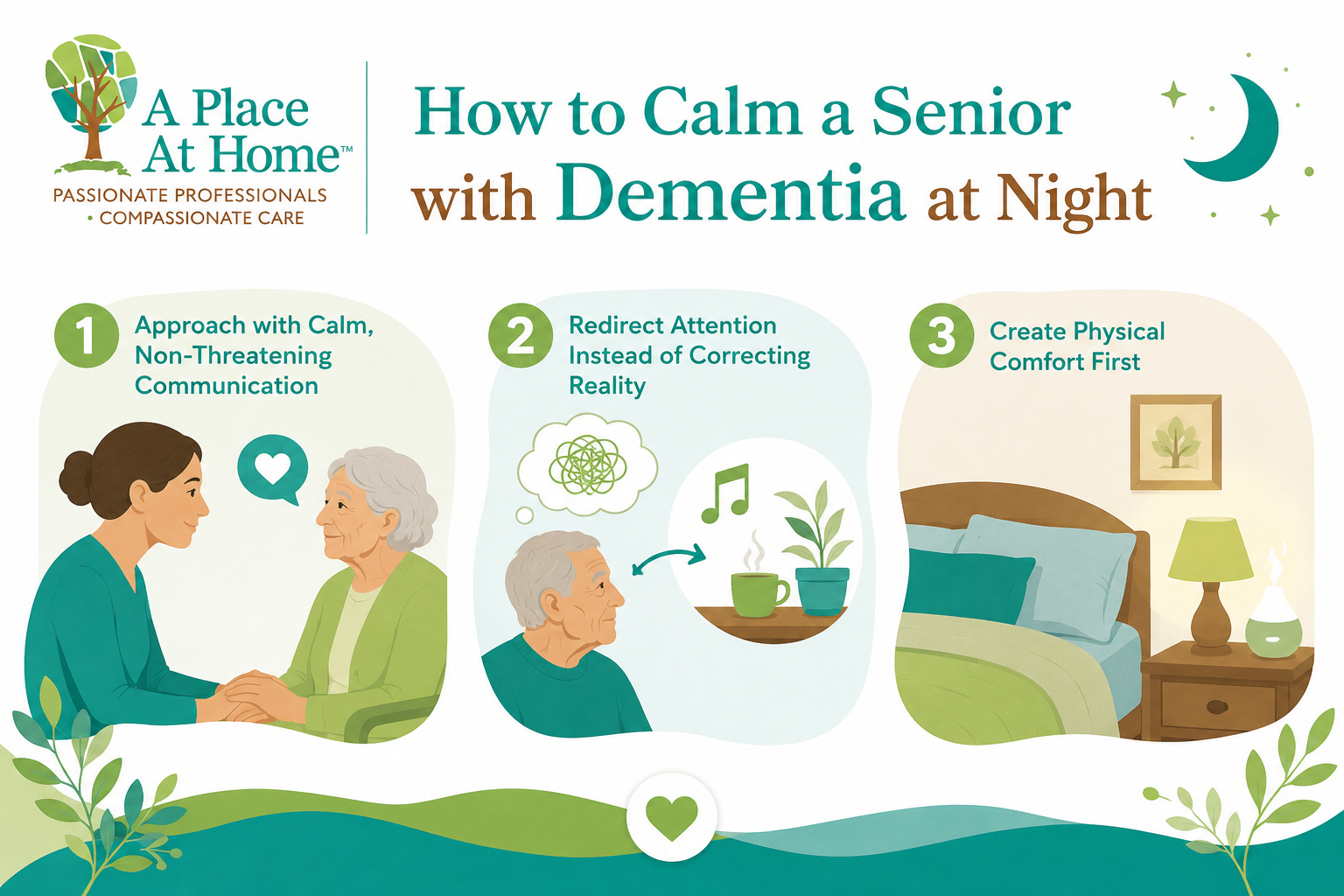
Here are some immediate steps you can take to help calm a dementia patient at night:
1. Approach with Calm, Non-Threatening Communication
Speak in a soft, calm, and steady voice while maintaining a relaxed demeanor. Avoid arguing, raising your voice, or trying to force them to understand reality, as this can increase agitation and anxiety. Use short, simple sentences that are easy to follow, and offer reassurance whenever possible. Sometimes, a calm tone and gentle presence are more effective than lengthy explanations.
2. Redirect Attention Instead of Correcting Reality
Rather than correcting your loved one or challenging what they believe is happening, try gently redirecting their attention to something comforting or familiar. Engaging them in a calming activity, talking about pleasant memories, listening to soft music, or offering a favorite blanket or object can help shift their focus away from distressing thoughts or confusion.
3. Create Physical Comfort First
Nighttime agitation can sometimes stem from unmet physical needs. Check to see if your loved one may be hungry, thirsty, too hot, too cold, in pain, or in need of the restroom. Addressing these basic comfort needs first can often help reduce irritability and restlessness quickly. Also, make sure the room is quiet, comfortable, and free from anything that may cause additional stress or confusion.
Caregivers searching for dementia caregiving tips should also focus on maintaining a calm tone, limiting overstimulation, and avoiding sudden environmental changes that may increase dementia anxiety at night.
Common Nighttime Dementia Behaviors and How to Respond
| Common Nighttime Dementia Behaviors | Possible Cause | How Caregivers Can Help |
|---|---|---|
| Pacing | Anxiety or confusion | Use calm reassurance and gentle redirection |
| Wandering | Disorientation or restlessness | Install door alarms and provide supervision |
| Repetitive questions | Memory impairment | Offer patient reassurance and simple answers |
| Agitation | Overstimulation or discomfort | Reduce noise and check physical needs |
| Hallucinations | Dementia progression | Stay calm and avoid arguing |
Best Ways to Reduce Nighttime Dementia Agitation
Although nighttime agitation and sundowning are common among seniors with dementia, certain environmental adjustments can help create a calmer atmosphere and support better sleep. A peaceful, familiar, and structured environment can significantly reduce confusion, anxiety, and restlessness during the evening hours.
Here are several ways to help reduce nighttime agitation through environmental changes:
Adjust the Lighting
Lighting can have a major impact on mood and sleep patterns for individuals with dementia. Using soft, dim lighting in the evening can help mimic a natural sunset and signal that it is time to relax and prepare for sleep. Avoid overly bright lights or dark shadows, as sudden changes in lighting may increase confusion or fear.
Reduce Noise and Stimulation
Too much noise or activity in the evening can become overwhelming and worsen agitation. Lower background noise by turning off televisions, loud appliances, or unnecessary electronics before bedtime. Soft music, calming nature sounds, or a white noise machine may help create a more soothing environment. Earplugs or soundproofing can also help block outside traffic or household sounds that may disturb sleep.
Maintain a Consistent Evening Routine
Consistency is very important for seniors with dementia. Keeping meals, medications, activities, and bedtime on the same schedule each day, including weekends, can help reduce confusion and provide a sense of stability and comfort.
Address Common Triggers
Certain triggers can make nighttime agitation worse. Limit caffeine intake in the afternoon and evening to help prevent restlessness and sleep disruption. It is also important to make sure your loved one’s basic needs are met, including hunger, thirst, pain management, and restroom use, before bedtime.
Encourage Exposure to Natural Light and Nature
Spending time outdoors during the day or near natural sunlight can help regulate the body’s internal clock and improve sleep-wake cycles. Exposure to gardens, fresh air, and calming outdoor environments may also help reduce stress and agitation.
Keep the Environment Familiar and Comforting
Familiar surroundings can provide reassurance and reduce anxiety at night. Keep meaningful items nearby, such as family photos, favorite blankets, pillows, or cherished objects that help your loved one feel safe, calm, and comfortable in their environment.
Additional dementia safety risks may include poor nighttime visibility, cluttered walkways, and overstimulating television or screen time before bed.
How to Prevent Sundowning in Dementia Patients
Sundowning is a common symptom associated with Alzheimer’s disease and other forms of dementia that can cause increased confusion, anxiety, agitation, and restlessness during the late afternoon and evening hours. Establishing calming evening habits and maintaining a structured routine can help reduce these symptoms and create a more peaceful nighttime experience for your loved one.
Here are several effective evening routine strategies that may help prevent sundowning episodes:
- Maintain a Predictable Schedule: Consistency can help regulate the body’s internal clock and reduce confusion. Try to keep meals, medications, activities, and bedtime at the same time each day. A predictable routine helps seniors with dementia feel more secure and comfortable, especially during the evening hours.
- Encourage Exposure to Natural Light: Exposure to sunlight during the day can help support a healthy circadian rhythm and improve sleep patterns. Open curtains during the day, spend time outdoors when possible, and use soft, calming lighting in the evening to help signal that it is time to wind down.
- Create a Calm Wind-Down Period: Begin transitioning into a quieter and more relaxing environment a few hours before bedtime. Gentle activities such as listening to soft music, reading together, looking through family photos, or playing calming nature sounds can help reduce stress and overstimulation before nighttime agitation begins.
- Limit Evening Stimulation: Avoid caffeine, nicotine, and alcohol later in the day, as these substances may increase restlessness and interfere with sleep. It is also helpful to reduce loud noises, bright screens, and overly stimulating activities during the evening hours.
- Keep the Home Familiar and Comfortable: A familiar environment can help reduce anxiety and confusion. Keep favorite blankets, family photos, soothing scents, or comforting music nearby to create a sense of security and relaxation before bed.
- Address Physical Needs Before Bedtime: Make sure your loved one’s basic needs are met before they go to sleep. Offering a light snack, helping them use the restroom, adjusting room temperature, and ensuring they are physically comfortable can help minimize nighttime disruptions and agitation.
- Monitor and Record Potential Triggers: Keeping a journal of behaviors, routines, meals, and environmental factors may help identify patterns that contribute to sundowning episodes. Tracking triggers can make it easier to adjust routines and create strategies that better support your loved one’s needs.
- Seek Professional Support When Needed: If sundowning becomes severe, frequent, or difficult to manage, consider speaking with a dementia specialist or professional caregiver. Experienced dementia care providers can help develop personalized strategies to reduce nighttime agitation and improve overall quality of life for both seniors and their families.
Safety Considerations for Nighttime Dementia Care
Safety is one of the most important concerns when caring for a senior with dementia at night. Confusion, poor visibility, restlessness, and wandering behaviors can increase the risk of falls, injuries, or leaving the home unsafe during nighttime hours. Taking proactive safety measures can help protect your loved one while also providing greater peace of mind for caregivers and family members.
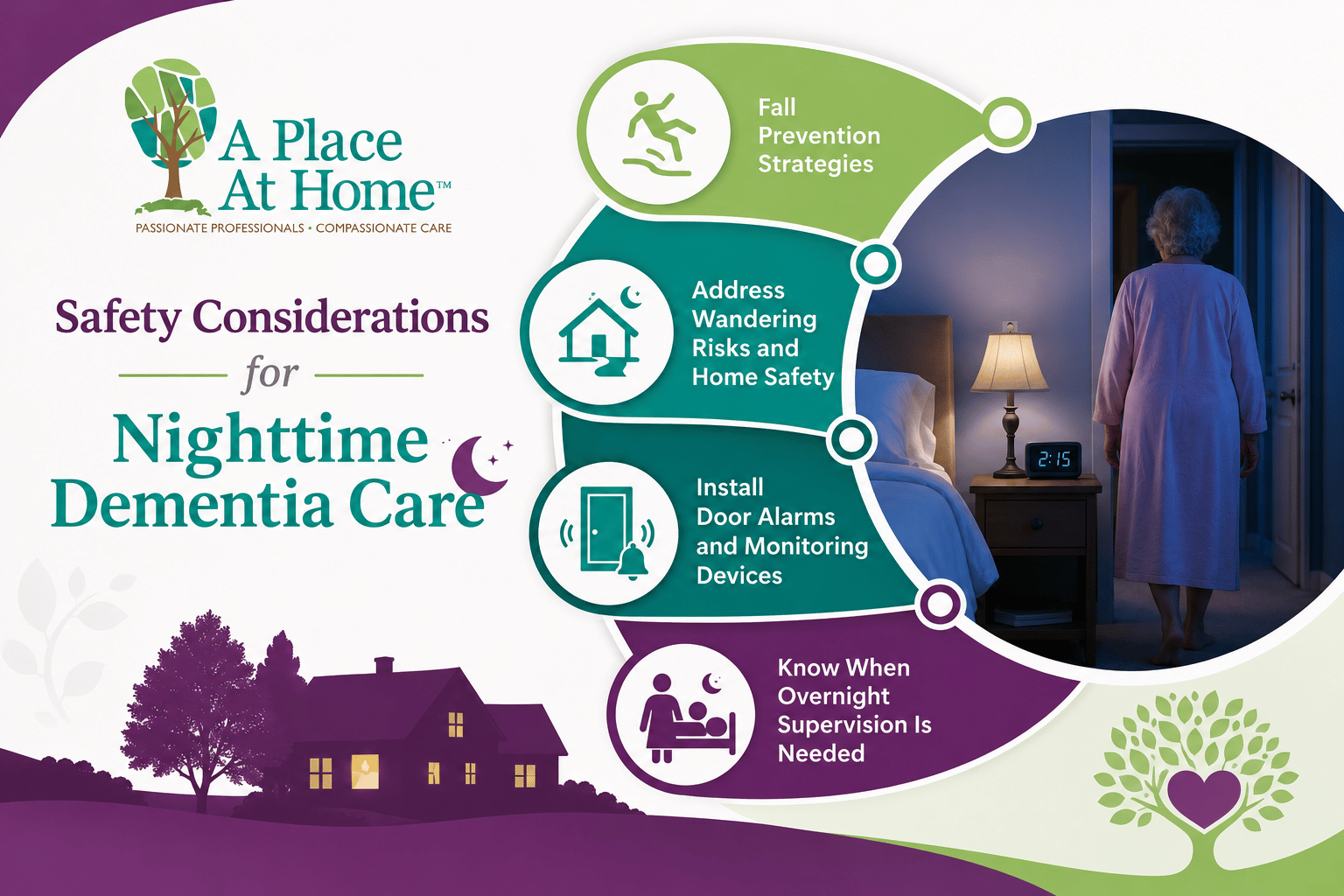
Here are several important safety considerations for nighttime dementia care:
Fall Prevention Strategies
Falls are a major risk for seniors with dementia, especially at night when visibility is lower and confusion may increase. Keep walkways, hallways, and bedrooms free of clutter or tripping hazards. Make sure frequently used areas of the home are well-lit, including stairways, bathrooms, and paths leading to the bedroom. Nightlights, non-slip rugs, grab bars, and sturdy handrails can also help reduce the risk of falls and injuries.
Address Wandering Risks and Home Safety
Many dementia patients are prone to wandering, particularly during episodes of sundowning or nighttime confusion. If your loved one is at risk of leaving the home unattended, it is important to have safety measures in place. Secure doors and windows, consider childproof or dementia-safe locks, and create a home environment that limits access to potentially dangerous areas.
Install Door Alarms and Monitoring Devices
Door alarms, motion sensors, and home monitoring systems can alert caregivers if a loved one begins wandering during the night. Cameras or monitoring devices may also provide added reassurance and allow caregivers to respond quickly if assistance is needed. These tools can be especially helpful for family members who are unable to supervise their loved one every moment overnight.
Know When Overnight Supervision Is Needed
As dementia progresses, some seniors may require overnight supervision to remain safe. If your loved one frequently wanders, experiences severe nighttime agitation, has trouble recognizing their surroundings, or engages in unsafe behaviors, overnight care from a family member or professional caregiver may become necessary. Having overnight support can help ensure immediate assistance is available while also reducing stress for family caregivers.
When to Consider Professional In-Home Dementia Care
Professional in-home dementia care can provide valuable support for seniors while allowing them to remain in the comfort and familiarity of their own home. As dementia progresses, daily care needs often become more challenging for family members to manage alone. Recognizing the signs that additional support is needed can help improve your loved one’s safety, comfort, and overall quality of life while also reducing stress for family caregivers.
Here are some common signs that it may be time to consider professional in-home dementia care:
- Increasing Safety Concerns: Safety issues are often one of the first signs that additional care may be necessary. Seniors with dementia may experience frequent falls, wandering, leaving the home unsupervised, or becoming lost in familiar places. They may also struggle with safely preparing meals, using appliances, or recognizing potential dangers within the home.
- Decline in Daily Functioning: As dementia advances, everyday tasks can become increasingly difficult. Your loved one may need assistance with dressing, bathing, grooming, eating, using the restroom, or managing medications. Mobility and balance issues may also increase the risk of falls and injuries, making daily supervision more important.
- Changes in Communication and Behavior: Seniors with dementia may begin showing noticeable changes in communication, mood, and behavior. This can include increased agitation, aggression, anxiety, confusion, withdrawal, or difficulty expressing thoughts and needs clearly. Professional caregivers trained in dementia care can provide calming support and effective communication strategies.
- Caregiver Burnout: Caring for a loved one with dementia can be physically and emotionally exhausting for family members. If caregivers are feeling overwhelmed, constantly stressed, sleep-deprived, or unable to keep up with caregiving responsibilities, professional in-home support can provide much-needed relief and help prevent burnout.
- Frequent Health Crises or Hospitalizations: Repeated emergency room visits, infections, falls, or hospital stays may indicate that your loved one requires more consistent care and supervision. In-home caregivers can assist with post-hospital recovery, medication reminders, mobility support, and monitoring for changes in health or behavior.
- Decline in Emotional Well-Being: Seniors with dementia may experience loneliness, anxiety, depression, or fear, especially if they spend long periods alone. Professional caregivers can provide companionship, emotional reassurance, social interaction, and engaging activities that help improve overall emotional well-being and reduce feelings of isolation.
How Professional Caregivers Help Reduce Nighttime Dementia Episodes
Professional caregivers play an important role in helping prevent and manage nighttime dementia episodes. Through structured routines, calming techniques, safety measures, and personalized support, trained caregivers can help reduce confusion, agitation, wandering, and sleep disturbances that often occur at night in seniors with dementia.
Here are several ways professional caregivers help reduce nighttime dementia episodes:
- Structuring the Day to Support Better Sleep: Professional caregivers help establish consistent daytime routines that encourage healthier sleep patterns at night. This may include maintaining regular meal times, encouraging light exercise or physical activity, providing engaging daytime activities, and limiting long naps that may interfere with nighttime sleep.
- Supporting Healthy Circadian Rhythms: Caregivers can help regulate the body’s internal clock by encouraging exposure to natural sunlight during the day or using light therapy when appropriate. Maintaining proper light exposure during daytime hours can help improve sleep-wake cycles and reduce nighttime confusion and restlessness.
- Creating a Calm and Safe Sleep Environment: A quiet, organized, and comfortable bedroom environment can help seniors feel more relaxed and secure at night. Professional caregivers may help reduce clutter, improve lighting, remove fall hazards, and implement safety tools such as bed exit alarms, door chimes, or secured windows and doors to reduce wandering risks.
- Addressing Physical and Emotional Triggers: Nighttime agitation is often triggered by unmet physical or emotional needs. Caregivers monitor for signs of pain, hunger, thirst, discomfort, anxiety, or the need to use the restroom. By addressing these issues promptly, caregivers can help reduce nighttime awakenings and prevent agitation from escalating.
- Using Technology for Safety and Monitoring: Professional caregivers may recommend or use monitoring tools that improve nighttime safety for seniors with dementia. Devices such as GPS trackers, wearable alert systems, motion sensors, or pressure-sensitive bed pads can help detect wandering or sudden movement and allow caregivers to respond quickly if assistance is needed.
- Using Calming Techniques and Gentle Redirection: When nighttime confusion or agitation occurs, professional caregivers are trained to respond calmly and compassionately. They use reassurance, redirection, memory cues, and soothing communication techniques to help seniors feel safe and regain a sense of comfort and orientation without creating additional stress or fear.

Compassionate Overnight Dementia Care in Dublin
If your loved one struggles with nighttime dementia agitation, wandering, confusion, or sundowning symptoms, professional overnight dementia care can provide safety, comfort, and peace of mind.
At A Place At Home – Dublin, our trained caregivers provide personalized Alzheimer’s and dementia home care services designed to help seniors remain safe and comfortable at home, even during challenging nighttime hours. From overnight supervision and companionship to assistance with daily routines and dementia-specific support, our caregivers are here to help families navigate every stage of memory care with compassion and professionalism.
Whether your loved one needs companionship, overnight supervision, assistance with daily activities, or specialized dementia support, A Place At Home – Dublin’s Alzheimer’s and dementia care services can help improve their quality of life while giving family caregivers much-needed peace of mind.
* Seniors experiencing severe nighttime confusion, wandering, or behavioral changes should be evaluated by a healthcare professional, as symptoms may worsen due to infections, medication side effects, dehydration, or underlying medical conditions.
Frequently Asked Questions
What causes sundowning in people with dementia?
Sundowning is believed to be caused by a combination of brain changes from dementia, disruption of the circadian rhythm, fatigue, and environmental factors such as reduced lighting in the evening. As dementia progresses, the brain has more difficulty processing time, surroundings, and sensory input, which can lead to increased confusion and agitation later in the day.
How does dementia affect the sleep-wake cycle?
Dementia can damage areas of the brain responsible for regulating circadian rhythms, which control when a person feels awake or sleepy. This disruption often leads to fragmented sleep, daytime sleepiness, nighttime wakefulness, and increased confusion during evening hours.
Why do dementia symptoms worsen in the evening?
Symptoms often worsen in the evening due to a combination of mental fatigue, reduced environmental stimulation, shadows or low lighting, and changes in routine. As the day progresses, individuals with dementia may become less able to cope with stressors, which can increase agitation and confusion.
What are the behavioral symptoms of sundowning?
Common behavioral symptoms include pacing, wandering, irritability, anxiety, agitation, restlessness, hallucinations, and repetitive questioning. These behaviors often appear or intensify in the late afternoon or evening and may continue into the night.
How is nighttime dementia agitation different from normal confusion?
Nighttime dementia agitation is more persistent, emotionally driven, and often triggered by internal brain changes rather than temporary disorientation. Unlike normal confusion, it is typically recurring, worsens over time, and is associated with cognitive decline and memory impairment.