

As we age, our bodies process and absorb nutrients differently. Appetite often decreases, digestion slows, and certain medications can interfere with nutrient absorption. Because of these changes, many seniors unknowingly develop deficiencies that can impact energy, bone health, cognitive function, and overall well-being. These changes are often some of the first signs families notice when a loved one begins to need additional support at home.
Among the most common nutrient deficiencies in older adults are vitamin D, vitamin B12, calcium, magnesium, protein, and potassium, all key to maintaining strength, immunity, and independence. In this guide, we’ll explore why these deficiencies happen, the warning signs to watch for, and how seniors can stay nutritionally balanced.
What Nutrients Are the Elderly Most Commonly Lacking?
Older adults are most commonly deficient in:
- Vitamin D – supports bone strength and immune health
- Vitamin B12 – essential for brain and nerve function
- Calcium – helps maintain bone density
- Magnesium – supports muscle and heart function
- Protein – preserves muscle mass and strength
- Potassium – regulates blood pressure and heart health
These deficiencies are often caused by reduced appetite, changes in digestion, medications, chronic conditions, and limited sun exposure.
Why Seniors Are at Higher Risk for Nutrient Deficiencies
As the body ages, several natural changes increase the risk of nutrient deficiencies, even when eating habits seem normal. Understanding these root causes is key to preventing long-term health issues.
Reduced Appetite and Calorie Intake
Many seniors experience a decrease in appetite due to changes in taste, smell, or digestion. This often leads to lower food intake and fewer essential nutrients.
Changes in Nutrient Absorption
The stomach produces less acid with age, making it harder to absorb nutrients like vitamin B12 and calcium. The body also becomes less efficient at processing nutrients overall.
Medication Interactions
Common medications such as antacids, diuretics, and blood pressure drugs can interfere with nutrient absorption or increase nutrient loss.
Chronic Health Conditions
Conditions like diabetes, kidney disease, and digestive disorders can affect how nutrients are absorbed and used by the body.
Limited Mobility or Food Access
Difficulty shopping or cooking can lead to reliance on processed or low-nutrient foods, increasing the risk of deficiencies. Having help with daily routines, including grocery shopping and meal preparation, can make a meaningful difference.

Most Common Nutrient Deficiencies in Seniors
Even with a balanced diet, many older adults fall short on certain key nutrients that are critical for bone health, energy, and overall wellness. The following are the nutrients seniors most commonly lack, including what they do for the body, why they’re important, and the potential health consequences when intake is insufficient.
Vitamin D
According to the National Institutes of Health (NIH), older adults are at higher risk of vitamin D deficiency due to reduced skin synthesis and limited sun exposure.
Why it matters: Supports bone strength, immune function, and muscle health
Why seniors lack it: Reduced sun exposure and decreased skin synthesis
Signs of deficiency: Fatigue, bone pain, frequent illness, muscle weakness
Recommended intake: 800–1,000 IU daily (or as advised by a doctor)
Best sources: Salmon, mackerel, fortified dairy, egg yolks
Vitamin B12
Why it matters: Supports brain health, nerve function, and red blood cell production
Why seniors lack it: Lower stomach acid reduces absorption
Signs of deficiency: Memory issues, fatigue, numbness or tingling
High-risk groups: Adults over 60, vegetarians, those on acid-reducing medications
Recommended intake: 2.4 mcg daily
Best sources: Meat, dairy, fortified cereals
Calcium
Why it matters: Maintains bone density and reduces fracture risk
Why seniors lack it: Lower intake and reduced absorption
Signs of deficiency: Bone loss, increased fracture risk
Recommended intake: 1,200 mg daily (especially for women 50+)
Best sources: Dairy products, leafy greens, fortified foods
Magnesium
Why it matters: Supports muscle, nerve, and heart function
Why seniors lack it: Poor diet, medications, and chronic conditions
Signs of deficiency: Muscle cramps, fatigue, irregular heartbeat
Recommended intake: 320–420 mg daily
Best sources: Nuts, seeds, whole grains
Protein
Why it matters: Preserves muscle mass and prevents weakness
Why seniors lack it: Reduced appetite, chewing difficulty, dietary habits
Signs of deficiency: Muscle loss, fatigue, weight loss
Recommended intake: 1.0–1.2 g per kg of body weight
Best sources: Eggs, poultry, fish, beans, protein shakes
Potassium
Why it matters: Regulates blood pressure and supports heart health
Why seniors lack it: Low intake of fruits and vegetables
Signs of deficiency: Muscle cramps, weakness, irregular heartbeat
Recommended intake: 2,600–3,400 mg daily
Best sources: Bananas, potatoes, beans, leafy greens
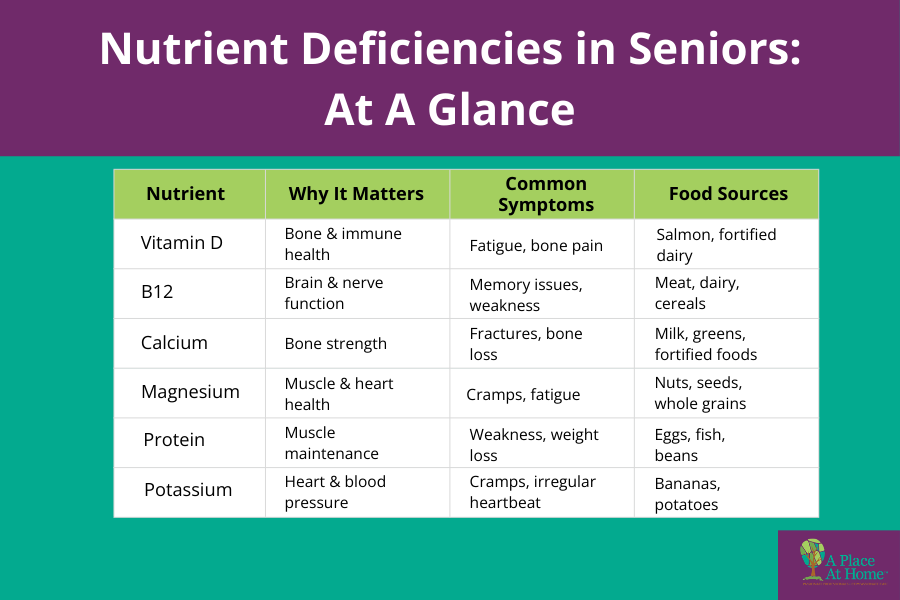
Nutrient Deficiencies in Seniors: At A Glance
The table below summarizes the most common nutrient deficiencies in seniors, including their symptoms and food sources.
Warning Signs of Nutrient Deficiencies in Older Adults
Nutrient deficiencies in seniors can develop gradually and may go unnoticed at first. Watch for these common warning signs:
- Unexplained fatigue: Feeling unusually tired despite adequate rest.
- Frequent falls: Loss of muscle strength or balance issues.
- Muscle weakness: Difficulty performing daily tasks or reduced mobility.
- Memory problems: Forgetfulness or trouble concentrating.
- Poor wound healing: Cuts or bruises that take longer than usual to heal.
- Loss of appetite: Reduced interest in eating or skipping meals regularly.
If you’re noticing these changes in a parent or loved one, it may be time to look beyond nutrition and evaluate their overall daily support needs.
Real-Life Signs Families Often Notice First
Family members often notice subtle changes before a diagnosis:
- Clothes fitting looser
- Less interest in meals
- Increased daytime sleeping
- Forgetting to eat or shop
- Declining strength or mobility
These early signs often point to underlying nutritional gaps.
Why Nutrient Deficiencies Are Dangerous for Seniors
Left unaddressed, nutrient deficiencies can lead to:
- Increased risk of falls and fractures
- Weakened immune system
- Cognitive decline
- Delayed recovery after illness
- Loss of independence
Proper nutrition plays a critical role in maintaining quality of life as we age.
How Seniors Can Prevent Nutritional Deficiencies
Maintaining proper nutrition becomes increasingly important with age, but it doesn’t have to be overwhelming. There are practical steps seniors can take to reduce the risk of deficiencies and support overall health.
Focus on Nutrient-Dense Meals
The U.S. Department of Agriculture’s Dietary Guidelines for Americans recommends focusing on nutrient-dense foods to meet daily vitamin and mineral needs as we age. Prioritize foods rich in protein, vitamins, and minerals at every meal. Incorporate items like lean meats, fish, eggs, dairy, whole grains, leafy greens, nuts, and beans. Smaller, frequent meals can also help seniors meet their nutrient needs, especially if appetite is reduced.
Consider Doctor-Recommended Supplements
Sometimes diet alone isn’t enough. Vitamin D, B12, calcium, magnesium, and protein supplements may be recommended by a healthcare provider to fill gaps. Always consult a doctor before starting any supplement routine.
Stay Hydrated
Dehydration can affect appetite, digestion, and overall nutrient absorption. Seniors should aim to drink water regularly throughout the day and include fluids from soups, teas, or hydrating fruits and vegetables.
Schedule Regular Health Screenings
Routine blood tests can identify nutrient deficiencies early. Monitoring vitamin levels, kidney function, and other key indicators helps seniors take action before minor deficiencies become serious health issues.
Get Help With Meal Preparation
Limited mobility, chronic conditions, or fatigue can make cooking and grocery shopping challenging. In-home care support can help seniors plan balanced meals, prepare nutrient-rich dishes, and ensure they’re eating enough each day, making it easier to stay healthy and independent.

Best Diet for Seniors to Prevent Deficiencies
A balanced senior diet should focus on nutrient-dense, whole foods, including:
- Lean proteins (fish, eggs, poultry)
- Fruits and vegetables
- Whole grains
- Dairy or fortified alternatives
- Healthy fats (nuts, seeds, olive oil)
Smaller, more frequent meals can help seniors meet their nutritional needs more easily.
When to Consider Professional Help
Sometimes, even with the best intentions, seniors may struggle to maintain proper nutrition on their own. Professional support can make a meaningful difference in these situations. Consider seeking help if you or a loved one experiences:
- Difficulty cooking: Challenges with meal preparation due to mobility issues, fatigue, or chronic conditions.
- Unintended weight loss: Losing weight without trying can be a sign of inadequate nutrition or underlying health issues.
- Forgetting meals: Skipping meals regularly, whether due to memory problems or routine changes, increases the risk of deficiencies.
- Recovery after hospitalization: Post-hospitalization recovery often requires extra nutrients to regain strength, support healing, and prevent complications.
Engaging professional caregivers or nutrition support services can ensure seniors receive balanced meals, proper supplementation, and consistent monitoring, helping them maintain health, energy, and independence.
Taking Action: Support for Seniors and Families
Recognizing and addressing nutrient deficiencies is an important step toward healthier aging. But sometimes, the challenges that come with preparing balanced meals, remembering to eat regularly, or managing recovery at home require a little extra help. If you’re noticing warning signs like unintended weight loss, skipped meals, or difficulty cooking, it might be time to consider professional support.
At A Place At Home – Dublin, our caregivers can assist with nutritious meal planning and preparation, medication reminders, encouragement around hydration and eating, safe mobility, and daily routines to help seniors stay comfortable, nourished, and independent in the place they love most. Comprehensive senior home care not only promotes better nutrition but also brings peace of mind to families.
For families in Central Ohio, A Place At Home – Dublin offers compassionate, personalized in‑home care designed to help older adults remain safe, healthy, and thriving at home. Whether you’re looking for a few hours of assistance each week or more regular care, connecting with a professional care provider can ensure your loved one gets the support they need to maintain good nutrition, health, and quality of life.
Contact A Place At Home – Dublin today to schedule a free in‑home consultation and learn how we can help your senior loved one stay nourished, supported, and independent.
Frequently Asked Questions (FAQs)
Why do seniors become deficient in nutrients?
Seniors are more likely to develop nutrient deficiencies due to decreased appetite, reduced nutrient absorption, chronic health conditions, and medications that interfere with how the body processes vitamins and minerals.
How do you know if an elderly person is malnourished?
Common signs of malnutrition in seniors include unintentional weight loss, fatigue, muscle weakness, poor appetite, frequent illness, and difficulty concentrating. These symptoms often develop gradually and may be overlooked without regular monitoring.
What is the most common vitamin deficiency in older adults?
The most common vitamin deficiencies in older adults are Vitamin D and Vitamin B12. Vitamin D deficiency is often caused by limited sun exposure, while B12 deficiency is linked to reduced stomach acid and absorption issues.
Can nutrient deficiencies cause memory problems in seniors?
Yes, deficiencies in nutrients like vitamin B12, vitamin D, and magnesium can contribute to memory problems, confusion, and cognitive decline. Proper nutrition plays an important role in maintaining brain health as we age.