
Yes, someone with dementia can live alone, but usually only in the early stage, before daily safety risks start to outweigh their ability to manage on their own. Most people need to stop living alone once they reach the moderate stage of the disease. Warning signs like wandering, medication mix-ups, missed meals, and unattended appliances signal that supervision, either with in-home care or a move, has become necessary.
Each situation still depends on the person, the home, and the support around them, because dementia doesn’t progress on a fixed schedule. Someone in the early stage may live safely at home for years with a few adjustments and regular check-ins. Someone else may need daily supervision within months of diagnosis. What follows is a practical guide to reading the signs, understanding where your loved one falls in the progression, and knowing what your options are, including options that don’t require leaving the home they love.
Warning Signs a Person with Dementia Can’t Live Alone
The clearest signals that living alone has become unsafe are specific, observable events, not vague impressions. If you can point to incidents like the ones below, it is time to act.
- Wandering or getting lost in familiar places: Your mother walks to the mailbox and ends up three blocks away, unsure how she got there. People with dementia who wander often leave without a phone, ID, or proper clothing, and many won’t ask a stranger for help. If this has happened even once, living alone is no longer safe.
- Appliances left on: The stove was left burning twice in one week. The faucet ran overnight. A scorched pan appeared in the trash with no explanation. Kitchen incidents are among the most dangerous warning signs because the consequences escalate from property damage to house fires.
- Medication mix-ups: You find a pill organizer with Tuesday full and Thursday empty on a Wednesday, or a prescription that should have run out two weeks ago that’s still half full. Double-dosing and missed doses both carry serious health risks, especially with blood pressure, diabetes, or heart medications.
- Missed meals and weight loss: The refrigerator holds expired food, groceries go untouched, and your loved one has visibly lost weight. People with dementia often forget to eat and drink, which leads to malnutrition and dehydration, and dehydration in turn worsens confusion.
- Falls, or near-falls, with no one there: Changes in depth perception, balance, and coordination make falls more likely, and a fall becomes an emergency when the person can’t remember how to call for help or becomes confused about what happened.
- Inability to respond to an emergency: Ask your loved one directly: “What would you do if you smelled smoke?” If they can’t walk you through calling 911 or getting out of the house, they should not be alone.
- Anxiety or agitation when alone: Pacing, repeated phone calls to family, fidgeting, or following you room to room when you visit (sometimes called shadowing) are signs that being alone has become frightening, not just risky. If agitation is already a regular occurrence, our guide on how to calm an agitated dementia patient at home covers practical strategies you can use in the moment.
One of these signs on its own warrants a conversation with a doctor. Two or more, or any single incident involving fire, wandering, or a fall, warrants immediate changes to the living situation.
What Stage of Dementia Means Someone Can’t Live Alone?
Living alone typically stops being safe in the moderate stage of dementia, which corresponds to stages 5 and 6 on the Global Deterioration Scale (GDS) that many physicians use. Here’s how the progression usually maps to independence:
- Early stage (GDS 2–3, sometimes 4): Many people in the early stage live alone successfully. Memory lapses are present, misplaced keys, a forgotten appointment, trouble finding words, but judgment and self-care remain largely intact. With supports like automatic bill pay, a medication reminder system, home-delivered meals, and daily check-in calls, independent living can continue for a while. This is also the window for legal and financial planning, while your loved one can still participate fully in decisions about their own future.
- Moderate stage (GDS 5–6): This is the turning point. In the moderate stage, people begin to need help choosing appropriate clothing, remembering their address or phone number, and managing daily routines. Confusion about time and place sets in and wandering risk rises sharply. A person at this stage generally should not be left alone for extended periods, and by the later part of the moderate stage, most need supervision around the clock. This supervision doesn’t have to mean a facility; for many families it means in-home care.
- Late stage (GDS 7): In the late stage, people need hands-on help with eating, bathing, toileting, and mobility. Twenty-four-hour care is required, whether provided by live-in caregivers at home or in a residential setting.
If you’re unsure where your loved one falls, a physician or a geriatric care manager can perform a formal assessment. Don’t rely on a good day during a short visit; dementia symptoms fluctuate, and people in the early and moderate stages often mask their difficulties convincingly for an hour at a time.
Is It Safe to Leave a Dementia Patient Alone for a Few Hours?
In the early stage, usually yes, with precautions in place. In the moderate stage and beyond, generally no.
If your loved one is still in the early stage and hasn’t shown any of the warning signs above, short periods alone are often fine, and a few precautions make them safer:
- Leave prepared meals that can be eaten cold or microwaved, so there’s no reason to use the stove
- Post emergency numbers in large print by the phone, with simple instructions on who to call
- Call or text at set times while you’re out, and ask a neighbor to check in
- Remove trip hazards like loose rugs and cluttered walkways, and add night lights and grab bars
- Consider a medical ID bracelet and, in Los Angeles County, register with your local law enforcement’s return-home program in case of wandering
The honest test is the emergency question. If your loved one can’t tell you, clearly and correctly, what they would do if the smoke alarm went off, then even “a few hours” is too long. And because dementia is progressive, an arrangement that’s safe this spring may not be safe by fall. Reassess every few months, and after any incident.
Alternatives to Moving: Can Someone with Dementia Stay in Their Own Home?
Yes, many people with dementia remain in their own homes well into the moderate stage, and sometimes through the end of life, with the right support in place. A move to memory care is one option, but it isn’t the only one, and for people whose sense of security depends on familiar rooms, familiar routines, and a familiar neighborhood, staying home often means less confusion and less distress.
- In-home dementia care: A professional caregiver comes to the home for scheduled shifts, anywhere from a few hours a week to 12-hour days, overnight coverage, or full live-in care. A trained dementia caregiver handles the exact risks on the warning-signs list: meal preparation so the stove stays off, medication reminders so doses aren’t missed or doubled, fall prevention, and a steady presence that eases the anxiety many people feel when alone. Care scales up as the disease progresses, which means your loved one doesn’t have to move each time their needs change.
- Monitoring technology: Motion sensors, door alarms, automatic stove shut-off devices, video check-in systems, and GPS wearables can extend the window of safe independence in the early stage. Technology works best as a supplement to human check-ins, not a replacement; a door alarm tells you Dad left the house at 2 a.m., but it doesn’t bring him home.
- A trial period of part-time support: Families often get stuck because the choice feels binary: total independence or a facility. It isn’t. Start with a caregiver three mornings a week and watch what changes. Is Mom eating better? Is the medication organizer right at the end of the week? Is she calmer? A trial period gives you real information instead of guesswork, and it introduces the idea of help gradually, which most people accept far more easily than an abrupt move. If needs grow, hours grow with them.
The families we work with at A Place At Home – Woodland Hills usually find that the earlier support starts, the smoother every later transition becomes, because a trusted caregiver is already part of the routine before the moderate stage makes everything harder.
How to Talk to a Parent with Dementia About Getting Help
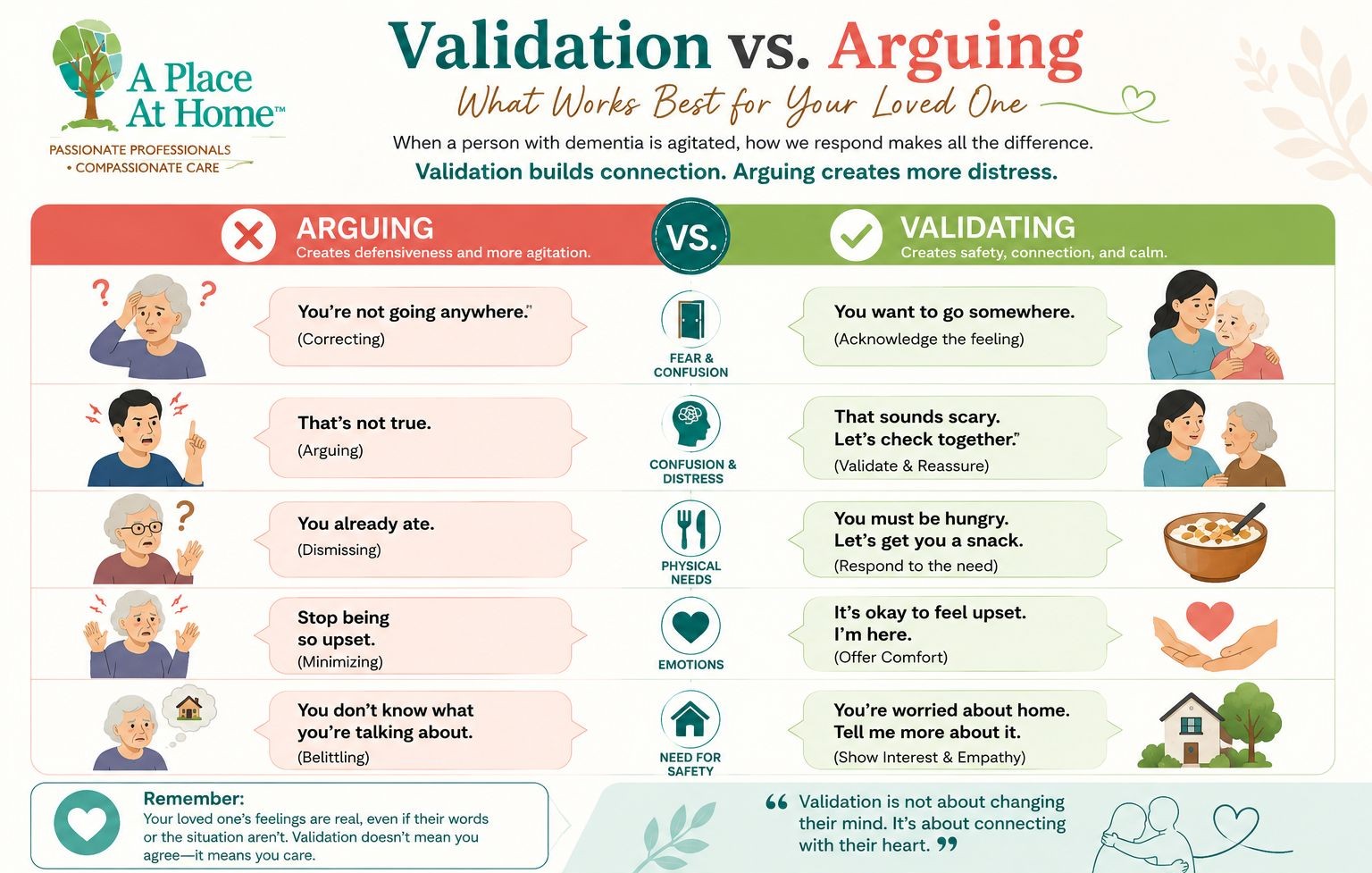
Start early, keep it small, and frame help as something that preserves independence rather than takes it away. This conversation should be handled delicately, and it rarely works as a single dramatic sit-down. It works as a series of small, respectful conversations, ideally started before a crisis forces the issue. A few things that help:
- Document what you’re seeing: Keep a simple dated log: “March 3, stove left on. March 11, missed appointment. March 15, lost driving home from the pharmacy.” A written record does three things: it shows you whether incidents are becoming more frequent, it gives the doctor concrete information instead of impressions, and it keeps the conversation grounded in specific events rather than accusations.
- Involve the doctor: People often accept from a physician what they resist from their children. Share your log with your parent’s doctor before the appointment (you can call or send a note even if privacy rules limit what they can tell you) and ask the doctor to raise the subject of in-home support directly.
- Bring in a neutral third party if needed: A geriatric care manager or an agency care coordinator can assess the home, the routines, and the risks without the emotional weight a family member carries. Sometimes the same recommendation lands differently coming from someone whose job it is to make it.
- Lead with their goals, not your fears: “I want you to be able to stay in this house” is a far better opening than “I’m worried you’re going to burn it down.” Position a caregiver as the thing that makes staying home possible, because that’s exactly what it is.
- Start with the least intrusive help: Housekeeping, meals, and a ride to appointments feel like a service, not a surrender. Personal care can come later, once trust is built.
00000
Alzheimer’s and Dementia Care at Home in Woodland Hills
If you’re seeing the warning signs in a parent or spouse, whether they’re in Woodland Hills, Encino, Sherman Oaks, Thousand Oaks, or anywhere in the South San Fernando Valley or Conejo Valley, you don’t have to figure out the next step alone. A Place At Home – Woodland Hills provides Alzheimer’s and dementia care built around familiar routines, emotional reassurance, and gentle guidance, from a few hours of support a week to overnight, 12-hour, and full 24-hour live-in care as needs progress.
Every care plan starts with a free in-home visit, where a care coordinator meets your loved one, learns their routines, and helps you honestly assess whether living alone is still safe, and what it would take to keep them safely at home. Call (818) 600-7683 or contact us online to schedule your visit.
FAQs
What stage of dementia means someone can’t live alone?
Living alone typically stops being safe in the moderate stage of dementia, corresponding to stages 5 and 6 on the Global Deterioration Scale. At this point, people often lose track of time and place, struggle to manage daily routines, and face a sharply higher risk of wandering. By the later part of the moderate stage, most people need supervision around the clock, though this can often be provided through in-home care rather than a move.
Is it safe to leave a dementia patient alone for a few hours?
In the early stage, usually yes, as long as a few precautions are in place, such as prepared meals, posted emergency numbers, and a scheduled check-in call. In the moderate stage and beyond, generally no. A good test is asking what they’d do if they smelled smoke; if they can’t answer clearly, even a few hours alone is too risky, and the arrangement should be reassessed.
What are the warning signs someone with dementia shouldn’t live alone?
The clearest warning signs include wandering or getting lost in familiar places, appliances left on, medication mix-ups, missed meals or weight loss, unexplained falls, and an inability to explain what they’d do in an emergency. One of these signs on its own warrants a conversation with a doctor. Two or more, or any single incident involving fire, wandering, or a fall, means the living situation needs to change right away.
Can someone with dementia stay in their own home instead of moving to memory care?
Yes, many people with dementia remain safely at home well into the moderate stage with the right support in place. Options include in-home dementia care, monitoring technology like door alarms and GPS wearables, and a trial period of part-time caregiver support to see what actually helps. Staying home often means less confusion and distress for someone whose sense of security depends on familiar rooms and routines.
How do I convince a parent with dementia to accept help?
Start early, keep the conversation small, and frame help as something that lets them stay home longer, not something that takes their independence away. Documenting specific incidents, involving their doctor, and starting with low-pressure help like housekeeping or rides to appointments all make the idea easier to accept. It usually takes several gentle conversations rather than one big talk, especially if you begin before a crisis forces the issue.