
Alzheimer's and Dementia Care in Woodland Hills, CA
Watching someone you love struggle to remember your name, lose track of conversations, or become confused in a home they’ve lived in for decades is one of the hardest things a family can face. If your parent or spouse has been diagnosed with Alzheimer’s disease or another form of dementia, you are probably looking for care that goes beyond basic supervision.
We provide professional in-home Alzheimer’s and dementia care throughout Woodland Hills, CA and the surrounding San Fernando Valley communities, including Calabasas, West Hills, Canoga Park, and Tarzana.
In-Home Memory Care in Woodland Hills, CA
For someone living with memory loss, the environment around them matters more than most people realize. A familiar home, a well-known neighborhood, the same chair by the same window, these details provide a quiet but powerful sense of orientation that no new facility can offer right away.
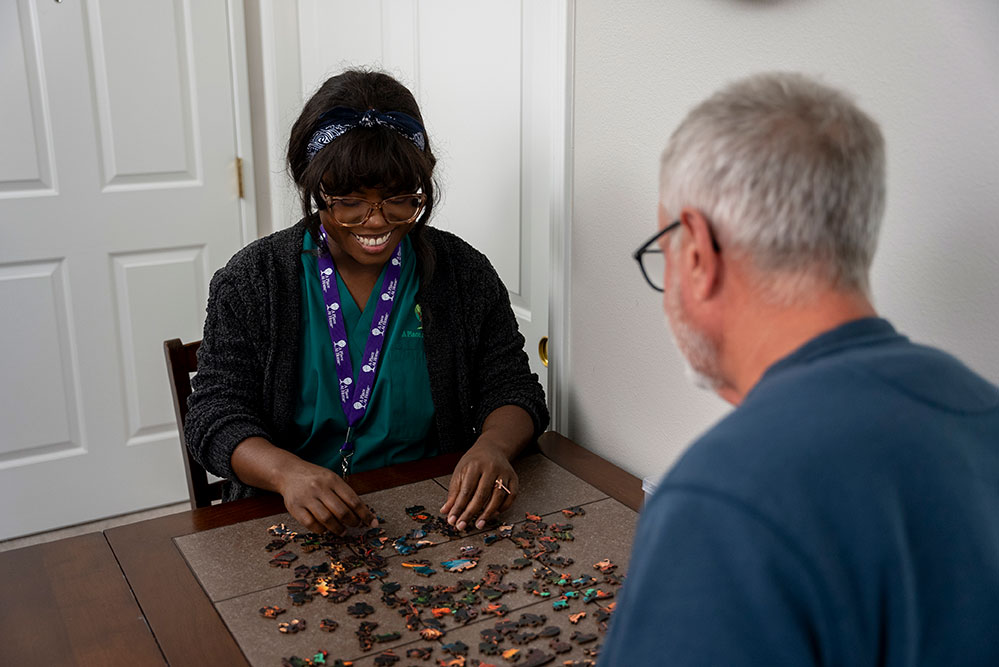
Our caregivers work one-on-one with your loved one in their own home, following their natural rhythms and building the kind of trust that takes time and consistency to develop. We create structure where it helps, offer gentle support when things get hard, and stay calm when the day does not go as planned. That kind of steady presence is what good memory care looks like in practice.
We serve families throughout Woodland Hills, CA and the San Fernando Valley. Whether your loved one needs a few hours of daily support or full-time care, we build a plan that fits their situation.
Why In Home Dementia Care is Important for Woodland Hills Seniors
Dementia is not a single condition. It is a term used to describe a range of cognitive changes that affect memory, reasoning, behavior, and the ability to manage everyday tasks. Alzheimer’s disease is the most common form, accounting for the majority of dementia diagnoses among older adults in the United States. Other types include vascular dementia, Lewy body dementia, and frontotemporal dementia.
All forms of dementia progress over time, though the pace and pattern vary from person to person. In the early stages, symptoms can be easy to overlook or explain away. As the condition advances, the level of care required grows considerably.
Signs that your loved one may need memory care support:
- Frequently misplacing items or losing track of recent events and conversations
- Getting confused in familiar environments or losing their sense of time and date
- Wandering or attempting to leave home, particularly in the late afternoon or evening
- Increased agitation, anxiety, or mood changes that seem to come on without clear cause
- Difficulty managing personal hygiene, meals, or medications without assistance
- Sundowning, which is the pattern of increased confusion and restlessness that often occurs as the day winds down
What Our Dementia Caregivers Actually Do
Memory care requires a different kind of attention than general home care. Our caregivers are trained in approaches that reduce anxiety and confusion rather than accidentally amplify them.
How we approach care:
- Arriving consistently so your loved one builds familiarity with their caregiver over time
- Maintaining structured daily routines because predictability reduces anxiety for someone with memory loss
- Using gentle redirection rather than confrontation when confusion or resistance arises
- Responding to sundowning and agitation with calmness and patience rather than alarm
- Monitoring for signs of change and communicating regularly with family members
What our caregivers help with day by day:
- Personal hygiene and grooming assistance
- Nutritious meal preparation suited to any dietary guidelines from the physician
- Medication reminders and monitoring to support health management
- Engagement activities that provide mental stimulation and a sense of purpose
- Transportation to local medical appointments, including providers at UCLA West Valley Medical Center and West Hills Hospital
- Wandering prevention and home safety supervision
- Overnight care and 24-hour support for families who need full-time coverage

Why Woodland Hills, CA Families Choose A Place at Home
Our owner’s mother lived with Alzheimer’s, and that experience is at the heart of why this company exists. It didn’t just inspire what we do, it shaped how we do it. We understand the challenges families face because we’ve walked that path ourselves, and that perspective guides the way we care for your loved one every day.
Here is what sets our care apart:
Genuine dementia training.
Our caregivers are not generalists assigned to memory care cases. They are trained in the specific behavioral and emotional dimensions of Alzheimer’s and related conditions, including how to manage difficult moments without escalating them.
Care built around the individual.
We take time at the start to understand your loved one’s routines, preferences, history, and personality. The care plan reflects who they are, not just what condition they have.
Consistent caregiver
For someone with memory loss, seeing the same face matters. We work hard to match caregivers thoughtfully and minimize turnover in your loved one’s care team.
Local and responsive
We are rooted in this community. Our team knows Woodland Hills, the surrounding neighborhoods, and the local healthcare landscape. When something comes up, we are easy to reach and quick to respond.
Alzheimer's and Dementia Care FAQs
General home care focuses on practical assistance with daily tasks. Alzheimer’s and dementia care goes further, addressing the behavioral, emotional, and cognitive dimensions of memory loss. Our caregivers are trained to recognize and respond to dementia-related behaviors in ways that support well-being rather than unintentionally increasing stress.
Yes. We coordinate with physicians, home health agencies, and other care providers to make sure our support is consistent with your loved one’s overall care plan.
We do. Our care is available seven days a week, and we offer overnight and around-the-clock care for families who need it.
We support families across all stages, from early memory loss where someone needs light supervision and companionship, through mid and late-stage dementia where more hands-on personal care and safety monitoring is needed around the clock.
For stage 1 and stage 2, in-home care is almost always the better choice. Familiar surroundings reduce confusion and help your loved one feel grounded in ways a new environment simply cannot replicate. A memory care facility becomes worth considering at stage 3 and beyond, when the level of medical supervision needed goes beyond what home care can safely provide.
Testimonials
Call Us for Alzheimer’s and Dementia Care in Woodland Hills, CA
If your family is navigating Alzheimer’s or dementia right now, we would welcome the chance to talk. We offer a free in-home assessment where we take time to understand your loved one, your family’s situation, and what kind of support would help. There is no pressure and no commitment required to have that conversation.
Contact us today to schedule your free consultation. We are here to help your family find a path forward that works.