
Warning Signs of Heat Stroke in the Elderly: What Every Caregiver Needs to Know

Warning Signs of Heat Stroke in the Elderly

If you care for an aging parent or loved one, summer is one of the most dangerous times of year. Heat stroke in the elderly can develop quickly, and the warning signs are not always obvious. Knowing what to watch for and how to respond can be the difference between a close call and a life-threatening emergency.

This guide covers the early warning signs of heat stroke in seniors, explains why older adults are at higher risk, walks through the two types of heat stroke, and compares heat stroke against heat exhaustion so you know exactly when to call 911.

Why Are Seniors at Higher Risk for Heat Stroke?

Adults over 65 face a significantly higher risk of heat stroke than younger people. Several age-related changes make the body less capable of handling extreme heat:

  • The body’s ability to sense and respond to rising temperatures slows down with age
  • Older adults sweat less efficiently, which reduces the body’s natural cooling ability
  • Chronic health conditions such as heart disease, diabetes, and kidney disease affect how the body handles heat stress
  • Common medications including diuretics, beta blockers, and certain blood pressure drugs interfere with fluid balance and temperature regulation
  • Many seniors live alone and may not realize how quickly conditions are becoming dangerous

Because of these factors, a senior can go from feeling warm to experiencing heat stroke much faster than a younger, healthier adult. Early recognition is everything.

What Are the Early Warning Signs of Heat Stroke in the Elderly?

One of the most important things to understand about heat stroke in seniors is that it does not always look the way you expect. Some older adults may not sweat heavily or even feel particularly hot. Watch closely for any of the following symptoms:

  • Body temperature of 104 degrees Fahrenheit or higher
  • Hot, flushed skin that may be dry rather than sweaty
  • Sudden confusion, disorientation, or unusual behavior
  • Irritability, agitation, or changes in mental status
  • Rapid heart rate or fast, shallow breathing
  • Severe headache
  • Nausea or vomiting
  • Reduced or absent thirst despite being in the heat
  • In severe cases, loss of consciousness or unresponsiveness

Any sudden change in mental status during hot weather should be treated as a medical emergency. Confusion and disorientation are among the earliest and most serious warning signs that the brain is being affected by overheating.
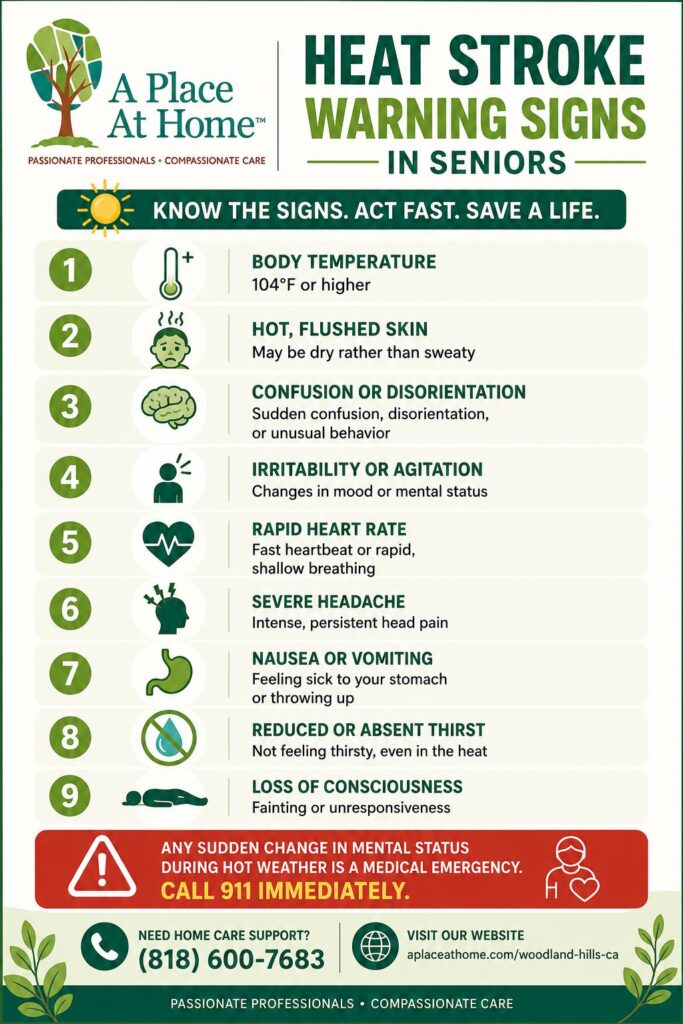
Heat stroke warning signs for seniors infographic

Heat Exhaustion vs Heat Stroke: What Is the Difference?

Heat exhaustion and heat stroke are both serious heat-related conditions, but they are not the same. Heat exhaustion is a warning stage. Heat stroke is a medical emergency. Here is how to tell them apart:

FeatureHeat ExhaustionHeat Stroke
Body TemperatureBelow 104°F104°F or higher
SweatingHeavy sweatingHot, dry skin (often no sweating)
Mental StatusNormal or mildly affectedConfusion, disorientation, or loss of consciousness
SkinPale, moistFlushed, red, dry
SeveritySerious but treatableLife-threatening emergency
Action RequiredMove to cool area, hydrateCall 911 immediately

If a senior is confused, has stopped sweating, or has a body temperature at or above 104 degrees Fahrenheit, do not wait. Call 911 immediately.

What Are the Two Types of Heat Stroke in Seniors?

There are two distinct types, and understanding the difference matters for caregivers.

Exertional Heat Stroke

This type occurs when the body generates more heat than it can release through physical activity. In seniors, this can happen during yard work, a long walk on a hot afternoon, or any outdoor activity without adequate rest and hydration. It tends to develop quickly.

Non-Exertional (Classic) Heat Stroke

This is the more common type in older adults. It develops gradually from prolonged exposure to high environmental temperatures, such as during a heat wave or in a home without air conditioning. The person does not need to be physically active for this type to become life-threatening.

Both types require immediate emergency medical attention. The distinction matters because classic heat stroke can catch caregivers off guard when a senior has simply been sitting inside a hot home for hours.

How to Treat Heat Stroke in an Elderly Person

If you suspect heat stroke, call 911 right away. While waiting for emergency help, begin cooling the person down immediately. Every minute matters.

  • Move them to a cool environment right away, preferably an air-conditioned room
  • Apply cool, damp cloths or ice packs to the neck, armpits, and groin area
  • Use a cool sponge bath or cool shower if the person can safely tolerate it
  • Remove excess or tight clothing to help the body release heat
  • If the person is conscious and able to swallow safely, offer water or an electrolyte drink
  • Do not give anything by mouth if they are confused, unresponsive, or unable to swallow

Even if the person begins to feel better, heat stroke always requires professional medical evaluation. Complications can develop hours later, including kidney damage, muscle breakdown, and organ failure.

How to Prevent Heat Stroke in Older Adults

Most cases of heat stroke in seniors are preventable. These steps can significantly reduce the risk during periods of extreme heat:

  • Keep the home cool, especially during afternoon peak heat hours, using air conditioning or fans
  • Encourage regular fluid intake throughout the day, even when thirst is absent
  • Dress in loose, lightweight, breathable fabrics such as cotton or linen
  • Apply broad-spectrum sunscreen of at least SPF 15 when outdoors and reapply every two hours
  • Avoid strenuous outdoor activities between 10 a.m. and 4 p.m.
  • Seek air-conditioned spaces such as libraries, malls, or community centers during heat waves
  • Never leave a senior alone in a parked car, even briefly, even with windows cracked
  • Review medications with a healthcare provider to understand which ones increase heat sensitivity
  • Check in on seniors who live alone at least once daily during hot weather

A professional in-home caregiver plays a direct role in heat stroke prevention. They can monitor hydration, encourage rest, watch for early warning signs, and ensure the home environment stays safe and cool throughout the summer months.

Frequently Asked Questions About Heat Stroke in the Elderly

What temperature is considered heat stroke in the elderly?

A body temperature of 104 degrees Fahrenheit (40 degrees Celsius) or higher is the clinical threshold for heat stroke. At this temperature, the body can no longer cool itself effectively and organ damage can begin quickly. Any reading at or above this level in a senior requires immediate emergency care.

What does heat stroke look like in seniors who do not sweat much?

This is one of the most dangerous aspects of heat stroke in older adults. Many seniors experience classic (non-exertional) heat stroke with hot, dry, flushed skin rather than heavy sweating. If a senior has red, dry skin and is confused or unusually lethargic in the heat, treat it as a heat stroke emergency even if they are not visibly sweating.

How quickly can heat stroke develop in an elderly person?

Heat stroke can develop within minutes in extreme conditions, or over several hours during prolonged exposure to a hot indoor environment. Seniors are especially vulnerable because their bodies adapt to temperature changes more slowly. A senior sitting in a poorly ventilated room during a heat wave can develop heat stroke without any physical exertion.

Which medications increase heat stroke risk in seniors?

Several common medications reduce the body’s ability to regulate heat. These include diuretics (water pills), beta blockers, ACE inhibitors, antipsychotics, antihistamines, and certain antidepressants. If your loved one takes any of these, speak with their physician before summer about how to manage the increased risk.

Can heat stroke cause long-term damage in seniors?

Yes. If heat stroke is not treated promptly, it can cause lasting damage to the brain, kidneys, heart, liver, and muscles. Even after recovery, some seniors experience lasting cognitive changes. This is why immediate treatment and follow-up medical care are so critical after a heat stroke event.

Is heat exhaustion dangerous in older adults?

Heat exhaustion is serious and should not be ignored in seniors. Without quick intervention, it can progress to heat stroke within a short period of time. Any senior showing signs of heat exhaustion, including heavy sweating, weakness, dizziness, or nausea, should be moved to a cool environment and given fluids right away. If symptoms do not improve within 15 to 30 minutes, seek medical attention.

Keeping Seniors Safe This Summer

Heat stroke is a serious but largely preventable condition. For older adults, the risks are higher because of how aging affects the body’s ability to regulate temperature, combined with chronic health conditions and medications that compound that vulnerability.

caregiver giving water to senior woman to prevent dehydration

Awareness of the warning signs, quick action when something seems wrong, and consistent prevention habits are the most powerful tools families and caregivers have.

For seniors who live alone or need reliable daily support, having a professional caregiver at home during the summer months can make a meaningful difference. At A Place at Home-Woodland Hills, our caregivers help monitor hydration, encourage safe routines, watch for early warning signs of heat-related illness, and ensure the home environment stays safe throughout the season.

Call A Place at Home-Woodland Hills at (818) 600-7683 to learn more about our personalized in-home senior care services in the Woodland Hills, Calabasas, Encino, Thousand Oaks, Westlake Village, California.

How to Find Reliable Elderly Care at Home in Woodland Hills, CA

How to Find Reliable Elderly Care at Home in Woodland Hills, CA

Quick Takeaways: Finding Reliable Elderly Home Care in Woodland Hills

  • Nearly 1 in 5 Woodland Hills residents is 65 or older, meaning quality in-home care is in high demand
  • Always verify an agency is licensed through the California Department of Social Services before hiring
  • Ask if caregivers are employees (not contractors) and what the backup plan is when someone calls out
  • Part-time home care in LA can cost significantly less than the $6,281/month flat rate of assisted living
  • A personalized care plan and in-home assessment before day one are non-negotiable
  • Watch for red flags: vague screening processes, pressure to sign contracts, and no dedicated family contact
  • Local resources like IHSS, the LA County Department of Aging, and All Seniors Foundation can help offset costs
  • A Place At Home Woodland Hills serves the full South San Fernando Valley with a free consultation available

Introduction

Making the decision to bring care into your parent’s home is one of the most personal choices a family can make. You want someone who will show up on time, treat your loved one with genuine respect, and actually pay attention to what they need. But knowing how to find that level of care, and knowing you can trust the people and the agency behind it, takes some guidance.
Woodland Hills is home to a sizable and growing senior population. Nearly 17.9% of residents are 65 or older, and the community’s above-average household income means families here often have options, but that abundance of choice can also make the search feel overwhelming. This guide walks you through exactly what to look for, what questions to ask, and how to evaluate your options so you can make a confident decision.

The Reality of Aging in Woodland Hills and the South San Fernando Valley

Understanding the local landscape helps you make a better decision. Here are a few numbers worth knowing:

MetricStatistic
Woodland Hills residents aged 65+17.9%
Older adults (age 60+) in Los Angeles County2 Million+
Projected senior population growth in LA County by 203055%

 The South San Fernando Valley, including Woodland Hills, Tarzana, West Hills, Calabasas, and Canoga Park, has seen steady growth in its older adult population over the past decade. At the same time, demand for quality in-home care has risen sharply. That means families need to be thoughtful and proactive when searching for care.

One in four 65-year-olds today is expected to live past age 90. Planning ahead, rather than in crisis mode, gives you the best chance of finding the right fit.

What Reliable Elderly Home Care Actually Looks Like

Not all home care is created equal. The difference between a good agency and a mediocre one often shows up in the details, how they screen caregivers, how they handle scheduling gaps, and whether they take the time to understand your loved one’s individual needs.
Reliable elderly care at home typically includes:

  • Personal care assistance: bathing, grooming, dressing, toileting
  • Meal preparation tailored to dietary needs or restrictions
  • Medication reminders
  • Light housekeeping and laundry
  • Companionship and social engagement
  • Transportation to appointments, errands, or outings
  • Alzheimer’s and dementia care for those with cognitive decline
  • Respite care for family caregivers who need a break

In Woodland Hills, many families start with part-time help, a few hours several days a week, and adjust over time as needs change. A quality agency will make that transition easy without requiring you to restart the whole intake process.

Key Questions to Ask Before Hiring a Home Care Agency in Woodland Hills, CA

When you call or meet with an agency, come prepared. The answers to these questions will tell you a lot about whether they are the right fit for your family.

About Caregivers

  • Are caregivers employees or independent contractors? Agencies that employ their caregivers directly handle taxes, insurance, and workers’ compensation. This protects your family from liability.
  • What does the background screening process look like? A thorough agency conducts criminal background checks, reference checks, and verifies certifications before placing anyone in a home.
  • How are caregivers trained? Ask specifically about dementia care training, fall prevention, and emergency response protocols.
  • What happens if my assigned caregiver is sick or unavailable? The answer should not be ‘we’ll let you know.’ A reliable agency has a backup plan ready.

About the Agency

  • Are you licensed by the state of California? California requires home care agencies to be licensed through the Home Care Services Bureau under the Department of Social Services.
  • Do you carry general liability and professional liability insurance? This protects your loved one and your home.
  • How do you handle family communication and care updates? Regular check-ins and transparent reporting are signs of an accountable organization.
  • Can we meet caregivers before committing? A good agency welcomes this. It helps ensure compatibility before care begins.

About the Care Plan

  • Do you create a personalized care plan? Generic care rarely fits specific needs. Look for an agency that conducts an in-home assessment before finalizing any arrangement.
  • How often is the care plan reviewed and updated? Needs change. Care plans should too.
  • What happens in a medical emergency? Know the protocol before you need it.

Understanding the Cost of In-Home Care in Los Angeles

Cost is a real factor for most families, and it is worth understanding what you are actually comparing when you look at options.

In the Los Angeles area, professional home care averages roughly $6,436 per month based on a 40-hour week. For seniors who only need 20 to 30 hours of assistance weekly, the cost comes in well below that. For context, the median cost of an assisted living facility in Los Angeles has climbed to approximately $6,281 per month, and that number does not include add-ons for memory care, medication management, or specialized services, which can add another $500 to $3,000 monthly on top of the base rate.
When comparing options, factor in what in-home care preserves that a facility cannot: the comfort of familiar surroundings, one-on-one attention, family flexibility, and the ability to maintain routines that matter to your loved one. Research consistently shows that seniors who remain at home report higher satisfaction and, in many cases, better health outcomes than those who transition to institutional settings.

California in-home care averages approximately $32 per hour, which puts the San Fernando Valley region slightly above the national average, reflecting the higher cost of labor in Greater Los Angeles. For families navigating tighter budgets, some options through IHSS (In-Home Supportive Services) may be available for qualifying seniors, with over 151,000 older adults in LA County currently receiving IHSS services.

How to Verify a Home Care Agency in California

California has clear licensing requirements for home care agencies. Before signing anything, take these steps:

  • Check the California Department of Social Services (CDSS) database. The Home Care Services Bureau maintains a public list of licensed agencies. Search by agency name or zip code to confirm their status.
  • Look up any complaint history. The CDSS website also lists any enforcement actions or substantiated complaints against licensed agencies.
  • Verify caregiver registration. In California, individual home care aides must also be registered with the state. A reputable agency will confirm this without hesitation.
  • Check reviews across multiple platforms. Look at Google, Yelp, and care-specific sites. Pay attention to how the agency responds to negative feedback, that tells you a lot about how they operate.
  • Ask for references. Talk to current or former client families whenever possible.

Warning Signs to Watch Out For

Not every agency advertising in the Woodland Hills area operates at a high standard. Watch for these red flags:

  • Vague or no information about caregiver screening
  • Pressure to sign a long-term contract before completing an in-home assessment
  • No clear answer about what happens if a caregiver does not show up
  • Unlicensed operation or reluctance to share their CDSS license number
  • One-size-fits-all care plans with no personalization process
  • No dedicated point of contact for family questions or concerns
  • Unusually low rates without a clear explanation of what is and is not included

Trust your instincts. If something feels rushed, vague, or evasive, it probably is.

Local Resources for Families in Woodland Hills

Families navigating elderly care in the Woodland Hills and South San Fernando Valley area have access to several helpful local resources:

  1. Los Angeles County Department of Aging (LADOA): Provides information on programs, benefits, and services available to older adults throughout LA County.
  2. Westside Regional Center: Offers services for adults with developmental disabilities, including coordination of in-home supports.
  3. Area Agency on Aging (AAA) for LA County: Connects families with local programs including meal delivery, transportation assistance, caregiver support, and more.
  4. All Seniors Foundation: A Los Angeles nonprofit that helps seniors navigate free support services, including coordination across medical offices, home care agencies, and transportation in the West San Fernando Valley.
  5. West Hills Hospital and Medical Center and Kaiser Permanente Woodland Hills: Both offer discharge planning and referral services for patients transitioning from hospital to home-based care.

Aging in Place in Woodland Hills: Why It Works Here

Woodland Hills is genuinely well-suited for aging in place. The community is walkable in many areas, close to major medical centers, and served by a number of home care agencies with experience in the region.

The neighborhood’s established, suburban character means many seniors have lived in their homes for decades. They know their neighbors, their doctors, and their routines. Keeping that continuity intact while adding the right level of professional support is, for most families, a far better option than relocating to a facility, especially earlier in the care journey.

Woodland Hills is also home to a high concentration of seniors with specific cultural, dietary, and social preferences. Families here benefit from working with agencies that take the time to match caregivers based on more than just availability, whether that means language compatibility, shared background, or experience with specific health conditions common in aging populations.

Ready to Find Trusted Home Care in Woodland Hills or the South San Fernando Valley?

If you are looking for in-home care for a parent, spouse, or loved one in Woodland Hills, West Hills, Calabasas, Tarzana, Encino, Westlake Village, Canoga Park, or anywhere in the South San Fernando Valley, A Place At Home-Woodland Hills is here to provide home care services in Woodland Hills , CA and nearby areas.

A Place At Home – Woodland Hills
Serving Woodland Hills and the South San Fernando Valley

Compassionate home care for seniors

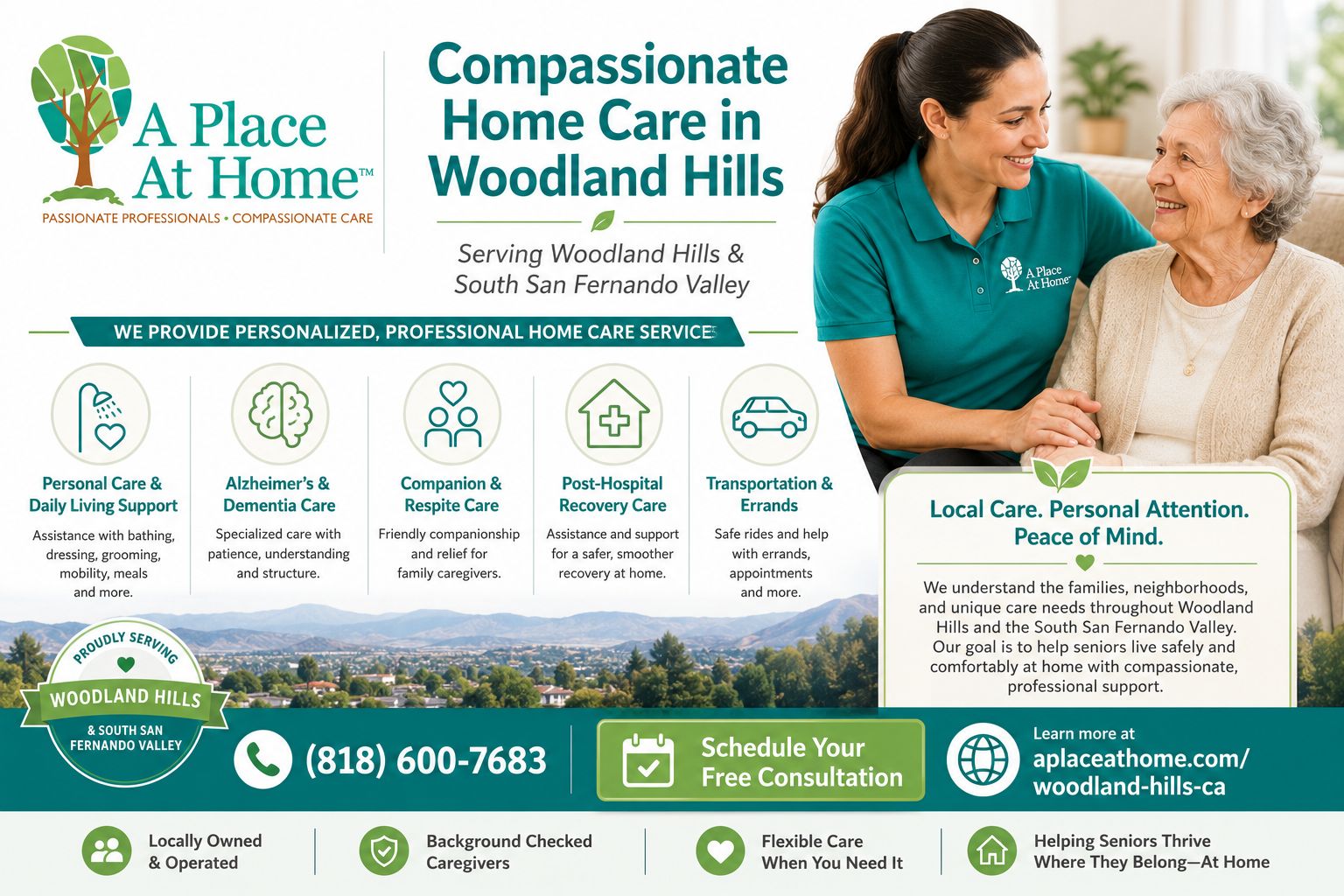
We provide personalized, professional home care services including:

  • Personal care and activities of daily living
  • Alzheimer’s and dementia care
  • Companion and respite care
  • Post-hospital and transitional care
  • Senior transportation and errand assistance

We know Woodland Hills. We understand the families here, the community, and what quality care at home actually looks like in practice. Schedule Your Free Consultation Today