

When Mom or Dad starts needing more help at home, it can be difficult to know where to begin. Maybe you’ve noticed unopened mail piling up, missed medications, a few close calls on the stairs, or that preparing meals has become more difficult. Or perhaps your parent is doing well overall, but you’re realizing you can’t always be there when they need you.
For family caregivers in Westwood and throughout Bergen County, NJ, creating a home care plan can bring some much-needed structure to these concerns. Instead of waiting until a fall, hospitalization, or other crisis forces a decision, you can identify what your parent needs now and make a plan that can change with them.
A personalized home care plan doesn’t mean taking away your parent’s independence. Done well, it does the opposite: it identifies the right amount of support to help them continue living safely and comfortably at home.
Key Takeaways
- Start by looking at what Mom or Dad can safely do independently and where they need help.
- Include your parent in care planning whenever possible so their preferences and routines are respected.
- Consider personal care, meals, mobility, medications, companionship, transportation, and home safety.
- Decide how much support family members can realistically provide without becoming overwhelmed.
- Match professional home care hours to actual needs rather than assuming more or less care is automatically better.
- Review the care plan regularly because a senior’s needs can change over time.

What Is a Personalized Home Care Plan?
A personalized home care plan is a written outline of the assistance an older adult needs to remain safe, comfortable, and as independent as possible at home.
A good senior home care plan typically covers:
- Personal care and hygiene
- Meals and nutrition
- Medication reminders
- Mobility and fall prevention
- Transportation and errands
- Companionship and socialization
- Memory and cognitive support
- Household assistance
- Family caregiver responsibilities
- Caregiver schedules and emergency contacts
The key word is personalized. Two seniors of the same age may need completely different levels of care.
One parent may only need a caregiver several afternoons each week for meals, errands, and companionship. Another may have dementia, nighttime confusion, or mobility limitations that make 24-Hour Home Care more appropriate.
How Do You Create a Home Care Plan for an Aging Parent?
- Start With What Mom or Dad Needs Help With
Rather than beginning with a specific number of caregiving hours, look at your parent’s daily life.
Ask questions such as:
- Can they bathe and dress safely?
- Are they preparing and eating regular meals?
- Are medications being taken as directed?
- Can they safely get around the house?
- Have there been falls or near falls?
- Are they still driving safely?
- Are bills, appointments, or household responsibilities being forgotten?
- Are they becoming lonely or isolated?
- Can they safely remain alone overnight?
Write down where help is already needed as well as areas that are beginning to concern you.
- Talk With Your Parent About Their Priorities
Home care planning should be a conversation, not simply a list of decisions made for Mom or Dad.
Ask what matters most to them.
Maybe your mother wants to continue attending activities in Westwood. Perhaps your father wants to keep having breakfast at the same time every morning or remain involved with friends and neighbors.
Those details matter.
When care fits naturally into an established routine, it can feel less like someone is taking over and more like someone is making everyday life easier.
- Look Beyond Physical Care Needs
Home care isn’t only about bathing, dressing, or mobility. Consider your parent’s emotional and social well-being too.
If Mom is physically independent but spends most days alone, Companion Care in Bergen County could provide conversation, activities, transportation, meal preparation, and regular social interaction.
If Dad is experiencing memory loss, Dementia Care NJ may provide more structured routines, supervision, cognitive engagement, and support with daily activities.
The goal is to look at the whole person rather than one diagnosis or limitation.
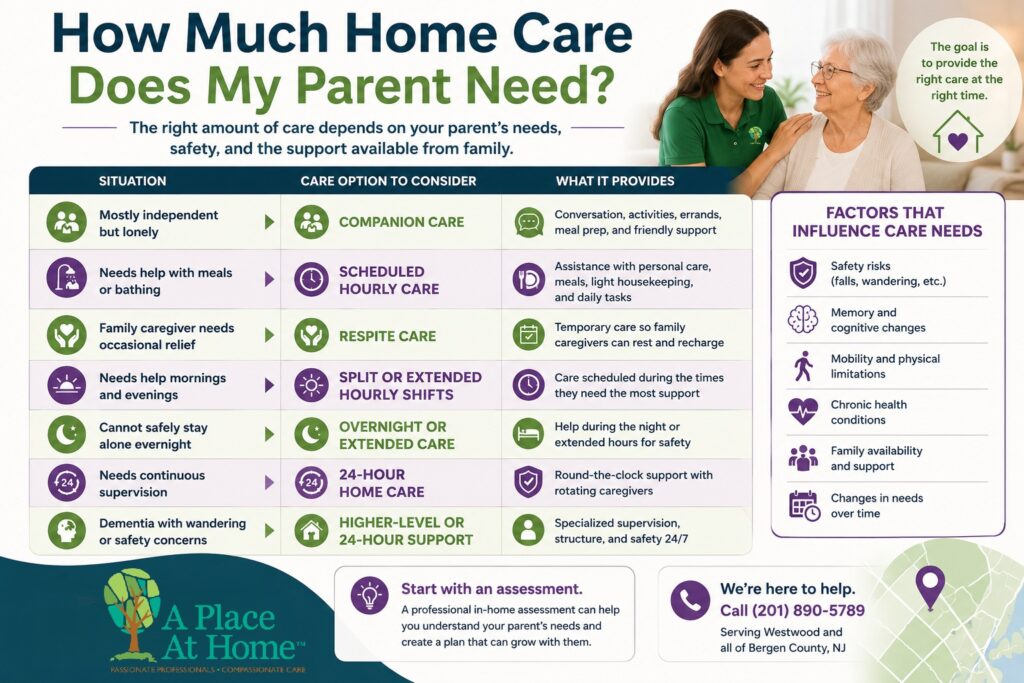
How Much Home Care Does My Parent Need?
There isn’t one correct number of caregiving hours. A useful way to think about it is to match the schedule to the periods when your parent actually needs assistance.
| Situation | Care Option to Consider |
| Mostly independent but lonely | Companion care |
| Needs help with meals or bathing | Scheduled hourly care |
| Family caregiver needs occasional relief | Respite care |
| Needs help mornings and evenings | Split or extended hourly shifts |
| Cannot safely remain alone overnight | Overnight or extended care |
| Needs continuous supervision | 24-hour home care |
| Dementia with wandering or significant safety concerns | Higher-level or 24-hour support |
Your family’s availability matters too. If siblings or relatives are providing some care, professional caregivers may be able to fill specific gaps.
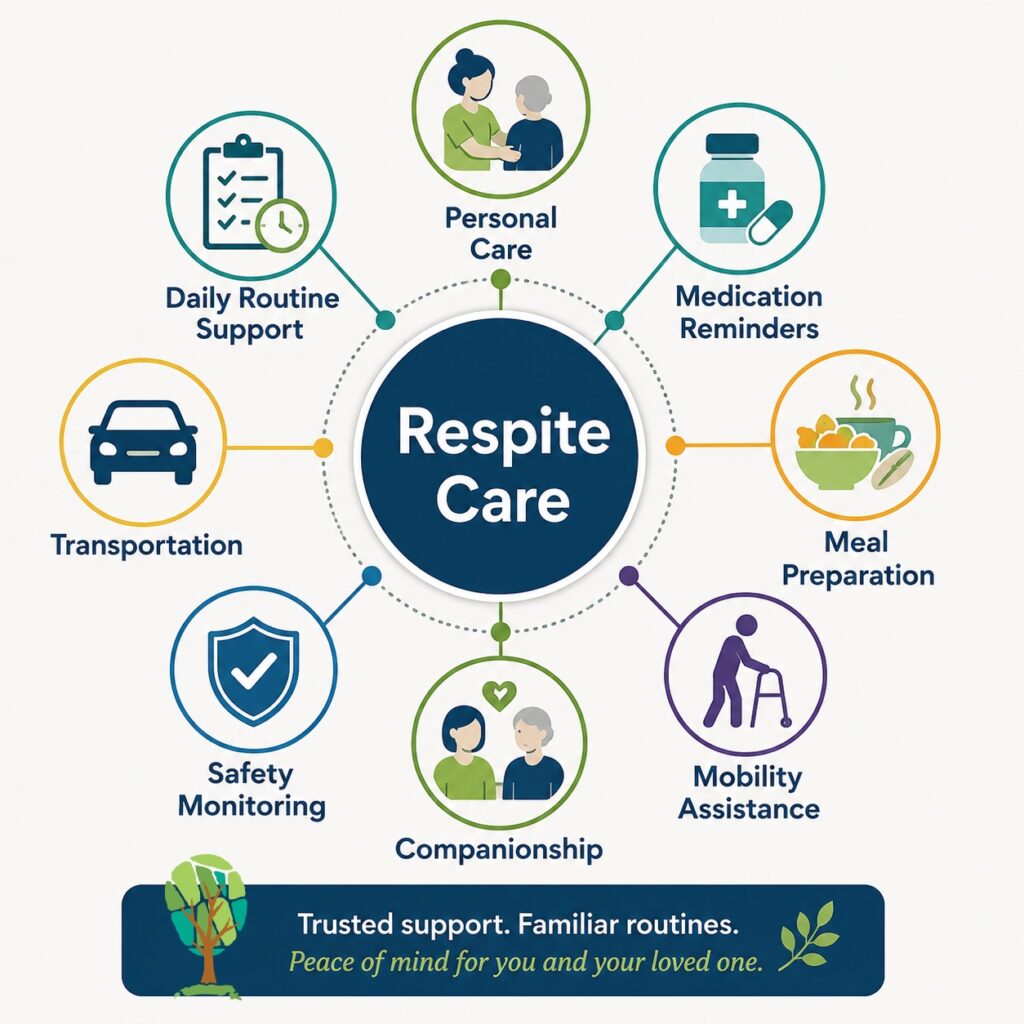
Respite Services can also give family caregivers scheduled time away without disrupting Mom or Dad’s routine.
Divide Responsibilities Realistically
One of the easiest mistakes to make is building a care plan around what family members hope they can do rather than what they can consistently manage.
If you work full time, have children at home, live outside Bergen County, or are already juggling other responsibilities, providing daily care may eventually become difficult.
Have an honest family conversation about:
- Who can provide transportation?
- Who can attend medical appointments?
- Who handles groceries and meals?
- Who is available in an emergency?
- Who can visit during weekdays?
- What happens if the primary family caregiver becomes sick or travels?
Identifying gaps isn’t a failure of the family. It’s exactly what a good care plan is supposed to accomplish.
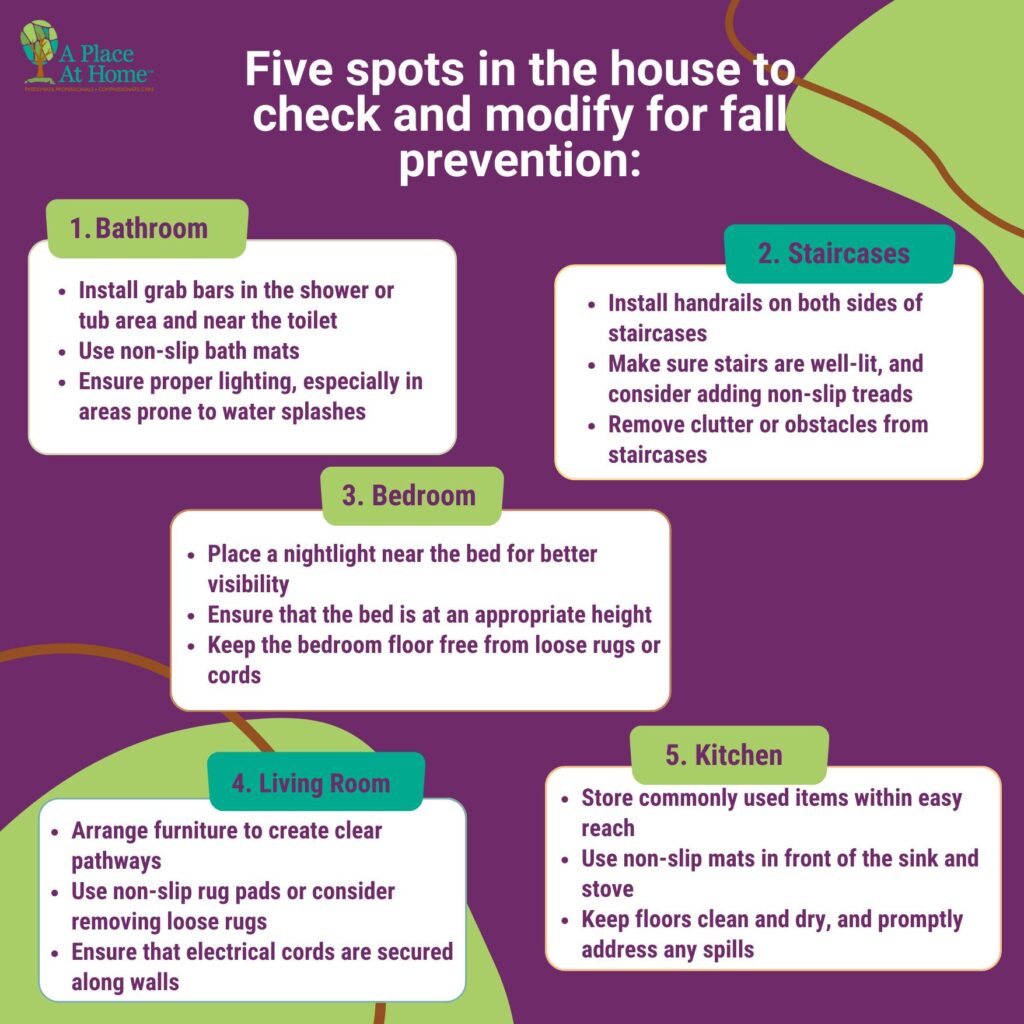
Make the Home Part of the Care Plan
Sometimes the right support involves changing the environment as well as adding caregiving hours. Walk through your parent’s home and look for potential hazards. Consider:
- Removing loose rugs and clutter
- Improving hallway and stairway lighting
- Installing grab bars where appropriate
- Keeping frequently used items within easy reach
- Creating clear walking paths
- Adding non-slip surfaces in bathrooms
- Making emergency numbers easy to find
These relatively small adjustments can complement professional care and make everyday routines safer.
Put Important Information in One Place
Create a simple home care folder or digital document containing the information someone would need if you weren’t available. Include:
- Medication list
- Physician information
- Emergency contacts
- Preferred hospital
- Allergies
- Typical daily schedule
- Meal preferences
- Mobility needs
- Important medical considerations
- Activities your parent enjoys
- Family contact information
For seniors living with dementia, also include information about routines, triggers, calming strategies, and familiar activities.
Review the Care Plan as Needs Change
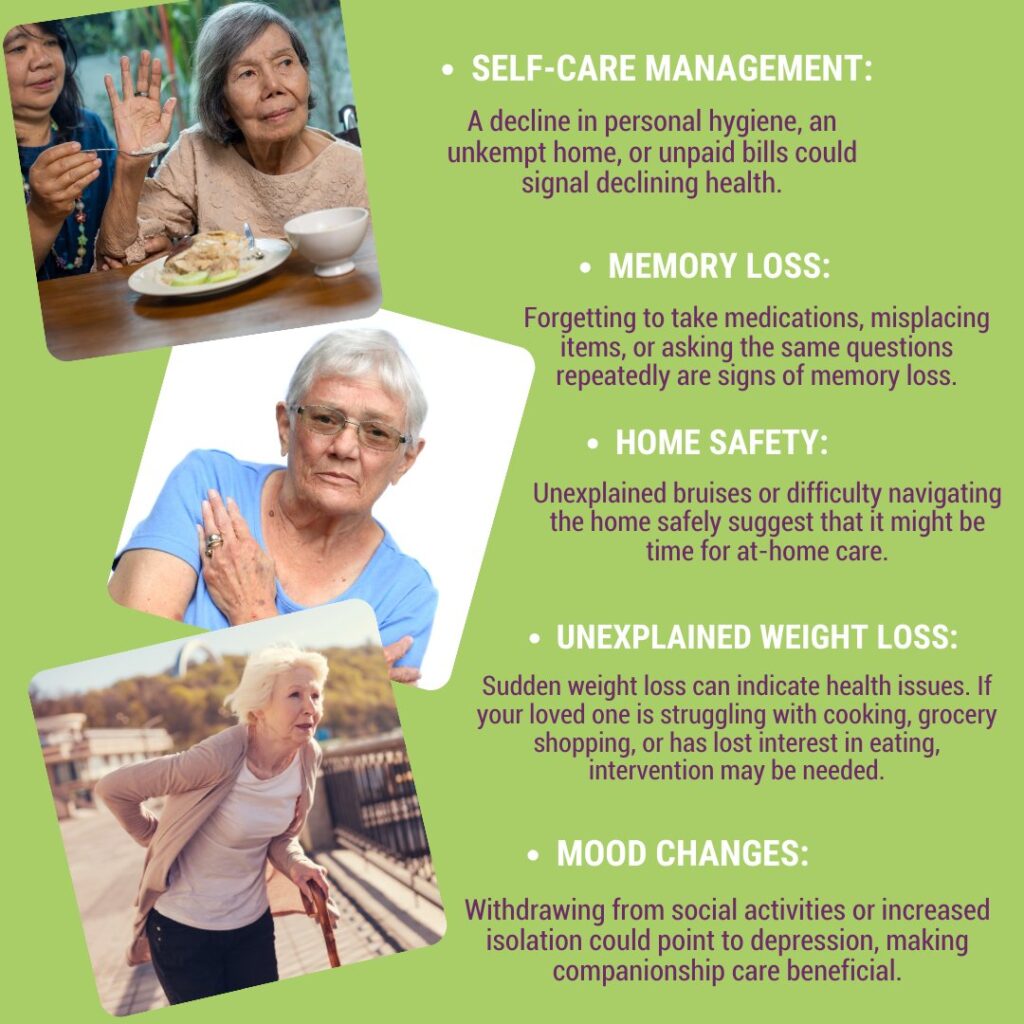
A care plan shouldn’t be created once and forgotten. Your parent may need only a few hours of assistance today but more support six months from now. Watch for changes such as:
- More frequent falls
- Increased confusion
- Weight loss
- Missed medications
- Difficulty with personal hygiene
- Changes in mobility
- Nighttime wandering
- Increased caregiver exhaustion
These may indicate that it is time to increase caregiving hours or consider 24-Hour Home Care.
Scheduling regular family check-ins perhaps monthly or quarterly can help you recognize changes before they become emergencies.
How do you know when it’s time for home care?
Home Care Resources for Bergen County Families
Families don’t have to figure out aging and caregiving completely on their own.
The Bergen County Division of Senior Services, which serves as the county’s Area Agency on Aging and Aging & Disability Resource Connection (ADRC), can help older adults and caregivers learn about available programs and aging-related resources.
Families can also speak with physicians, hospital discharge planners, senior centers, and professional home care providers when determining what level of assistance may be appropriate.
For families in Westwood, Paramus, Ridgewood, Hillsdale, River Vale, Washington Township, and surrounding Bergen County communities, starting these conversations before a crisis provides more time to compare options and involve Mom or Dad in the decision.
Build a Care Plan Around Your Parent, Not Just Their Needs
The best home care plan isn’t necessarily the one with the most caregiving hours. It’s the one that provides the right support at the right times while respecting your parent’s routines, preferences, and independence.
And that plan can change.
Mom may start with companionship a few afternoons each week. Later, she may benefit from personal care or additional morning assistance. Dad may initially need help after a hospitalization and eventually require more consistent supervision.
At A Place At Home – Westwood, we work with Bergen County families to develop personalized home care plans based on each senior’s needs, routines, preferences, and family support system.
Whether you’re exploring companion care, respite care, dementia support, hourly assistance, or 24-hour home care, our team can help you understand your options and determine an appropriate next step.
Call A Place At Home – Westwood at (201) 890-5789 or submit our online contact form to schedule a consultation and start building a personalized care plan for your loved one.
Personalized Home Care Plan FAQs
What should be included in a home care plan for an elderly parent?
A home care plan should address personal care, meals, medications, mobility, transportation, companionship, household assistance, safety concerns, emergency contacts, and the senior’s daily routines and preferences.
How do I know when my parent needs home care?
Signs may include difficulty bathing or dressing, missed medications, poor nutrition, falls, memory problems, social isolation, an untidy home, difficulty driving, or increasing dependence on family members for everyday activities.
How many hours of home care does my parent need?
The appropriate number of hours depends on your parent’s safety, mobility, cognitive health, daily routine, and available family support. Some seniors need only a few hours per week, while others may require daily, overnight, or 24-hour assistance.
Can a home care plan change over time?
Yes. Home care plans should be reviewed regularly and adjusted when a senior’s health, mobility, memory, daily routine, or family support changes.
Where can Bergen County families get help planning senior care?
Families can contact the Bergen County Division of Senior Services and ADRC, speak with healthcare providers, or schedule an assessment with a local home care provider. A professional assessment can help identify care needs and determine an appropriate level of in-home support.