

When an aging parent or loved one begins needing extra help at home, one of the biggest questions families ask is: Should we choose hourly home care or 24-hour care?
For many family caregivers in Westwood and throughout Bergen County, NJ, the answer isn’t always obvious. Your loved one’s needs may change gradually, making it difficult to know when a few hours of support is enough—or when around-the-clock care is the safer option.
The good news is that both types of home care are designed to help seniors remain independent, comfortable, and safe in familiar surroundings. Understanding the differences can help you choose the level of support that best fits your loved one’s lifestyle, health, and daily routine.
Key Takeaways
- Hourly home care provides assistance for a few hours each day or week based on your loved one’s needs.
- 24-hour home care offers continuous supervision and assistance around the clock.
- Hourly care is often ideal for seniors who remain fairly independent but need help with specific daily tasks.
- 24-hour care is better suited for seniors with advanced health conditions, dementia, or significant mobility challenges.
- Choosing the right level of care can improve safety, reduce caregiver stress, and help seniors remain at home longer.
Hourly Care vs. 24-Hour Home Care: Which Is Right for Your Loved One?

Hourly Home Care
Hourly care provides assistance for scheduled periods throughout the day. Visits may range from a few hours each week to several hours every day.
A caregiver can assist with:
- Personal care
- Meal preparation
- Medication reminders
- Transportation
- Light housekeeping
- Companionship
- Fall prevention
Hourly care allows families to receive professional support while remaining actively involved in caregiving.

24-Hour Home Care
24-hour home care provides continuous assistance throughout the day and night. Caregivers work in rotating shifts to ensure someone is always awake and available.
This level of care is commonly recommended for seniors who:
- Wander because of Alzheimer’s or dementia
- Need assistance throughout the night
- Have frequent falls
- Recover from major surgery
- Require constant supervision
- Need assistance with nearly every daily activity
Rather than moving into a facility, many Bergen County families choose 24-hour home care so their loved one can continue living comfortably at home.
Hourly Care vs. 24-Hour Care Comparison
| Feature | Hourly Home Care | 24-Hour Home Care |
|---|---|---|
| Care Schedule | Flexible hours | Continuous care |
| Best For | Independent seniors | Seniors needing constant supervision |
| Overnight Support | Optional | Included |
| Companionship | ✔ | ✔ |
| Personal Care | ✔ | ✔ |
| Medication Reminders | ✔ | ✔ |
| Fall Prevention | ✔ | ✔ |
| Dementia Supervision | Limited | Extensive |
| Family Caregiver Relief | Moderate | Maximum |
How Do You Know Which Type of Care Is Right?
Every senior’s situation is different, but there are several questions that can help guide your decision.
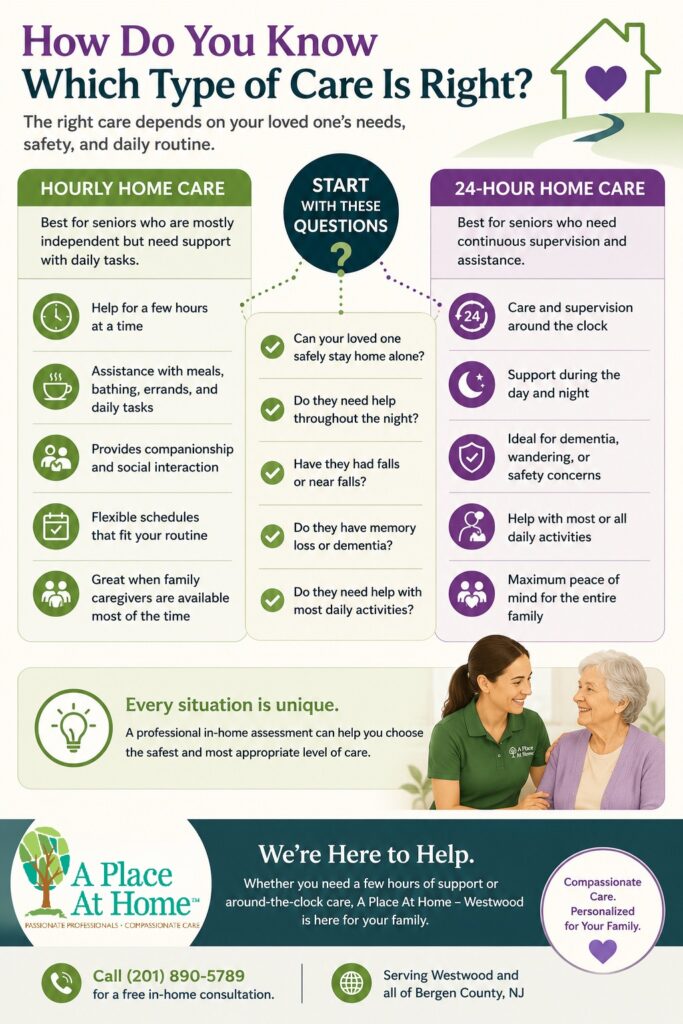
Hourly home care may be the right choice if your loved one:
- Needs help with meals or bathing
- Lives alone during the day
- Has recently returned home from the hospital
- Needs transportation to appointments
- Feels lonely or socially isolated
- Has family nearby who provide most care
24-hour care may be the better option if your loved one:
- Cannot safely stay home alone
- Has Alzheimer’s disease or another form of dementia
- Frequently wanders
- Needs assistance throughout the night
- Has experienced multiple falls
- Requires help with nearly all Activities of Daily Living (ADLs)
If you’re unsure, a professional in-home assessment can help determine the safest option.
Tips for Choosing the Right Home Care
Selecting home care isn’t just about today’s needs—it’s also about planning for tomorrow.
Consider Current Safety Risks
Ask yourself:
- Is your loved one forgetting medications?
- Have they fallen recently?
- Are they wandering?
- Do they become confused at night?
These are signs additional care may be needed.
Think About Family Availability
Many Bergen County caregivers balance:
- Full-time jobs
- Raising children
- Household responsibilities
- Caring for aging parents
Professional home care can reduce stress while ensuring your loved one receives consistent support.
Plan for Future Needs
Many seniors begin with hourly care before transitioning to 24-hour care as health conditions progress.
Choosing a provider that offers both services makes it easier to adjust care without changing agencies.
Home Care Resources for Bergen County Families
According to the U.S. Census Bureau, nearly one in five Bergen County residents is age 65 or older. As the senior population continues to grow, more families are choosing aging in place over assisted living or nursing homes.
Helpful local resources include:
- Bergen County Division of Senior Services
- Bergen County ADRC (Aging & Disability Resource Connection)
- Local caregiver support groups
- Hospital discharge planners
- Community senior centers
Combining these resources with professional home care allows families to build a personalized care plan that evolves as their loved one’s needs change.
Which Home Care Services Can Be Combined?
Many families use a combination of services to create the right level of support.
Depending on your loved one’s needs, you may combine:
- Companion Care in Bergen County for social interaction and daily assistance
- Dementia Care NJ for memory care support and cognitive engagement
- Respite Services to give family caregivers time to rest and recharge
- 24-Hour Home Care when continuous supervision becomes necessary
This flexible approach ensures seniors receive personalized care without paying for services they don’t need.
Finding the Right Care for Your Family

There is no one-size-fits-all answer when deciding between hourly and 24-hour home care. The best choice depends on your loved one’s health, safety, independence, and your family’s ability to provide support.
For many families in Westwood and throughout Bergen County, starting with a professional care assessment provides clarity and confidence. Whether your loved one needs just a few hours of companionship each week or around-the-clock assistance, having the right care plan in place can improve quality of life for everyone involved.
At A Place At Home – Westwood, we provide compassionate, personalized home care tailored to each family’s unique needs. From hourly companion visits to comprehensive 24-hour home care, our experienced caregivers are here to help seniors remain safe, comfortable, and independent in the place they call home.
Call A Place At Home – Westwood today at (201) 890-5789 or fill out our online contact form to schedule a complimentary in-home consultation and learn which care option is right for your loved one.
Frequently Asked Questions
Is hourly home care enough for someone with dementia?
It depends on the stage of dementia. Seniors in the early stages may benefit from hourly visits, while those with advanced dementia often require 24-hour supervision for safety.
Can I increase care hours later?
Yes. Many families begin with hourly care and gradually increase services as their loved one’s needs change.
Does 24-hour care mean someone stays awake overnight?
Yes. Unlike live-in care, 24-hour home care typically uses rotating caregivers so someone is awake and available throughout the day and night.
How many hours of home care can I schedule?
Hourly care is flexible. Families can often schedule care for just a few hours per week, several hours per day, overnight, or around the clock.
How do I know which type of care my loved one needs?
A professional in-home assessment can evaluate your loved one’s mobility, cognitive health, daily routines, and safety risks to recommend the appropriate level of care.