

Caring for an aging loved one can be a full-time commitment, and sometimes they need more than just medical assistance, they need companionship, emotional support, and everyday help to maintain their independence. Including companionship with their personal and medical care ensures that they get this type of support. Unlike traditional medical caregiving, companion care focuses on providing seniors with social interaction, practical assistance, and peace of mind, helping them live comfortably and safely in their own homes.
In this guide, we explore the range of services companion care can include, from daily check-ins and meal preparation to transportation and meaningful social engagement, so families can understand how this type of care can make a real difference in their loved one’s quality of life.
What is Companion Care?
Companion care is a type of non-medical in-home support designed to help seniors maintain independence while staying socially connected and safe at home. Unlike skilled medical care, companion care doesn’t involve administering medication or performing medical procedures. Instead, it focuses on the emotional, social, and practical aspects of daily life that can greatly impact a senior’s well-being.
Caregivers providing companion care often serve as a trusted friend and helper. They offer company during the day, assist with light household tasks, help with errands or transportation, and provide reminders for appointments or daily routines. This kind of support can reduce feelings of loneliness, promote mental and emotional health, and give families peace of mind knowing their loved one has consistent, caring assistance.
In short, companion care is about more than just assistance, it’s about enriching a senior’s life, fostering connection, and supporting independence in the comfort of home.
Key Services Included in Companion Care
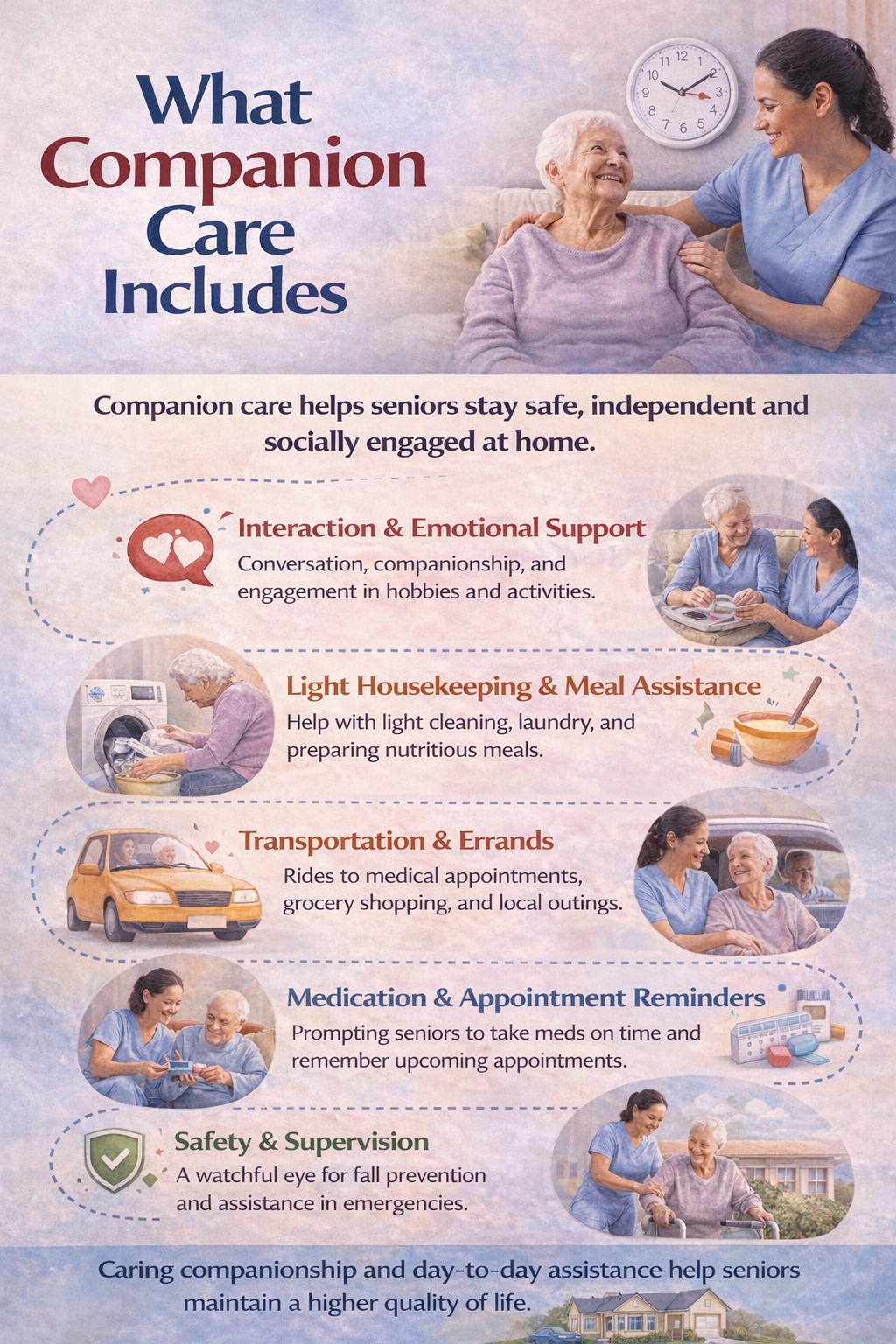
Companion care can be highly personalized to meet the unique needs of each senior, but most services typically include:
- Social Interaction and Emotional Support
Companions provide conversation, companionship, and engagement in hobbies or activities. Whether it’s playing games, reading together, or simply chatting, this support helps reduce loneliness and promotes emotional well-being. - Light Housekeeping and Meal Assistance
Caregivers can help with tasks like laundry, dishwashing, vacuuming, and preparing nutritious meals. This ensures seniors live in a safe, clean environment while maintaining a healthy diet. - Transportation and Errand Support
Many seniors rely on companions for rides to appointments, grocery shopping, or social outings. This keeps them active, independent, and connected to their community. - Medication and Appointment Reminders
While not medical professionals, companion caregivers can help seniors remember to take medications on schedule and attend important appointments, which supports overall health. - Safety and Supervision
Companions provide a watchful eye to prevent accidents, offer assistance with mobility, and respond quickly if emergencies arise, giving families added peace of mind.
By combining practical assistance with companionship, this type of care helps seniors enjoy a higher quality of life while staying safely at home.
How Companion Care Benefits Seniors and Their Families
Companion care offers a wide range of benefits that improve the quality of life for seniors while providing peace of mind for their families.
For Seniors:
- Reduced Loneliness and Social Isolation: Regular interaction with a companion helps seniors stay engaged, happy, and mentally active.
- Enhanced Safety and Independence: Companions provide assistance with daily tasks and mobility, helping seniors remain safely in their own homes longer.
- Improved Routine and Well-Being: From meal preparation to appointment reminders, companion care helps seniors maintain healthy routines and a sense of structure.
- Emotional Support: Having a trusted companion fosters a sense of connection, reduces stress, and promotes overall emotional health.
For Families:
- Peace of Mind: Knowing a loved one has consistent support and supervision eases anxiety for family members, especially those who live far away.
- Respite for Caregivers: Companion care allows family caregivers to take breaks, focus on their own responsibilities, and avoid burnout.
- Support for Decision-Making: Experienced caregivers can provide guidance on a senior’s needs and well-being, helping families make informed care choices.
Ultimately, companion care strengthens the bond between seniors and their families by supporting independence, safety, and emotional health, while giving families the reassurance that their loved ones are cared for with compassion and respect.
Common Questions and Hesitations About Companion Care
It’s natural for families to have questions or concerns before bringing a companion caregiver into their loved one’s home. Understanding these common hesitations can help families make informed decisions.
Will a companion caregiver replace my role as a family caregiver?
Many Bergen County families worry that hiring a companion caregiver means stepping back from caring for their loved one. In reality, companion care is designed to support families, not replace them. A caregiver provides companionship, supervision, and help with daily tasks so family members can spend more meaningful time with their loved one instead of focusing only on caregiving responsibilities.
Is companion care only for seniors who are frail or seriously ill?
No. Companion care can benefit many seniors in Westwood and throughout Bergen County, even those who are still active and independent. Many older adults simply need social interaction, help with errands, or support with daily routines to continue living safely and comfortably at home.
How much does companion care cost in Bergen County?
The cost of companion care varies depending on how often care is needed and the level of support required. Some families may only need a few hours of help each week, while others benefit from daily visits. Many Bergen County families find that companion care provides valuable peace of mind and flexibility while helping loved ones remain safely at home.
Will my loved one feel comfortable with a companion caregiver?
Comfort and trust are very important. Professional home care agencies carefully match caregivers with seniors based on personality, interests, and care needs. This thoughtful matching process helps seniors in Bergen County homes build positive relationships with caregivers and feel comfortable welcoming them into their daily routines.
How do I know a companion caregiver is reliable and safe?
Reputable home care agencies carefully screen and train their caregivers. This typically includes background checks, professional training, and ongoing supervision. Families in Westwood and Bergen County can also stay in communication with the agency and receive updates to ensure their loved one is receiving safe, compassionate care.
Addressing these questions early can help families feel confident in choosing companion care, knowing it supports both the senior’s well-being and the family’s peace of mind.
Companion Care from A Place At Home
Choosing companion care for your senior loved ones is a meaningful step toward ensuring they live safely, comfortably, and happily at home. From providing daily companionship and emotional support to assisting with meals, errands, and household tasks, professional caregivers help seniors maintain independence while reducing stress and worry for the entire family.
If you’re ready to explore how companion care can benefit your loved one, A Place At Home – Westwood offers personalized, compassionate care services tailored to each senior’s unique needs. Our trained caregivers provide reliable support, engaging companionship, and practical assistance so your family can have peace of mind knowing your loved one is in caring hands.
You can learn more about our companion care services in Bergen County, NJ and schedule a consultation by calling us at (201) 890-5789 or filling out our contact form. Give your loved one the gift of support, connection, and independence right at home.