

Key takeaway: Loss of appetite in an older adult almost always has an identifiable cause, things like medication side effects, dental pain, depression, dementia, or a natural age-related drop in hunger hormones. Most of these causes can be treated or managed once identified. A sudden refusal to eat lasting more than two to three days, or unexplained weight loss of 5% or more of body weight within six to twelve months, needs prompt medical attention.
If you’ve sat across the table from your parent lately, watching a full plate go cold and untouched, you know the particular dread that comes with it. Maybe it happened gradually, smaller portions, less interest, more pushing food around than actually eating. Or maybe it was sudden, and now you’re worried about what it means.
If you notice something different, you’re not overreacting. A change in eating habits in an older adult is worth taking seriously. But it’s also worth knowing that loss of appetite in the elderly almost always has a specific, identifiable cause, and most of those causes, once found, can be treated or at least meaningfully managed.
This guide walks through the most common reasons an elderly parent stops eating, what the warning signs look like, and exactly what families can do to help.
Is It Normal for Elderly People to Eat Less?
Yes, to a degree. The body changes with age in ways that naturally reduce how much food a person needs. Metabolism slows, muscle mass decreases, and energy demands simply aren’t what they used to be. A modest, gradual reduction in appetite over the years is a normal part of aging.
But there’s a real difference between eating a little less and barely eating at all:
- Gradual, modest reduction: Likely normal aging. Monitor, but don’t panic.
- Sudden or significant appetite loss: A symptom that needs medical investigation.
- Complete refusal to eat: Urgent. Contact a doctor promptly.
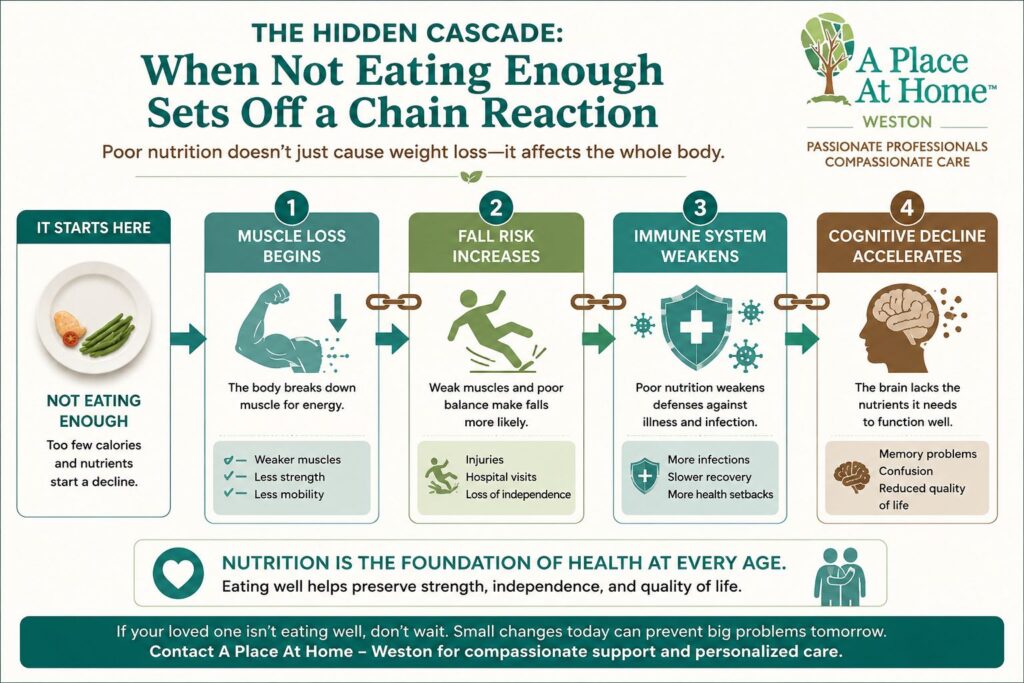
Left unaddressed, reduced eating can lead to unintentional weight loss, muscle weakness, increased fall risk, and greater vulnerability to illness and infection. The sooner the cause is identified, the better the outcome tends to be.
The 10 Most Common Reasons an Elderly Parent Stops Eating
When an older parent begins eating less, it’s rarely due to a single cause. Appetite is shaped by physical health, medications, emotional wellbeing, and even daily routines that change gradually over time. What looks like a picky phase or normal aging is often a signal that something deeper is going on.
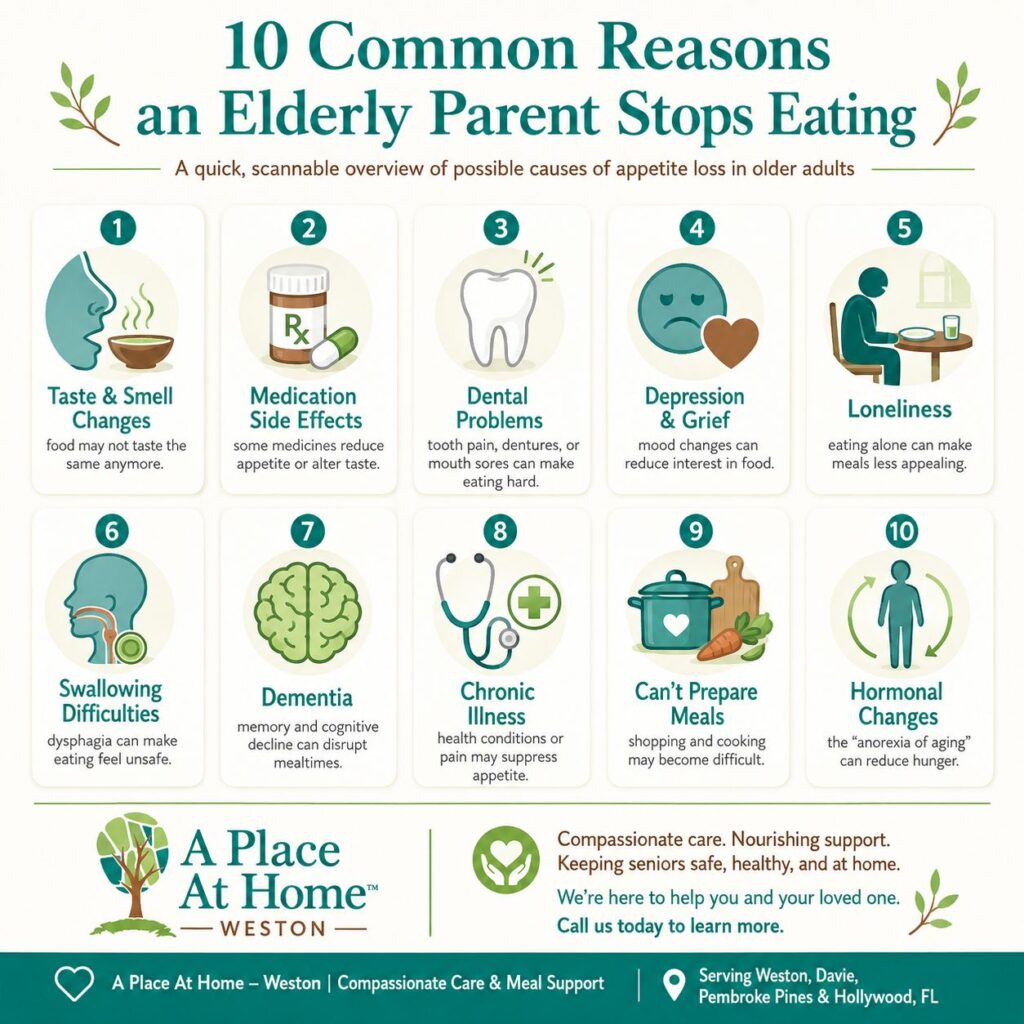
1. Taste and Smell Have Faded with Age
This is one of the most common and most overlooked reasons older adults lose interest in food. Taste buds regenerate quickly when we’re young, but that process slows significantly with age, and some taste buds stop renewing altogether. As a result, food simply doesn’t taste the way it used to.
Sour and bitter flavors often become more pronounced, while sweet, salty, and savory tastes fade. Smell plays an equally large role in flavor perception, and smell loss tends to accelerate in a person’s 70s and 80s. When food stops being pleasurable, eating becomes a chore rather than something to look forward to.
What helps: Stronger herbs, spices, citrus, and umami-rich ingredients (parmesan, mushrooms, miso) can compensate. Alternating warm and cold foods also enhances flavor perception.
2. Medications Are Affecting Appetite or Taste
Many common medications cause appetite suppression or alter the way food tastes. Some make food taste metallic or bitter. Others reduce saliva production, making food dry and hard to swallow. Medications known to cause these effects include certain blood pressure drugs, statins, antibiotics, antidepressants, neurological medications, and chemotherapy drugs.
If your parent started eating less around the same time a new medication was introduced, or when a dose was increased, it’s worth flagging this to their doctor.
Medication side effects can sometimes affect appetite, taste, or dry mouth, so families may also find it helpful to review these safe at-home tips for organizing medications for seniors.
What helps: A formal medication review with the GP. Never adjust medications independently, but a prescriber can often identify a culprit and switch to an alternative with fewer appetite side effects.
3. Dental Problems and Pain While Eating
Tooth loss, ill-fitting dentures, gum disease, and mouth sores all make eating genuinely painful. Most older adults won’t say eating hurts. They’ll simply eat less and less until family members notice something is wrong.
Dentures that fit well a year ago may no longer fit correctly if your parent has lost weight. Regular dental check-ups often fall by the wayside when mobility becomes difficult, making this an easy problem to miss.
What helps: Schedule a dental review and specifically ask whether dentures still fit correctly. For painful oral conditions, soft food alternatives such as scrambled eggs, yogurt, soup, and smoothies allow adequate intake while the underlying problem is treated.
4. Depression and Grief
Depression affects roughly one in ten older adults, and one of its most consistent symptoms is loss of appetite. Grief after losing a spouse, close friend, or sibling is an especially common trigger, and the appetite loss that follows bereavement can persist for months.
Depression in older adults often presents differently than it does in younger people. Rather than expressing obvious sadness, an older adult with depression may become withdrawn, fatigued, and physically unwell, making it easy to mistake an emotional cause for a physical one.
What helps: A GP assessment is the right starting point. Treating underlying depression, often with a combination of medication and support, can restore appetite significantly. Increasing social connection, particularly around mealtimes, matters just as much.
5. Loneliness and Eating Alone
Eating is a fundamentally social act. Decades of shared meals build deep associations between eating and connection. When a person ends up eating alone, day after day, much of the motivation to prepare food or sit down to a proper meal disappears.
Some seniors actively come to dislike mealtimes because of the absence of company. They may skip meals rather than sit alone at a table that once held a whole family.
What helps: Eating with your parent whenever you can makes a real difference. Community dining programs, meal clubs, and regular visits timed around mealtimes are all worth exploring. For seniors receiving care at home, a caregiver who eats with them, rather than simply serving food, is noticeably more effective.
6. Swallowing Difficulties (Dysphagia)
Dysphagia is common in older adults, particularly after a stroke, with Parkinson’s disease, or in advanced dementia. A person with swallowing difficulties often quietly restricts what they eat, avoiding anything that feels risky without telling anyone why.
Signs to watch for include coughing or throat-clearing after eating or drinking, a wet or gurgly voice after meals, eating very slowly, or consistently avoiding certain food textures.
What helps: Ask for a referral to a speech and language therapist. Texture-modified diets and specific swallowing techniques can make eating both safer and more manageable.
7. Dementia and Cognitive Decline
Cognitive impairment can disrupt eating in a number of ways. A person with dementia may lose the ability to recognize hunger signals, forget to eat, or forget they’ve already eaten. As the condition advances, they may lose interest in food entirely, struggle to use cutlery, or become unable to connect the act of eating with the feeling of hunger.
Behavioral eating challenges such as holding food in the mouth without swallowing, refusing to open the mouth, or not recognizing food as food are common in later-stage dementia and can be distressing for families to witness.
What helps: Finger foods, brightly colored plates (which aid contrast perception for those with visual changes), structured mealtimes, adapted utensils, and eating alongside a caregiver who is also eating all tend to improve intake.
8. Chronic Illness and Physical Discomfort
Many underlying health conditions directly suppress appetite. Heart failure, kidney disease, COPD, cancer, and chronic pain all have appetite reduction as a known effect. Even something as common as constipation, which is very prevalent in older adults, creates a persistent feeling of fullness and bloating that kills hunger.
Your parent may genuinely not feel hungry, not because they’re choosing to avoid food, but because their body is sending the wrong signals due to an underlying condition.
What helps: Managing the underlying illness is the most effective route. A GP or dietitian can also advise on foods that work around specific health challenges, and treating constipation alone sometimes produces a meaningful improvement in appetite.
9. They Simply Can’t Prepare Food Anymore
A parent living alone may not be eating because they don’t want to, but because the practical act of cooking has become too difficult. Arthritic hands struggle with jars, can openers, and peelers. Standing at a stove is exhausting. Carrying groceries from the car is painful.
Many older adults won’t admit this. They value their independence and don’t want to be seen as struggling. Instead, they quietly stop cooking, eat whatever requires no preparation, and lose weight slowly.
What helps: Meal delivery services, pre-prepared meals in easy-open containers, and home care assistance with shopping and meal preparation. If a parent is losing weight but insists they’re eating fine, this is worth investigating further.
10. The “Anorexia of Aging”: Hormonal Changes
There is a recognized medical phenomenon called the anorexia of aging, a physiological reduction in appetite that occurs in some older adults independently of illness or depression. Levels of hunger-stimulating hormones such as ghrelin decline with age, while satiety hormones remain elevated, meaning a senior may feel genuinely full after just a few bites, even when their overall daily intake is far below what they need.
This isn’t willpower or preference. It’s a hormonal shift that makes eating feel unnecessary even when the body is undernourished.
What helps: Smaller, more frequent meals (six to eight small offerings throughout the day rather than three large ones), calorie-dense foods that pack maximum nutrition into small portions, and no pressure to finish the plate.
What Happens When an Older Body Doesn’t Get Enough Food
Muscle loss accelerates rapidly without adequate protein, and muscle lost in later life is extremely difficult to regain. Nutritional deficiencies leave seniors more vulnerable to frailty, falls, and joint deterioration. The immune system weakens, making infections more likely and recovery slower. Cognitive decline can accelerate as the brain depends on consistent nutrition to function, and mood often worsens alongside it.
Unexplained weight loss of 5% or more of body weight within six to twelve months always warrants urgent medical investigation. It can be a sign of something treatable, but it needs to be found.
12 Practical Things Families Can Do Right Now
- Switch to small, frequent meals. Six to eight small meals throughout the day is far more manageable than three large ones. Find the time of day when your parent’s appetite is strongest and make that the priority mealtime.
- Choose calorie-dense foods. When total intake is low, every bite needs to work harder. Prioritize full-fat dairy, eggs, avocado, nut butters, oily fish, olive oil, and protein shakes. Avoid filling a limited appetite with low-calorie raw vegetables.
- Boost flavor to compensate for taste loss. Stronger herbs, garlic, ginger, lemon, and umami-rich ingredients can make food genuinely appealing again. Umami, found in parmesan, mushrooms, tomatoes, and miso, is one of the last taste senses to fade with age.
- Make eating social. Eat with your parent whenever possible. Having company at a meal consistently improves how much older adults eat. If you can’t always be there, look into community dining programs or schedule family visits around mealtimes.
- Offer finger foods and easy-to-eat options. Food that can be picked up without cutlery, like chicken strips, soft cheese cubes, cut fruit with dip, and bite-sized meatballs, is often better tolerated. For dental issues or swallowing difficulties, scrambled eggs, porridge, yogurt, soft fish, and soups are reliable staples.
- Make the environment calm and appealing. Use real plates and proper cutlery; dignity around mealtimes matters. Reduce distractions like the TV. Serve food attractively. For those with dementia, brightly colored plates can help with food recognition.
- Request a medication review. Ask the GP specifically whether any current medications could be affecting appetite or taste. This single conversation sometimes identifies a fixable cause that’s been overlooked for months.
- Encourage gentle movement before meals. Even a short walk or fifteen minutes outside before eating can meaningfully stimulate hunger. Physical activity is one of the most effective natural appetite stimulants.
- Give them back some control. Ask what they like eating. Offer choices. Honor preferences even when they’re not the most nutritionally ideal option, getting something in matters more than getting the perfect thing in.
- Try appetite-stimulating strategies. A small glass of a favorite drink before meals (with medical approval) can help. Chewing sugar-free gum before eating can improve taste sensitivity. Cold or room-temperature foods may be better tolerated if strong smells are triggering nausea.
- Consider nutritional supplements. Oral nutritional supplements like Ensure or Fortisip provide significant calories and nutrients in a small, easy-to-consume volume. These should supplement food intake rather than replace it, but they’re a valuable safety net. Ask a GP or dietitian about getting them on prescription.
- Get professional help, and don’t wait. A GP referral to a dietitian is appropriate for any senior experiencing significant appetite or weight loss. If swallowing difficulties are suspected, ask for a speech and language therapy assessment. A dental exam should be arranged when oral pain may be contributing. If depression or grief is a possible factor, a mental health evaluation can help.
Red Flags That Need Urgent Medical Attention
Some situations call for a same-day call to the GP rather than a wait-and-see approach:
- Weight loss of 5% or more of body weight in six to twelve months without clear explanation
- Complete refusal to eat for more than two to three consecutive days
- New or worsening confusion alongside reduced eating
- Signs of severe malnutrition: extreme fatigue, frequent infections, wounds that won’t heal, significant hair loss
- Swallowing difficulties that appear suddenly, particularly after a possible stroke
- Any suspicion that cancer, heart failure, kidney disease, or another serious underlying illness is driving the change
- If your parent is not in an end-of-life stage and has suddenly and significantly stopped eating, contact their doctor promptly. Early intervention makes a real difference.
Frequently Asked Questions
What do you do when an elderly parent refuses to eat?
Offer small amounts of favorite foods in a calm, social setting, and avoid pressuring them to eat. Then work to identify the underlying cause, common ones include dental pain, medication side effects, depression, and difficulty preparing food on their own.
How long can an elderly person go without eating?
An elderly person who has stopped eating but is still drinking fluids can typically survive seven to fourteen days. If both food and fluids stop entirely, that window shortens to roughly two to five days, with significant variation depending on underlying health. Any complete refusal to eat lasting more than two to three days, outside a known end-of-life context, warrants urgent medical review.
What is the best food to give an elderly person with no appetite?
Calorie-dense, easy-to-eat foods work best, such as full-fat yogurt, scrambled eggs, nut butter on soft bread, avocado, cream soups, and protein smoothies. When appetite is very limited, every bite should be nutrient-dense, easy to eat, and genuinely appealing in taste and texture.
Should I force my elderly parent to eat?
No. Forcing food creates conflict and distress, and can be genuinely dangerous if there are undetected swallowing difficulties. Focus on gentle encouragement: removing barriers, making food appealing, and making mealtimes something to look forward to rather than a battle.
Is loss of appetite a sign of dying in the elderly?
Not always. Appetite loss has many causes, most of which are treatable, though it can be a natural part of the end-of-life process when someone is entering the final stage of life. A medical assessment is the best way to understand which situation you’re dealing with.
How A Place At Home – Weston Can Help with Senior Meal Planning
Watching a parent struggle to eat, and not knowing why or what to do, is one of the more quietly distressing parts of caring for an aging parent. Almost always, there’s something that can help, and you don’t have to identify it or fix it on your own.

As part of our senior home care services, A Place At Home – Weston puts real focus on meal planning for older adults. Our caregivers help with grocery shopping, meal preparation, and cooking, and they sit with your parent during meals to offer companionship and hands-on feeding assistance when it’s needed. If your loved one is in the Weston, FL area and you’re concerned about their nutrition, daily care, or overall wellbeing, we can build a plan around their specific needs, favorite foods, and any health conditions affecting their appetite.
Getting the right support in place early can genuinely change the trajectory. Reach out to A Place At Home – Weston today to learn more about how our home care services, including meal planning and mealtime support, can help your loved ones in Weston, Davie, Pembroke Pines, Hollywood, FL and the surrounding areas of Broward County.