

A dementia diagnosis does not automatically mean that a senior has to leave home.Many older adults living with Alzheimer’s disease or another form of dementia can continue living at home for months or even years, particularly when they have the right support, a safe environment, and family members who regularly reassess their changing needs.For families in Ashburn, VA, the harder question is usually not simply, “Can Mom or Dad stay home?” It is:
Can they continue living at home safely, comfortably, and with enough support for their current stage of dementia? The answer is different for every family.
At A Place At Home, in-home dementia care is designed to support seniors and adults who need extra help with daily routines, personal care, companionship, supervision, and safety while allowing them to remain in familiar surroundings for as long as it remains appropriate.
Can Someone With Dementia Live at Home?
Yes. A person with dementia may be able to continue living at home, particularly during the earlier stages of the condition.
Familiar surroundings can be reassuring for someone experiencing memory loss. Their bedroom, favorite chair, familiar photographs, neighborhood, and daily routines may all provide a sense of continuity when other parts of life begin to feel confusing. However, dementia is progressive. A person who manages fairly independently today may need considerably more help later.
That is why families should think about aging at home as an ongoing plan rather than a one-time decision. The important questions are whether your loved one is safe, whether their daily needs are being met, and whether enough support is available as those needs change.
What Are Signs a Senior With Dementia May Need More Help at Home?
Changes are not always dramatic. Often, family members notice several small concerns before realizing that their loved one needs more consistent help.
You may begin noticing that your parent or loved one:
- Forgets to eat or drink regularly
- Has spoiled or expired food in the refrigerator
- Wears the same clothing repeatedly
- Has difficulty bathing or grooming
- Misses medications or takes them at the wrong time
- Becomes confused about the day or time
- Leaves appliances running
- Has unexplained bruises or falls
- Begins wandering or trying to leave the house
- Gets lost in familiar places
- Becomes increasingly anxious when alone
- Has difficulty completing household tasks
- Withdraws from friends or activities
- Experiences noticeable changes in sleep or behavior
One concern by itself may not mean that living at home is no longer possible. But several changes together can signal that additional supervision or dementia care at home should be considered.
Why Can Staying at Home Be Helpful for Someone With Dementia?
For many people with dementia, familiarity matters. Moving into an unfamiliar environment can sometimes be confusing, particularly when a person is already having difficulty processing new information.
Remaining at home allows many seniors to continue waking up in the same bedroom, eating at their familiar table, seeing recognizable surroundings, and following routines they have known for years. Home can also allow care to be organized around the individual instead of requiring the person to adapt to a completely new environment.
That does not mean home will always be the safest choice. But when appropriate support is available, it may allow a senior to maintain comfort and independence for longer.

How Can In-Home Dementia Care Help?
Dementia affects much more than memory. Over time, it can affect judgment, communication, personal care, mobility, eating habits, sleep, and the ability to complete familiar tasks.
A professional caregiver can provide practical support while helping preserve as much independence as possible.
Depending on your loved one’s needs and care plan, non-medical dementia care at home may include help with:
Personal Care
A caregiver can provide respectful assistance with bathing, dressing, grooming, toileting, and other everyday personal-care routines.
For someone with dementia, even familiar tasks may eventually become confusing or frustrating. Having a calm and consistent person available can make those routines easier to manage.
Meal Preparation
People living with dementia may forget to eat, lose interest in preparing food, or have difficulty completing the steps involved in cooking.
A caregiver can prepare meals, encourage regular eating and hydration, and provide companionship during mealtimes.
Medication Reminders
Non-medical caregivers can provide reminders according to the established care plan.
Caregivers do not replace physicians, pharmacists, or nurses and should not independently make medication decisions.
Companionship
Dementia can be isolating for both the individual and the family.
A familiar caregiver can provide conversation, participate in appropriate activities, accompany the senior on walks, look through photographs, listen to music, or simply spend time together.
These interactions can also give family caregivers reassurance that their loved one is not spending long periods alone.
Help With Daily Routines
Predictable routines can be helpful for people experiencing memory loss.
A caregiver can help maintain a consistent rhythm around waking, meals, personal care, activities, and bedtime while adapting to the individual’s preferences.
Mobility and Fall-Safety Support
Changes in balance, judgment, and mobility may increase safety concerns.
A caregiver can provide assistance with everyday movement according to the care plan, help keep walking areas clear, and remain nearby when a senior needs additional support.
Transportation and Errands
As dementia progresses, driving may no longer be safe.
Caregivers may assist with transportation to appointments, errands, family visits, or activities so the senior can remain connected to the community without relying on driving independently.
How Can Families Make the Home Safer for Someone With Dementia?
Home safety needs can change as dementia progresses.
Families in Ashburn caring for someone with dementia should periodically walk through the home and look at it from the perspective of someone who may have difficulty with memory, judgment, vision, or orientation.
Consider whether you need to:
- Improve lighting in hallways and stairways
- Remove loose rugs and other trip hazards
- Keep frequently used items easy to reach
- Secure medications and potentially dangerous household products
- Install grab bars where appropriate
- Reduce clutter
- Clearly identify important rooms
- Monitor access to doors if wandering becomes a concern
- Keep emergency information readily available
- Review kitchen and appliance safety
Technology such as door alerts or fall-detection devices may provide additional support, but technology should complement—not automatically replace—appropriate human supervision.
An occupational therapist or another qualified professional can also provide individualized home-safety recommendations when needed.
Is It Safe for Someone With Dementia to Live Alone?
Sometimes, particularly in the earliest stages. But living alone should be reassessed regularly.
A person may still be physically capable of bathing, eating, and walking but have difficulty recognizing unsafe situations or remembering whether something has already been done.
Families should consider questions such as:
- Can they prepare food safely?
- Do they remember to eat?
- Can they recognize an emergency?
- Can they use the phone to ask for help?
- Are medications being taken correctly?
- Have they wandered or become lost?
- Are falls becoming more frequent?
- Are they leaving doors unlocked?
- Can they safely use household appliances?
- Do they become frightened or confused when alone?
When the answer to several of these questions becomes concerning, additional supervision may be necessary.
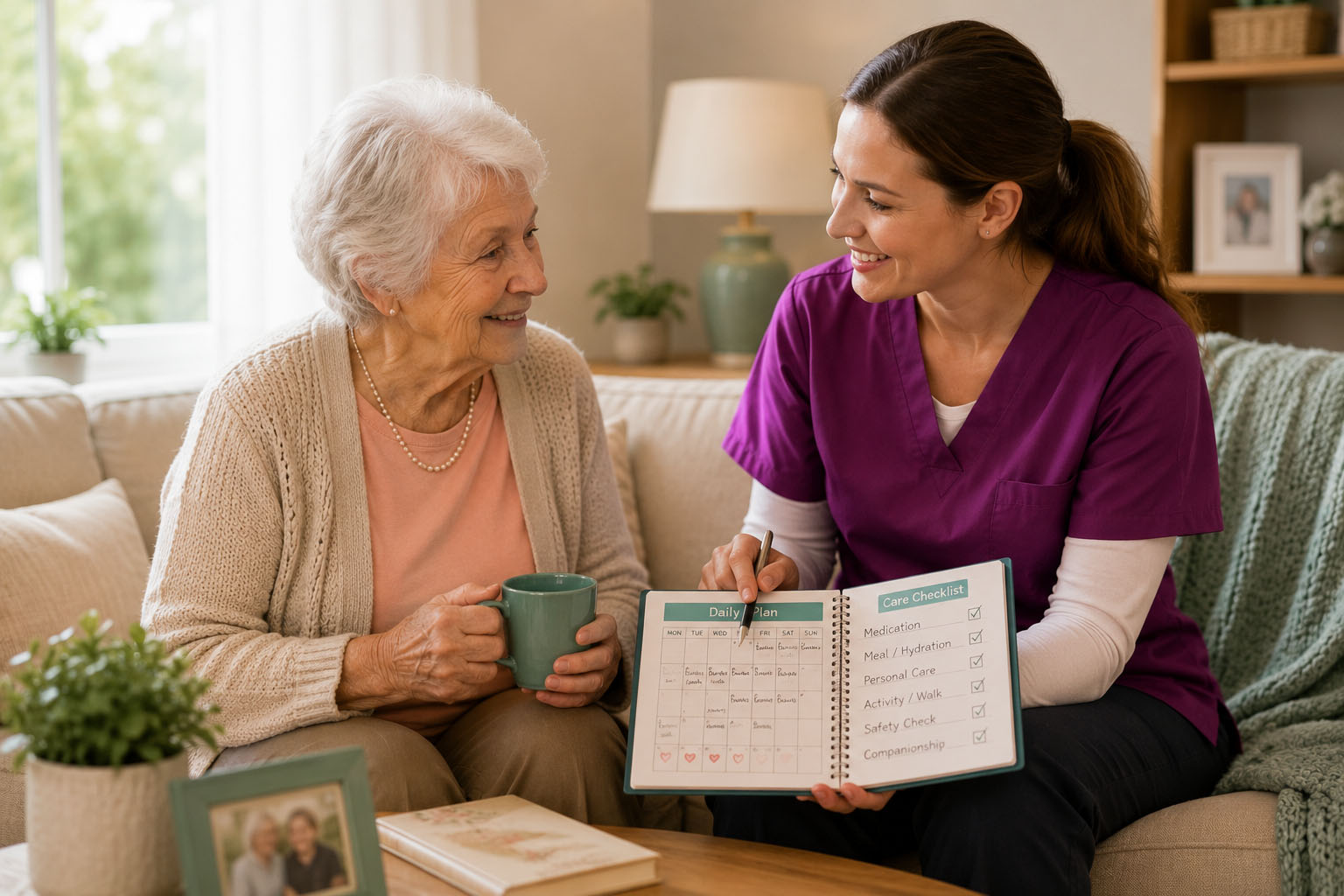
How Much Dementia Care at Home Does a Senior Need?
There is no standard number of caregiving hours that works for everyone.
Some families initially need a caregiver for a few hours several days per week. The caregiver may help with meals, personal care, transportation, companionship, and household routines.
As dementia progresses, a senior may need daily assistance, longer shifts, overnight care, or eventually around-the-clock support.
A useful approach is to ask:
When are the most difficult parts of the day?
For one family, mornings may be challenging because their loved one needs help bathing and dressing. Another senior may manage well during the day but become confused or restless in the evening. Another may be physically safe but should no longer spend long periods alone.
Care should be built around the person rather than forcing every family into the same schedule.
What About Family Caregivers?
Many people with dementia remain at home because a spouse, daughter, son, or other relative provides most of their care. Family caregiving can be deeply meaningful, but dementia care can also become demanding over time.
It is common for family caregivers to gradually take on more responsibilities without realizing how much the role has changed. You may begin with grocery shopping and appointments. Later, you may also be handling meals, personal care, nighttime supervision, transportation, household responsibilities, and constant safety concerns.
Professional home care does not have to replace family involvement. Instead, it can fill gaps in the schedule and allow family members to spend more time being a spouse, son, daughter, or grandchild rather than trying to handle every caregiving responsibility alone.
When Might Staying at Home No Longer Be the Best Option?
There may come a point when home is no longer the safest or most practical environment.
Families should consider discussing other care options when there are serious concerns such as repeated wandering, frequent falls, significant behavioral changes, extensive overnight needs, or care requirements that cannot reasonably be managed at home. A physician or other qualified healthcare professional should be involved when there are significant changes in cognition, behavior, mobility, eating, swallowing, or overall health.
Choosing a different care setting is not determined by the dementia diagnosis alone. The decision should consider the person’s current needs, safety, family resources, available professional support, and quality of life.
How Do You Know When It Is Time to Hire a Dementia Caregiver?
You do not need to wait for a crisis. In fact, bringing in support earlier can give your loved one time to become familiar with a caregiver while routines are still relatively established.
It may be time to consider professional help when:
- Family members are increasingly worried about leaving the senior alone
- Daily activities are being missed
- Personal hygiene is declining
- Meals are becoming inconsistent
- Family caregivers are becoming overwhelmed
- Your loved one needs more supervision
- Nighttime confusion is increasing
- Transportation has become difficult
- You are constantly rearranging work or family responsibilities to provide care
The goal is not to take independence away. Good dementia support should help a person continue doing what they can while helping where it is needed.
If you are wondering whether your parent or loved one can continue living safely at home in Ashburn, you do not have to make the decision alone. Talk with A Place At Home about your loved one’s current needs and the level of in-home support that may help them remain safe, comfortable, and connected at home.

