
Can a Senior With Dementia Continue Living at Home? A Guide for Ashburn Families

Can a Senior With Dementia Continue Living at Home

A dementia diagnosis does not automatically mean that a senior has to leave home.Many older adults living with Alzheimer’s disease or another form of dementia can continue living at home for months or even years, particularly when they have the right support, a safe environment, and family members who regularly reassess their changing needs.For families in Ashburn, VA, the harder question is usually not simply, “Can Mom or Dad stay home?” It is:

Can they continue living at home safely, comfortably, and with enough support for their current stage of dementia? The answer is different for every family.

At A Place At Home, in-home dementia care is designed to support seniors and adults who need extra help with daily routines, personal care, companionship, supervision, and safety while allowing them to remain in familiar surroundings for as long as it remains appropriate.

Can Someone With Dementia Live at Home?

Yes. A person with dementia may be able to continue living at home, particularly during the earlier stages of the condition.

Familiar surroundings can be reassuring for someone experiencing memory loss. Their bedroom, favorite chair, familiar photographs, neighborhood, and daily routines may all provide a sense of continuity when other parts of life begin to feel confusing. However, dementia is progressive. A person who manages fairly independently today may need considerably more help later.

That is why families should think about aging at home as an ongoing plan rather than a one-time decision. The important questions are whether your loved one is safe, whether their daily needs are being met, and whether enough support is available as those needs change.

What Are Signs a Senior With Dementia May Need More Help at Home?

Changes are not always dramatic. Often, family members notice several small concerns before realizing that their loved one needs more consistent help.

You may begin noticing that your parent or loved one:

  • Forgets to eat or drink regularly
  • Has spoiled or expired food in the refrigerator
  • Wears the same clothing repeatedly
  • Has difficulty bathing or grooming
  • Misses medications or takes them at the wrong time
  • Becomes confused about the day or time
  • Leaves appliances running
  • Has unexplained bruises or falls
  • Begins wandering or trying to leave the house
  • Gets lost in familiar places
  • Becomes increasingly anxious when alone
  • Has difficulty completing household tasks
  • Withdraws from friends or activities
  • Experiences noticeable changes in sleep or behavior

One concern by itself may not mean that living at home is no longer possible. But several changes together can signal that additional supervision or dementia care at home should be considered.

Why Can Staying at Home Be Helpful for Someone With Dementia?

For many people with dementia, familiarity matters. Moving into an unfamiliar environment can sometimes be confusing, particularly when a person is already having difficulty processing new information.

Remaining at home allows many seniors to continue waking up in the same bedroom, eating at their familiar table, seeing recognizable surroundings, and following routines they have known for years. Home can also allow care to be organized around the individual instead of requiring the person to adapt to a completely new environment.

That does not mean home will always be the safest choice. But when appropriate support is available, it may allow a senior to maintain comfort and independence for longer.

How Can In-Home Dementia Care Help

How Can In-Home Dementia Care Help?

Dementia affects much more than memory. Over time, it can affect judgment, communication, personal care, mobility, eating habits, sleep, and the ability to complete familiar tasks.

A professional caregiver can provide practical support while helping preserve as much independence as possible.

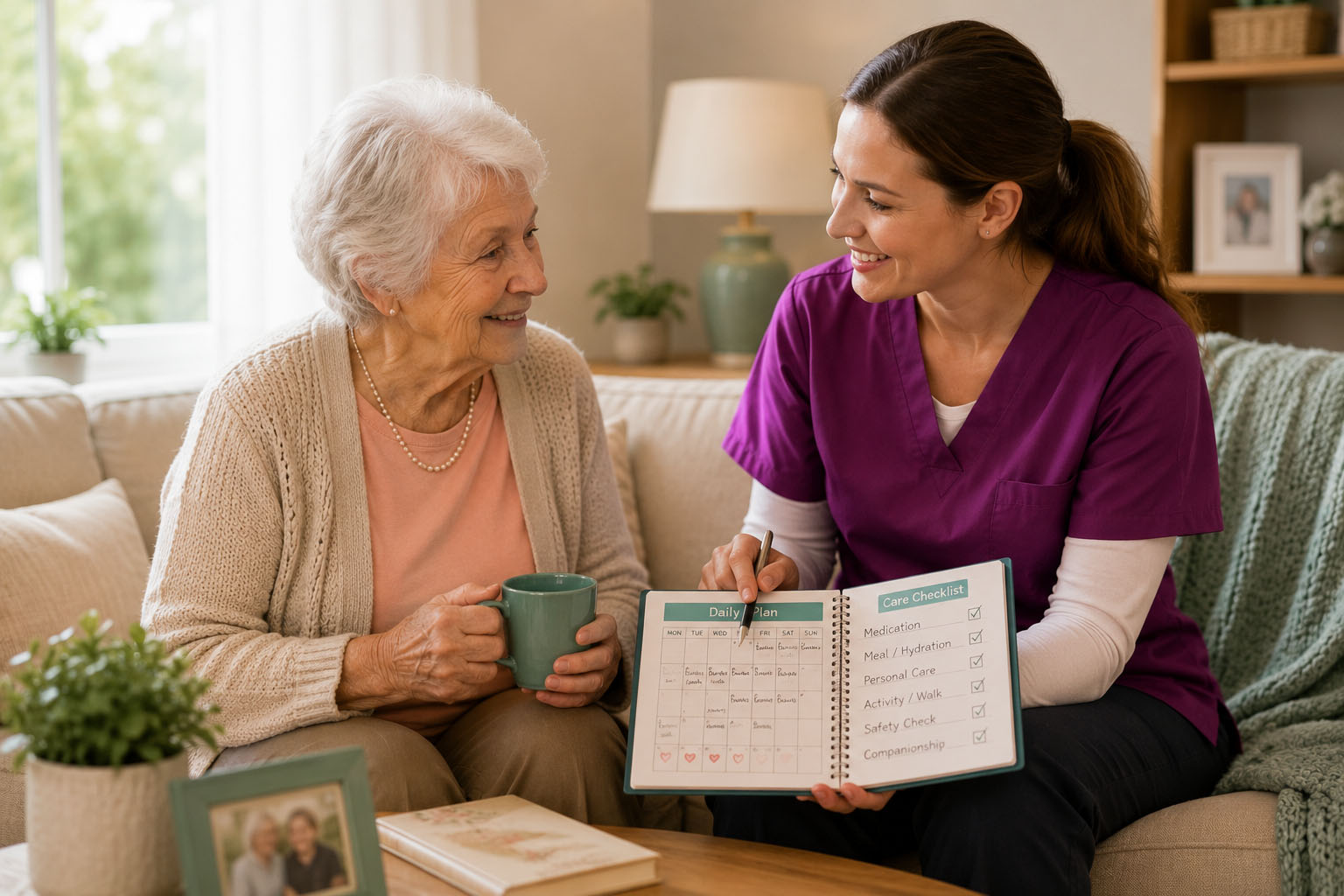
Depending on your loved one’s needs and care plan, non-medical dementia care at home may include help with:

Personal Care

A caregiver can provide respectful assistance with bathing, dressing, grooming, toileting, and other everyday personal-care routines.

For someone with dementia, even familiar tasks may eventually become confusing or frustrating. Having a calm and consistent person available can make those routines easier to manage.

Meal Preparation

People living with dementia may forget to eat, lose interest in preparing food, or have difficulty completing the steps involved in cooking.

A caregiver can prepare meals, encourage regular eating and hydration, and provide companionship during mealtimes.

Medication Reminders

Non-medical caregivers can provide reminders according to the established care plan.

Caregivers do not replace physicians, pharmacists, or nurses and should not independently make medication decisions.

Companionship

Dementia can be isolating for both the individual and the family.

A familiar caregiver can provide conversation, participate in appropriate activities, accompany the senior on walks, look through photographs, listen to music, or simply spend time together.

These interactions can also give family caregivers reassurance that their loved one is not spending long periods alone.

Help With Daily Routines

Predictable routines can be helpful for people experiencing memory loss.

A caregiver can help maintain a consistent rhythm around waking, meals, personal care, activities, and bedtime while adapting to the individual’s preferences.

Mobility and Fall-Safety Support

Changes in balance, judgment, and mobility may increase safety concerns.

A caregiver can provide assistance with everyday movement according to the care plan, help keep walking areas clear, and remain nearby when a senior needs additional support.

Transportation and Errands

As dementia progresses, driving may no longer be safe.

Caregivers may assist with transportation to appointments, errands, family visits, or activities so the senior can remain connected to the community without relying on driving independently.

How Can Families Make the Home Safer for Someone With Dementia?

Home safety needs can change as dementia progresses.

Families in Ashburn caring for someone with dementia should periodically walk through the home and look at it from the perspective of someone who may have difficulty with memory, judgment, vision, or orientation.

Consider whether you need to:

  • Improve lighting in hallways and stairways
  • Remove loose rugs and other trip hazards
  • Keep frequently used items easy to reach
  • Secure medications and potentially dangerous household products
  • Install grab bars where appropriate
  • Reduce clutter
  • Clearly identify important rooms
  • Monitor access to doors if wandering becomes a concern
  • Keep emergency information readily available
  • Review kitchen and appliance safety

Technology such as door alerts or fall-detection devices may provide additional support, but technology should complement—not automatically replace—appropriate human supervision.

An occupational therapist or another qualified professional can also provide individualized home-safety recommendations when needed.

Is It Safe for Someone With Dementia to Live Alone?

Sometimes, particularly in the earliest stages. But living alone should be reassessed regularly.

A person may still be physically capable of bathing, eating, and walking but have difficulty recognizing unsafe situations or remembering whether something has already been done.

Families should consider questions such as:

  • Can they prepare food safely?
  • Do they remember to eat?
  • Can they recognize an emergency?
  • Can they use the phone to ask for help?
  • Are medications being taken correctly?
  • Have they wandered or become lost?
  • Are falls becoming more frequent?
  • Are they leaving doors unlocked?
  • Can they safely use household appliances?
  • Do they become frightened or confused when alone?

When the answer to several of these questions becomes concerning, additional supervision may be necessary.
How Can In-Home Dementia Care Help APAH

How Much Dementia Care at Home Does a Senior Need?

There is no standard number of caregiving hours that works for everyone.

Some families initially need a caregiver for a few hours several days per week. The caregiver may help with meals, personal care, transportation, companionship, and household routines.

As dementia progresses, a senior may need daily assistance, longer shifts, overnight care, or eventually around-the-clock support.

A useful approach is to ask:

When are the most difficult parts of the day?

For one family, mornings may be challenging because their loved one needs help bathing and dressing. Another senior may manage well during the day but become confused or restless in the evening. Another may be physically safe but should no longer spend long periods alone.

Care should be built around the person rather than forcing every family into the same schedule.

What About Family Caregivers?

Many people with dementia remain at home because a spouse, daughter, son, or other relative provides most of their care. Family caregiving can be deeply meaningful, but dementia care can also become demanding over time.

It is common for family caregivers to gradually take on more responsibilities without realizing how much the role has changed. You may begin with grocery shopping and appointments. Later, you may also be handling meals, personal care, nighttime supervision, transportation, household responsibilities, and constant safety concerns.

Professional home care does not have to replace family involvement. Instead, it can fill gaps in the schedule and allow family members to spend more time being a spouse, son, daughter, or grandchild rather than trying to handle every caregiving responsibility alone.

When Might Staying at Home No Longer Be the Best Option?

There may come a point when home is no longer the safest or most practical environment.

Families should consider discussing other care options when there are serious concerns such as repeated wandering, frequent falls, significant behavioral changes, extensive overnight needs, or care requirements that cannot reasonably be managed at home. A physician or other qualified healthcare professional should be involved when there are significant changes in cognition, behavior, mobility, eating, swallowing, or overall health.

Choosing a different care setting is not determined by the dementia diagnosis alone. The decision should consider the person’s current needs, safety, family resources, available professional support, and quality of life.

How Do You Know When It Is Time to Hire a Dementia Caregiver?

You do not need to wait for a crisis. In fact, bringing in support earlier can give your loved one time to become familiar with a caregiver while routines are still relatively established.

It may be time to consider professional help when:

  • Family members are increasingly worried about leaving the senior alone
  • Daily activities are being missed
  • Personal hygiene is declining
  • Meals are becoming inconsistent
  • Family caregivers are becoming overwhelmed
  • Your loved one needs more supervision
  • Nighttime confusion is increasing
  • Transportation has become difficult
  • You are constantly rearranging work or family responsibilities to provide care

The goal is not to take independence away. Good dementia support should help a person continue doing what they can while helping where it is needed.

If you are wondering whether your parent or loved one can continue living safely at home in Ashburn, you do not have to make the decision alone. Talk with A Place At Home about your loved one’s current needs and the level of in-home support that may help them remain safe, comfortable, and connected at home.

Independent Living Support for Adults With Disabilities in Fairfax County, VA

Independent-living-support-in-Fairfax-County

Nobody chooses disability. But most people with disabilities choose exactly the same thing — to live their own life, in their own home, on their own terms.

The challenge is not the desire. It is finding the right support to make it possible.

At A Place at Home — Reston, we provide in-home care for adults with disabilities throughout Fairfax County and Northern Virginia. We see families navigate this process every day. We know which programs exist, which ones have waiting lists, and where the gaps are between what public programs provide and what a person actually needs to live safely and independently at home.

This guide pulls everything together — the local programs available in Fairfax County, the Virginia state programs that apply here, the nonprofit organizations working on the ground in Northern Virginia, and where our caregivers fit into a complete independent living plan.

What Does Independent Living Support Actually Include?

Independent living support is not a single service. It is a combination of supports built around what a specific person needs to live where they choose.

Depending on the individual, it includes:

Personal care — bathing, dressing, grooming, toileting, and hygiene support at the level the person needs

Medication management — reminders, organization, and monitoring for consistency and safety

Meal preparation — planning and preparing nutritious meals that meet dietary and health needs

Mobility and transfer support — safe assistance with movement inside the home and in the community

Transportation — to medical appointments, employment, therapy, and community activities

Household tasks — cleaning, laundry, errands, and home management

Skill development — building daily living skills that increase independence over time

Companion care — reducing isolation and supporting meaningful participation in community life

Where Independent Living Support Comes From in Fairfax County

Support comes from four sources — each with different eligibility criteria, different services, and a different role in a complete plan. Most families end up using more than one.

1. ENDependence Center of Northern Virginia — ECNV

ECNV is the most important free independent living resource in the region — and the one most families have never heard of.

The ENDependence Center of Northern Virginia is a community resource and advocacy center run by and for persons with disabilities. Founded in 1982, ECNV is one of 17 Centers for Independent Living in Virginia — serving Arlington, Fairfax, and Loudoun Counties and the Cities of Alexandria, Fairfax, and Falls Church.

ECNV is peer-led by people with disabilities — including staff, volunteers, and the Board of Directors — who have unique perspectives and understandings of living in the world with a disability.

2. Fairfax County Government Programs

Fairfax County Department of Family Services

The Fairfax County Aging, Disability, and Caregiver Resources intake line connects adults with disabilities to services including assessments for case management and in-home care

Fairfax County’s Disability Rights and Resources provides training, education, and outreach to county residents on their rights under the ADA, the Federal Fair Housing Act, and other disability-related laws. It also supports the Fairfax Area Disability Services Board and AccessAbility Fairfax — a free annual event for individuals with disabilities and their families. Website: fairfaxcounty.gov/familyservices/disabilities

Fairfax-Falls Church Community Services Board

The CSB is the entry point for developmental disability services in Fairfax County.

Virginia Community Services Boards determine eligibility for individuals with intellectual and developmental disabilities to receive Support Coordination. Support Coordinators assess, plan, develop, link, monitor, and coordinate services and supports that empower individuals. The CSB serves as the point of entry for residents of Fairfax County and the Cities of Fairfax and Falls Church who have developmental disabilities and wish to receive services

3. Virginia State Programs

Virginia CCC Plus Waiver

The Commonwealth Coordinated Care Plus Waiver is Virginia’s primary Medicaid program for home and community-based care. For qualifying individuals it covers personal care, respite care, adult day health, and other supports that allow a person to stay home rather than enter a nursing facility.

Eligibility requires meeting Medicaid financial criteria and a clinical level of care determination. To begin in Fairfax County — call (703) 324-7948 or visit NoWrongDoor.Virginia.gov.

We work with many families who are waiting for CCC Plus approval. While the eligibility process moves forward — A Place at Home caregivers can begin providing daily support immediately, so your loved one is never without care during the wait.

4. Nonprofit Organizations

The Arc of Northern Virginia

The Arc of Northern Virginia serves people of all ages with intellectual and developmental disabilities — providing advocacy, DD waiver support coordination, information and referral, public guardianship, Special Needs Trust support, and Tech for Independent Living — an award-winning program that develops customizable lesson plans and an app to promote independence in the community

One family shared: “Every time I run out of options for solving a need for my adult intellectually-disabled son, The Arc of Northern Virginia has provided a pathway for help. Without this organization, our lives would be much more difficult. Website: thearcofnova.org

Where A Place at Home – Reston Fits Into This Picture

Public programs and nonprofit resources are the foundation. But they have real limitations — eligibility requirements, waiting lists, limited hours, and services that stop at a certain point.

That is where A Place at Home comes in.

We provide the daily in-home support that fills the gaps — immediately, consistently, and without the constraints of government programs.

We start the day you call

There are no eligibility applications or waiting lists with A Place at Home. When your family is ready for care — we are ready to begin. For families waiting months for Medicaid waiver approval, our caregivers provide daily support from day one.

The same caregiver. Every visit.

We match caregivers to each individual based on their specific disability, their communication style, their daily routine, and their personality. The same caregiver shows up every day. For adults with disabilities this consistency is not a comfort — it is a functional necessity. A caregiver who understands how the person needs to be supported provides fundamentally better care than a rotating pool of strangers following a care plan.

We support the whole person — not just the tasks

Our caregivers do not just assist with bathing and meals. They accompany clients to work, appointments, and community activities. They provide genuine companionship that reduces isolation. They support the independence the person is working toward — not the dependence that low-quality care creates.

Payment

A Place at Home — Reston accepts private pay and most long-term care insurance policies. We do not accept Medicare or Medicaid. This means our care schedules and caregiver assignments are determined entirely by the individual’s needs — not government reimbursement rates.

Is Your Loved One Ready for Independent Living Support?

Our care coordinator will meet with your family at no charge — assessing your loved one’s specific needs and building an in-home care plan that supports the independent life they want to live.

Top 11 Best Senior Living Communities in Reston, VA for 2025: Assisted & Independent Living

home for seniors living

Choosing the right senior living community for yourself or a loved one is one of the most important decisions you can make. Families in Reston, VA often search for communities that provide a balance of independence, support, safety, and a vibrant lifestyle. Reston, VA and the surrounding Fairfax County area are home to 48 senior living communities, but according to the U.S. News 2025 Best Senior Living Rankings, only 11 communities earned a “Best” rating. These top-rated communities stand out for their commitment to safety, quality dining, compassionate caregiving, and meaningful daily enrichment — the things that matter most to seniors and their families.

To make your search easier, we’ve gathered the Top 10 senior living communities in Reston, VA for 2025, including both assisted living and independent living options.

1. Sunrise at Fair Oaks – A community that blends warmth and care

If you’re searching for a community that combines professional care with genuine warmth, Sunrise at Fair Oaks is an excellent choice. Residents often describe it as welcoming and full of life—whether it’s spending time with the beloved community dog, Song, or taking part in resident-led clubs, fitness classes, and group outings.

The community’s location makes daily living both comfortable and convenient. With the Inova Fair Oaks Hospital campus just minutes away, residents and families have the peace of mind that quality healthcare is always close by.

Everyday essentials are also easy to access—CVS Pharmacy is less than a mile away, while a variety of cafés and restaurants provide plenty of options for social outings. Whether it’s grabbing a morning coffee at Starbucks or enjoying a meal with family at Dogfish Head Alehouse, residents can stay connected to the local neighborhood without hassle.

Families appreciate the experienced caregivers who create personalized care plans to meet each individual’s needs, ensuring both safety and dignity every day.

What Makes Sunrise at Fair Oaks Special

  • Anytime dining with chef-prepared meals and seasonal menus
  • Resident-led clubs & social activities including fitness, art, and community outings
  • 24/7 staff support with medication management and specialized memory care services

2. Falcons Landing – Resort-style living with a military legacy

Best for: Independent Living, Assisted Living, Memory Care & Skilled Nursing

Falcons Landing is more than just a senior living community — it’s a full Continuing Care Retirement Community (CCRC) designed to support residents through every stage of aging. Originally founded to serve veterans and federal employees, Falcons Landing now welcomes everyone while honoring its strong military legacy.

With a wide range of care levels — from independent living to skilled nursing — residents can enjoy peace of mind knowing they’ll always have the support they need without having to move off-campus.

Why Residents Love Falcons Landing

  • Resort-style amenities including a fitness center, swimming pool, and art studio
  • Five-star dining experiences led by a celebrated executive chef
  • Seamless care transitions across independent living, rehab, assisted living, memory care, and nursing care — all in one community.

3. Sunrise at Hunter Mill – Personalized support in a garden setting

Best for: Assisted Living & Memory Care

For seniors who want a blend of natural beauty and engaging activities, Sunrise at Hunter Mill offers the best of both worlds. Nestled among lush walking paths and landscaped gardens, this community creates a peaceful, home-like environment where residents can thrive. Sunrise of Hunter Mill is just minutes from Vienna and Fairfax, placing residents close to the heart of Northern Virginia. The community is conveniently located near the Oakton Library for book lovers, as well as a variety of local shops and diverse restaurants, perfect for family visits or casual outings.

Beyond location, Sunrise of Hunter Mill provides a wide spectrum of care options — including assisted living, memory care, short-term respite stays, and hospice care coordination. This ensures that residents not only enjoy the benefits of the surrounding neighborhood but also receive the level of support they need as their care requirements change.

Every care plan is personalized to the individual, helping residents maintain as much independence as possible while knowing support is available 24/7. Families appreciate the balance of compassionate care, community connection, and scenic surroundings.

Why Residents Love Sunrise at Hunter Mill

  • Scenic gardens & walking paths, plus book clubs and social gatherings
  • Fitness and art programs tailored to resident interests
  • Specialized memory care with individualized support plans

4. Brightview Great Falls – A lifestyle built around engagement

Best for: Assisted Living & Memory Care

At Brightview Great Falls, life feels more like a boutique resort than traditional senior housing. The community’s “Vibrant Living” philosophy means residents spend less time worrying about daily chores and more time pursuing passions — from attending concerts and volunteering to enjoying happy hour with friends.

With flexible rental options and a wide variety of engaging programs, Brightview creates a warm, lively environment that encourages connection and fulfillment every day.

Why Residents Love Brightview Great Falls

  • No entrance fees with a flexible rental model
  • Creative programs like cooking classes, art workshops, and community concerts
  • Restaurant-style dining crafted with senior nutrition and enjoyment in mind

5. Arbor Terrace Herndon – Independent living with a modern touch

Best for: Independent Living

Arbor Terrace Herndon is designed for seniors who want the freedom of independent living while staying connected to a vibrant community. The setting feels like a resort-style neighborhood, with inviting spaces such as a library, art studio, and fitness center.

What sets Arbor Terrace apart is its flexibility — residents can enjoy the independence they desire today with the reassurance that optional care services, like medication management or 24-hour supervision, are available if their needs change over time.

Why Residents Love Arbor Terrace Herndon

  • Independent living apartments with three daily meals included
  • Engaging activity schedule featuring gardening, fitness, and art programs
  • Optional access to higher-level support, including memory care and physical therapy services

6. Braddock Glen – Affordable and close-knit assisted living

Best for: Assisted Living

For families seeking an affordable assisted living community that still delivers personalized care, Braddock Glen is a top choice. Its smaller size creates a close-knit, intimate environment where residents quickly form meaningful friendships and feel part of a supportive family-like setting.

The community emphasizes both comfort and engagement, with a variety of activities and flexible dining options designed to make daily life enjoyable and stress-free.

Why residents love Braddock Glen

  • Chef-prepared meals with flexible dining options
  • Engaging activities such as exercise classes, book clubs, art programs, and religious services
  • Individualized care plans tailored to support daily living needs

7. Sunrise of Vienna – Modern senior living in the heart of fairfax county

Best for: Assisted Living & Memory Care

Blending modern design with compassionate care, Sunrise of Vienna offers seniors a vibrant lifestyle right in the heart of Fairfax County along Maple Avenue. The community’s personalized approach means residents not only receive the support they need but also enjoy opportunities to pursue their interests and passions every day.

With a strong focus on both engagement and safety, families feel confident knowing their loved ones are well cared for in an uplifting environment.

Why families choose sunrise of vienna

  • Engaging daily activities including fitness, art, and social programs
  • Tailored memory care support with 24-hour supervision
  • Fresh, seasonal dining that encourages connection at mealtimes

8. Brightview Dulles Corner – Vibrant living with flexible care options

Best for: Independent Living, Assisted Living & Memory Care

At Brightview Dulles Corner, seniors can embrace the freedom of independent living while knowing support is available whenever it’s needed. Guided by its “Vibrant Living” philosophy, the community emphasizes fun, wellness, and strong social connections through engaging programs and events.

Whether it’s enjoying happy hour with friends, attending a live concert, or participating in lifelong learning classes, residents have countless opportunities to stay active and connected — with the added reassurance of care services available on-site.

Why residents love BrightView Dulles corner

  • Flexible rental model with no long-term commitment
  • Engaging programs like happy hours, concerts, and lifelong learning classes
  • Comprehensive support including memory care and daily living assistance

9. Brightview Woodburn (Fairfax) – Assisted living with extra support

Best for: Assisted Living & Memory Care

Brightview Woodburn offers seniors the comforts of assisted living with the added reassurance of specialized care services when needed. Its dedicated Wellspring Village® memory care neighborhood is especially valued by families, providing a safe and supportive environment for residents living with dementia.

With a strong emphasis on both wellness and enrichment, residents can enjoy a balance of daily support and meaningful engagement in a welcoming community.

Why Residents Love Brightview Woodburn

  • Beautiful gardens, fitness center, and library for relaxation and recreation
  • Enrichment activities including concerts, volunteer programs, and lifelong learning
  • Enhanced memory care support through the Wellspring Village® neighborhood\

10. Sunrise of McLean – Personalized, Multicultural Care

Best for: Assisted Living & Memory Care

Sunrise of McLean is known for its multilingual staff and highly personalized care, making it a welcoming choice for families from diverse backgrounds. Located in a quiet suburban neighborhood near Tysons, the community offers both compassionate support and a wide range of engaging daily programs that keep residents active and socially connected.

Families appreciate the balance of round-the-clock care and individualized wellness plans that ensure every resident receives attention tailored to their needs.

Why Residents Love Sunrise of McLean

  • Daily activities including art, fitness, and social programs
  • Freshly prepared meals served three times a day, plus snacks
  • 24-hour support with personalized wellness and care plans

11. Sunrise at Reston Town Center – Assisted living in the heart of Reston

Best for: Assisted Living & Memory Care

For seniors who value urban convenience with trusted care, Sunrise at Reston Town Center is a standout choice. Located just steps from Reston’s shops, restaurants, and cultural attractions, the community combines an energetic setting with the personalized, compassionate support Sunrise is known for.

Families appreciate the experienced caregivers — many of whom have been part of the Northern Virginia Sunrise network for years — while residents enjoy a vibrant calendar of activities that encourage creativity, wellness, and connection.

Why It’s a Favorite

  • Prime location in Reston Town Center
  • Engaging programs such as painting, cooking, flower arranging, walking clubs, and Bible study
  • Compassionate 24/7 caregivers offering personalized care plans

Amenities & Lifestyle

  • Library, Bistro café, salon, outdoor spaces, and private dining rooms
  • Fitness and exercise classes, religious services, and movie nights
  • Pet-friendly environment with resident parking and transportation services

Care & Dining

Residents benefit from comprehensive care options, including medication management, physical therapy, wellness checks, and specialized memory care programs. The community’s culinary team prepares fresh, seasonal meals daily, offering dining and accommodation for dietary needs.

Cost of Senior Living in Reston, VA (2025)


Type of Care Reston / Fairfax County Avg (Monthly) Virginia State Avg National Avg
Independent Living $5,289 ~$4,548 ~$4,143
Assisted Living $5,000 – $6,232 ~$6,050 ~$5,190
Memory Care $7,435 ~$6,563 ~$5,625

How to Choose the Right Senior Living Community in Reston

With so many options in Reston and the greater Fairfax County area, choosing the right senior living community can feel overwhelming. Here are some key factors to consider when making your decision:

Identify the Right Level of Care

  • Independent Living – Best for active seniors who want freedom from chores but don’t need daily support.
  • Assisted Living – Ideal for those who need help with daily activities such as bathing, dressing, or medication management.
  • Memory Care – Specialized programs for seniors living with Alzheimer’s disease or other forms of dementia.
  • Continuing Care Retirement Communities (CCRCs) – Provide multiple levels of care on one campus, ensuring seamless transitions if needs change.

Consider Location & Accessibility

  • Proximity to family and friends for regular visits.
  • Access to healthcare facilities like Reston Hospital Center or Inova Fairfax.
  • Convenience of nearby shopping, parks, and cultural activities.

Review Amenities & Lifestyle Options

Look for features that match your loved one’s interests and routines:

  • Fitness centers, walking trails, or art studios
  • Clubs, volunteer opportunities, and lifelong learning classes
  • Pet-friendly policies and community events

Evaluate Dining & Nutrition

Food is central to well-being. Ask about:

  • Anytime dining flexibility
  • Menus tailored to dietary restrictions
  • Resident feedback on meal quality

Tour the Community in Person

Nothing replaces seeing a community firsthand. During your visit:

  • Observe interactions between staff and residents.
  • Check the cleanliness and safety of the environment.
  • Ask about staff-to-resident ratios and caregiver training.

Understand Costs & Contracts

  • Request a clear breakdown of monthly fees and what’s included.
  • Clarify whether the community requires an entrance fee or offers a rental model.
  • Ask about future costs if care needs increase.

Conclusion – Finding the Best Senior Living Option in Reston

With so many excellent senior living communities in Reston and Fairfax County, families have a variety of choices for assisted living, memory care, and independent living. Each community highlighted here offers something unique — from resort-style amenities to personalized caregiving and vibrant social opportunities. Choosing the right place can feel overwhelming, but you don’t have to navigate the decision alone. At Assisting Hands Home Care, we partner with families every day to provide trusted, compassionate non-medical home care services — helping seniors remain safe, comfortable, and independent at home.

The Role of senior caregivers in helping seniors age in place in Reston, VA

Live in and 24 hour Care

As the senior population in Reston, VA, continues to grow, many older adults are choosing to age in place—remain in their homes for as long as possible instead of moving to assisted living facilities. According to the U.S. Census Bureau, nearly 13% of Reston’s population is over the age of 65, a number that’s expected to increase in the coming years. This growing demographic faces unique challenges, but with the right support, seniors can maintain their independence and quality of life.

At A Place at Home – Reston, we specialize in providing senior caregiving services in Reston that help elderly residents live comfortably at home. But what exactly does “aging in place” mean, and how do senior caregivers in Reston play a crucial role in making it possible?

What does aging in place mean for seniors in Reston, VA?

Aging in place refers to the ability for seniors to live in their own homes, safely and independently, as they grow older. It involves adapting the home environment to accommodate physical and health changes and often includes support for activities of daily living (ADLs), such as dressing, bathing, and meal preparation.

In Reston, where many seniors have lived in the area for decades, the desire to remain in their homes is strong. Aging in place allows seniors to maintain their personal routines, stay connected with friends and family, and continue to engage with the community they love. However, as AARP highlights, managing chronic health conditions and staying socially engaged can be difficult for seniors, particularly those living alone.

Common challenges seniors face in Reston, VA

As seniors age, they often experience physical and cognitive changes that make everyday tasks more difficult. Here are some common challenges that seniors in Reston face, which may make aging in place more complicated:

  1. Mobility Issues: Many seniors suffer from arthritis, weakened muscles, or balance problems that make it difficult to move around safely. This increases the risk of falls, especially in homes with stairs, clutter, or poor lighting.
  2. Chronic Health Conditions: Seniors in Reston are often managing chronic conditions such as diabetes, heart disease, and hypertension. These conditions require ongoing monitoring and medication management, which can be overwhelming for older adults living alone. According to the CDC, chronic diseases affect a significant percentage of the senior population, making it essential to stay on top of treatments and prevent complications.
  3. Cognitive Decline: As people age, some may experience cognitive decline or develop conditions such as Alzheimer’s or dementia. Seniors may forget to take medications, become confused, or struggle to perform basic tasks like cooking or cleaning.
  4. Social Isolation: Many seniors in Reston may experience loneliness as friends and family members become busier or move away. Isolation can lead to depression and negatively impact physical health.
  5. Difficulty with Household Tasks: Tasks like cleaning, cooking, grocery shopping, and managing finances can become too much for seniors to handle on their own, especially if they have physical limitations or mobility problems.

How Senior Caregivers in Reston, VA, Can Help

Senior caregivers are specially trained professionals who assist seniors with their daily needs, enabling them to live safely and independently in their own homes. Here’s how senior caregivers in Reston can help address the challenges seniors face:

  1. Personal Care Assistance
    Senior caregivers help with basic tasks such as bathing, dressing, grooming, and toileting. This support ensures that seniors can maintain their hygiene and dignity without the stress of managing these tasks on their own.
  2. Mobility Assistance & Fall Prevention
    Caregivers can help seniors move around the home safely, whether that means providing physical support, assisting with walking, or modifying the environment to prevent falls. Simple changes like adding grab bars in bathrooms or improving lighting can make a big difference.
  3. Chronic Condition Management
    Senior caregivers assist with monitoring medications, tracking vital signs, and helping with dietary restrictions or exercise plans. Having a trained professional can ensure that seniors stay on top of their health and reduce hospital readmissions.
  4. Cognitive and Memory Care
    Many seniors in Reston face memory-related challenges. Caregivers trained in Alzheimer’s and dementia care can help seniors with daily routines, reminders, and emotional support. Creating a structured environment and offering companionship can help reduce anxiety and confusion.
  5. Companionship & Social Engagement
    One of the key aspects of aging in place is maintaining strong social connections. Senior caregivers provide companionship, engage in conversation, and assist with hobbies or activities that keep the senior mentally and emotionally stimulated.
  6. Light Housekeeping & Meal Preparation
    Caregivers help with light housekeeping, ensuring that the home remains clean and free from hazards. They can also assist with preparing nutritious meals, ensuring seniors are eating well and managing any special dietary needs.
  7. Respite for Family Caregivers
    Many families in Reston are caregivers for their elderly loved ones. Senior caregivers can step in to provide respite care, giving family members a much-needed break while ensuring their loved ones continue to receive quality care.

Why Senior Caregivers in Reston, VA, Are the Key to Aging in Place Successfully

Choosing to age in place requires a support system. Senior caregivers in Reston, VA, provide the care and assistance that allow elderly individuals to remain in their homes for longer, with dignity and comfort. With the right caregiver support, seniors can overcome the challenges of aging, from mobility issues to social isolation, while continuing to live independently.

If you or a loved one is considering aging in place in Reston, VA, A place at Home offers a wide range of personalized senior care services tailored to meet the unique needs of each individual. Whether you need help with personal care, companionship, or managing chronic conditions, our compassionate caregivers are here to provide the support you need to age comfortably at home.

Conclusion

Aging in place in Reston, VA, is an achievable goal for many seniors, but it requires the right resources and support. With the help of professional senior caregivers, your loved ones can continue to live independently, safely, and comfortably in the familiar surroundings of home.

Also Read: When Care Can’t Wait: How Immediate In-Home Care Can Start Within 24 Hours