

Safe transfers are among the most important yet high-risk tasks in senior care. Whether assisting a loved one at home or working as a professional caregiver, proper transfer technique reduces the risk of falls, back injuries, skin tears, and long-term mobility complications.
In this article, we’ll take a closer look at why safe lifting and transfers matter and how to approach them with confidence and care. From proper preparation and effective techniques to the use of supportive equipment, each step plays a role in reducing risk and improving comfort. We’ll also touch on the importance of ongoing training and practical safety considerations that help protect both seniors and caregivers throughout the process.
How to Safely Lift and Transfer a Senior
The safest way to lift and transfer a senior is first to assess their mobility level, prepare the environment, and use proper body mechanics such as bending at the knees and keeping the back straight.
Keep the senior close to your body, avoid twisting, and always move in a controlled, coordinated motion. Use assistive devices like gait belts, slide boards, or mechanical lifts when needed, especially if the senior cannot safely bear weight or maintain balance.
Why Safe Lifting and Transfers Are Essential
Improper lifting during senior transfers can lead to serious injuries for both the caregiver and the individual receiving care. Using the right technique for each situation is essential, as transfer methods should always be tailored to the senior’s condition, mobility level, and immediate needs.
According to data from the National Institute for Occupational Safety and Health (NIOSH), patient handling tasks account for a large percentage of caregiver musculoskeletal injuries, especially to the lower back and shoulders. More than 50% of all caregivers report injuries from lifting or transferring an older adult, and over 30% of seniors experience difficulty with transfers.
For seniors, unsafe transfers can lead to:
- Falls and fractures (especially hip fractures)
- Skin tears due to friction or dragging
- Fear of movement, which reduces mobility over time
- Loss of independence due to injury complications
For caregivers:
- Chronic back strain
- Acute lifting injuries
- Long-term mobility limitations
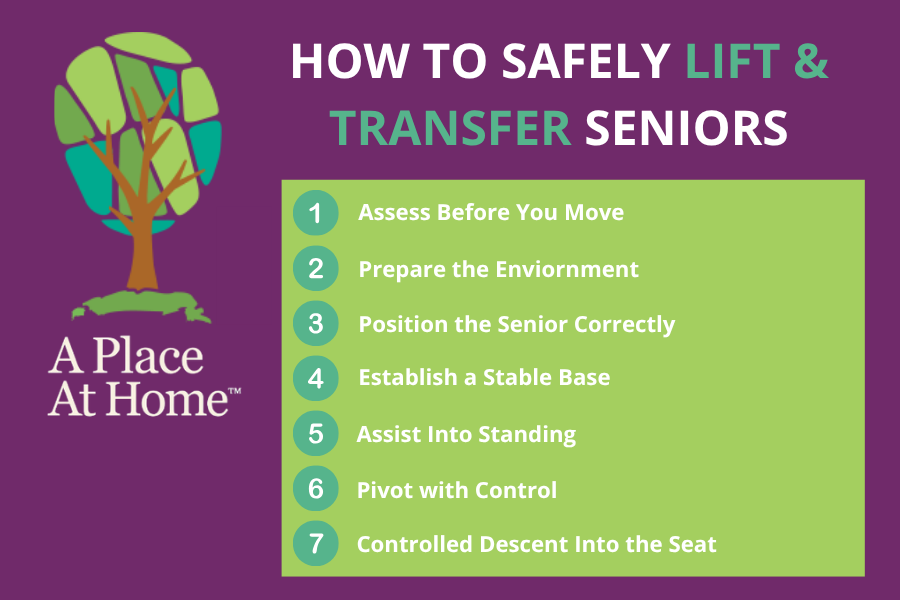
Step 1: Assess Before You Move
Preparation is essential for a safe and successful senior transfer. Research shows that falls are a leading cause of injury-related hospitalization among adults aged 65 and older. Taking a few moments to assess the situation can significantly reduce the risk of injury and help the process go more smoothly. This starts with evaluating the senior’s mobility and choosing the most appropriate transfer method based on their abilities and current condition.
Before beginning, evaluate:
- Can the senior bear weight on their legs?
- Can they follow instructions consistently?
- Are they dizzy, weak, or in pain?
- Have there been any recent falls or medical changes?
Home safety modifications and consistent environmental setup are key parts of long-term fall prevention strategies. If the senior cannot bear weight at all or is unstable, a mechanical lift should be used instead of a manual transfer. Mobility is not static. It can change from hour to hour depending on fatigue, medication, or health status.
Step 2: Prepare the Environment
Most transfer injuries happen before the actual movement begins. The environment should be prepared so nothing interferes with balance or footing.
This includes:
- Removing rugs, cords, and clutter from the path
- Ensuring floors are dry and non-slippery
- Positioning the chair, wheelchair, or toilet close to the starting point
- Locking wheelchair brakes and stabilizing all seating surfaces
- Ensuring proper lighting so that footing and obstacles are visible
Both caregivers and seniors should also wear stable, non-slip footwear whenever possible.
Step 3: Position the Senior Correctly
Proper positioning is also a foundational principle used in professional caregiving and mobility assistance. The senior should be brought to a seated position at the edge of the bed or chair and allowed to stabilize before any standing movement begins. Feet should be flat on the floor, slightly behind the knees to support forward balance. A brief pause is essential here. Many falls occur when caregivers move too quickly into standing before the senior has fully regained equilibrium.
Step 4: Establish a Stable Base
The caregiver should position their feet shoulder-width apart, with one foot slightly forward for balance. The back should remain straight, and the caregiver should be close enough that no reaching is required. At this stage, communication is important. The caregiver should clearly explain what is about to happen so the senior is prepared to move at the same time.
Step 5: Assist Into Standing Using Controlled Momentum
Rather than lifting the senior upward, the goal is to guide them forward into standing. As the senior leans forward, their weight naturally shifts over their feet. The caregiver supports this movement using a gait belt or secure hold at the torso, helping stabilize rather than lift. This is one of the most important safety principles: the movement should be assisted, not forced. This technique is commonly used in professional mobility assistance to reduce strain and improve safety.
Step 6: Pivot With Control
Once standing, pause briefly to ensure balance is stable before moving. The caregiver and senior should then pivot together in small steps toward the destination surface. The caregiver should never twist the body. Instead, the feet should reposition to guide the turn. Most falls occur when caregivers rush this phase or begin turning before balance is established.
Step 7: Controlled Descent Into the Seat
As the senior reaches the chair, wheelchair, or toilet, the caregiver guides them backward until they feel the surface behind their legs. The descent should be slow and controlled, ensuring full contact with the seat before releasing support. Once seated, adjust posture so the senior is fully supported and stable.
Common Mistakes to Avoid During Transfers
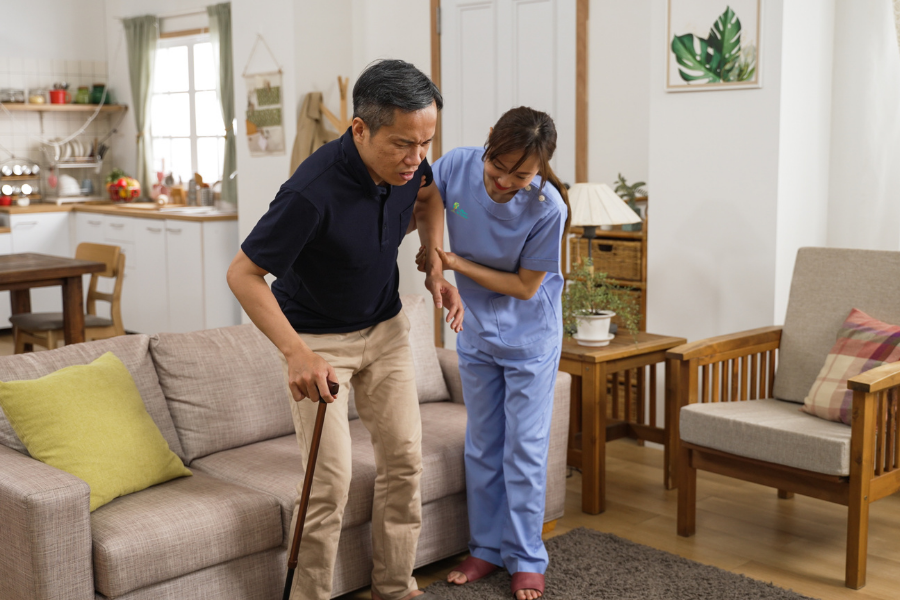
Most transfer injuries occur due to predictable errors:
- Twisting instead of pivoting with the feet
- Lifting with the back instead of the legs
- Moving before the senior is stable
- Forgetting to lock the wheelchair brakes
- Attempting transfers without assistance when required
- Rushing due to time pressure
Avoiding these mistakes is often more important than learning advanced techniques.
When Should You Use Transfer Equipment?
There are several types of senior transfers, and the right approach depends on the individual’s mobility, strength, and level of assistance needed. While each situation is unique, understanding the fundamentals of common transfers can help caregivers move safely and confidently.
- Bed-to-chair transfers: Prepare the space by clearing any obstacles. Help the senior sit up on the edge of the bed and ensure they feel steady before proceeding. If they can assist, they can push off using the chair’s armrests. If not, a transfer belt or slide sheet can provide added support. Stay close, keep your back straight, bend at the knees, and use your legs as you guide them into the chair. Once seated, adjust their position so they are comfortable, stable, and have their feet flat on the floor.
- Chair-to-wheelchair transfers: These transfers require careful positioning and communication. Place the wheelchair close to the chair and lock the brakes before beginning. Encourage the senior to move to the edge of the seat with their feet firmly on the floor. As they lean slightly forward, assist them into a standing position, then pivot them toward the wheelchair. Gently lower them into the seat, making sure they are secure, properly aligned, and comfortable with their back supported.
- Standing from a chair or bed: Start by ensuring the area is clear and the surface is stable. The senior should scoot forward with their feet flat on the ground and lean slightly forward to help initiate the movement. Provide support with your arm or a gait belt, keeping proper posture as you lift, back straight, knees bent, and no twisting. Controlled, steady movement is key to maintaining balance and safety.
- Bathroom transfers: Bathroom transfers, particularly to and from the toilet, require extra attention to positioning and stability. The senior should be close enough that the backs of their legs touch the toilet before sitting. Encourage them to reach back for grab bars or stable support as they lower themselves. Assist as needed to ensure a smooth, controlled descent. Proper positioning is important; if their feet are not firmly on the ground, their risk of slipping or injury increases.
When Should You Not Try to Transfer a Senior On Your Own
Falls are a leading cause of injury-related hospitalization among older adults. A transfer should not be performed alone if:
- The senior cannot bear weight at all
- There is visible instability, confusion, or resistance
- The caregiver feels strain or loss of control
- The environment is unsafe or obstructed
- No assistive equipment is available when needed
In these cases, additional help or mechanical lifting should be used.
Senior Safety Tips During Transfers
Before and during any transfer, caregivers should follow proper safety precautions to reduce the risk of injury for both themselves and the senior. At the same time, seniors can play an active role in making the process safer and more comfortable.
Open communication is key. Seniors should speak up if they feel pain, dizziness, or discomfort so the caregiver can adjust or pause the transfer as needed. Caregivers, in turn, should clearly explain each step, while seniors listen and follow guidance to help movements stay coordinated and controlled.
Simple steps like wearing non-slip footwear can also make a meaningful difference by reducing the risk of slips and falls. Additionally, both the caregiver and the senior should focus on using only the necessary muscles during the transfer, avoiding unnecessary strain, and helping the movement feel more natural and secure.

Training and Practice for Caregivers
Safe transfers are a learned skill that improves with training and repetition. Caregivers benefit from hands-on instruction in body mechanics, mobility assessment, and proper use of assistive devices. Professional standards supported by organizations like the CDC and OSHA emphasize that proper training and equipment use are essential for reducing caregiver injury.
When to Consider Professional Support for Safe Transfers
Even with proper technique, senior transfers can become increasingly difficult as mobility changes over time. What may start as simple assistance can gradually shift into a higher-risk situation that requires more strength, skill, and consistency than most family caregivers can safely provide on their own. In these cases, home care services from professional caregivers can make a meaningful difference in both safety and peace of mind.
Trained caregivers are equipped to:
- Perform safe transfers consistently using proper body mechanics
- Select and use assistive devices correctly based on mobility level
- Reduce physical strain and injury risk for family caregivers
- Adjust transfer techniques as the senior’s condition changes over time
For families, this support helps ensure that transfers are handled safely and correctly every time, especially during higher-risk moments such as nighttime care, bathroom assistance, or progressive mobility decline. Families working with A Place At Home – North Tucson receive experienced caregivers trained in safe lifting and transfer techniques, helping protect both seniors and family members while maintaining dignity, comfort, and confidence in daily care routines.
If you’re looking for additional support or have questions about in-home care options, contact A Place At Home – North Tucson to learn how professional caregivers can help ensure safe and consistent transfer assistance at home.
FAQs: Safe Senior Lifting and Transfer Techniques
What equipment helps with safe senior transfers?
Common transfer equipment includes gait belts for stability, slide boards for lateral transfers, and mechanical lifts for individuals who cannot bear weight. Sit-to-stand devices may also help seniors who need partial assistance. The right equipment depends on the senior’s mobility level and safety needs.
When should you not lift a senior alone?
You should not attempt a transfer alone if the senior cannot bear weight, is unstable, confused, or resisting movement. It is also unsafe if you feel strain, lack control, or do not have proper assistive equipment available. In these cases, a second caregiver or mechanical lift should be used.
What are common mistakes when lifting seniors?
Common mistakes include lifting with the back instead of the legs, twisting during movement, rushing the transfer, and failing to lock wheelchair brakes. Another major risk is attempting to lift a senior who is not stable or does not have proper footing before standing.
Can one person safely transfer a senior?
It depends on the senior’s mobility level. If the senior can bear weight and assist with movement, one caregiver may be sufficient using proper technique and equipment. If the senior is fully dependent or unstable, two caregivers or a mechanical lift is required for safety.