

Changes in an older adult’s mental status often prompt a visit to the doctor. Symptoms such as confusion, withdrawal, or anxiety may indicate delirium or dementia. It’s important for caregivers to understand the differences between these two conditions, which can have similar signs. According to the Alzheimer’s Association, nearly 6.5 million Americans age 65 and older are living with dementia, while studies show that up to 50% of hospitalized seniors experience delirium at some point during their stay.
While delirium and dementia share many symptoms, they are not diseases themselves but rather clusters of signs pointing to underlying health issues. Despite these similarities, the two conditions differ medically in their causes, duration, and prognosis, which means their treatments are also distinct.
What Is the Difference Between Delirium and Dementia?
Delirium is a sudden, temporary change in mental status, while dementia is a slow, progressive decline. Delirium usually comes on quickly, often over hours or days, and is almost always a sign that something is wrong right now, such as an infection, medication reaction, or another acute medical issue. Dementia, on the other hand, develops gradually over months or years as brain cells are damaged by diseases like Alzheimer’s.
Caregivers can also watch how the older adult’s attention and alertness change. A person with delirium may seem fine one moment and then very confused the next, with trouble focusing or staying awake. By contrast, someone with dementia is more likely to show steady, ongoing memory problems, but their alertness usually remains the same in the earlier stages.
Another important difference is reversibility. Delirium is often reversible when the underlying cause is treated quickly. Dementia is generally not reversible, although treatment and support can slow progression and improve quality of life.
What Is Delirium in Older Adults?
Delirium is a sudden, temporary change in a senior’s mental state caused by an underlying medical condition, medication, or other disruption to normal brain function. According to the National Institutes of Health, delirium affects an estimated 1 in 3 seniors after major surgery and occurs in up to 30% of older adults with infections. Neurotransmitter imbalances, particularly involving dopamine and serotonin, contribute to its symptoms.
Common Causes of Delirium
- Infections, such as urinary tract infections or the flu
- Side effects of medications
- Hospitalization, surgery, or anesthesia
- Metabolic imbalances or other acute illnesses
Symptoms of Delirium
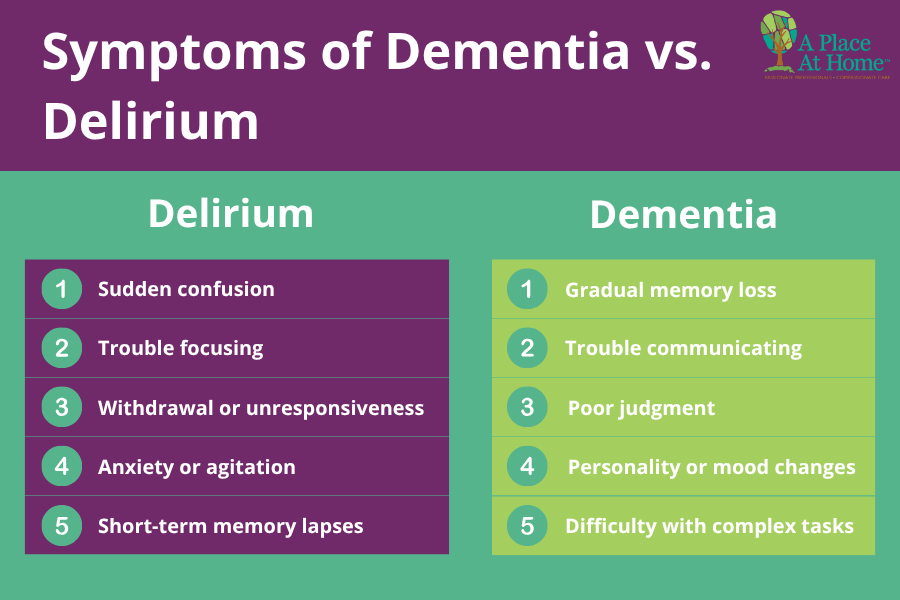
- Sudden confusion or disorientation
- Difficulty focusing or sustaining attention
- Withdrawal or emotional changes like anxiety
- Forgetfulness regarding recent events or surroundings
How Long Delirium Lasts & When to Seek Help
Delirium typically develops within hours or days. Recovery is faster in otherwise healthy seniors when the underlying cause is identified and treated promptly. In more serious cases, some cognitive function may not fully return. Anyone showing signs of delirium should see a doctor immediately.
What Is Dementia?
Dementia is a progressive syndrome that gradually affects memory, thinking, and behavior. Unlike delirium, dementia is usually irreversible, although treatments can help manage symptoms. Common types include Alzheimer’s disease, vascular dementia, and Lewy body dementia. Alzheimer’s disease accounts for 60–80% of dementia cases, while vascular dementia affects roughly 10% of seniors.
Types of Dementia in Seniors
- Alzheimer’s Disease: This is the most common type of dementia. It typically starts with mild memory loss, such as forgetting recent conversations, appointments, or where items were placed.
- Vascular Dementia: Vascular dementia is caused by reduced blood flow to the brain, often after a stroke or a series of small, “silent” strokes.
- Lewy Body Dementia: Lewy body dementia is linked to abnormal protein deposits in the brain. Attention and alertness can fluctuate from day to day.
- Frontotemporal Dementia (FTD): This type of dementia affects the parts of the brain responsible for behavior, personality, and language.
- Mixed Dementia: Some older adults have more than one type of dementia at the same time, such as Alzheimer’s disease combined with vascular dementia.
Symptoms of Dementia
- Gradual memory loss and difficulty recalling names or events
- Trouble communicating or solving problems
- Poor judgment or disorientation
- Personality and psychological changes, such as anxiety, paranoia, or depression
How Dementia Progresses Over Time
Dementia progresses slowly, though certain types, like vascular dementia, can appear suddenly after a stroke. Early intervention can improve quality of life, but the condition generally worsens over time. Professional Alzheimer’s and dementia home care can help seniors maintain safety, comfort, and cognitive function by providing personalized daily support, structured routines, and mental stimulation in the familiarity of their own home.
Delirium vs. Dementia: Side-by-Side Comparison
| Feature | Delirium | Dementia |
|---|---|---|
| Onset | Sudden | Gradual |
| Duration | Temporary | Chronic, progressive |
| Attention | Impaired | Often normal early on |
| Memory | Usually intact | Impaired |
| Reversibility | Often reversible | Usually irreversible |
| Common Causes | Infections, medication, and surgery | Neurodegenerative disease, vascular changes |
Shared Risk Factors for Dementia and Delirium
Advancing age is a shared risk factor for both delirium and dementia. Medical conditions, like infections, also increase vulnerability to these two conditions. An older adult with dementia has a greater risk of developing delirium. Having delirium for an extended period can increase the risk of dementia.
Seniors with multiple health issues, such as infections or thyroid problems, are more difficult to diagnose. This is because many ailments produce symptoms similar to dementia and delirium. Plus, doctors are unable to determine the baseline mental state in seniors with several chronic illnesses.
How Delirium and Dementia Are Diagnosed
A physician evaluates seniors to determine the underlying cause of mental changes:
- Delirium: Physical and neurological exams, mental status review, and medical history
- Dementia: Cognitive testing, biomarkers for Alzheimer’s, imaging, and ongoing monitoring
Accurate diagnosis is crucial for treatment and care planning.
Treatment for Delirium and Dementia
Treating Delirium
Treatment for delirium focuses on identifying and addressing the underlying triggers, such as infections, medications, or metabolic imbalances, to help restore normal cognitive function. In contrast, dementia is a progressive condition, and while it cannot be cured, certain medications, like cholinesterase inhibitors, can temporarily improve memory, thinking, and daily functioning.
Managing Dementia Symptoms
Caregivers play a crucial role in supporting individuals with dementia by breaking large tasks into smaller, manageable steps, providing consistent routines, and minimizing potential sources of confusion. In-home dementia care can further enhance quality of life by allowing seniors to remain safe, engaged, and comfortable in the familiar surroundings of their own home while receiving personalized assistance tailored to their needs.
Prevention & Healthy Aging Tips for Seniors
Seniors can reduce their risk of delirium by addressing the factors that trigger it. Getting regular, restful sleep, staying well-hydrated, and promptly treating underlying medical conditions can help minimize both the likelihood and severity of delirium episodes.
While dementia cannot be prevented, maintaining overall brain health is essential. Older adults can support cognitive function by keeping their minds active through reading, puzzles, or learning new skills, staying socially engaged with friends and family, and following a balanced, nutritious diet rich in fruits, vegetables, and healthy fats. These proactive steps can help seniors maintain mental clarity, independence, and a higher quality of life.
When to Call a Doctor About Sudden Confusion in an Older Adult
Any sudden change in an older adult’s thinking, awareness, or behavior should be taken seriously. While mild forgetfulness can be part of normal aging, sudden confusion is not and may point to delirium, stroke, infection, or another urgent problem.
Caregivers should contact a doctor or seek emergency care if they notice:
- Sudden confusion, disorientation, or inability to recognize familiar people or places
- New trouble speaking, slurred speech, or difficulty finding words
- Sudden weakness, numbness, or drooping on one side of the face or body
- Fever, chills, or signs of infection along with confusion
- Hallucinations (seeing or hearing things that aren’t there)
- Severe agitation, restlessness, or a big change in personality or mood
- Unusual sleepiness, difficulty waking up, or mixed-up day and night patterns
- A recent fall, head injury, or change in medications, followed by confusion
Professional In-Home Memory Care for Seniors in Newton, MA

Delirium and dementia commonly coexist in seniors and share similar symptoms. It’s critical that caregivers schedule a medical appointment when concerning symptoms emerge. This prevents delirium from becoming severe and, in the case of dementia, determines if symptoms are reversible.
When your aging loved one is diagnosed with dementia or delirium, rely on the compassionate caregivers at A Place At Home for quality in-home memory care services. We provide support in the comfort of the senior’s home, thereby reducing disorientation and increasing feelings of security and well-being. Our dedicated caregivers perform a variety of non-medical care services to promote the health, safety, and comfort of the elderly. We prepare balanced meals, give medication reminders, and assist with hygiene activities. Caregivers are also pleasant companions who keep seniors socially engaged.
Memory care is personalized to fulfill the individual care needs of seniors. We focus on stimulating their minds to preserve their cognitive function. Plus, our professionals trained in dementia care reduce wandering by accompanying them through the home and ensuring their safety.
Families with elderly loved ones living in Newton, Massachusetts, choose A Place At Home – Newton for our reliable and comprehensive dementia care services. Schedule a complimentary consultation today to learn how our in-home care services enhance a senior’s overall quality of life.
Frequently Asked Questions (FAQs)
How quickly does delirium develop in older adults?
Delirium typically develops within hours or days, often triggered by infections, medication changes, hospitalization, or surgery.
What are the early signs of dementia?
Early signs include gradual memory loss, difficulty communicating, trouble solving problems, disorientation, and changes in personality or mood.
Can dementia be treated or reversed?
Dementia cannot usually be reversed, but certain medications and therapies can improve memory, thinking, and daily functioning. Supportive care, including structured routines and cognitive stimulation, also enhances quality of life.