
In South Louisiana, hurricane season is something we grow up understanding. We watch the tropics, keep an eye on the spaghetti models, and know that a quiet forecast can change quickly. Still, knowing hurricanes are possible is not the same as being prepared when one begins moving toward the Gulf.
For seniors, especially those who live alone, have limited mobility, take several medications, or rely on medical equipment, preparing early is especially important. A thoughtful hurricane plan can help replace last-minute scrambling with clearer decisions, safer choices, and greater peace of mind.
At A Place at Home – Lafayette, we believe the best time to prepare is before there is a storm to worry about. When life gives us lemons, a good plan helps us squeeze the day instead of being caught off guard.
Begin With a Clear Evacuation Plan
Families should decide ahead of time whether their loved one may evacuate and where they will go. Waiting until an evacuation order is issued can make travel more stressful, particularly for a senior who needs assistance getting dressed, packing belongings, transferring into a vehicle, or managing confusion.
Talk through the important details now:
- Where will your loved one stay?
- Who will provide transportation?
- Can the destination accommodate a walker, wheelchair, oxygen equipment, or other medical needs?
- Are pets allowed?
- Which route will you use, and is there an alternate route?
- Who will check on your loved one if family members are out of town?
Keep the plan written down and share it with everyone who may be involved. FEMA recommends knowing where you will go, how you will get there, and how family members will communicate if they become separated.
Prepare Medications and Medical Information
Medication needs can become complicated when pharmacies close, roads are blocked, or a family must remain away from home longer than expected.
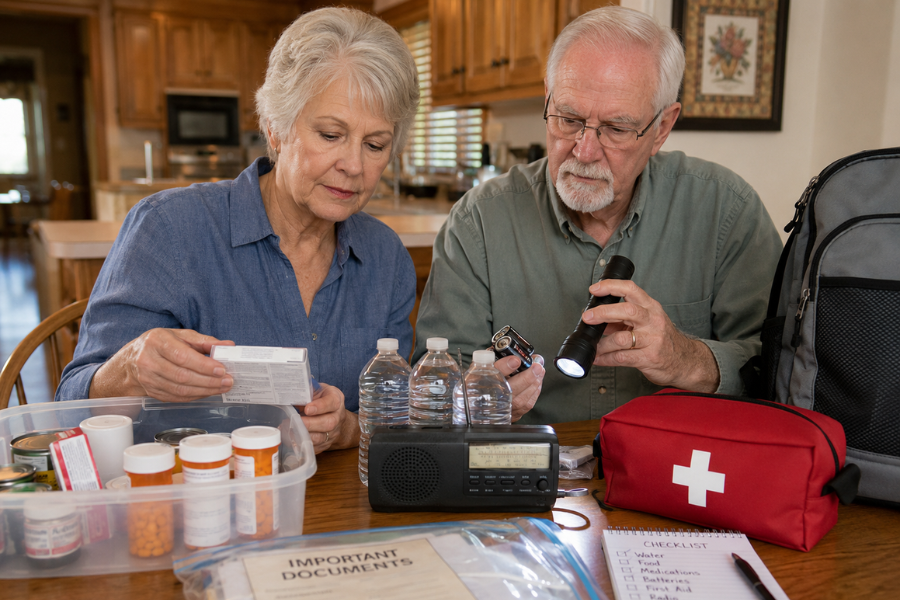
Before a storm threatens, review all prescriptions and make sure your loved one has an adequate supply. Keep medications together in a waterproof container or easy-to-carry bag. Include a written list of:
- Prescription and over-the-counter medications
- Dosages and instructions
- Allergies
- Medical conditions
- Doctors and pharmacy contact information
- Health insurance information
- Emergency contacts
Do not forget eyeglasses, hearing-aid batteries, glucose-testing supplies, incontinence products, mobility aids, and other daily necessities. Seniors who use oxygen, refrigerated medication, a CPAP machine, or electrically powered medical equipment should have a backup plan for an extended outage.
Build a Senior-Friendly Emergency Kit
An emergency kit should be easy to locate and manageable enough to take during an evacuation. NOAA recommends preparing supplies well before a storm, including water, nonperishable food, medication, flashlights, a first-aid kit, and items needed by older adults or people with physical limitations.
Consider including:
- Drinking water
- Nonperishable foods that are easy to open and eat
- A manual can opener
- Flashlights and extra batteries
- A battery-powered or hand-crank radio
- Phone chargers and portable power banks
- First-aid supplies
- Personal hygiene products
- Several changes of comfortable clothing
- Sturdy, closed-toe shoes
- Copies of important documents in a waterproof pouch
- Cash in small bills
- Blankets, pillows, and comfort items
- Food, water, carriers, leashes, and medication for pets
Be sure the food in the kit meets your loved one’s dietary needs. Someone with diabetes, swallowing difficulties, kidney disease, or another medical condition may require more careful planning than a standard emergency-food list provides.
Plan for Power Outages
Even when a hurricane does not directly strike Acadiana, strong winds and heavy rain can leave homes without electricity. For an older adult, extreme heat following a storm may be just as dangerous as the storm itself.
Determine where your loved one can go if the home becomes too hot. Make sure someone is responsible for checking in after the storm, particularly if phone service is unreliable.
Generators should always be operated outdoors and safely away from doors, windows, garages, and vents. Never use a generator, charcoal grill, or other fuel-burning device inside a home or enclosed area.
Before the storm, charge phones and backup batteries, freeze containers of water to help keep the freezer cold, and make sure flashlights are within easy reach. Battery-operated fans can offer some relief, but they should not be treated as a substitute for air conditioning during dangerous heat.
Make the Home Safer
Small preparations around the home can prevent injuries and property damage. Bring outdoor furniture, plants, decorations, and other loose objects inside. Clear walkways and remove items that could become tripping hazards if the electricity goes out.
Place flashlights beside the bed, in the bathroom, and near the main living area. Avoid using candles, which increase the risk of fire.
If flooding is possible, move important documents, medications, electronics, and sentimental belongings to higher locations. Hurricanes can bring storm surge, heavy rainfall, inland flooding, strong winds, tornadoes, and other hazards, so families should consider more than wind speed when making decisions.
Know the Difference Between a Watch and a Warning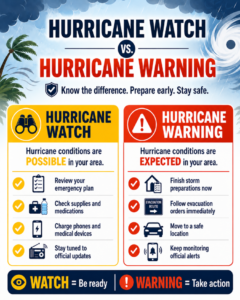
A hurricane watch means hurricane conditions are possible in the area. This is the time to review the evacuation plan, check supplies, prepare the home, and pay close attention to official updates.
A hurricane warning means hurricane conditions are expected. Preparations should be completed, and residents should leave immediately when instructed to evacuate by local officials.
Do not rely on social-media rumors or a single weather graphic. Follow information from the National Hurricane Center, local emergency-management officials, trusted news stations, and your parish government.
Include Your Loved One in the Conversation
Hurricane planning should not feel like decisions are simply being made for an older adult. Include your loved one whenever possible. Ask what belongings they would want to bring, where they would feel most comfortable staying, and what part of the process worries them.
Some seniors may resist evacuating because they fear leaving their home, becoming a burden, traveling with medical needs, or losing their independence. Listening patiently can help families address those concerns before the pressure of an approaching storm makes the conversation more difficult.
Check on Seniors in Your Community
Preparedness extends beyond our own households. Take time to check on an older neighbor, relative, church member, or friend who may not have nearby family.
A simple phone call can reveal that someone needs help picking up medication, moving outdoor furniture, purchasing supplies, charging medical equipment, or arranging transportation. Kindness is always in season, especially when a storm is brewing.
A Little Support Can Make a Big Difference
Hurricane season can feel overwhelming, but families do not have to wait until the forecast becomes urgent to begin making plans. Preparing a few items each week, discussing transportation, organizing medications, and identifying a safe destination can make an uncertain situation feel much more manageable.
At A Place at Home – Lafayette, our goal is to help seniors remain safe, supported, and comfortable while giving their families greater peace of mind. Our caregivers can assist with everyday needs, companionship, meal preparation, personal care, transportation, and other services that help seniors continue living in the comfort of home.
This hurricane season, start the conversation early. Make the plan, gather the supplies, and check on the people who may need a helping hand.
When life gives you lemons, we’ll bring the care.
To learn more about compassionate in-home care for yourself or a loved one, contact A Place at Home – Lafayette today at (337) 366-7808.
Squeeze the day!