Senior Care Options in East Brunswick — A Complete Family Guide

Adult daughter sitting with her elderly mother at home, talking about senior care options

Recognizing that a parent or loved one needs help in their daily lives is never easy. For many families in East Brunswick, it starts with a small concern such as a missed medication, a close call with a fall, or the realization that mom or dad is spending more time alone than is safe or healthy.

Whatever has brought you to this point, understanding your options is an important first step. Senior care is not one-size-fits-all, and the right choice depends on your loved one’s health, daily needs, preferences, and level of independence. This guide explores the senior care options available to families in East Brunswick and throughout Middlesex County, explaining what each type of care involves, who it may benefit, and how to find the best fit for your loved one.

When Does a Family Know It Is Time for Senior Care?

Caregiver preparing medication for an elderly man at home

There is rarely one moment that tells a family a parent needs more help. More often, it is a gradual realization as small changes begin to add up such as missed medications, difficulty managing daily tasks, increased isolation, or concerns about safety at home.

Common signs that a senior may need additional support at home include:

  • Difficulty with basic daily tasks such as bathing, dressing, or preparing meals
  • Missed medications or confusion about dosing schedules
  • A recent fall or multiple near-falls in the home
  • Increased isolation or signs of depression and loneliness
  • A diagnosis of Alzheimer’s disease, dementia, or Parkinson’s disease
  • Recent discharge from a hospital or rehabilitation facility
  • A family caregiver who is showing signs of burnout or exhaustion

Experiencing anything from this list is common and families throughout East Brunswick and Middlesex County must decide what to do when faced with the possibility that their senior loved ones need help. The good news is that senior care does not have to include giving up the home and routines your loved one values. Today, families have more care options than ever, including services that can provide the right level of support while helping seniors remain safely and comfortably at home.

Types of Senior Care Available in East Brunswick NJ
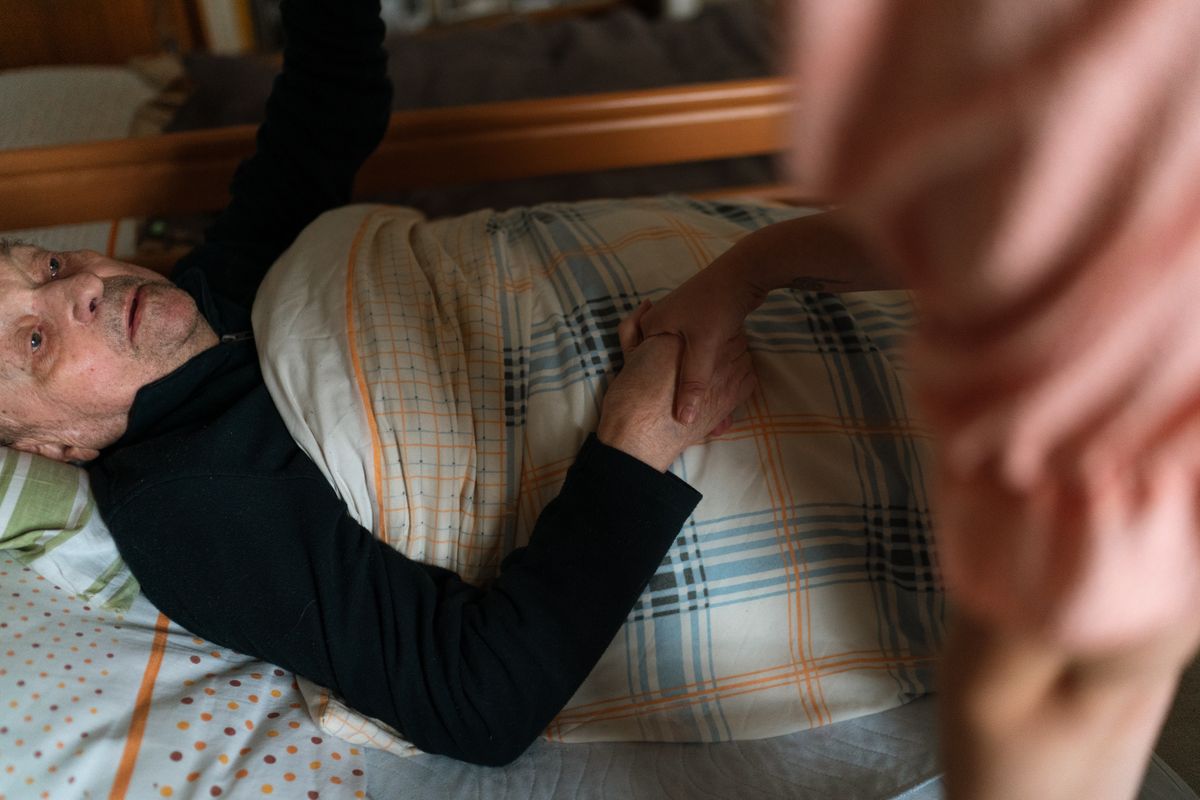
Caregiver holding the hands of a senior woman during a home visit

Understanding the different types of senior care available can make it easier to determine what is right for your loved one. Families in East Brunswick and throughout Middlesex County have several options, depending on the level of support, supervision, and care their loved one needs. Here are the primary senior care options to consider:

In-Home Care

In-home care, also referred to as home care or non-medical home care, provides trained caregivers who come directly to your loved one’s home to assist with activities of daily living (ADLs). This is often the preferred option for seniors who want to remain independent in the familiar environment of their homes.

In-home care typically covers personal care, companion care, dementia care, respite care, and post-surgery recovery support. It does not include medical services like nursing care or physical therapy, those fall under home health care, which is a separate category.

Home Health Care

Home health care is medically focused and prescribed by a physician after a hospitalization or health event. It involves licensed nurses, physical therapists, and occupational therapists visiting the home to provide skilled medical services. Medicare often covers short-term home health care after a qualifying hospital stay.

Assisted Living Facilities

Assisted living communities provide housing, meals, and personal care support in a residential setting. For seniors who need round-the-clock oversight or whose home is no longer safe to live in, assisted living may be appropriate. There are several assisted living communities serving the East Brunswick and Middlesex County area.

Memory Care Communities

Memory care is a specialized form of assisted living designed specifically for individuals with Alzheimer’s disease or other forms of dementia. These communities provide a structured, secure environment with trained staff and programming tailored to cognitive decline.

Adult Day Programs

Adult day programs provide supervised activities, social engagement, and some health services during daytime hours, typically while a family caregiver is at work. Middlesex County has several adult day program options for seniors who benefit from structured activities and social interaction.

In-Home Care Services in East Brunswick — What Is Available
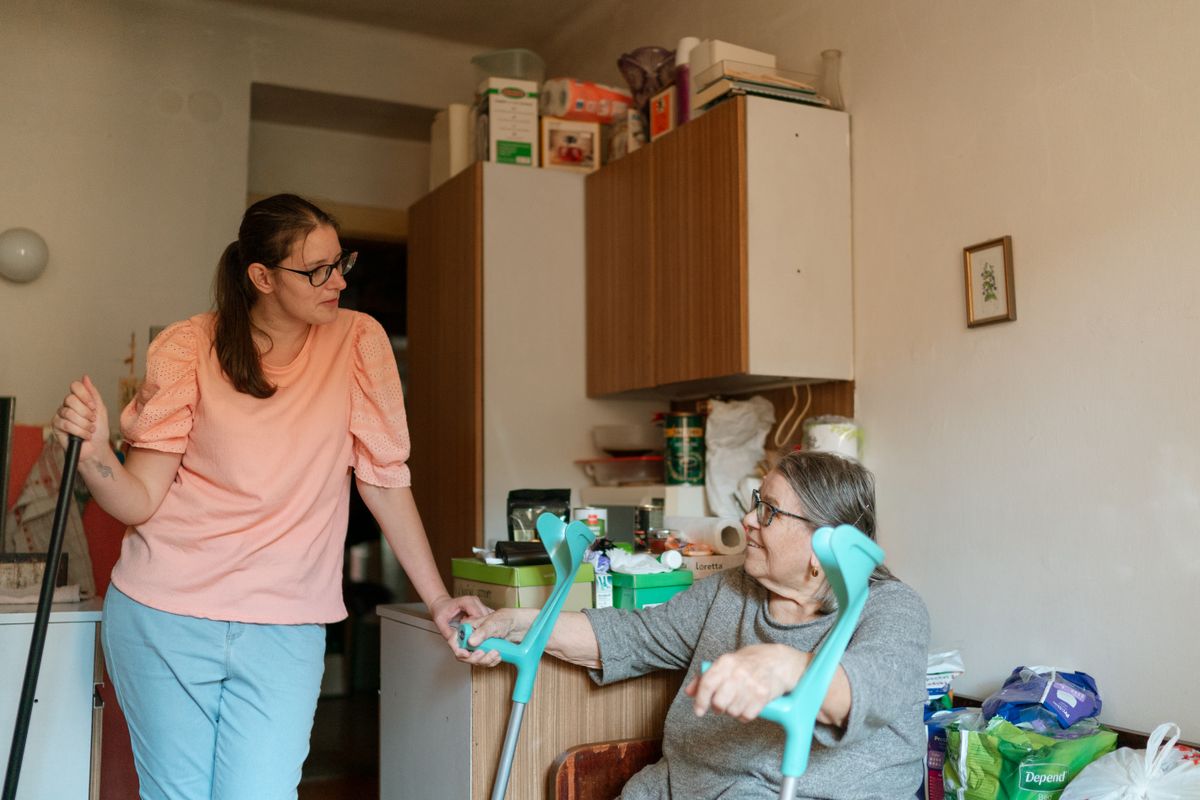
In-home caregiver assisting a senior woman in her kitchen

For families who want their loved one to remain at home, A Place at Home offers a range of in-home care services throughout East Brunswick and surrounding Middlesex County communities. Care can be tailored to each senior’s needs, providing support with daily activities, personal care, companionship, and other tasks while helping them maintain their independence and familiar routines at home.

Personal Care

Personal care helps with everyday physical tasks that can become more challenging with age, illness, or recovery. This includes assistance with bathing, grooming, dressing, toileting, and mobility. A personal care aide provides hands-on support with dignity and respect, helping your loved one stay clean, comfortable, and safe while maintaining as much independence as possible.

Companion Care

Companion care focuses on the social and emotional well-being of seniors who live alone or who experience loneliness and isolation. A companion caregiver provides conversation, accompanies seniors to appointments and activities, assists with light housekeeping, and ensures someone is present and engaged. Research consistently shows that social isolation is one of the most significant health risks facing seniors today, and companion care directly addresses that risk.

Dementia and Alzheimer’s Care

Caring for a loved one with dementia at home requires patience, specialized knowledge, and consistency. A Place at Home – East Brunswick provides dementia care in East Brunswick that is tailored to each individual’s stage of cognitive decline. Our caregivers are trained to manage behavioral changes, provide structured routines, ensure safety in the home, and support family members who are also navigating the emotional weight of this diagnosis.

Respite Care

Family caregivers, adult children, spouses, and other relatives who provide daily care need time to rest and recharge. Respite care provides temporary relief by having a professional caregiver step in for a few hours, a day, or longer. It is not a luxury. Caregiver burnout is real, and respite care can help families sustain their caregiving role over the long term without sacrificing their own health and well-being.

Post-Surgery and Recovery Care

When a parent is discharged from a hospital or rehabilitation facility, the first weeks at home are critical. Post-surgery care provides extra hands during this vulnerable period, helping with medication reminders, mobility support, meal preparation, and transportation to follow-up appointments. Having a caregiver present during recovery reduces the risk of re-hospitalization and gives families peace of mind.

How to Pay for Senior Care in East Brunswick NJ

The cost of senior care is often one of the first concerns families have, and it is an important part of the decision. Understanding how care can be paid for can make it easier to plan ahead and choose the right option. Here is an overview of the most common ways families pay for in-home care in New Jersey:

  • Private Pay: Most in-home care is paid out of pocket by the senior or their family. Costs vary depending on the number of hours, the level of care needed, and the specific services provided.
  • Long-Term Care Insurance: Many seniors have long-term care insurance policies that cover in-home care services. If your loved one has a policy, review the benefits carefully, coverage for home care is common and often underutilized.
  • Veterans Benefits — Aid and Attendance: Eligible veterans and surviving spouses may qualify for the VA’s Aid and Attendance benefit, which provides financial assistance specifically for home care costs. This is one of the most underutilized benefits available to New Jersey veterans.
  • NJ Medicaid — JACC Program: The New Jersey JACC (Jersey Assistance for Community Caregiving) program provides Medicaid-funded home care services for income-eligible seniors who would otherwise require nursing home placement. A care coordinator can help determine eligibility.
  • Medicare: Medicare does not cover non-medical in-home care. It does cover short-term skilled home health care following a qualifying hospitalization when prescribed by a physician.

How to Choose the Right Home Care Agency in East Brunswick

Elderly man holding hands with a caregiver while talking at home

Not all home care agencies are the same. When evaluating home care providers in East Brunswick, families should ask:

  • Are caregivers employees or independent contractors? Employee-based agencies handle taxes, insurance, and training — providing a higher level of accountability.
  • How are caregivers screened? Background checks, reference checks, and training requirements vary significantly between agencies.
  • Is the agency licensed in New Jersey? Home care agencies in NJ must hold a valid state license. Confirm before signing any agreement.
  • How is caregiver consistency handled? Continuity matters, especially for seniors with dementia. Ask how the agency handles caregiver absences and replacements.
  • What happens in an emergency? Understand the agency’s on-call process and how urgent situations are handled outside of business hours.
  • Is there a minimum hours requirement? Some agencies require a minimum number of hours per week. Others, like A Place at Home, offer flexibility to match your loved one’s actual needs.

Senior Care Options in East Brunswick FAQs

What is the difference between home care and home health care in NJ?

Home care, also called non-medical home care, covers personal care, companion care, and daily living assistance provided by trained caregivers. Home health care is medically focused, provided by licensed nurses and therapists, and typically prescribed by a physician following a health event. Medicare covers home health care in qualifying situations but does not cover non-medical home care.

How quickly can home care start in East Brunswick?

In most cases, A Place at Home can begin services within 24 to 48 hours of an initial consultation. For urgent situations such as a hospital discharge, same-day arrangements may be possible. Call us to discuss your timeline.

Does A Place at Home serve areas near East Brunswick?

Yes. In addition to East Brunswick, A Place at Home serves families in New Brunswick, Old Bridge, South Brunswick, Edison, Piscataway, Highland Park, and surrounding Middlesex County communities. Call us to confirm coverage in your specific area.

Can we start with just a few hours per week?

Yes. A Place at Home does not require minimum hours. Many families start with a few hours of care per week and adjust the schedule as their loved one’s needs evolve over time.

What if my loved one refuses home care?

This is one of the most common challenges families may face. Many seniors resist accepting help, it can feel like a loss of independence. We recommend starting with companion care, which feels less clinical than personal care. A familiar, consistent caregiver often becomes someone your loved one looks forward to seeing. Our team can offer guidance on how to approach this conversation with your parents.

Talk to A Place at Home — East Brunswick

Choosing senior care is a big decision, but you do not have to figure it out alone. If you are exploring care options for a parent or loved one in East Brunswick or throughout Middlesex County, A Place at Home can help you understand what level of support makes sense for your family. Our personalized in-home care is built around your loved one’s needs, preferences, and daily routine, with no long-term contracts.

Call us for a free consultation: (908) 733-8661

We will take the time to learn about your situation, answer your questions, and explain your options. Whether your loved one needs a few hours of help each week or more consistent support throughout the day, we can help you find a care plan that fits.


How Companion Care Helps Seniors Living Alone in East Brunswick

A Place At Home Health care worker helping an elderly man

There is always a lingering sense of worry among those whose senior parents live alone.

This is not the dramatic worry of an emergency, more like the quiet, persistent kind of worry that makes you wonder if your parents are eating enough, getting out of the house, or have anyone to talk to that day.

For many East Brunswick families, that worry only grows as their parents get older. A senior who was once active and social may start spending more time at home, alone and disconnected from the people and activities that used to fill their days.

Companion care is designed to help encourage seniors to be more socially active and engaged while ensuring their basic care needs are met.

What Is Companion Care?

Companion caregiver reading a book together with an elderly man at home

Companion care is a type of home care that helps seniors stay connected, engaged, and comfortable at home. While companionship is at the heart of this type of care, it can also include personal care and assistance when a loved one needs a little more support.

A companion caregiver may spend time talking, playing games, preparing a meal, running an errand, or accompanying your loved one to an appointment. Depending on their needs, the caregiver can also help with personal routines such as grooming, dressing, or other activities of daily living. The goal is to provide the right level of support while building a familiar, trusting relationship.

For older adults who live alone or have become more isolated, having someone in the home on a regular schedule can encourage socialization and connection. Over time, the caregiver becomes a familiar person your loved one knows and looks forward to seeing.

Companion care typically includes:

  • Conversation and social engagement
  • Accompanying seniors to appointments, errands, and outings
  • Light housekeeping and meal preparation
  • Participation in hobbies, games, reading, and other activities
  • Medication reminders
  • Transportation to community events, senior centers, and religious services
  • Watching for changes in mood or health and keeping family updated

For many seniors in East Brunswick, companion care changes their daily experience at home in a real and meaningful way.

Why Living Alone Is a Health Concern for Seniors

Elderly man and caregiver looking out the window together at home

Loneliness in older adults is more than a quality-of-life concern. Prolonged loneliness and social isolation have been linked to serious health risks, with some of their effects comparable to those associated with smoking, physical inactivity, and other established health risk factors.

According to the National Academies of Sciences, Engineering, and Medicine, more than one-third of adults age 45 and older report feeling lonely, while nearly one-quarter of adults age 65 and older are considered socially isolated. The potential health effects include:

  • Higher risk of dementia and cognitive decline
  • Increased risk of depression and anxiety
  • Greater risk of heart disease and stroke
  • Weakened immune function
  • Higher rates of hospitalization

For seniors living alone in East Brunswick, social isolation can develop gradually. Regular companion care can help address it by providing meaningful interaction, conversation, and a reliable presence at home. For families, that regular connection can be an important part of supporting a loved one’s overall well-being.

Who Benefits Most from Companion Care?

Companion care isn’t just for seniors with significant medical needs. It’s a good fit for older adults who would benefit from more social interaction, a consistent presence, and help with everyday activities. Families in East Brunswick often consider companion care when a parent:

  • Lives alone with limited social contact during the week
  • Recently lost a spouse or close friend
  • Has stopped driving and depends on others for getting around
  • Has pulled back from hobbies and activities they used to enjoy
  • Shows signs of low mood or low motivation
  • Needs someone present at home but does not yet need personal care
  • Has early-stage dementia and benefits from routine and engagement
  • Is recovering from an illness and could use company during the day

Companion care can also be a gentle way to introduce home care to a parent who is hesitant to accept outside help. The focus on companionship and activities feels less clinical and more like having a friendly, familiar visitor. Many families find that once a parent develops a trusting relationship with a companion caregiver, they’re more comfortable accepting additional assistance over time as their needs change.

How Is Companion Care Different from Personal Care?

Companion care and personal care serve different purposes but are commonly combined. Companion care focuses on fostering social connection and ensuring emotional well-being through socialization and activities that help seniors stay engaged and comfortable at home. Personal care provides more hands-on assistance with activities such as bathing, dressing, grooming, toileting, and mobility.

Although these services are distinct, many seniors benefit from a combination of both. For example, a companion caregiver might spend time talking with your loved one, preparing meals, or running errands while also helping with personal hygiene or getting dressed. The level of support can be adjusted to address your loved one’s needs and daily routine.

A Place at Home – East Brunswick can provide companion care, personal care, or a combination of the two. There are no minimum-hour requirements or long-term contracts, so your family can arrange support that makes sense for your situation.

How Companion Care Helps the Whole Family

Elderly man using a tablet while talking with his family and a caregiver

When a parent lives alone, the worry rarely falls on just one person. It often spreads across siblings, spouses, and other family members, each carrying their own concerns and guilt about not being there as often as they’d like.

Companion care doesn’t replace family involvement. It supports it.

Knowing a trusted caregiver visits your parents several days a week, making sure they are eating well, staying engaged, and not spending the entire day alone, can ease the burden on the whole family.

The real value of companion care is not just about what it brings to your parent’s life, but also the peace of mind it gives back to yours.

Getting Started with Companion Care in East Brunswick

If your parents live alone and you’re concerned about isolation, safety, or how they’re managing when family can’t be there, companion care can provide the regular connection and everyday support that benefits seniors.

At A Place At Home – East Brunswick, every new client begins with a free consultation. We take the time to learn about your loved one’s daily routine, personality, interests, and the kind of support your family is looking for. This helps us match your parents with a caregiver who is a good fit for their personality and their ability to provide care.

There are no minimum-hour requirements or long-term contracts. Many families start with one or two visits per week and adjust the schedule as their loved one becomes comfortable and their needs evolve.

Talk to A Place at Home in East Brunswick

Having a trusted caregiver your parents know and look forward to seeing can bring more connection and enjoyment to their days while giving your family greater peace of mind. Call A Place at Home – East Brunswick at (908) 733-8661 to schedule your free consultation. We’ll listen to your concerns, answer your questions, and help you determine the right level of support for your loved one.

We proudly provide companion care in East Brunswick, New Brunswick, Old Bridge, South Brunswick, Edison, Piscataway, and surrounding Middlesex County communities.

How to Help an Elderly Parent Get into and Out of a Car Safely

Helping an Elderly Parent into a Car

Stepping into the vehicle was once something that your beloved parent did without giving it a second thought. However, nowadays, you will likely find your parent clinging onto the car door, having difficulty sitting down, or making multiple attempts to get up before getting into the car. An action that should only take a couple of seconds is now stressful and difficult for you both, especially if you are concerned about a fall.

For senior adults who have arthritis, muscle weakness, balance problems, Parkinson’s disease, or limited movement because of a surgical procedure, entering and exiting a vehicle is one of the most difficult things about leaving their home. Even a simple task such as going to the supermarket or a doctor’s appointment requires planning.

If you are taking care of an aging parent in East Brunswick, NJ, and surrounding areas, then learning how to help with transferring into the car can make those outings easier. However, the safest way will depend on your parent’s physical aptitudes, including strength, balance, understanding the directions, and type of the vehicle.

This guide explains how to prepare for a car transfer, what steps may help when your parent can stand and move with limited assistance, which mistakes to avoid, and when it’s safer to seek professional help.

What Is the Safest Way to Help an Elderly Person Get into a Car?

For an older adult who can stand, bear weight, and turn safely, a commonly suggested approach is to sit on the car seat first and then bring both legs into the vehicle. This reduces the need to balance on one leg while stepping into the car. Getting out generally involves reversing the movement: bring both legs outside, position the feet securely, and stand only when ready.

The method has to be tailored to suit the mobility and health status of the individual. If your parent is unable to carry his/her own weight, lacks coordination, or needs heavy lifting, do not undertake the manual transfer without a customized plan and proper training.

Why Getting into and Out of a Car Becomes Difficult with Age

Getting into or out of a car demands much more physical effort than one might realize. The individual has to walk up to the car, turn around, bend his body, sit down on a chair-like surface, maneuver his legs into the limited area, and do everything in reverse after.

Arthritis is one of the most prevalent problems that cause difficulties in moving to and from cars among older adults. Discomfort in the joints in the knees, hips, or lower back could affect the capability to bend and twist easily. Knee arthritis in a parent, for occurrence, might affect their aptitude to sit or stand up from the seat.

In addition, the elderly, who have muscle weakness due to aging, will find it difficult to rise from a seated position. Individuals, who have been hospitalized but are recovering from their condition, might find themselves being temporarily weak or tired even though they were physically fit before the condition. Situations such as those of Parkinson’s disease or stroke might make them slow in rising from their seated positions.

Other challenges would include cognitive challenges. The parents, who have dementia, can get confused with multiple instructions or may start moving without the caregiver being prepared. In addition, some may fear falling down, and consequently, they will tighten their bodies during movement.

Before Helping Your Elderly Parent into a Car, Prepare the Vehicle

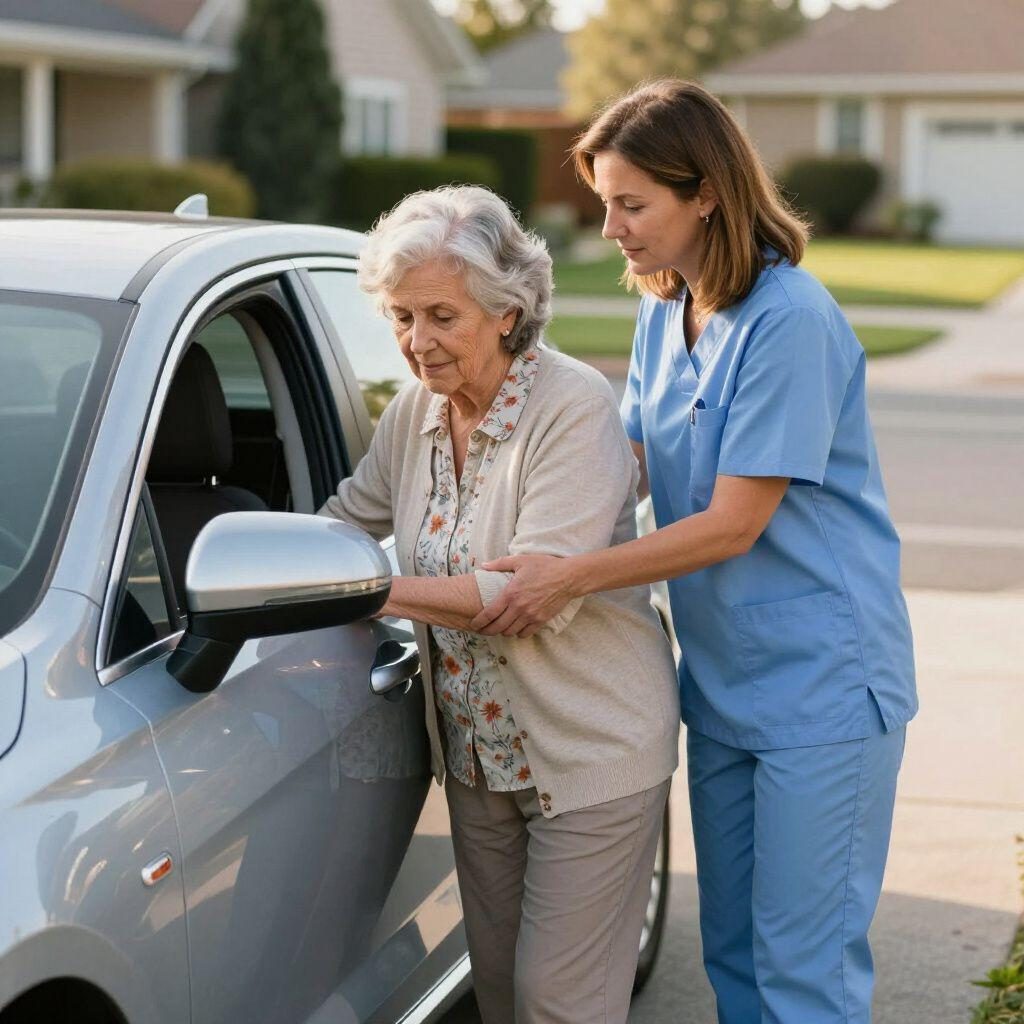
Caregiver supporting an elderly woman by the arm as she steps toward the open passenger door of a car in a residential driveway

Preparation for a safe car transfer starts even before your parent arrives at the door because a few minutes of preparation may actually make your transfer much easier.

Choose a Safe, Level Parking Area

When at all feasible, park in an area that is level and secure and has sufficient space to be able to fully open the door. Avoid parking in steep driveways, uneven pavement, loose gravel, and other locations where your parent will have to step into moving traffic.

Families living in East Brunswick, NJ may find themselves parking in a variety of locations from the family driveway to the parking lot of a physician’s office to a crowded shopping center.

It is important to keep in mind that during the warm seasons in New Jersey, the interiors of a car, metal buckles, and all the other surfaces become very hot. It is necessary to cool down the car and then help your parent to get into it.

Adjust the Seat Before the Transfer

Recline the passenger seat backwards for more legroom and ease of positioning. In cases where the seat can be reclined or adjusted in terms of height, take a position which would make the transfer process easier and comfortable.

A very low seat would require a lot of leg strength to get out of. Similarly, an extremely high seat would require some form of climbing action. There is nothing inherently safer about either of the options.

Make sure there are no loose items and that the seat belt is within reach.

Make Sure Your Parent Has Appropriate Footwear

Those shoes which are closed and have non-slip soles are more likely to be more steady than open-toe shoes, slippers, or socks only. If you know that your mother needs help while using a walking stick or walking frame to walk, then make sure that she gets it right from the beginning until she reaches her car seat.

Do not remove the walking aids from her until she sits in the car safely.

How to Help an Elderly Parent Get into a Car: Step-by-Step

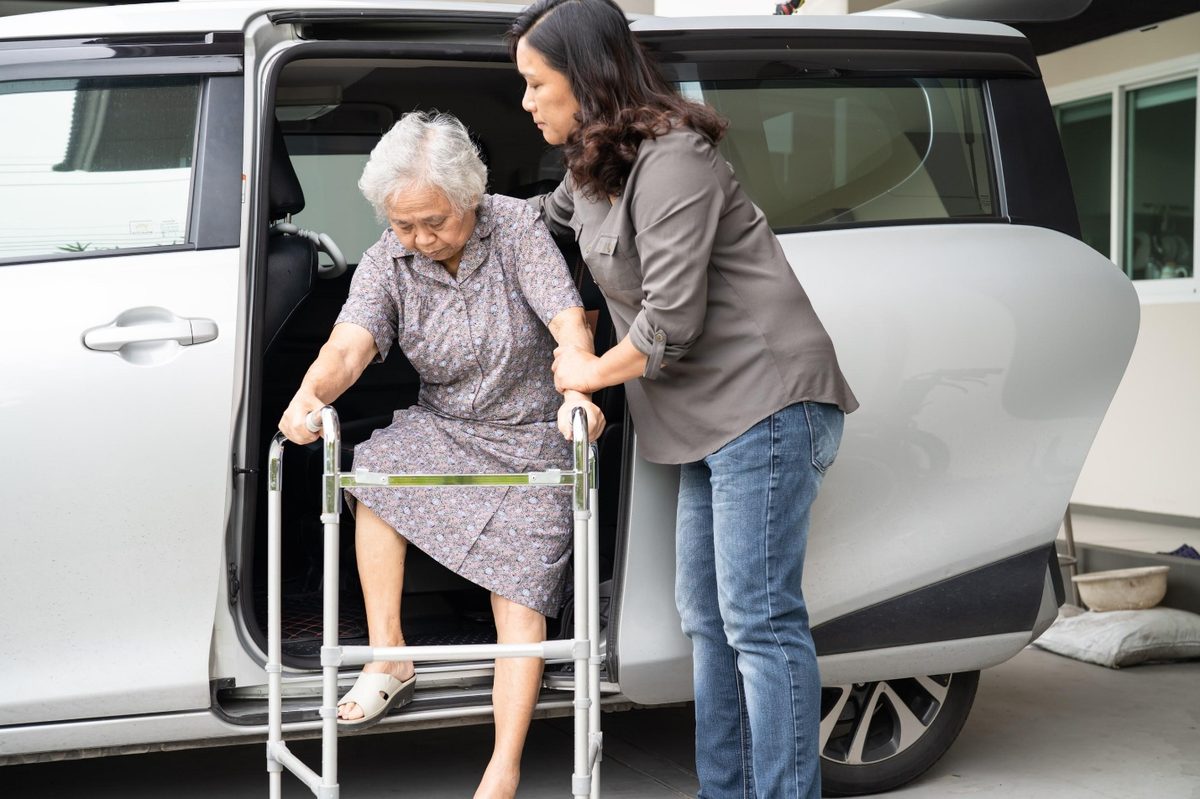
Family caregiver helping an elderly woman with a walker lower herself onto the seat of a minivan

The following instructions represent one way of helping an elderly individual that is able to stand and bear weight and move independently under some degree of supervision. These instructions are not for everyone. If you need to physically lift your parent, he or she is unsteady on their feet, or unable to move in some way, ask a physical or occupational therapist.

Step 1: Position Your Parent Near the Passenger Seat

The passenger door should be fully opened to let your parents move about using whatever mobility device available. Help your parent move into a position where they can turn around and face the seat with their back.

Remind them to move at a slow pace and not twist their body. They need to have their feet in an anchored position and to be close to the chair.

Before proceeding, ask them if they feel stable or dizzy.

Step 2: Have Your Parent Reach for a Stable Support

If your parent is able to safely use his/her arms, then he/she might be able to reach backwards towards the support from the seat.

It is advisable that you do not depend on the open car door, car window or car interior trim as a means of weight bearing. This is because such areas might be movable or were not intended to hold any person’s body weight.

Do not encourage your parent to put force on your neck and shoulders as you assist them. Likewise, do not pull them with their arms and hands while moving. If physical support is required to a great extent, then it will be wise to consult a health care practitioner.

Step 3: Encourage Your Parent to Sit Down Slowly

After your parent can sense that there is a seat behind them and is supported properly, encourage them to bend at the hips and knees and sit down slowly.

Use simple instructions such as, “Take your time,” or “Sit down slowly.” Give them enough time to complete each movement rather than rushing through the transfer.

Check if they lose balance suddenly, have buckling knees, experience pain or dizziness. In case they are unable to control their descent, it will be better to assess an appropriate transfer rather than catching or lifting them.

Step 4: Help Your Parent Turn and Bring Their Legs Inside

Your parent will then be able to slowly turn their body towards the front of the car and put their legs inside the vehicle.

For some senior citizens, moving one leg at a time might work better for them, while others might prefer having their legs closer together and turn them as a whole along with their hips. Which way is right varies based on flexibility and restrictions in certain areas.

For instance, a senior citizen who recently had hip replacement surgery would have certain restrictions when it comes to movements. In this case, do not follow a regular transfer procedure but listen to what a surgeon or a therapist recommends.

In case your parent cannot put their legs up by themselves, make sure you learn the right way of doing that from a therapist so as not to pull and twist your parent’s painful joints.

Step 5: Check Their Position Before Closing the Door

Before closing the passenger door, it is important to check that the parent is seated comfortably and their hips are firmly situated on the seat while their legs are all the way in.

It is necessary to ensure that their feet, hands, and clothes do not obstruct the doorway and assist them to put on their seat belt correctly.

Asking how they feel can be especially useful if they have arthritis, back pains, or post-surgery pain.

How to Help an Elderly Parent Get Out of a Car Safely

Exiting a car can be more challenging than entering one because it needs the individual to rise from their seat and attain balance before proceeding to walk.

You will need to park your car in an even spot, shut off the engine, and open up the passenger side of the vehicle. Ensure that there is sufficient room for your parent to stand without entering the road or uneven surfaces.

Step 1: Turn Toward the Open Door

Get your parent to unfasten their seat belt and turn slowly towards the open car door. If they are comfortable doing so, then they should try moving their legs out of the car and getting their feet closer to the ground.

Do not force your parent’s legs to move, nor their hips to turn. There might be patients who would require extra time due to limited hip rotation.

Step 2: Position Both Feet Securely

Your parent needs both feet on the ground in a solid stance before you even think of lifting them up.

Their feet need to be neither too far forward nor in an odd position underneath the car. Look out for loose pebbles, water, curbs, and other obstructions that may cause your parent to slip.

If your parent can’t get their feet under them, do not try to lift them up by yourself.

Step 3: Allow Your Parent to Stand at Their Own Pace

If your parent is strong enough and knows how to get up safely, have him/her lean forward at the right position and push himself/herself off the stable surface on which he/she is placed.

Your parent should not be dragged up with force from the hands, wrists, or arms because it can put extra stress on the shoulders.

After getting up, you should direct your parent to wait for a little while before he/she walks, as some elderly people feel dizzy upon getting up due to prolonged sitting.

Step 4: Make Sure They Are Steady Before Walking

Allow your parent to regain their balance and assist them with the cane or walker accordingly. Ensure that the walking aid is properly positioned before they move.

In case you see that they are unbalanced, do not panic them into entering the building. In case they weak, lose strength or any other symptoms arise, do not proceed further and call for assistance.

What if Your Elderly Parent Uses a Walker or Wheelchair?

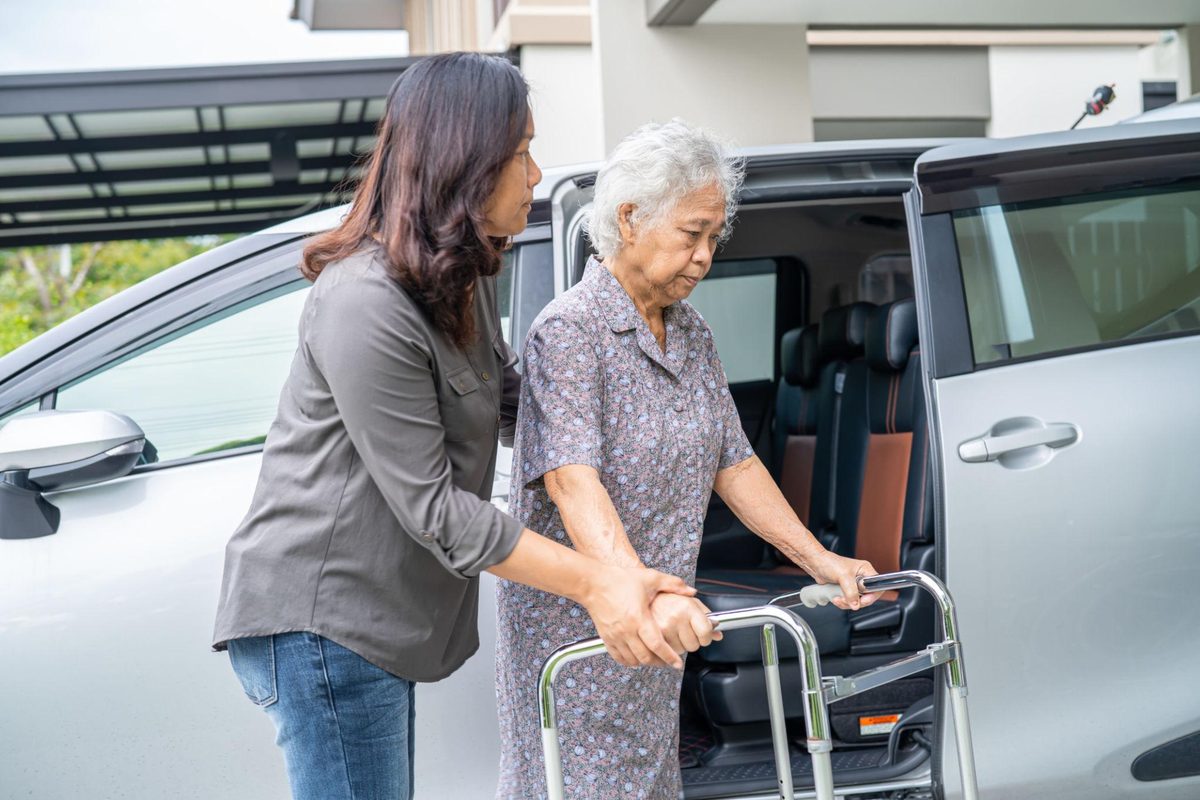
Caregiver guiding an elderly woman as she steps out of a minivan and steadies herself on a walker

Transfer for a walker or a wheelchair becomes somewhat more difficult since the carer will need to take into account the disability as well as the equipment itself.

If your parent uses a walker, the main thing is to make sure that he/she will be able to approach the vehicle with steady support. The walker should not be used to pull up the user from his/her sitting position. Once your parent sits down, the walker will be able to collapse and put aside.

Transfers using a wheelchair imply some further preparation since some users will be able to stand up and spin around without much help while others will not be able to withstand any load.

Just because you think a person can transfer from a wheelchair to an automobile seat does not mean that he or she is safe doing so. There should be an evaluation by a physical therapist or occupational therapist to determine the person’s transfer ability.

A wheelchair-accessible vehicle may be preferable for your mother if she cannot stand up and bear weight.

Can Car Transfer Aids Make Getting In and Out Easier?

While some devices may assist with ease of movement into the vehicle, the specific devices should be chosen according to the needs of the individual and type of vehicle.

For instance, the swivel seat cushion can assist in rotating the legs of older persons toward the front part of the vehicle. It can be problematic because the device can rotate unexpectedly or affect the seating position, hence needs to be tested.

The portable vehicle support handles are also worth trying out. Not all handles work with different vehicles; therefore, it is important to consider whether the device can be safely used in the vehicle, according to the instructions provided.

Transfer boards and mechanical lifts are usually designed to suit particular cases of mobility and therefore need a proper assessment and training. They should never be adapted to serve in a normal passenger vehicle.

Prior to buying any equipment, you could seek advice from an occupational therapist on what is suitable for your parent’s condition.

Common Mistakes That Can Cause Injuries During Car Transfers

Sometimes, family members attempt to assist by lifting, tugging, or hurrying to complete the challenging process. In spite of being aimed at helping, these actions can raise the risks of injuries.

For instance, the most widespread error made by family members is pulling up an older person by his or her arms, which can lead to shoulder joint tension. Another example is letting an older person use an opening car door as an aid because it can open suddenly.

Moving an elder when he or she is dizzy, exhausted, or cannot put pressure on the body is one of the most serious issues. For example, if you notice that your parent feels exceptionally feeble after visiting a doctor or hospitalization, it would be better to postpone moving him or her.

Families should also avoid assuming that one technique will work indefinitely. A parent whose mobility is gradually declining may need a new assessment, different equipment, or a different transportation arrangement.

Above all, never try to make a transfer where you need more physical help than you can give without risking injury. It’s just as important for you not to hurt yourself as it is to protect your parent from harm.

When Should You Stop Trying to Help Your Parent into the Car Yourself?

However, there might arise an occasion where it will become dangerous for you to assist your parent to enter the conventional car unless he is professionally evaluated or uses any other equipment.

Be alert if your parent is prone to losing balance, unable to get up from a chair without a lot of help, his knees give away at unexpected moments, and becomes highly anxious while being transferred.

Any rapid change in mobility needs to be noted. Any signs of weakness, confusion, severe pain, or inability to stand are not necessarily symptoms of age. Have yourself checked by a physician. In cases of stroke symptoms, loss of consciousness, injury, or any emergencies, contact 911 immediately.

In the case where your elderly parent has just been discharged from the hospital, then you need to adhere to their discharge instructions regarding mobility.

When Professional Home Care Can Help with Mobility and Transportation

Helping an aging parent get into and out of a car is often one of the first signs that everyday activities are becoming more difficult. You may also notice your parent struggling to stand from the sofa, walk to the bathroom, get dressed, or prepare meals without assistance.

These issues do not necessarily mean that your parent will have to leave the house. According to his/her particular situation, having professional in-home care can be helpful and assist family caregivers in meeting their obligations.

For instance, the non-medical home caregiver can assist your loved one with preparation for medical appointments, walk using appropriate mobility equipment, give company, help with self-care activities, and transport if necessary.

However, it is vital for caregivers to make transfers only within the possibility of their training and the guidelines outlined by their agency. If the person requires heavy lifting or special equipment, he/she will require a plan that has been prescribed by a therapist.

For families from East Brunswick, NJ and surrounding areas, home care services will help relieve the stress of adult children juggling career demands along with the increasing requirements of their aging parents.

How A Place at Home East Brunswick, NJ Can Support Your Aging Parent

At A Place at Home East Brunswick, NJ, we understand how concerning it can be when an aging parent begins struggling with everyday activities. Something as simple as getting into a car may become a reminder that your loved one needs more support than they did a few months ago.

What we aim to do is to ensure that the elderly are able to feel comfortable at home while enjoying their freedom and dignity. In-home care services, based on the unique requirements of the client and his/her care plan, may vary from personal care, companionship, cooking to mobility services, among others.

If your parent is having difficulty with their mobility, we can assess the needs for care that they have each day and assist you with identifying relevant services. If there is any need for special transfer procedures and equipment, it should be done by a healthcare professional.

Need Help Caring for an Elderly Parent in East Brunswick, NJ?

If your parent is having difficulty getting in and out of a car, walking safely, bathing, or completing other daily activities, it may be time to consider additional help at home.

Contact A Place at Home East Brunswick, NJ, today to discuss personalized in-home senior care in East Brunswick, NJ, and nearby communities. Our team can help you explore care options that support your loved one’s comfort, safety, and independence.

Call (908) 733-8661