

If you’re caring for an aging parent or starting to plan ahead for yourself, you’ve probably asked this question at some point:
What age is considered a senior citizen in New Jersey?
It seems like there should be a clear answer — but in reality, it’s more complicated than most people expect. Families across Westwood, Bergen County, and all of New Jersey are often surprised to learn that there isn’t one official age that defines when someone becomes a “senior.”
Instead, the age depends on what you’re talking about: healthcare, benefits, taxes, housing, or support services. And that uncertainty can make planning feel overwhelming, especially when you’re trying to do the right thing for someone you love.
This guide breaks it down in a clear, practical way — without jargon — so you know what applies to your situation and what to think about next.
The Short Answer Most Families Are Looking For
In New Jersey, there is no single age that officially defines someone as a senior citizen.
Most senior-related benefits and services begin somewhere between ages 60 and 65, depending on the program. Some start earlier, some later, and many have additional requirements beyond age.
That’s why two people the same age may qualify for very different services.
Why There Isn’t One “Senior Citizen” Age in New Jersey
New Jersey doesn’t use a single legal definition for “senior.” Instead, each program — whether it’s healthcare, taxes, housing, or community services — sets its own eligibility rules.
This means:
- Someone might qualify as a senior for housing at one age
- Become eligible for community or nutrition services at another
- And qualify for Medicare or tax benefits at a later age
For families, this can be confusing. Many people assume benefits automatically kick in at a certain birthday — and then feel caught off guard when that doesn’t happen.
Common Ages That Are Often Considered “Senior” in New Jersey
While there’s no official definition, certain ages come up again and again when families start planning.
Age 55: Early Senior Recognition
Age 55 is often considered an early senior milestone, especially for:
- Senior housing communities
- Some local programs or fitness classes
- Retail or restaurant discounts
That said, most government benefits do not start at 55. This age is more about lifestyle options and early planning than formal assistance.
Age 60: Access to Many Community Services
Age 60 is an important age in New Jersey. Many state and county senior services begin here, including:
- Nutrition programs
- Transportation assistance
- Community-based senior services
- Caregiver support resources
Several of these programs are supported through the New Jersey Division of Aging Services, which helps connect older adults and families with local resources.
https://www.nj.gov/humanservices/doas/
For many families, age 60 is when support starts becoming more visible — even if full retirement hasn’t begun yet.
Age 62: Early Social Security Eligibility
At 62, people can begin collecting Social Security retirement benefits.
However, it’s important to know:
- Benefits are reduced compared to waiting longer
- Once you claim early, the reduction is permanent
Some people choose this option, while others wait until full retirement age or later.
https://www.ssa.gov/benefits/retirement/
Age 65: A Major Turning Point
Age 65 is the age most people associate with being a senior — and for good reason.
At 65, individuals typically become eligible for:
- Medicare
- Many senior tax relief programs
- Expanded healthcare planning options
Medicare eligibility information can be found here:
https://www.medicare.gov/basics/get-started-with-medicare
For many families, this is when conversations about healthcare coverage and long-term planning become more urgent.
What Age Is Considered a Senior for New Jersey State Programs?
Many New Jersey senior services begin at age 60, particularly programs related to:
- Nutrition and meals
- Transportation
- Social engagement
- Support for family caregivers
In Bergen County, these services are often coordinated through the Division of Senior Services.
https://www.co.bergen.nj.us/division-of-senior-services
Each program has its own requirements, so it’s always a good idea to confirm eligibility before applying.
What About Senior Tax Benefits in New Jersey?
Most senior tax benefits in New Jersey begin at age 65, though age alone is not enough.
Eligibility often depends on:
- Income limits
- Length of residency
- Property ownership
Programs may include property tax deductions and the Senior Freeze program.
https://www.nj.gov/treasury/taxation/senior.shtml
Because rules can change, families should review eligibility every year.
What Age Is Considered a Senior for Healthcare?
From a healthcare standpoint, 65 is the most significant age milestone.
At this point, most people become eligible for Medicare. However:
- Medicare and Medicaid are not the same
- Medicaid eligibility depends on income and medical need
New Jersey Medicaid information is available here:
https://www.nj.gov/humanservices/dmahs/clients/medicaid/
Healthcare decisions often play a big role in when families start thinking more seriously about support at home.
Do Senior Discounts All Start at the Same Age?
No — and this surprises a lot of people.
Senior discounts in New Jersey can start at:
- 55
- 60
- 62
- 65
It depends entirely on the business. There’s no standard rule, so it never hurts to ask.
Does Being a “Senior” Automatically Mean Someone Needs Care?
Not at all.
Age alone doesn’t determine whether someone needs help. Many people remain independent well into their 70s, 80s, and beyond.
The need for care usually depends on:
- Mobility and balance
- Memory or cognitive changes
- Ability to manage daily routines safely
- Whether family caregivers are feeling stretched thin
Professionals focus far more on how someone is functioning day to day than on their age.
When Do Families in Bergen County Start Looking for In-Home Care?
In our experience, families in Westwood and across Bergen County often begin exploring in-home care after a life change, such as:
- A hospital stay or surgery
- A fall or close call
- A dementia diagnosis
- Trouble managing daily tasks
- Caregiver exhaustion
These moments often spark conversations about safety, independence, and quality of life.
How Age Fits Into In-Home Care Planning
Age can offer context — but it shouldn’t drive decisions by itself.
In-home care can range from:
- A few hours a week of companionship
- Daily help with personal care
- Overnight supervision
- 24-hour or live-in support
The right plan is based on needs, preferences, and goals — not a birthday.
Common Questions Families Ask
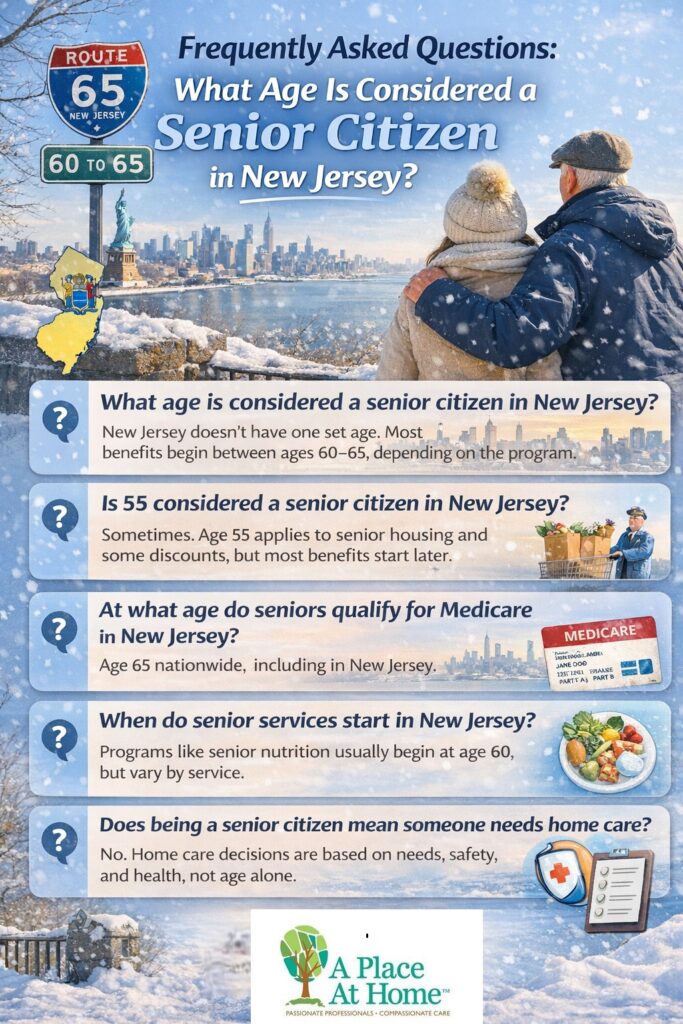
What age is considered a senior citizen in New Jersey?
There is no single age. Most services begin between 60 and 65.
Is 55 considered a senior in NJ?
Sometimes, mainly for housing and discounts, but not for most government programs.
Do you have to be 65 to be considered a senior?
No. Many services begin earlier, while others start later.
When does Medicare start in New Jersey?
Medicare typically begins at age 65.
At what age should seniors consider in-home care?
There is no set age. Care decisions should be based on safety and quality of life.
Helpful Senior Resources in Bergen County
Bergen County offers a wide range of support for older adults and caregivers, including:
- Senior services and wellness programs
- Transportation assistance
- Nutrition services
- Caregiver support resources
You can learn more here:
https://www.co.bergen.nj.us/division-of-senior-services
Final Thoughts
In New Jersey, being a “senior citizen” isn’t about hitting one specific age. It’s about understanding what resources are available, when they begin, and how to plan ahead — before a crisis forces decisions.
Whether your loved one is just turning 60 or well into their later years, having clear information makes it easier to support independence, safety, and peace of mind for everyone involved.