

Parkinson’s disease is a progressive neurological condition that affects movement, coordination, and daily function. According to the Parkinson’s Foundation, an estimated 1.1 million people in the United States are living with Parkinson’s disease, and that number is projected to rise in the coming years. As symptoms change over time, adapting daily routines becomes one of the most important ways to preserve independence, safety, and emotional well-being.
Parkinson’s affects every individual differently. As abilities change, older adults living with this condition must continually adjust their daily routines. By developing healthy habits and thoughtful strategies, those with Parkinson’s can maintain a sense of purpose, improve their well-being, and enjoy a better quality of life.
The progressive motor challenges associated with Parkinson’s can significantly impact everyday activities. Common symptoms include tremors that may occur even while at rest, muscle stiffness or rigidity, slowed movement, shuffling steps, and episodes of “freezing,” when the feet seem unable to move forward.
In addition to physical symptoms, Parkinson’s also brings non-motor challenges. These may include memory and concentration difficulties, persistent fatigue, sleep disturbances such as insomnia or restless legs, and an increased risk of depression and anxiety. Together, these changes can affect both emotional health and cognitive function.
Although these physical and mental changes can reduce independence, they do not eliminate the ability to live meaningfully. With the right daily routines and adaptive strategies, individuals with Parkinson’s can feel empowered, resilient, and supported. Establishing consistent, manageable habits provides structure that strengthens both physical health and emotional well-being.
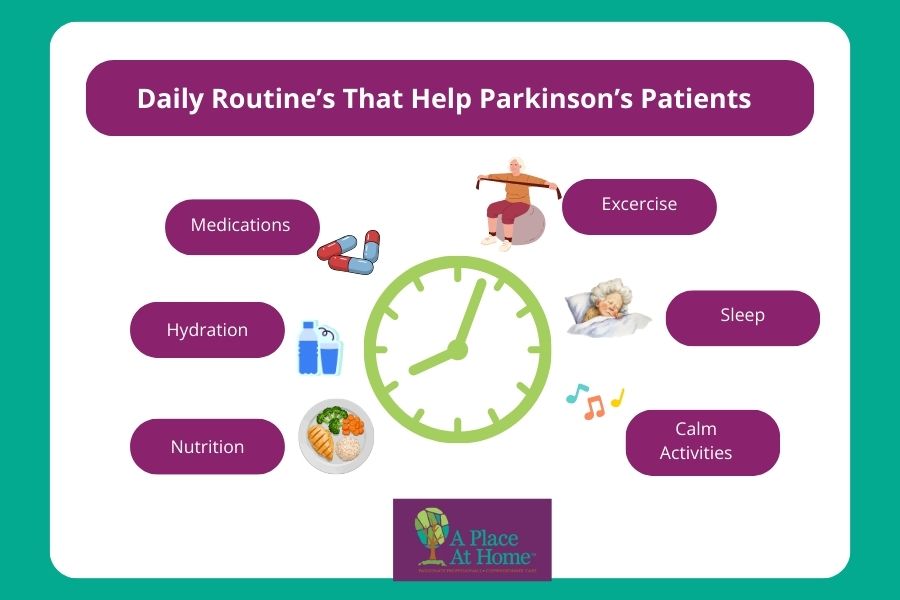
How Physical Activity Helps Parkinson’s Symptoms
Regular exercise offers tremendous health benefits, even to Parkinson’s patients who feel too stiff to move. Ease into movements to warm up the muscles. Upon waking, stretch in bed for a few minutes. Roll the neck, ankles, and shoulders. Take a walk, do Tai Chi or swim.
Join an exercise class filled with participants affected by Parkinson’s or that is led by a coach with the condition. Work up to exercise 30 minutes, 5 days a week. On days when exercising feels impossible, perform a little at a time and focus on small wins to stay motivated.
How Nutrition Supports Parkinson’s Management
Start incorporating fruits, vegetables, legumes, whole grains and beans into daily meals to ease Parkinson’s symptoms. At the same time, limit sugars, processed foods and red meat. Try modeling food choices on the Mediterranean and MIND diets, which are shown to benefit Parkinson’s patients.
Consuming foods rich in vitamins and minerals helps the aging body optimize medications. Meals that are rich in fiber manage constipation. Good nutrition also maintains bone health. Plus, a balanced diet improves energy levels for older adults living with Parkinson’s disease.
Why Parkinson’s Medications Must Be Taken on Time
Parkinson’s medications, such as COMT inhibitors, dopamine agonists, and anticholinergics, deliver maximum benefits when taken at the same time each day. Seniors who stay consistent with a medication schedule help keep their Parkinson’s symptoms, like tremors and rigidity, under control.
Adapting to the drug routine may include setting medication reminders on a smartwatch or phone, using a pill organizer that sounds like an alarm or relying on a medication reminder app. Drink a full glass of water upon taking the medications to help the body break them down more efficiently.
How Sleep Impacts Parkinson’s Disease
A quality night’s rest helps repair a body affected by Parkinson’s disease, contributing to better movement the next day and less severe symptoms. Memory and decision-making ability also improve by getting the 7 to 9 hours of uninterrupted sleep recommended by experts.
Modify the bedroom environment to promote restful sleep. Dim the lights and adjust the temperature until the room is comfortable. Avoid daytime naps and screen time an hour before bed to encourage nighttime sleep. Fulfill needs for food and restroom use before bed to prevent awakening at night.
How Stress Worsens Parkinson’s Symptoms
Stress worsens Parkinson’s symptoms by further depleting the senior’s already minimal dopamine levels, intensifying tremors and exacerbating sleep problems. Acute stress can also interfere with the effectiveness of Parkinson’s medications. While stress is inevitable, the elderly can learn to manage it.
Seniors can incorporate any number of stress relievers into their daily routines. Artistic older adults paint, play the piano, and dance to lively music. Others journal to express difficult emotions. Meditation is another popular tool to help relieve the burden of daily stress.
Why Social Connection Matters for Parkinson’s Patients
The health benefits of positive social interactions are many, boosting the immune system, easing depression and anxiety, and helping the elderly feel acknowledged. However, Parkinson’s symptoms can shut down normal functions and interfere with engaging socially with friends and family.
The soft voice, facial masking, and tremors that accompany Parkinson’s disease contribute to the feelings of social isolation and loneliness many patients feel. A community of supportive friends, family, and caregivers ensures that seniors remain socially connected and emotionally healthy every day.
Older adults affected by Parkinson’s disease are urged to adapt their daily routines to better cope with the changes their condition brings. New habits form gradually and may be more difficult to develop for seniors with Parkinson’s, since their dopamine reward system is in decline.
Common Questions About Parkinson’s and Daily Living
Parkinson’s Home Care from A Place at Home-Weston
Parkinson’s specialists agree that consistent routines, medication timing, physical movement, and emotional support are the four pillars of successful home-based Parkinson’s management.
Support is available through friends, family members, and trusted home care providers such as A Place At Home. We deliver compassionate Parkinson’s home care designed to help individuals living with this progressive condition maintain their independence while improving daily quality of life.
Our non-medical in-home care includes medication assistance, with gentle reminders that help seniors take prescriptions on schedule, so they receive the full benefit of their treatment and avoid symptom flare-ups.

For those experiencing movement challenges, caregivers also provide hands-on mobility support to reduce the risk of falls and injuries. Home safety evaluations and ongoing monitoring further help protect seniors as their needs change.
In addition, caregivers assist with errands and transportation, including medical appointments and pharmacy visits. Grocery shopping, nutritious meal preparation, and help with bathing, dressing, and grooming are all part of daily support. Just as importantly, companionship and meaningful social interaction promote emotional well-being and reduce isolation.
When your aging loved one is diagnosed with Parkinson’s, the caregivers at A Place At Home can help them adapt their daily routines and continue living with confidence. Schedule a complimentary in-home consultation to learn more about Parkinson’s home care in Weston, Hollywood, Pembroke Pines, and surrounding Broward County communities. Call (954) 335-9284