
Parkinson’s disease is now the fastest-growing neurological condition in the world. A landmark BMJ study published in March 2025 projects that global cases will reach 25.2 million by 2050, a 112% increase from 2021. In the United States alone, nearly 90,000 people are newly diagnosed every year, a figure 50% higher than estimates from just a decade ago. And the combined economic cost of Parkinson’s in the U.S., including treatment, lost income, and social security payments, crossed $82.2 billion in 2024. That trajectory is alarming. But there is also genuinely encouraging news: a growing body of research shows that specific, everyday choices can meaningfully lower your risk.
Most people know that aging and family history play a role. What fewer people know is that four less-obvious lifestyle factors have emerged from recent science as powerful levers for protection. None of them involve special supplements or expensive equipment. Two of them will probably surprise you.
This guide covers what each factor is, exactly what the research says, and what you can do about it starting today. If someone in your life has already been diagnosed, there is also practical guidance at the end on how in-home care in the Weston area supports daily life with Parkinson’s.
Key Takeaways
- Parkinson’s is the fastest-growing neurological condition in the world, but over 20% of cases may be preventable through lifestyle choices alone.
- Your gut microbiome plays a role in neurological health. A whole-food, high-fiber diet that supports microbial diversity may help reduce risk.
- Poor sleep is more than a symptom. REM sleep behavior disorder can appear years before a Parkinson’s diagnosis and is one of the strongest known early warning signs.
- Chemical exposures matter. TCE, pesticides, and other environmental toxins have been linked to increased Parkinson’s risk.
- Exercise is one of the most effective protective habits. Aerobic activity, strength training, and balance exercises support brain and nervous system health.
- Coffee in moderation and a whole-food diet may provide an additional layer of protection when combined with other healthy habits.
- Family history is not destiny. Even people with a genetic predisposition can benefit from lifestyle changes that support long-term brain health.
What Is Parkinson’s Disease, and What Causes It?
Parkinson’s disease develops when dopamine-producing neurons in a part of the brain called the substantia nigra begin to degenerate and die. Dopamine is the neurotransmitter that coordinates smooth, controlled movement. As more neurons are lost, dopamine levels drop, and the characteristic motor symptoms begin to appear: tremors, stiffness, slowness of movement, and difficulty with balance.
The exact trigger for this neurodegeneration is not fully understood. What researchers do know is that it is not caused by a single factor. Age is the greatest risk factor. Having a first-degree relative with Parkinson’s roughly doubles your risk.
Beyond genetics, a combination of environmental exposures, gut health, sleep, metabolic health, and activity level all contribute to whether or not the disease develops.
The important insight: genetics and age cannot be changed. But research published in 2025 in Frontiers in Human Neuroscience found that by shifting multiple modifiable risk factors from unfavorable to favorable, more than 20% of Parkinson’s cases could theoretically be prevented. And with nearly 90,000 Americans diagnosed every year, that percentage represents tens of thousands of lives. That is the number this guide is built around.
What Are the Early Signs of Parkinson’s Disease?
Motor symptoms are what most people associate with Parkinson’s. But the disease often announces itself with non-motor symptoms years, sometimes decades, before a tremor ever appears. Recognizing these early signs matters because earlier intervention gives more time for protective lifestyle habits to work. For a deeper look at what to watch for, see our guide to the early signs of Parkinson’s in seniors.
Non-motor warning signs that sometimes precede diagnosis include:
- Loss of smell (anosmia) with no other cause
- REM sleep behavior disorder (acting out dreams physically during sleep)
- Constipation and gut motility changes
- Depression, anxiety, or apathy
- Orthostatic hypotension (lightheadedness when standing)
Classic motor symptoms include:
- Resting tremor, often starting in one hand
- Bradykinesia (slowness of movement)
- Rigidity or stiffness in limbs
- Balance problems and a shuffling gait
- Reduced arm swing while walking
Cognitive symptoms, including slowed thinking and memory difficulty, can develop as the disease progresses. These often have more impact on quality of life than the motor symptoms and are driven by the same underlying dopamine depletion affecting movement
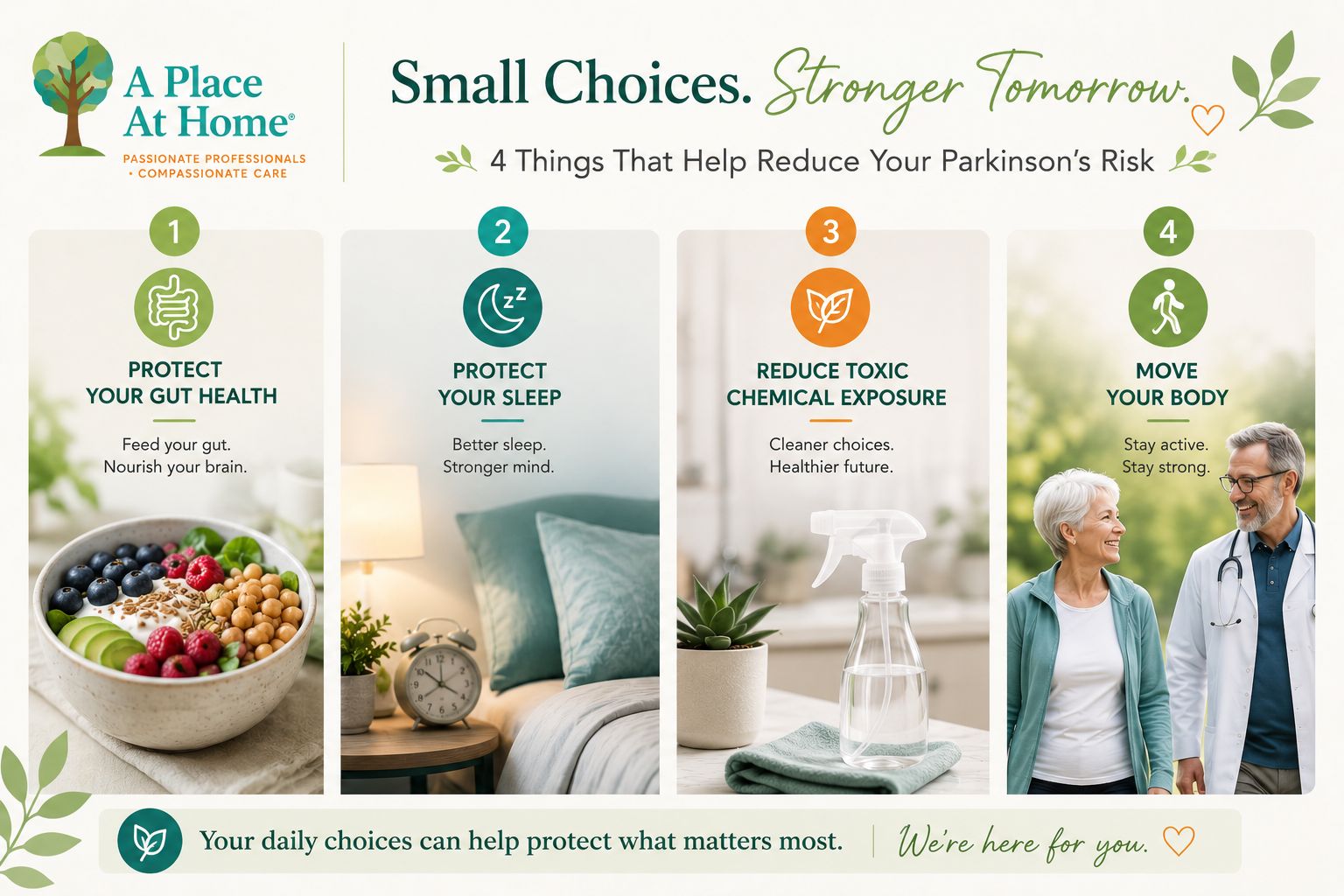
4 Things That Help Reduce Your Parkinson’s Risk
These are not four tips everyone already knows. Two of them, sleep architecture and gut microbiome health, represent newer research that is only beginning to reach general audiences. The other two, chemical exposure and exercise, are better established but deserve far more specific guidance than they typically receive.
1. Protecting Your Gut Health (The Gut-Brain Connection Is Real)
Of all the findings in recent Parkinson’s research, the gut-brain connection may be the most significant. Scientists have known for years that people with Parkinson’s experience gastrointestinal symptoms. What is now clear is that the relationship runs deeper than symptoms: gut health may actually influence whether the disease develops in the first place.
Research published in Nature Communications in 2025 used machine learning to analyze gut microbiome data from 22 studies worldwide. The finding was striking: people with Parkinson’s disease showed a consistent and specific pattern of microbial changes in their gut. The affected microbial pathways were heavily involved in processing environmental chemicals like pesticides, solvents, and other pollutants.
Researchers interpreted this as evidence that the gut microbiome may serve as a frontline contact zone for the chemical exposures linked to Parkinson’s risk.
A 2026 study from University College London published in Nature Medicine went further, showing that gut microbiome analysis could identify elevated Parkinson’s risk in people who had no symptoms yet, including those with genetic predispositions to the disease.
The gut-brain axis, the bidirectional communication highway between the digestive system and the brain, is increasingly central to Parkinson’s research. Gut dysbiosis (an imbalance in microbial populations) produces systemic inflammation. That inflammation reaches the brain. Anti-inflammatory microbial metabolites, particularly short-chain fatty acids, are found in lower quantities in people with Parkinson’s.
What this means practically:
A diet that supports a healthy, diverse gut microbiome is now a legitimate Parkinson’s risk-reduction strategy. That means:
- High-fiber foods: vegetables, fruits, legumes, whole grains, and fermented foods like yogurt, kefir, and sauerkraut
- Limiting ultra-processed foods, which disrupt microbial diversity and promote gut inflammation
- Reducing saturated fat and added sugars, both associated with gut dysbiosis
- Considering the gut implications of chemical exposures (more on this in factor 3)
This is not about any single probiotic or supplement. It is about consistently feeding a varied, thriving microbial community through whole food choices.
2. Protecting Your Sleep Quality (Especially REM Sleep)
Sleep disturbances and Parkinson’s disease have a deeply intertwined relationship, and the direction of causation may run both ways. Poor sleep does not just result from Parkinson’s. Certain sleep disorders appear to be a prodromal marker of the disease, meaning they can precede diagnosis by years or even decades.
Rapid eye movement sleep behavior disorder (RBD) is perhaps the most clinically important example. RBD is a condition in which the normal muscle paralysis that occurs during REM sleep is absent, causing people to physically act out their dreams. Research shows that over 80% of people with RBD eventually develop Parkinson’s or a related neurodegenerative condition. RBD is now considered one of the most specific prodromal markers for Parkinson’s known.
Beyond RBD, chronic poor sleep quality broadly disrupts the brain’s ability to clear toxic waste, maintain neuroplasticity, and regulate inflammation. Sleep fragmentation, reduced sleep efficiency, and sleep-disordered breathing are all associated with accelerated neurodegeneration. A review in PMC published in 2025 confirmed that sleep disturbances contribute to Parkinson’s pathogenesis through oxidative stress and mitochondrial dysfunction, the same mechanisms that drive neuronal death in the disease.
What this means practically:
Protecting sleep quality is a brain-protective priority, not just a lifestyle nicety. Evidence-backed steps include:
- Maintaining consistent sleep and wake times, even on weekends
- Keeping the bedroom cool, dark, and free of screens in the hour before bed
- Addressing sleep apnea, which is both independently harmful and treatable with CPAP therapy
- Talking to a doctor about suspected RBD, especially if a bed partner notices physical movement during sleep
- Reducing alcohol, which disrupts REM sleep architecture even in moderate quantities
- Managing stress through practices like mindfulness, which has clinical support for improving sleep quality in older adults
If you are experiencing unexplained daytime fatigue, chronic insomnia, or you have been told you move during sleep, a sleep study is worth discussing with your physician. These are not minor inconveniences. They are signals worth investigating.
3. Reducing Exposure to Neurotoxic Chemicals
The link between certain environmental chemicals and Parkinson’s disease is one of the most well-established in the research. Yet most people have no idea which specific chemicals are involved or where they are most likely to encounter them.
Trichloroethylene (TCE) is a synthetic solvent used in industrial degreasing, dry cleaning, and a range of consumer products including some metal cleaners, adhesives, and paint removers. It is also a well-documented groundwater contaminant, particularly near former military bases and industrial sites. Studies have found TCE in significant concentrations in surrounding water and soil. TCE is listed as a probable human carcinogen and has strong associations with Parkinson’s risk in occupational exposure research.
Pesticides and herbicides, particularly paraquat and rotenone, also carry substantial evidence for increasing Parkinson’s risk. Paraquat is chemically similar to MPP+, a compound known to selectively destroy the dopamine-producing neurons that Parkinson’s affects. Rotenone disrupts mitochondrial function, the same cellular mechanism central to Parkinson’s neurodegeneration.
The 2025 gut microbiome study discussed above adds a new dimension: pesticides and solvents appear to alter the gut microbiome in specific ways that are consistent with Parkinson’s risk. The gut is, in this model, a key point of exposure, not just the brain directly.
What this means practically:
You cannot eliminate all chemical exposure. But you can meaningfully reduce it:
- Use a water filter with an activated carbon block, which is effective at removing both TCE and many pesticide residues from drinking water
- Check household product labels for TCE, and replace with safer alternatives when available
- If you work in agriculture, construction near industrial sites, or dry cleaning, use proper protective equipment consistently
- Ventilate well when using any cleaning products containing solvents
- Check whether your area has known groundwater contamination (EPA’s EnviroMapper tool is publicly available)
- Choose organic produce for the items highest in pesticide residue when budget allows (the Environmental Working Group publishes an annual Dirty Dozen list)
These steps are practical and cumulative. Each one reduces the chemical burden that, over time, contributes to neurological risk.
4. Exercising in Ways That Specifically Protect the Brain
Exercise is the single lifestyle factor with the most robust evidence for reducing Parkinson’s risk and slowing progression in people already diagnosed. This is not a general health recommendation. The biological mechanisms are specific and well-documented.
Regular physical activity preserves dopamine-producing neurons, the exact cells Parkinson’s destroys. It maintains neuroplasticity, the brain’s ability to form and strengthen new neural connections. It reduces oxidative stress and neuroinflammation, both of which accelerate neurodegeneration. And it stimulates the production of neurotrophins, proteins that promote the growth and survival of neurons.
A 2025 review in The Lancet Neurology confirmed that sustainable lifestyle physical activity produces symptomatic benefits and may slow neurodegeneration in Parkinson’s disease. Another Lancet-adjacent review found that combining lifestyle interventions, including exercise, produced synergistic effects on multiple aspects of Parkinson’s pathophysiology.
Not all exercise is equally neuroprotective. The research points to specific activity types:
- Aerobic exercise: Brisk walking, cycling, swimming, dancing. Aim for at least 150 minutes per week of moderate-intensity aerobic activity. This is the category with the strongest evidence for neuroprotection.
- Balance and coordination training: Tai Chi, dance, yoga, and Pilates all show specific benefits for reducing fall risk and improving motor control. Tai Chi in particular has an impressive clinical evidence base in Parkinson’s populations.
- Strength training: Resistance training twice weekly preserves muscle mass, supports bone density, and has metabolic benefits relevant to neurological health. Metabolic syndrome (high blood pressure, cholesterol, abdominal obesity, insulin resistance) is an independent Parkinson’s risk factor.
- High-intensity interval training (HIIT): Emerging evidence suggests HIIT may be particularly effective at stimulating neuroprotective factors. Even short bouts of high-intensity effort appear to generate stronger neurotrophin responses.
- Daily functional movement counts too. Doing household tasks, gardening, shopping, and walking errands all contribute. The most important thing is consistent, varied movement over a lifetime, not any single perfect workout routine.
What About Diet and Coffee?
These two factors deserve specific mention even though they overlap with the gut health discussion above, because the evidence is strong enough to be actionable on its own.
A whole-food, anti-inflammatory diet featuring vegetables, fruits, whole grains, legumes, and lean proteins is consistently associated with lower Parkinson’s risk in longitudinal research. The protective mechanism is multifactorial: better gut microbiome diversity, reduced systemic inflammation, improved brain blood vessel health, and more stable metabolic markers.
Coffee and caffeine have a well-replicated association with reduced Parkinson’s incidence. One to four cups of coffee daily appears to be the protective range in most studies. The mechanism involves caffeine’s ability to reduce neuroinflammation, combat oxidative stress, and stimulate dopamine production. Caffeine suppresses microglial cell overactivation, one of the inflammatory processes linked to dopaminergic neuron death.
One important nuance: coffee does not cure Parkinson’s or halt progression once present. The evidence is specifically for risk reduction in people who have not yet developed the disease. Also worth noting: older adults taking certain medications should check for caffeine interactions with their physician.
What If Parkinson’s Runs in Your Family?
Having a first-degree relative with Parkinson’s disease roughly doubles your baseline risk. That is worth taking seriously, but it is not a guaranteed diagnosis.
The majority of Parkinson’s cases have no known genetic link. And even for those who do carry a family history, lifestyle choices still move the needle. The 2025 Frontiers in Human Neuroscience study found that modifiable factors made a measurable difference even in higher-risk groups. Genetics loads the gun. Environment and lifestyle determine whether it fires.
If Parkinson’s runs in your family, treat the four factors in this article as active risk-management, not optional habits. Gut health, sleep quality, chemical exposure, and regular exercise all matter more, not less, when your baseline risk is elevated.
If multiple close family members have been affected, ask your physician about genetic counseling. Knowing whether you carry a known Parkinson’s-associated variant can sharpen how you prioritize prevention.
In-Home Parkinson’s Care Near Weston, FL
A diagnosis does not mean losing independence. A Place At Home -Weston provides compassionate, professional in-home care for Parkinson’s seniors in Weston Florida. We understand that managing daily life with Parkinson’s takes the right support structure. Our guide to building effective Parkinson’s daily routines is a good starting point for families navigating what that looks like at home.
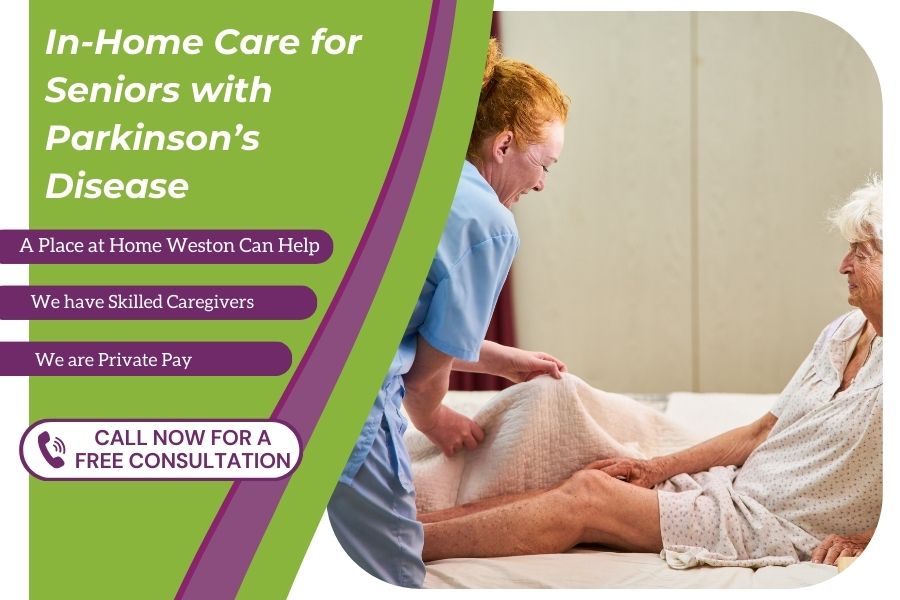
Our care services for Parkinson’s clients include:
- Medication reminders and adherence support
- Mobility and fall risk reduction, including assistance during freezing or shuffling episodes
- Preparation of brain-healthy, whole-food meals
- Structured daily exercise routines built around physical therapy recommendation
- Personal care assistance: bathing, grooming, and hygiene support
- Companionship and cognitive engagement to support mental wellness
- Respite care for family caregivers who need a break
Serving Weston, Hollywood, Davie, Pembroke Pines, and surrounding Broward County communities.
Call us today at (954) 335-9284 to schedule a free care consultation.
Parkinson’s Disease Related FAQs
Can Parkinson’s disease be prevented entirely?
Not entirely, because age and genetic factors cannot be controlled. But meaningful risk reduction is possible. Research estimates that over 20% of cases could theoretically be prevented through lifestyle modification alone. For individuals with genetic risk factors, protective lifestyle choices can still substantially reduce the probability of developing the disease.
How much coffee should I drink to lower Parkinson’s risk?
Most research points to one to four cups per day as the protective range. The mechanism involves caffeine reducing neuroinflammation and oxidative stress and stimulating dopamine production. Exceeding four cups daily does not appear to add additional benefit and may cause other health issues. This applies to pre-diagnosis risk reduction; coffee does not slow progression once Parkinson’s has developed.
What foods are most protective against Parkinson’s disease?
A whole-food diet high in fiber, vegetables, fruits, legumes, and whole grains supports gut microbiome diversity and reduces systemic inflammation, both of which are associated with lower Parkinson’s risk. Fermented foods like yogurt, kefir, and kimchi add beneficial microbial populations. Foods to minimize include ultra-processed items, saturated fats, and those with high added sugar content.
What should I do if I think I have early signs of Parkinson’s?
The most important step is to see a neurologist. If you are experiencing symptoms such as a resting tremor, stiffness, unexplained balance issues, or loss of smell without an obvious cause, these warrant medical evaluation. If a bed partner has noticed you physically moving or speaking during sleep, ask your doctor about a sleep study specifically to evaluate for REM sleep behavior disorder. Early diagnosis creates more options for management and gives more time for protective lifestyle habits to take effect.
What is the life expectancy of a person with Parkinson’s disease?
Most people with Parkinson’s disease have a life expectancy close to that of the general population. Parkinson’s itself is rarely the direct cause of death. With proper treatment and care, many people live 10 to 20 years or more after diagnosis. Complications in later stages, such as falls, pneumonia, and cognitive decline, are the more common contributors to reduced lifespan. Age at diagnosis and overall health play the biggest role in individual outcomes.