Is 60 or 65 Considered Elderly? Understanding Age, Aging, and What It Really Means

Senior Couple smiling

As people live longer, healthier lives, the question of when someone is considered elderly has become less clear. Is it 60? Is it 65? Or does age alone even tell the full story?

Understanding just what defines an age-for seniors, families, and caregivers-can help with planning, decision-making, and conversations about aging and health independence and eventual care needs. The short answer is that both 60 and 65 are in common use, depending on context. The longer answer is more complicated:

Is 60 Considered Elderly?

Yes, in some settings-60 is considered the beginning of older adulthood, but not necessarily “elderly” in the traditional sense.

It is used by, commonly: Age 60

  • Central organizations for international health
  • Programs for Seniors in the Community
  • Social and cultural definitions of aging

Many senior centers, wellness programs, and public health discussions begin using the term older adult or senior at age 60. However, most people at this age are still active, independent, and working or newly retired.

Because of this, age 60 is more accurately described as the start of later adulthood rather than old age.

Is 65 the Start of Old Age?

The age of 65 was quite arbitrary, as this is usually considered the age when one is labeled elderly, primarily because it coincides with retirement, senior benefits, and age-related healthcare planning. However, it is less of a rule and more of an outline than an actual measure of health or competency. The majority of people at age 65 live active, independent, and productive lives.

This is largely because age 65 marks eligibility for major milestones such as:

  • Medicare health insurance
  • Certain retirement and senior benefits
  • Age-based healthcare screenings

For decades, age 65 has been used as a benchmark in healthcare, policy, and retirement planning. As a result, it has become the most widely accepted definition of when someone is considered elderly—at least administratively.

Still, many adults at 65 remain healthy, active, and fully independent.

Why There’s No Single Definition of “Elderly”

There is no definition of the word elderly, since aging is a different process for each person.

Chronological age, or the age a person is, does not always reflect:

  • Physical ability
  • Cognitive health
  • Emotional well-being
  • Independence in daily life

Two persons aged 70 years may have very different health profiles and support needs. That is why many professionals today focus less on age alone and more on functional aging.

What is Functional Age and Why Should It Matter?

Functional age describes how well a person functions in daily life, other than how old they are by years. It is a reflection of factors such as one’s mobility and balance, the ability to manage activities of everyday living, memory and decision-making, and overall health and stamina. From a care perspective, functional age often means more than chronological age. Whereas some people in their late 70s are still fully independent, some others in their early 60s may require daily support as a result of illness, injury, or health changes.

Does turning 60 or 65 mean a person needs care?

No–an increase in years does not make any person pop into the care category. Many adults remain independent, living in their communities well into their 80s and beyond. The basis for most care decisions includes:

  • Safety at home
  • Ability to perform daily activities
  • Health changes
  • Recovery after surgery or illness
  • Level of family support

Age may be a reference point, but care needs are driven by function and safety, not a number.

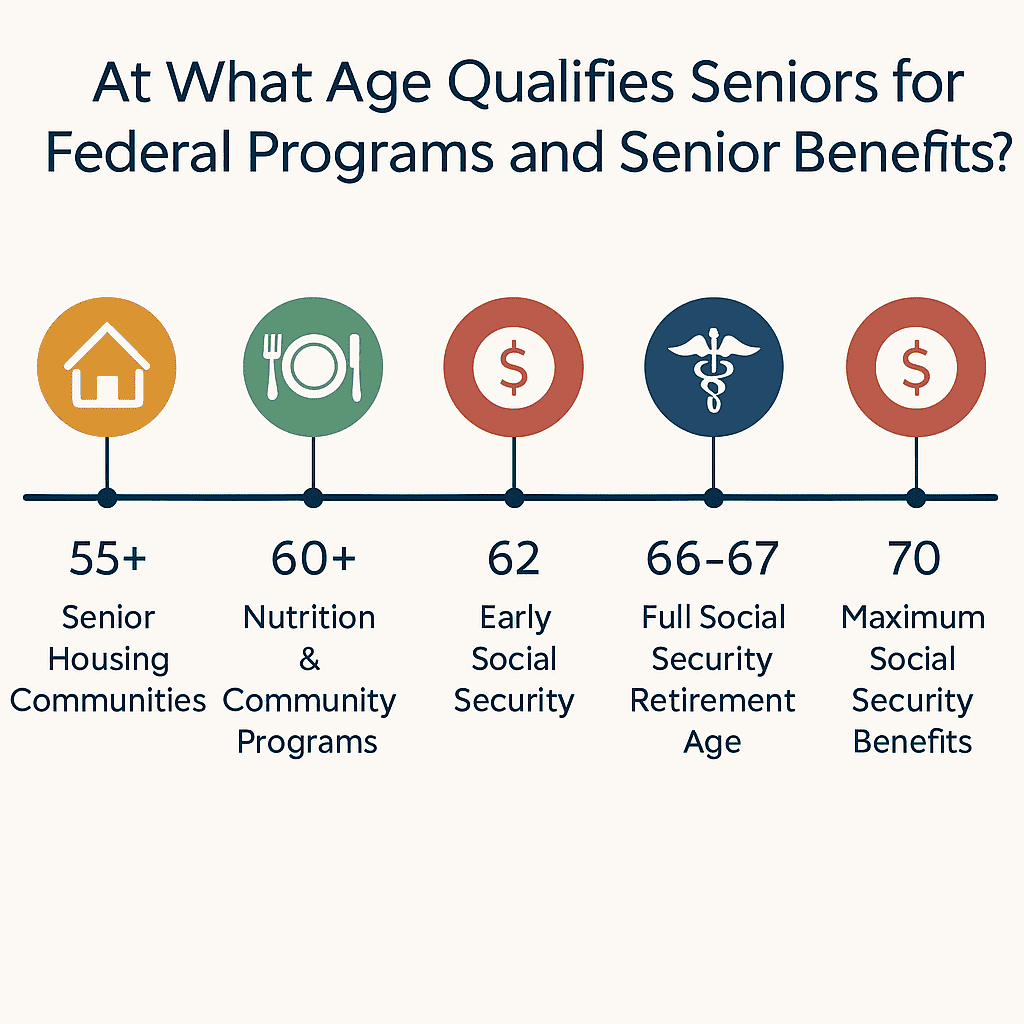
At What Age Qualifies Seniors for Federal Programs and Senior Benefits?

Senior benefits eligibility timeline by age

Most of the senior benefits are attached to an age threshold instead of a single definition of “elderly” in the United States. These programs are made for healthcare access, income security, housing, and daily living as one is aging. The most widely applied benchmark is 65, although under or over this level of age, eligibility can begin for different programs.

Medicare (Age 65)

Attains Medicare eligibility at an elderly stage of life, which begins at 65 years, providing them with health insurance. The programs offered under Medicare cover hospital and medical treatment and prescription drugs. Attaining Medicare is one of the reasons why a person attains senior status when they reach 65 years.

Social Security Retirement Benefits (Ages 62–70)

Benefits for retirement under Social Security can be drawn from as early as 62 years of age, but they are reduced if one wishes to start taking them before attaining full retirement age. Benefits are available from 66 to 67 years of age, with an option to raise them if one delays taking them until 70 years of age.

Supplemental Security Income (SSI) (Age 65 or Disability-Based)

SSI offers financial assistance to senior citizens with limited income and resources. Although eligibility can start at 65, some people can become eligible before this time if they have a disability. Assistance from this social service will cover basic living needs such as food and shelter.

Medicaid and Long-Term Care Assistance (Varies by State)

Eligibility for Medicaid benefits is determined by income and resources, but not by age, and many people can become eligible when their care requirements escalate in old age. Medicaid benefits include assistance with long-term healthcare such as in-home and SNF care.

Housing Assistance and Senior Housing Programs (Age 55+ or 62+)

Numerous government and local programs exist for senior citizens beginning at either age 55 or 62 years. Such programs can include rent subsidies, senior-only apartment buildings, and senior-friendly living communities.

Benefits for Veterans Aged 65 and Older (Varies by Benefit)

Veterans may be eligible for healthcare benefits, pensions, and assistance programs when they reach advanced age. Benefits come with eligibility based on age, military service, financial need, or disability.

Nutrition and Community Support Programs (Often Age 60+)

Programs such as congregate meal services, home-delivered meals, and senior community services often begin at age 60. These services support nutrition, social engagement, and independent living for older adults.

Apart from benefits and eligibility, other dimensions of life in which aging might be considered include phases of life in order to address varying requirements at different stages.

Is “Senior” the Same as “Elderly”?

Often, people will use these terms interchangeably, but “older adult” or “senior” can be a better option because it sounds more respectful and less concentrated on vulnerability. “Elderly” may be a common term in a medical or a government setting, but usage is moving toward someone-first languages.

Although it does not in itself define aging or need, age is a factor in establishing eligibility for two very important government programs.

Care Coordinator and Management Weston FL

What are the Stages of Aging?

Aging can be described in terms of phases in order to have a better understanding of health, autonomy, and function. Although different authors describe phases in different ways, a generally accepted model consists of four phases:

  • Early Older Adulthood (commonly 50s to early 60s): Here, people are active and self-sufficient but may have to deal with chronic ailments or lifestyles.
  • Young-old (commonly 65-74 years old): Generally, it involves transitions into retirement, a heightened emphasis on preventive health care, maintaining mobility, and autonomy.
  • Middle-old (often 75–84): Some adults may need assistance occasionally with transportation, household chores, taking medications, or personal safety at home.
  • Old-old (85+): Needs for assistance are more likely to increase, especially with fall risk, memory changes, and help with activities of daily living.

These stages aren’t strict rules. They’re a helpful way to talk about aging in a realistic, respectful way—because people age differently based on health, environment, and support systems.

At What Age Do Seniors Commonly Begin Requiring Assistance?

There is no specific age at which someone suddenly needs care. Most support needs develop gradually and are driven by functional changes, not birthdays. Challenges such as loss of mobility, balance problems, forgetfulness, managing daily activities, taking medications, or safety in and around the dwelling are more likely considerations before support is actually required. Some people can continue to look after themselves well into their 80s, where others will require support in their early 60s.

When Should Families Start Planning for Senior Care?

The best time to plan for senior care is before a crisis occurs. Families often benefit from starting conversations and exploring options once a loved one begins experiencing falls, trouble managing medications, difficulty cooking or keeping up with household tasks, or needs extra support after a hospital stay. Early planning allows families to make thoughtful, less stressful decisions and put the right support in place before safety or health becomes urgent.

Is the Term “Elderly” Still Appropriate?

The word elderly is increasingly being replaced with terms like:

  • Older adult
  • Senior
  • Aging adult

This shift reflects a more respectful and accurate view of aging. Many people associate “elderly” with frailty, which does not represent most adults in their 60s or even 70s.

Using people-first language helps focus on ability, not limitation.

Senior Home Care from A Place At Home – Summerlin

Every individual grows old in a different way, and when they need help, it is not based on a certain age. The most important factor is safety, independence, and a good life at home. A Place At Home – Summerlin residents will have access to tailor-made senior home care, which will address each individual in a manner in which they can be assisted either occasionally or on a continual basis.

Our caregivers assist senior citizens in being comfortable and self-reliant in their homes by providing assistance with personal care, meal service, medication reminders, mobility support, friendship, and post-illness recuperation. We assist the family in adjusting this support based on their evolving requirements, keeping in mind their dignity and continuity of care.

If you are just starting to think about planning for the future or if you notice some signs that a loved one in your life may need a little extra assistance, our local team is available to walk you through this next step.

Final Takeaway
Whether a person can be labeled as senior at 60 or at 65 can very much depend on the context in which they are being assessed. The truth is, aging is far more a function of health, independence, and functionality relative to a number.


Top Senior-Friendly Events in Las Vegas for 2026

seniors are having fun at event

Staying active, social, and connected plays a huge role in healthy aging. Fortunately, Las Vegas and the Summerlin area offer plenty of opportunities for older adults to get out, meet others, and enjoy life. Whether your loved one prefers community expos, cultural performances, or wellness fairs, 2026 promises a full calendar of fun, senior-friendly events.

Here are some of the top gatherings to mark on your calendar this year.

1. Senior Idol Showcase – January 22, 2026

Location: Charleston Heights Arts Center | 800 Brush St, Las Vegas

Think “America’s Got Talent”—but for the 50+ crowd! This cheerful talent show features local singers, dancers, and performers who prove that creativity never retires. Families and friends are encouraged to attend and cheer.
Why go: Great entertainment, uplifting atmosphere, and community pride in action.

2. LV Senior Expo – April 7, 2026

Location: Centennial Hills YMCA | 6601 N Buffalo Dr, Las Vegas, NV
🕘 10 a.m.–1 p.m.

This annual event brings together health providers, local businesses, and community organizations that serve adults 55 and older. Attendees can explore wellness booths, enjoy live entertainment, and discover resources that support healthy living and independence.
Why go: Free admission, indoor location, easy parking, and plenty of seating—perfect for seniors in and around Summerlin.

3. Senior Wellness Festival – September 2026 (TBD)

Location: Las Vegas Convention Center | 3150 Paradise Rd

Hosted by community partners and nonprofits such as Nevada HAND, this lively festival focuses on senior health, fall prevention, fitness, and nutrition. There’s also music, demonstrations, and friendly wellness challenges.
Tip: Bring comfortable shoes and arrive early for screenings and giveaways.

4. Aloha Day Senior Expo – November 2026 (TBD)

Location: The Orleans Hotel & Casino | 4500 W Tropicana Ave

Bringing island vibes to the desert, the Aloha Day Senior Expo celebrates culture, community, and connection. Expect Hawaiian music, hula dancers, local vendors, and resource tables for active adults.
Why go: It’s fun, festive, and free—ideal for a day out with family or friends.

5. Active Adult Center Programs – Year-Round

Location: Howard Lieburn Active Adult Center | 6230 Garwood Ave, Las Vegas NV

For seniors who prefer smaller gatherings, Las Vegas’ Active Adult Centers offer ongoing classes and activities such as:

  • Chair yoga and low-impact fitness
  • Art and craft workshops
  • Social dances and movie afternoons
  • Day trips and hobby clubs

These centers make it easy to stay social, healthy, and mentally engaged all year long.

Planning Ahead: Tips for Seniors and Family Caregivers

Attending events should be fun—not stressful. Keep these quick tips in mind when making plans:

  • Check accessibility: Confirm parking, ramps, and seating options before attending.
  • Stay cool: Las Vegas heat can rise quickly; bring water, sunscreen, and light layers.
  • Plan transportation: Arrange rides in advance if driving or walking long distances is difficult.
  • Know limits: Schedule rest periods, especially after surgeries or health procedures.

Need a Helping Hand to Attend Events Safely?

Whether your loved one wants company for a community festival or assistance moving around safely, A Place At Home – Summerlin is here to help. Our compassionate caregivers provide reliable transportation, mobility support, and companionship—so seniors can stay active and enjoy the Las Vegas lifestyle with confidence.


Why do seniors wake up at night so often? Understand sleep challenges in aging

Many older adults in Summerlin, Nevada finds getting a full night’s sleep more and more difficult. What was once a simple thing-for sleeping, staying asleep, and waking refreshed-can slowly devolve into nights of tossing and turning, trips to the bathroom, and waking up well before one is ready.

If this sounds familiar, you’re not alone. Sleep disturbances are one of the most common complaints among seniors. But understanding why they happen can help families take meaningful steps toward better rest and well-being.

Why Sleep Changes as We Age

As we grow older, it’s common to notice that sleep simply doesn’t come as easily as it once did. What used to be a solid eight hours can turn into restless nights, frequent awakenings, or early morning wake-ups long before sunrise. These changes don’t happen overnight; they are part of how the body and brain evolve with age.

Beginning in our 50s and continuing in our 60s, several biological and lifestyle changes can make it harder to fall asleep and stay asleep:

  • Less deep, restorative sleep (slow-wave sleep):
    Time spent in the deepest stage of sleep, the stage in which the body repairs tissues and strengthens memory, decreases with age. Older adults are more likely to spend time in the lighter stages of sleep, which is easier to wake from.
  • Changes in circadian rhythm:
    As people age, their internal body clocks tend to shift forward, so seniors feel tired earlier in the evening and wake up earlier in the morning. This “phase advance” makes it difficult for them to stay asleep throughout the night.
  • Decreased melatonin production:
    The brain produces less melatonin, the hormone that signals bedtime; thus, it is much harder to fall and stay asleep, especially in cases where evening light exposure is high, like with screens or bright lamps.
  • Increased sensitivity to environmental factors:
    Older adults are more likely to wake up if there are small noises, changes in light, or temperature changes. In a desert climate such as Summerlin, hot nights, dry air, and low humidity indoors can make staying asleep comfortably even more challenging.
  • Overall health and activity level changes:
    Reduced daytime activity, chronic pain, or medical conditions such as arthritis or diabetes can all disrupt nighttime rest.
  • More frequent nighttime awakenings:
    Age-related changes in bladder function and medications like diuretics can lead to nocturia—frequent nighttime urination—causing repeated sleep interruptions.

It’s important to remember that these shifts are common but not inevitable. With the right environment, routines, and support, seniors can still enjoy high-quality, restorative rest well into later life.

sleeping and aging

Common Reasons Older Adults Wake Up During the Night

Occasional nighttime wakings can be normal, but when it happens a number of times each night-or leads to daytime exhaustion-it sometimes points to the existence of an underlying cause that can be managed or treated. Understanding these reasons is the first step toward helping your loved one get the rest they deserve.

1. Health Conditions That Disrupt Rest

The body changes throughout our lives, which can make sleep more precarious with age. Many medical conditions directly interfere with nighttime comfort and breathing:

  • Arthritis and chronic pain: Aching joints and stiffness often worsen while lying still, making it hard to fall or stay asleep. Even minor movement can trigger discomfort that breaks sleep cycles.
  • Sleep apnea: When sleepers stop breathing for short periods, they often wake with a gasp or snore loud enough to rouse themselves and their bed partners. Many older adults with untreated sleep apnea report feeling tired after “sleeping” eight hours.

Restless leg syndrome or neuropathy: Tingling, burning sensations, and a need to move one’s legs can cause continuous tossing and turning. These sensations often become worse in the evening.

  • Heartburn and reflux: Lying flat may increase acid reflux, which many elderly individuals already suffer from.
  • Respiratory or heart problems: Diseases such as COPD or heart failure can lead to shallow breathing while sleeping and result in frequent awakenings.
  • Nocturia: Due to the decreased elasticity of the bladder and increased nocturnal production of urine by the kidneys, the elderly could experience nocturia.

2. Medication Side Effects

Some prescriptions—particularly those commonly taken by older adults—can interfere with sleep unintentionally.

Common culprits include:

  • History of diuretics for high blood pressure that induce nighttime urination
  • Steroids that cause energy spikes or restlessness
  • Antidepressants or beta-blockers which interfere with melatonin production
  • Decongestants or pain medications that are nervous system stimulants

If sleep disturbances started with a new prescription, be sure to discuss it with the prescribing physician. Sometimes adjusting the dosage timing or exploring an alternative medication can help restore better rest.

3. Emotional and Cognitive Factors

Sleep is closely linked with emotional well-being, especially in elderly individuals who may experience life transitions or isolation.

  • Anxiety and racing thoughts may keep the mind active long after bedtime.
  • It can cause early morning awakening and difficulty getting back to sleep. • Loneliness or bereavement can worsen night-time anxiety or make the home uncomfortably quiet. In the case of Alzheimer’s or dementia, changes in brain function may completely alter sleep cycles, leading to confusion and wandering at night.

4. Environmental and Temperature Changes

Even minor environmental disturbances may rouse a light-sleeping senior.

  • Temperature fluctuations: Overnight temperature drops, as well as a dry indoor air environment in Summerlin and across the Las Vegas Valley, can make sleeping uncomfortable. Seniors can get overheated, thirsty, or chilled.
  • Noise and light: Noises from the street, as well as early morning light filtering in through the blinds, can be bothersome.
  • Uncomfortable bedding or mattress: A very hard or very soft mattress can aggravate a back or joint pain problem.

A few simple modifications-such as blackout curtains, a white noise machine, or a cooling mattress pad-can diminish these disturbances.

5. Lifestyle Habits and Daily Routines

Poor sleep often reflects daily life. Irregular habits or stimulants can make restful nights harder to achieve.

  • Late caffeine intake: Even a cup of tea or chocolate dessert in the evening can affect seniors more strongly.
  • Irregular sleep schedule: Sleep and wake times are different each day, which confuses the system.
  • Daytime napping: While short ones help refresh energy, long or late ones negatively affect night sleeping.
  • Limited physical activity: Reduced movement during the day means less energy spent—and less sleep drive at night.

These would encompass regular routines, light exercises, and exposure to daylight during the day, which help in regulating sleep patterns naturally.

Read: Is 60 or 65 Considered Elderly?

How Dementia and Alzheimer’s Affect Sleep

Sleep challenges among seniors living with Alzheimer’s disease or other forms of dementia are not only common; they can also be among the most distressing symptoms both for the individual and the family caregivers. These conditions affect areas of the brain that help govern sleep, thereby making the body unable to follow a normal day-night rhythm.

As a result, many people with dementia experience:

  • Difficulty falling asleep or staying asleep
  • Frequent nighttime awakenings
  • Increased confusion or agitation in the evening

Reversed sleep cycles, where they feel awake at night and sleepy during the day

This pattern is often known as “sundowning,” a term used to describe increased restlessness, anxiety, or disorientation that typically occurs in the late afternoon or evening hours. During this time, seniors may pace, call out, or attempt to leave the home—behaviors that can leave families exhausted and worried for their loved one’s safety.

Why These Sleep Changes Happen

Several biological and environmental factors contribute to disrupted sleep in individuals with dementia:

  • Damage to the brain’s circadian clock: Dementia affects the part of the brain that controls the sleep-wake cycle, leading to irregular sleep patterns.
  • Reduced exposure to natural daylight: Spending more time indoors can confuse the body’s internal sense of time.
  • Medication side effects: Certain prescriptions for memory or mood may increase wakefulness.
  • Physical discomfort: Pain, hunger, or the need to use the bathroom can cause restlessness when the person cannot communicate what’s wrong.
  • Environmental triggers: Shadows, dim lighting, or household noises may heighten confusion and agitation after dark.

Practical Tips for Better Sleep for seniors at Home

You don’t always need a prescription or a major lifestyle overhaul to help seniors sleep better. Often, a few thoughtful adjustments to daily routines and the sleep environment can make a noticeable difference. Consistency, comfort, and calm are the cornerstones of restful sleep—especially as we age.

Here are some simple, effective ways families can promote better sleep at home:

1. Stick to a regular routine.

Going to bed and getting up at the same time every day regulates the internal clock of the human body. Even on weekends or holidays, maintaining this rhythm helps solidify a healthy sleep pattern. Where possible, schedule mealtimes, light exercises, and relaxation at similar times each day to support this natural cycle.

2. Limit Naps to Short Bursts

While daytime rest can indeed be refreshing, long and late naps usually disrupt nighttime sleep. Encourage short naps of 20–30 minutes, ideally before 3 p.m. This way, seniors are able to recharge without disrupting nighttime rest.

3. Encourage Daytime Activity and Sunlight

Staying active during the day helps build natural sleep pressure for the evening. Light activities like short walks, gardening, and light stretching improve both mood and nighttime rest. In Summerlin, the best walks will be either early morning or evening to avoid midday heat but still get in some beneficial sunlight exposure for circadian balance.

4. Create a Cool, Comfortable Sleep Environment

Temperature plays a huge role in how well one sleeps, and it’s especially true in the warm desert climates. Keep your bedroom at approximately 68°F (20°C) with good airflow. Use lightweight, breathable bedding and consider investing in a humidifier to offset dry interior air. Blackout curtains and a quiet fan can further reduce disturbances.

5. Avoid Stimulants and Heavy Meals Before Bed

Caffeine, nicotine, and even chocolate can disrupt sleep for many hours after intake. Advise abstaining from these after mid-afternoon. Similarly, large meals or spicy foods too near bedtime can cause heartburn or discomfort. Recommend a light evening snack, such as fruit or yogurt, if hunger arises before bed.

6. Create a Relaxing Bedtime Routine

The body is responding to the familiar cues that it is time to sleep. Wind down by engaging in quiet activities: listening to soft music, reading a light book, or doing some light stretching. Avoid screens and bright lights for at least an hour before bedtime because these can suppress melatonin and delay sleep onset.

7. Keep the Bedroom a Sleep-Only Space

Encourage that the bedroom should be used only for sleeping and relaxation, without television or scrolling through devices. This helps your brain make associations with the bedroom as a sleep cue.

How In-Home Care Can Help Seniors Sleep Better

For many Summerlin families, the greatest challenge is not simply a loved one struggling to go to sleep; it’s also keeping them safe, calm, and cared for through the night. Sleep disturbances can be incredibly taxing for both seniors and family members who care for them, especially when restlessness, confusion, or wandering at night begins to occur regularly.

That’s where professional in-home care can make all the difference. Not only do trained caregivers bring peace of mind, but they provide practical, compassionate support that allows for a healthy, restorative rest.

Here’s how overnight or 24-hour in-home care helps improve sleep quality:

  • Gentle reminders and assistance: Caregivers can help ensure seniors take nighttime medications safely, drink enough water, and follow their bedtime routine without stress or confusion.
  • Mobility support for nighttime safety: Many seniors wake during the night to use the bathroom or adjust their position. A caregiver can offer steady assistance—reducing the risk of slips or falls, especially in dimly lit areas.
  • Comforting companionship: Seniors who live alone or experience anxiety, loneliness, or dementia-related confusion often sleep more soundly when someone is nearby to provide reassurance and calm conversation.
  • Monitoring and immediate response: Caregivers remain attentive throughout the night, observing changes in breathing, movement, or behavior. Quick response to restlessness, discomfort, or disorientation helps prevent accidents and ensures uninterrupted rest.
  • Support for family caregivers: When families know their loved one is cared for overnight, they too can rest easier—avoiding burnout and improving their own health and focus during the day.

When Professional Support Becomes Essential

When sleeplessness or wandering becomes frequent, family caregivers may find themselves staying up all night to ensure safety. Over time, this lack of rest can lead to burnout and emotional strain.

Overnight caregiving services can make a profound difference—providing peace of mind while ensuring your loved one remains safe, calm, and comforted through the night. Trained caregivers can monitor for movement, redirect agitation, and offer reassurance, allowing family members to get the rest they need too.

At A Place At Home – Summerlin, our dementia-trained caregivers understand how to create secure, comforting environments that promote both sleep and dignity.

As clark county’s senior population booms, focus turns to shortcomings in the state’s care economy (2025 outlook)

caregiver playing chess with elderly couple

In 2025, Clark County, Nevada, continues to experience one of the fastest-growing senior populations in the western U.S. Once known primarily for the bright lights of Las Vegas, the region has become a popular destination for retirees drawn to its warm climate, tax advantages, and active-living communities like Summerlin, Henderson, and Green Valley.

According to Nevada’s Department of Health and Human Services, adults aged 65 and older now make up more than 15.5% of Clark County’s population, and that figure is projected to approach 17% by the end of the decade. (UNR Cooperative Extension)

Yet, as the population ages, one reality becomes increasingly clear: Nevada’s care economy isn’t fully keeping up with the growing demand for home-based support, caregiving staff, and affordable long-term care options.

The silver wave meets a strained care system

Across Clark County, from Las Vegas to Summerlin and Boulder City, families are feeling the pressure of an evolving care landscape. The demand for qualified caregivers, home health aides, and memory care professionals continues to surge, but the supply hasn’t kept pace.

A 2024 report from the Las Vegas Sun highlighted that while the state celebrates its thriving senior population, the “care economy”—the network of professionals who provide daily living support, home health, and companionship—remains underfunded, undertrained, and overstretched.

Key challenges include:

  • Workforce shortages: Nevada’s ratio of direct-care workers to seniors is below the national average, leaving families struggling to find consistent help.
  • Rising care costs: The average cost of non-medical home care in Clark County rose by nearly 8% between 2023 and 2025, according to Genworth’s Cost of Care Survey.
  • Limited training resources: Many caregivers lack formal training in dementia care, fall prevention, or specialized chronic condition support.
  • Regulatory complexity: Smaller agencies and independent caregivers face challenges meeting compliance standards amid evolving state oversight.

For families seeking in-home assistance, this combination creates both access barriers and uncertainty—especially for middle-income households who don’t qualify for Medicaid but can’t afford full-time private care.

The emotional cost for families

The impact isn’t just logistical—it’s deeply emotional.

Take the example of Mary, a 72-year-old widow in Summerlin whose eyesight and mobility have declined since developing diabetes. Her daughter, Rachel, manages her care from across town while working full time. Finding reliable caregivers has been a challenge. “We went through three agencies in one year,” Rachel shares. “Everyone was kind, but scheduling and consistency were constant problems. Mom needs routine, and every time we had a new caregiver, it set her back.”

Stories like Mary’s are increasingly common across Clark County, where more than one in four seniors live alone (U.S. Census, 2024). For many, in-home care isn’t just about convenience—it’s about preserving dignity, safety, and connection in the place they call home.

in-home care: the frontline of nevada’s care economy

In-home care providers play an essential role in bridging the gap between medical services and independent living. Agencies like A Place At Home – Summerlin are part of a growing movement that focuses on preventative, relationship-based care—helping seniors stay in their homes longer and avoid unnecessary hospitalizations.

This model emphasizes:

  • Personalized care plans tailored to health conditions and routines
  • Companionship to combat loneliness and isolation
  • Support with daily activities such as bathing, dressing, and meals
  • Respite care to relieve family caregivers
  • Specialized training for Alzheimer’s and dementia care

These services don’t just ease the strain on families—they also reduce healthcare costs by preventing accidents, malnutrition, and hospital readmissions.

Statistic Insight Source
15.58% Clark County residents aged 65+ (2024) Neilsberg Demographics
17% Projected 65+ share of Nevada’s population by 2025 UNR Cooperative Extension
+8% Increase in average home care costs since 2023 Genworth Cost of Care Survey
25% Seniors in Clark County living alone U.S. Census Bureau, 2024 Data
2,000+ Estimated shortage of qualified caregivers statewide Las Vegas Sun, 2024

Moving forward: building a stronger care infrastructure

Experts say Nevada must invest in its caregiving infrastructure to meet the growing needs of its residents. That includes:

  • Expanding training and certification programs for caregivers
  • Offering financial incentives for people entering home care professions
  • Improving Medicaid reimbursement rates to attract and retain talent
  • Encouraging public-private partnerships that strengthen community-based care

Until those systemic changes happen, local in-home care providers and family caregivers remain the backbone of Clark County’s care economy.

A local perspective from a place at home – Summerlin

“Families don’t just need someone to show up—they need consistency, compassion, and understanding,” says a local care coordinator at A Place At Home – Summerlin.
“Our caregivers aren’t just performing tasks—they’re building relationships that restore confidence and peace of mind.”

As Clark County’s senior population continues to rise, those personal connections will play an increasingly critical role in ensuring older adults can live safely and happily in the homes they love.


Questions to Ask Your Doctor Before Bringing a Senior Home After Surgery

senior talk with doctor

Bringing your loved one home after surgery is a hopeful step toward healing—but it also comes with new responsibilities. While hospital stays are often short, recovery continues long after discharge, especially for older adults whose bodies heal more slowly and need extra support.

Seniors may require assistance after surgeries such as:

  • Hip or knee replacement
  • Leg or foot surgery (fractures, tendon repair, or joint reconstruction)
  • Heart or bypass surgery
  • Back or spinal procedures
  • Abdominal or hernia repair
  • Cataract or eye surgery
  • Cancer-related or reconstructive surgeries

Even a simple procedure can bring challenges with mobility, fatigue, or pain. By asking thoughtful questions before discharge, you’ll know what to expect, what help is needed, and how to set up a safe, comfortable environment for recovery at home.

1. What Should We Expect During Recovery at Home?

Ask your doctor for a realistic picture of the recovery process.

  • How long will your loved one need assistance?
  • When can they safely resume daily activities?
  • What signs indicate healing—or a setback?

Understanding the timeline helps families plan ahead for in home caregiving, follow-up visits, and home adjustments.

2. What Type of Assistance Will Be Needed Day to Day?

Seniors often need extra help with basic activities, especially right after surgery. Confirm whether your loved one will require:

  • Personal care (bathing, dressing, toileting)
  • Mobility support or help getting in and out of bed
  • Remember Medication or meal preparation
  • Transportation to therapy or doctor appointments

If family members work or live apart, consider short-term in-home care to bridge the gap safely.

3. Are There Any Activity Restrictions?

Most surgeries come with temporary limits on movement. Ask:

  • Which activities should be avoided—bending, lifting, stairs?
  • When can walking or driving resume?
  • What movements could slow healing or cause pain?

Knowing these restrictions helps you prepare the home—remove loose rugs, improve lighting, and keep essentials within easy reach.

4. How Should We Manage Pain Safely?

Pain control is critical to recovery, but medications must be used carefully. Discuss:

  • What schedule and dosage are recommended?
  • Are there possible side effects or signs of dependence?
  • Can non-drug options—ice packs, gentle stretches, breathing exercises—help too?

Keeping a written schedule prevents missed doses or confusion.

5. What Complications Should We Watch For?

Ask your doctor which red flags mean you should call or return to the hospital. Common concerns include:

  • Fever or signs of infection around the incision
  • Sudden swelling, redness, or pain in the legs
  • Shortness of breath or chest discomfort
  • Dizziness or extreme fatigue

Write these down and keep them near the patient’s bedside for easy reference.

6. How Soon Should Physical Therapy Begin?

For surgeries involving muscles or joints, physical therapy helps rebuild strength and mobility. Ask when therapy should start and how often it should continue. If your loved one struggles with transportation, an in-home caregiver can help coordinate and assist with prescribed exercises safely.

7. What Follow-Up Appointments Are Needed?

Before discharge, confirm:

  • Dates of follow-up visits and who schedules them
  • Whether lab work or imaging will be required
  • If special instructions (fasting, medication timing) apply

Caregivers can help track appointments and ensure seniors arrive on time.

8. Who Should We Contact with Questions or Concerns?

Ask for a direct phone number or nurse line for urgent questions. Post it in an easy-to-find place at home so caregivers and family members can reach help quickly if symptoms change.

9. What Home Adjustments Should We Make for Safety?

A safe space supports faster recovery. Ask if your doctor recommends:

  • Grab bars or shower chairs in the bathroom
  • Raised toilet seats or handrails near stairs
  • A recliner or adjustable bed for comfort
  • Temporary rearrangement of furniture to clear walkways

Pro tip: Set up the main recovery area on the ground floor if possible to reduce stair use.

10. Would In-Home Post-Surgery Care Be Beneficial?

Finally, ask whether in-home care could help your loved one recover more safely and comfortably. Professional caregivers provide:

  • Assistance with daily routines and mobility
  • Medication and hydration reminders
  • Fall prevention and safety monitoring
  • Emotional support and companionship

Having help at home can reduce hospital readmissions and allow families to focus on encouragement rather than exhaustion.

A Smooth Recovery Starts with the Right Questions

The days after surgery are critical to long-term healing. By asking these questions before discharge, families can prepare the home, line up care, and ensure their loved one’s comfort from the very first night home.

If your family needs post-surgery care in Summerlin, NV, the compassionate team at A Place At Home – Summerlin can help your loved one recover safely with personalized support that promotes rest, strength, and independence.