

Being 80 doesn’t mean losing independence. Many seniors continue to live fulfilling lives in their own at the age of 80 or even later.
However, if you have an elderly parent who lives alone in Princeton, NJ, you might worry about whether he or she eats well, takes pills, and performs everyday tasks safely. Such issues may be rather difficult to solve especially in case you don’t live nearby, or you have your own family to care for.
Knowing when it is appropriate to be independent and when it is better to provide some assistance to your loved one can assist your family in making the right choice.
Can an 80-Year-Old Live Independently at Home?
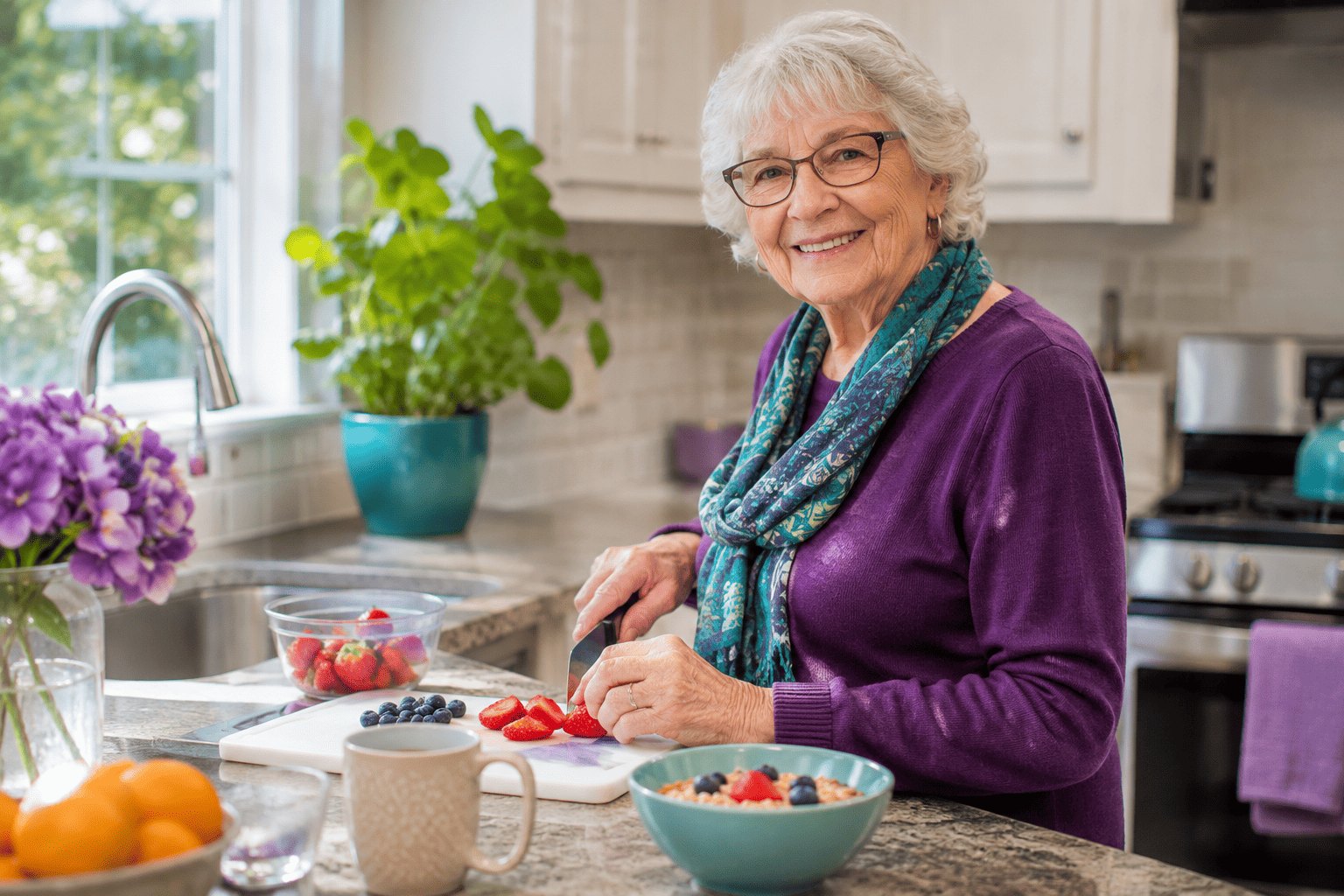
Yes, an 80-year-old person can live alone if they can take care of their own needs, take care of their health and hygiene, be mobile and react to the emergency properly.
The ability to live independently depends on physical and mental health, social relationships, and the safety of the living environment rather than age.
While some people continue to lead an active lifestyle at the age of 85, others may need help to cope with daily routines way before that.
What matters is not how many years your dear and near have lived, but how they live.
What Are the Four Stages of Aging?
The four major stages of aging will help families identify when their relative might require more help at home.
1. Independence (60s–70s): Seniors can take care of themselves in terms of personal activities and chores, cooking, attending social events without any constant help from another person.
2. Interdependence (70s–80s): Older people start requiring occasional assistance in preparing meals, transporting, cleaning, bathing and grooming, but retaining their independence.
3. Dependency (70 and Older): Health problems, reduced mobility or cognitive issues may result in a greater necessity in receiving help with activities of daily living and dementia.
4. End-of-Life Care: Seniors with advanced or terminal illnesses may require extensive caregiver support, comfort-focused care, or professional hospice services.
What Determines Whether an Elderly Person Can Safely Live Alone?
Before determining if further assistance is required, there are certain things that need to be considered about the life of their relative.
| Area of Concern | Signs of Independent Living | Signs Additional Support May Be Needed |
|---|---|---|
| Mobility | Walks and moves around safely | Frequent falls, difficulty standing, or unsteadiness |
| Personal hygiene | Bathes, dresses, and grooms independently | Difficulty bathing or neglecting personal hygiene |
| Nutrition | Prepares meals and eats regularly | Skipped meals, spoiled food, or unexplained weight loss |
| Medication management | Follows medication schedules correctly | Frequently missed doses or confusion about medications |
| Memory | Manages appointments and familiar routines | Increasing confusion or difficulty completing everyday tasks |
| Home maintenance | Maintains a reasonably clean and safe home | Excessive clutter, unfinished chores, or safety hazards |
| Social well-being | Maintains friendships and regular activities | Increasing loneliness, withdrawal, or isolation |
| Emergency preparedness | Can recognize emergencies and call for help | Difficulty using a phone or responding to emergencies |
If you notice changes in several of these areas, it may be time to explore professional senior home care.
7 Signs Your 80-Year-Old Loved One May Need Help at Home
Abilities of a loved one who is aging may change slowly. Something that starts off as missing appointments or struggling to carry groceries may become a bigger issue.
1. Frequent Falls or Difficulty Moving Around
Should your loved one be using the furniture for support, having problems climbing stairs or has had a few falls recently, then there is a need for more mobility support.
Caregivers will help with the walking process, transfers, and other activities, as well as help to detect any fall risks within the house.
2. Changes in Personal Hygiene
Unwashed hair, constant wearing of the same clothes or not having a shower are clear signs that personal hygiene issues have become physically difficult to handle.
Respectful assistance with bathing, dressing, and grooming can help seniors maintain their dignity and comfort.
3. Difficulty Preparing Meals
An empty refrigerator, spoiled food items, or signs of weight loss are some possible signs that the person is having trouble doing the shopping and preparing meals.
Caregivers can assist with grocery shopping, meal preparation, and maintaining regular eating routines.
4. Increasing Forgetfulness or Confusion
Occasional forgetfulness doesn’t automatically mean that something is seriously wrong. But consistent forgetfulness of medications, being confused in familiar places, or having trouble completing everyday tasks requires further consideration.
Family members need to consult with a medical specialist about this issue and think whether more help at home is needed.
5. Loneliness and Social Isolation
Being alone does not necessarily equate to being lonely. Reduced mobility, trouble with driving, or even the death of loved ones can increase the challenges of being socialized.
The company care offers socialization by allowing conversations and activities with seniors.
6. Difficulty Maintaining the Home
Unwashed dishes, overflowing laundry, unopened mail, and cluttered walkways may be signs that everyday household responsibilities have become overwhelming.
Light housekeeping and daily living assistance can help maintain a more comfortable and manageable home environment.
7. Increased Difficulty Managing Daily Routines
Your loved one might be able to perform a lot of functions by him/herself but might need assistance in the areas of transportation, scheduling of appointments, taking medication on time, or preparing in the morning.
Understanding this change early enables the family to provide such assistance incrementally, instead of reacting after the fact.
Are you seeing these changes in your elderly loved one? Let A Place at Home – Princeton helps you consider senior home care choices. Contact us at (609) 639-9652.
Is Your Elderly Loved One Safe Living Alone? A Family Checklist
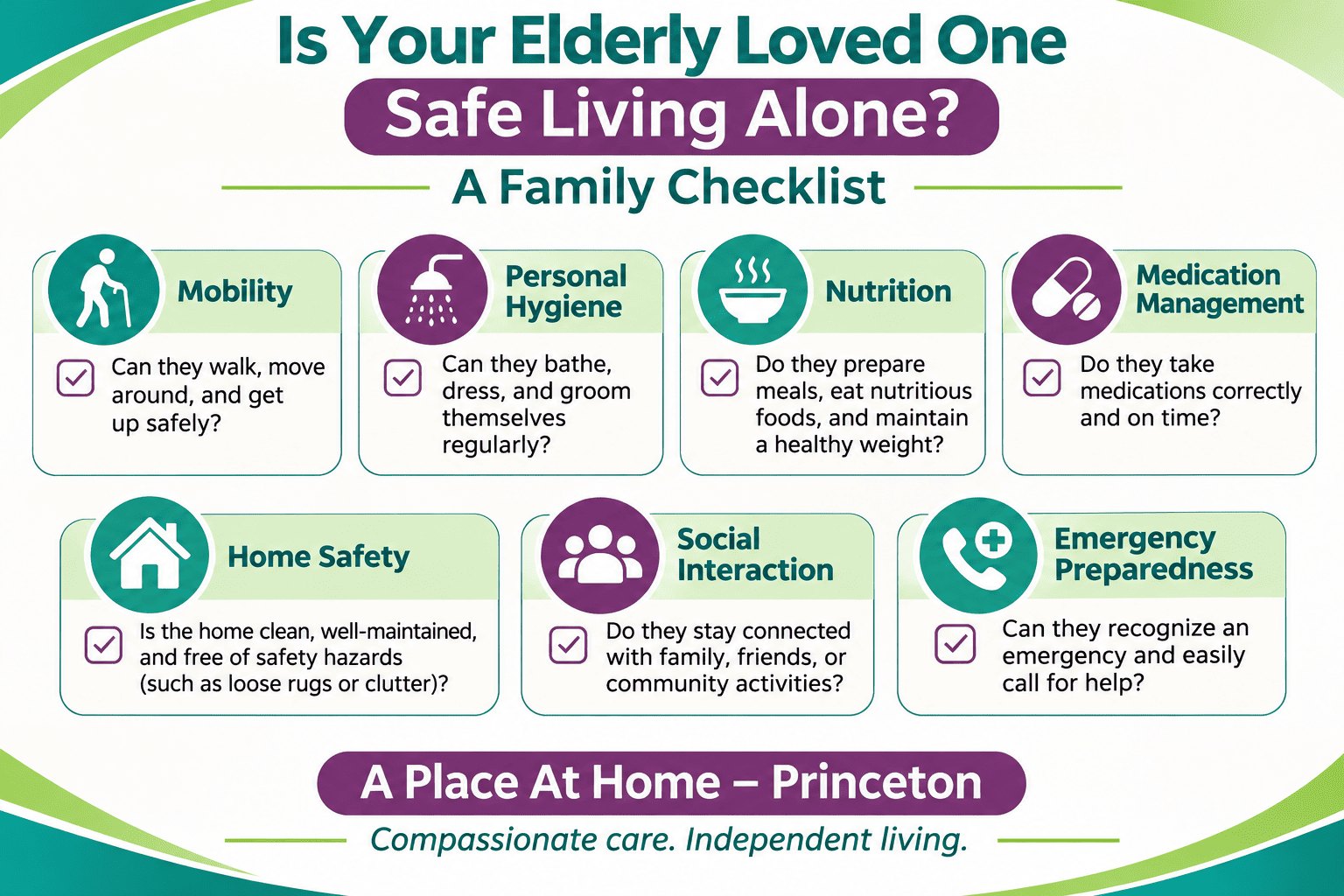
During your next visit, take time to observe your loved one’s daily routines and home environment.
Consider the following questions:
- Can they get in and out of bed without difficulty?
- Can they safely bathe, dress, and use the bathroom?
- Are they eating nutritious meals regularly?
- Are they taking medications as prescribed?
- Can they safely navigate stairs and walkways?
- Can they contact someone during an emergency?
- Are they managing household responsibilities?
- Do they have regular social interaction?
- Do they feel comfortable and confident living alone?
If several answers raise concerns, consider arranging an in-home care assessment to better understand what level of assistance may be appropriate.
How Much Home Care Does an 80-Year-Old Need?
There is no specific number of caregiving hours needed for an individual at the age of 80. It all depends on their physical, mental, and cognitive state, as well as their daily activities and family assistance.
| Level of Care | Who May Benefit |
|---|---|
| A few hours per week | Seniors who need companionship, grocery shopping, or light housekeeping |
| A few hours each day | Seniors who need assistance with meals, personal care, or mobility |
| Extended daily care | Seniors who require more consistent assistance throughout the day |
| Overnight care | Seniors who need help with nighttime bathroom visits or mobility |
| 24-hour care | Seniors whose assessed needs require continuous caregiver support |
Starting with a manageable care schedule can help seniors become comfortable receiving assistance. Care can then be adjusted as their circumstances change.
Helping Princeton Seniors Age at Home with Confidence
Whatever age your family member is, 75, 80 or even 90, asking for some additional help is by no means something that means surrendering the lifestyle you know.
A Place at Home – Princeton offers customized at-home senior care services to families living in Princeton, Lawrence Township, Hamilton, Ewing, West Windsor, Pennington, Hopewell, Robbinsville and other nearby Mercer County areas.
Whether you are an elder in need of some occasional assistance or a family member worried about your elderly relative living alone, our team can help you evaluate all the possibilities of taking care of your needs without compromising your preferences.
You don’t have to wait for a fall, hospitalization, or emergency to arrange additional support. Call A Place At Home – Princeton at (609) 639-9652 to schedule a free in-home care consultation.