

Is 60 a sign of old age? Or 65, 70, 80? Well, the answer to this question may vary according to the individual you ask.
For some, the age of 65 will mean retirement, travelling and hanging out with grandchildren. For some others, it will denote a shift in their mobility, health status and the ability to cope up with daily routines.
If you have an aging loved one in Princeton, NJ, you may wonder when age-related changes become a reason for concern and when it is appropriate to consider additional help at home.
However, while age serves as an indicator, the health condition of an individual, his/her lifestyle, physical state and independence might be better indicators.
At What Age Is a Person Considered Old?
In general, adults who are 65 years old and above are referred to as older adults in America. Nonetheless, there is no consensus regarding the age when a person becomes elderly.
Most individuals in their 60s and 70s work, exercise, travel, volunteer, and manage their houses independently.
Older adulthood is commonly divided into the following age groups:
| Age Group | Classification | Common Characteristics |
|---|---|---|
| 55–64 | Approaching older adulthood | Often active, employed, and independent |
| 65–74 | Young-old | Frequently independent with some age-related changes |
| 75–84 | Middle-old | May experience increasing health or mobility challenges |
| 85 and older | Oldest-old | May benefit from more regular assistance with daily activities |
These classifications are general descriptions rather than indicators of an individual’s health or ability to live independently.
According to the World Health Organization (WHO), aging does not follow a predictable pattern. Some 80-year-olds have physical and mental abilities comparable to those of much younger adults, while others experience significant declines at earlier ages. This reinforces the importance of evaluating an individual’s health, mobility, and daily functioning rather than relying solely on age
What Age Is Considered Old for a Woman?
Age at which women can be termed as being in the older adult stage is 65 years; nevertheless, women continue to work for many years beyond the age of 80 years.
Women live longer than men. Nevertheless, living longer could also mean having age-related diseases for longer periods of time.
Some common concerns among aging women include:
- Osteoporosis and reduced bone density
- Arthritis and joint stiffness
- Reduced muscle strength and balance
- Increased risk of falls and fractures
- Memory and cognitive changes
- Social isolation following the loss of a spouse
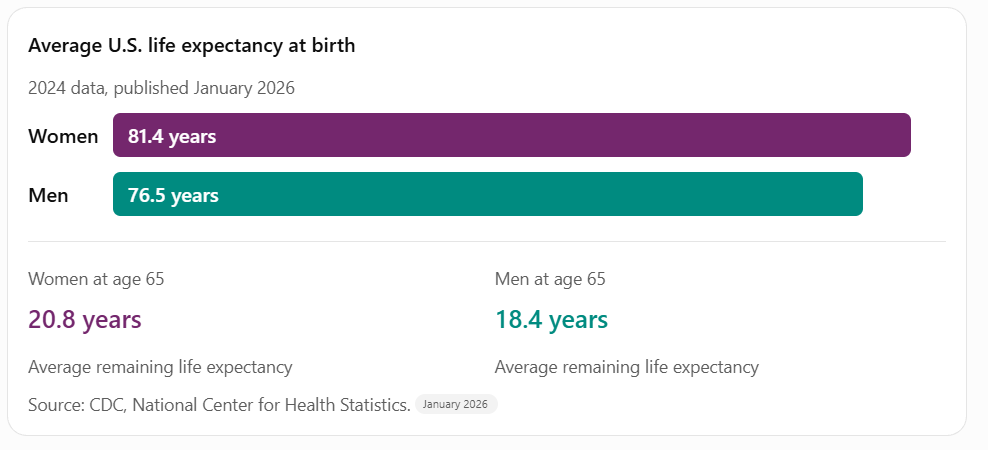
According to the CDC’s National Center for Health Statistics, the life expectancy at birth for females in the United States was 81.4 years in 2024. Those women who reached the age of 65 were projected to survive for 20.8 more years. The above facts are meant to emphasize the importance of preparing for healthy aging.
For families, recognizing a change in the behavior of an elderly woman is preferable to thinking about her age.
The reason is that when your mother who used to garden herself feels unable to go outside or handle the tasks, she needs help with mobility or company.
This would allow her to enjoy her activities even as she ages.
Source: CDC, National Center for Health Statistics, Mortality in the United States, 2024. Data Brief No. 548, January 2026. https://www.cdc.gov/nchs/products/databriefs/db548.htm
What Age Is Considered Old for a Man?
Like women, men usually enter the older adult category from the age of 65 years.
However, the process of aging differs in many aspects. Some men continue being active after retirement, whereas others have health problems which impair their independence at an early stage in life.
Problems which may appear in aging men could be cardiovascular disease, decreased muscle strength, arthritis, decreased mobility, and chronic health problems.
The process of retirement often brings new habits and social relations. Men may not want to ask for help since they cherish their independence or were used to handle everything themselves.
In case your father has difficulties with cooking, maintaining the house, visiting doctors, and taking care of himself, gradually introducing him to professional home care could help him stay independent.
Data from the National Center for Health Statistics shows that the average life expectancy at birth for men in the United States was 76.5 years in 2024. Men who reached age 65 had an average remaining life expectancy of 18.4 years.
Is 60, 70, or 80 Considered Old?
A person’s age does not necessarily reflect how they feel, function, or manage everyday life.
| Age | Is It Considered Old? | Potential Care Considerations |
|---|---|---|
| 60 | Generally, not considered elderly | Maintaining an active and healthy lifestyle |
| 65 | Commonly considered an older adult | Preventive healthcare and healthy aging |
| 70 | Older adulthood | Monitoring changes in strength and mobility |
| 75 | Older adulthood | Occasional assistance with daily responsibilities |
| 80 | Advanced older adulthood | Evaluating home safety and daily care needs |
| 85+ | Oldest-old age group | Personalized assistance based on individual abilities |
A healthy 85-year-old may require less assistance than a 65-year-old managing multiple chronic health conditions.
Chronological Age vs. Biological Age: What Is the Difference?
The chronological age is the measurement of the actual years someone has spent on this planet. The biological age is the age of the body concerning the state of the aging process.
Two people aged 75 can differ greatly in their physical capabilities, level of energy, and overall health condition.
The factors affecting the process of aging include nutrition, physical activity, genetics, sleeping patterns, presence of chronic diseases, social life, and access to healthcare services.
In terms of choosing home care for older relatives, the functional age is more helpful than the chronological one.
What Are the Four Stages of Aging?
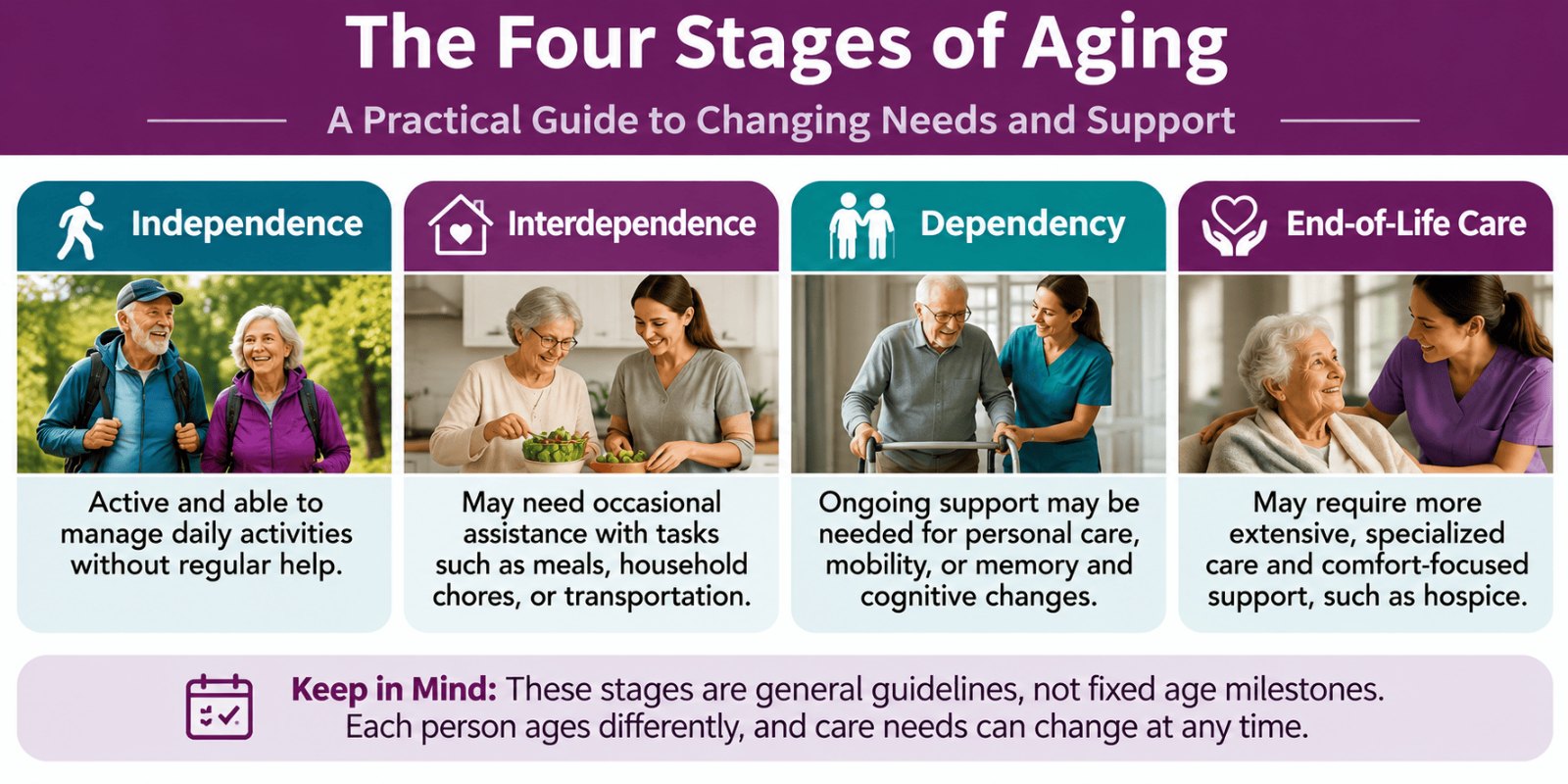
Understanding the four general stages of aging can help families recognize when their loved one may benefit from additional support.
Independence (60s–70s): The older individual can perform personal care and domestic tasks independently.
Interdependence (70s–80s): Seniors may begin to benefit from occasional assistance with transportation, meal preparation, housekeeping, and personal hygiene.
Dependency (70 and Older): Due to physical impairment, health problems, and cognitive difficulties, more assistance may be needed.
End-of-Life Care: For those suffering from chronic or life-threatening diseases, assistance would be needed.
These stages are general guidelines, not fixed age milestones. Every individual experience aging differently, and care needs can change at any age.
What Are the Signs That an Aging Loved One Needs Help at Home?
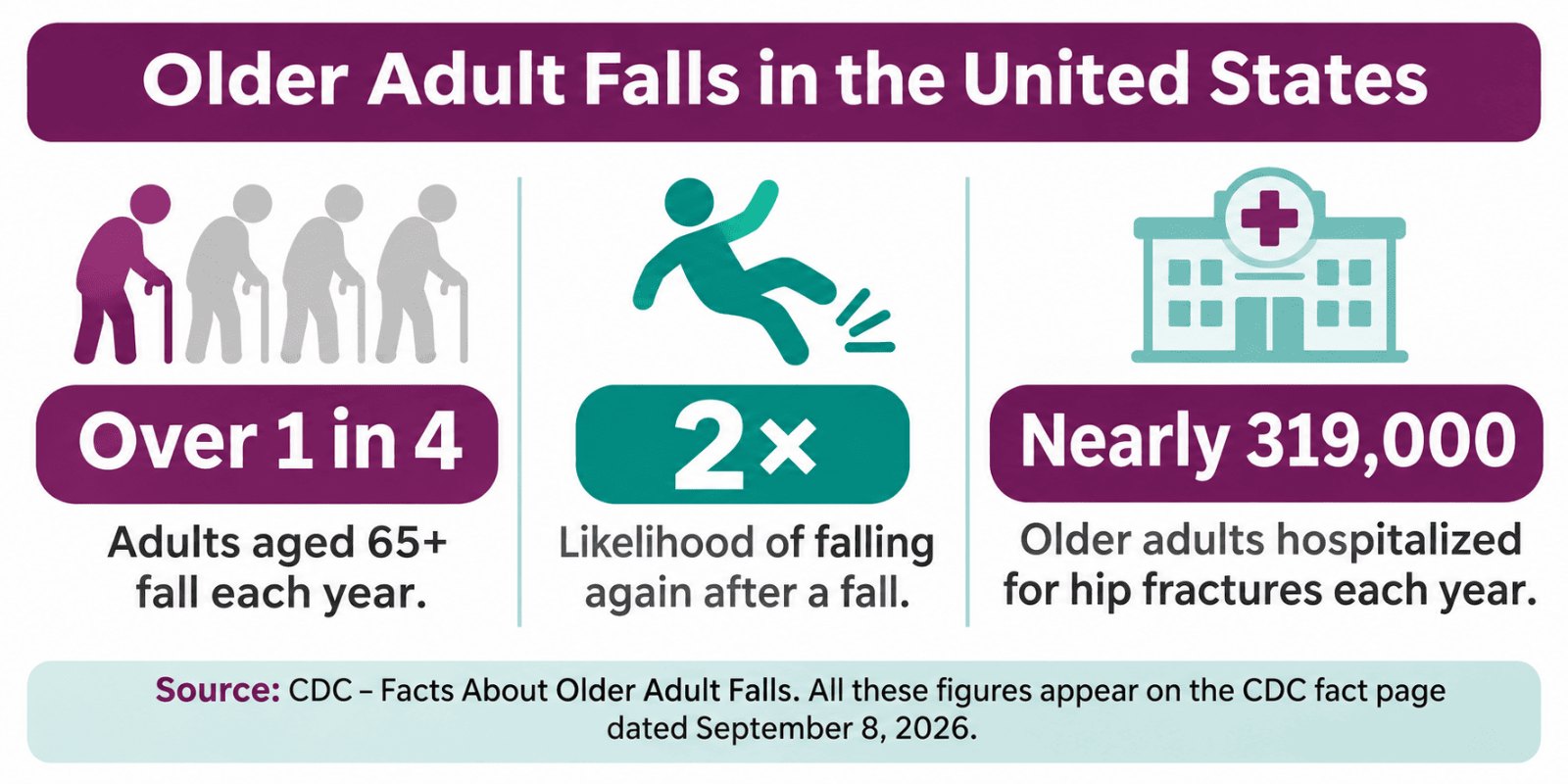
According to the Centers for Disease Control and Prevention (CDC), more than one in four adults aged 65 and older experiences a fall each year.
Sometimes, the first signs that older adult needs assistance are easy to overlook.
During a visit to your loved one’s home, you might notice unopened mail, expired groceries, neglected household chores, or difficulty getting up from a chair.
Source: CDC – Facts About Older Adult Falls
Your loved one may also begin avoiding activities they previously enjoyed because of fatigue, mobility challenges, or fear of falling.
Pay attention to the following changes:
- Frequent falls or difficulty maintaining balance
- Unexplained weight loss or skipped meals
- Difficulty bathing, dressing, or grooming
- Missed medications or medical appointments
- Increasing forgetfulness or confusion
- Difficulty maintaining a clean and safe home
- Withdrawal from friends, family, and social activities
- Difficulty driving or arranging transportation
These changes do not automatically mean your loved one can no longer live independently. They may simply indicate that additional support could make everyday life easier and safer.
If you are noticing changes in your aging loved one’s daily routines, contact A Place at Home – Princeton at (609) 639-9652 to discuss personalized senior home care options.
Helping Seniors Age Comfortably at Home in Princeton, NJ
Whether you are entering your retirement years, thriving through your 70s, or caring for an elderly family member who has entered their 80s or 90s, growing older does not mean having to give up one’s dignity, comfort, or independence.
At A Place at Home – Princeton, our senior home care services focus on individualized care suited for each person’s skills, likes, daily schedule, and needs.
Families throughout Princeton, Lawrence Township, Hamilton, Ewing, West Windsor, Pennington, Hopewell, Robbinsville, and surrounding Mercer County communities can explore flexible in-home care options.
Wondering whether it is time for additional help at home? Call A Place at Home – Princeton at (609) 639-9652 to schedule a free in-home care consultation.