
Balance exercises enhance stability and help seniors adapt more easily to uneven surfaces, such as sidewalks. By strengthening balance, these exercises play a key role in reducing the risk of falls. Overall, they provide older adults with greater confidence and security in their mobility.
In this guide, we’ll look closely at why balance exercises are so important for seniors, what happens when balance declines, and how regular practice with the help of home caregivers can transform daily life at home.
Why Balance Matters for Aging Adults
Balance is the ability to keep the body’s center of gravity over its base of support, whether standing still or moving. Adults lose 3–8% of muscle mass per decade after age 30, with losses accelerating after age 60. For younger adults, balance is mostly automatic. For older adults, it requires more effort because several body systems change with age:
- Muscles lose strength and power, especially in the legs and core
- Joints become stiffer, limiting the range of motion
- Vision and inner ear function decline, making it harder to judge space and movement
- Nerves conduct signals more slowly, delaying reactions
According to the Centers for Disease Control and Prevention (CDC), more than 14 million adults aged 65 and older experience a fall each year, and falls are a leading cause of both fatal and nonfatal injuries in older adults. Behind every statistic is a real person whose life may change dramatically after a fall, physically, emotionally, and socially.
Balance exercises directly address these age-related changes. They train the body to respond more efficiently to slips, uneven surfaces, and everyday challenges like turning, stepping, and reaching.
What Causes Poor Balance in Seniors?
Muscle Weakness and Deconditioning
As people age, they naturally lose muscle mass, particularly in the legs, hips, and core. Weaker muscles mean:
- Less power to catch oneself during a slip
- More effort is required just to stand, walk, or climb stairs
- Faster fatigue, which makes missteps more likely
Changes in Vision and Inner Ear Function
Seniors often experience vision problems, difficulty seeing in low light, reduced depth perception, and slower adaptation when moving from light to dark. The inner ear, which helps detect movement and head position, can also become less responsive. One in three adults over 65 has limited depth perception or contrast sensitivity, both essential for balance. This makes it harder to:
- Judge distances and steps
- Navigate curbs, stairs, and uneven sidewalks
- Walk safely in dimly lit areas
Slower Reflexes and Reaction Time
When a younger adult stumbles, the body instinctively reacts, muscles contract, arms reach out, and the person recovers quickly. As we age, those reflexes can slow down. For seniors, a slight trip over a rug or pet can quickly turn into a fall because:
- The response is delayed
- The muscles aren’t strong enough to correct the body’s position in time
Chronic Health Conditions and Medications
Medical issues can also undermine balance:
- A stroke can affect the parts of the brain that coordinate movement
- Neuropathy (nerve damage), often from diabetes, reduces sensation in the feet
- Arthritis causes pain and stiffness in the hips, knees, and ankles
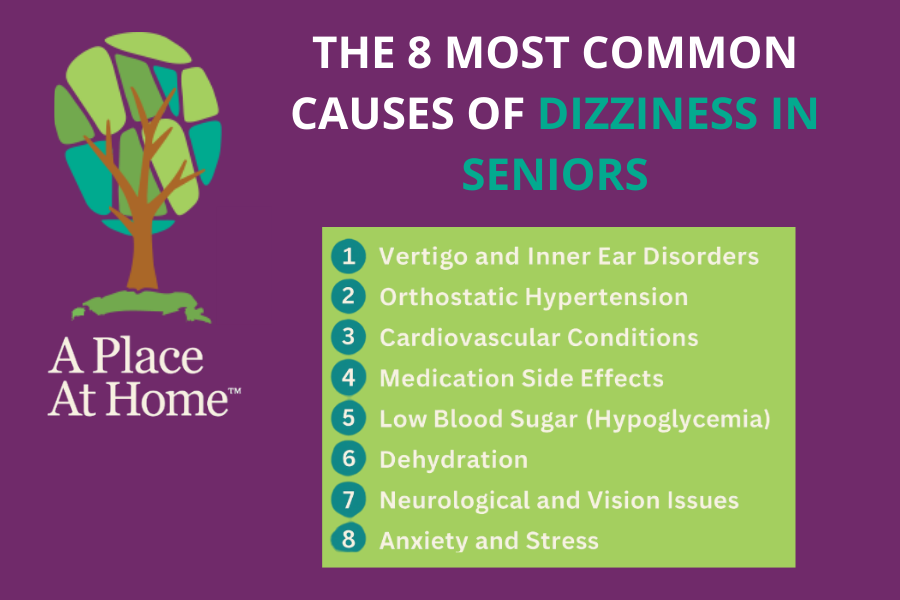
- Hypotension (low blood pressure) can cause dizziness when standing
- Certain medications can cause drowsiness or lightheadedness
Why Balance Exercises Are Essential for Seniors
Balance exercises are not just “nice to have.” They are essential for healthy aging because they address multiple systems at once.
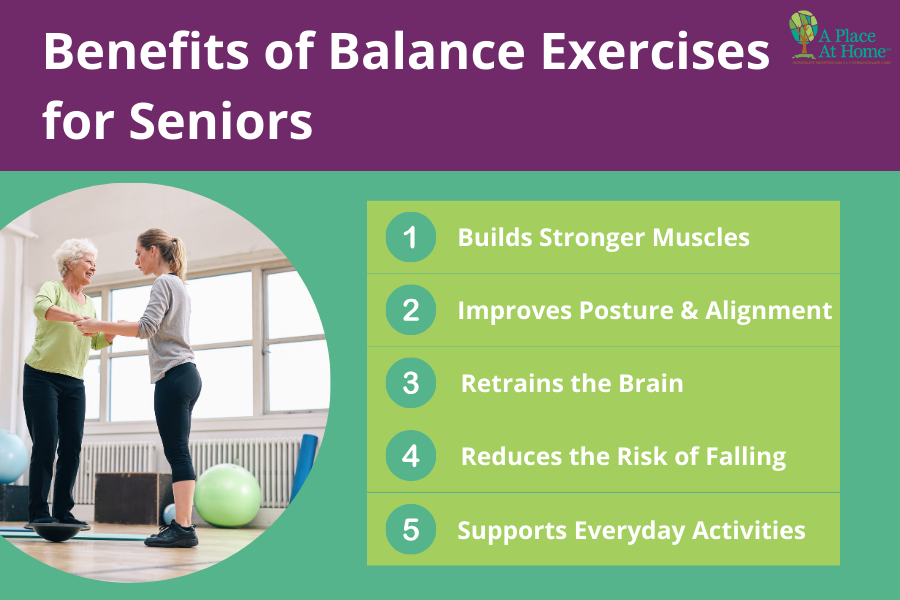
1. They Build the Strong, Stable Base the Body Needs
Balance exercises strengthen the muscles that keep seniors upright and steady:
- Leg muscles (calves, quadriceps, hamstrings) help control steps and recover from slips
- Hip muscles stabilize the pelvis and prevent side-to-side wobbling
- Core muscles support the spine and keep the torso upright
With stronger muscles:
- Seniors can stand from a chair more easily
- Climbing stairs or stepping into a bathtub feels safer
- The body can respond better to unexpected movements like a jostle or bump
2. They Improve Posture and Alignment
Poor posture often develops gradually with age, rounded shoulders, forward head position, or leaning to one side. These changes shift the body’s center of gravity, making balance more difficult and increasing strain on the back, hips, and knees. Better posture makes standing, walking, and turning smoother and less tiring. It also helps the body respond more efficiently when balance is challenged. Balance exercises help:
- Realign the spine and pelvis
- Encourage the body to stack properly over the feet
- Reduce strain on joints and muscles
3. They Retrain the Brain and Nervous System
Balance is not just about muscles; it’s a conversation between the brain, nerves, eyes, inner ear, and body. When seniors practice balance exercises, they are training the brain to process these signals more efficiently. Research shows that balance training improves neuromuscular response time by up to 30% in adults over 70. Over time, this leads to:
- Faster reactions
- Better coordination
- Improved foot placement and step accuracy
- Fewer misjudged steps or awkward turns
4. They Help Reduce Fear of Falling
When seniors practice balance exercises and start feeling more stable, their confidence grows. They trust their bodies more, are more willing to move, and often regain activities they had given up, such as:
- Walking in the neighborhood
- Attending social events
- Going to religious services
- Playing with grandchildren
5. They Support Everyday Activities and Independence
The real purpose of balance exercises is not to “be good at exercises.” It’s to make everyday life easier and safer. When these everyday movements are safer and less tiring, seniors can continue living at home more comfortably and for a longer time. Better balance helps with:
- Getting in and out of bed or a chair
- Using the bathroom safely
- Stepping into and out of the shower
- Carrying groceries, laundry, or meals
- Reaching into cabinets or closets
- Turning quickly when someone calls their name
The Risks of Poor Balance in Older Adults
Poor balance is about more than the occasional stumble. It can trigger a cascade of problems that affect nearly every aspect of life.
Physical Risks
- Increased fall risk: According to the CDC, a senior who falls once is twice as likely to fall again.
- Serious injuries: Hip fractures, head injuries, and wrist fractures are common.
- Loss of mobility: Pain, fear, and hospitalization can lead to long-term weakness.
Emotional & Social Risks
- Fear of falling: Many older adults become afraid to move freely after a fall—or even after a near-fall.
- Activity avoidance: They may stop walking outside, going to social events, or even moving around the house as much.
- Social isolation: Reduced activity and confidence can lead to loneliness, anxiety, and depression.
Functional Risks
- Difficulty with daily tasks: Getting dressed, bathing, preparing meals, and doing household chores becomes much more difficult.
- Loss of independence: Over time, seniors may need more assistance or even move to assisted living primarily because of falls and mobility problems.
This is where balance exercises make a powerful difference: they directly target the root causes of these problems and help seniors maintain the abilities that allow them to live on their own terms.
Best Types of Balance Exercises for Seniors
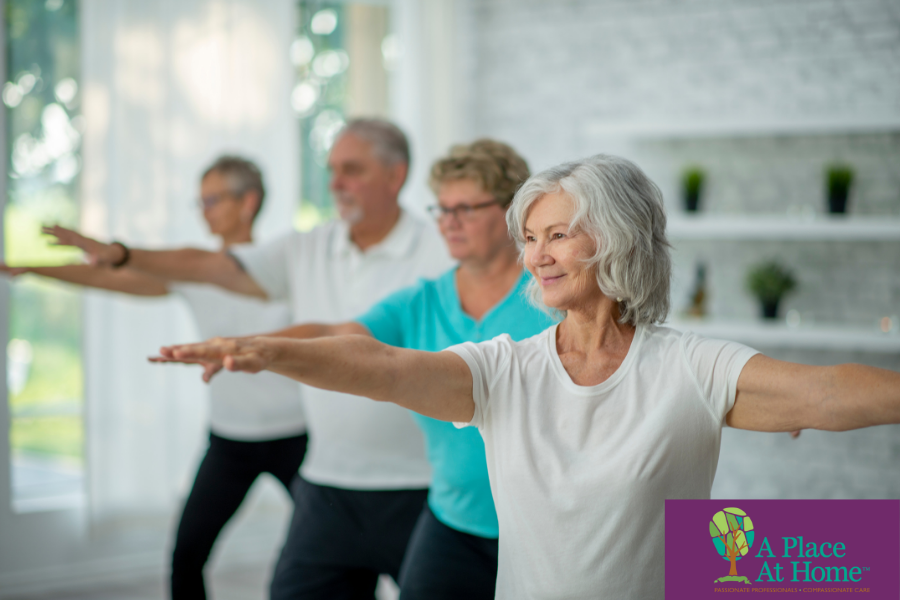
Elderly individuals can practice a wide range of gentle exercises to help improve balance:
- Single-leg stand: While standing, place the feet hip-width apart, lift one leg off the floor, and bend it back at the knee. Seniors may hold onto a chair for support as needed.
- Heel-to-toe walk and marches: Heel-to-toe walk and standing (or seated) marches are equally beneficial exercises.
- Tai Chi: Older adults are encouraged to join a Tai Chi class at their local senior center to strengthen leg muscles, develop more body awareness and gain control over their center of balance.
- Weight shifts: Stand with legs hip-width apart, then shift weight to the right side while lifting the left foot. Hold for 30 seconds, return to the starting position, and repeat with the other side.
- Resistance-based balance training: Seniors can also incorporate resistance-based balance training to strengthen muscles.
How Often Should Seniors Do Balance Exercises?
Seniors should start an exercise program gradually, then build to performing balance exercises 2 to 3 times per week. Daily, short sessions of 5 to 15 minutes are effective, as they build muscle memory and stability. Focus on consistency in training and safety.
Tips for Making Balance Exercises Safer at Home
Safety is key when performing balance exercises at home. Keep a sturdy chair nearby for support when needed. Wear non-slip shoes or exercise barefoot. Maintain good posture throughout the balance exercises and gradually increase the difficulty level after building strength.
How Home Care Services Help Seniors Improve Balance & Mobility
Home care services offer essential support for seniors looking to improve their balance and mobility. Caregivers help create a safer environment by clearing clutter, removing fall hazards, and providing non-slip mats. They also offer physical assistance, encouragement, and motivation, incorporating balance exercises into the senior’s daily routine to promote stability and confidence.
A caregiver serves as a spotter, providing support during exercises such as heel-to-toe walking. They adjust routines as seniors’ abilities improve, ensuring each activity remains safe and effective. Even older adults who are hesitant about exercise often embrace it when caregivers turn it into a positive, social experience and celebrate their progress.
Personalized Senior Home Care That Supports Strength, Balance, and Independence
Improving balance is one of the most effective ways for older adults to stay independent and prevent falls, but many seniors need support to exercise safely and consistently. A Place At Home – North Tucson provides compassionate, professional in-home care that helps seniors stay steady on their feet, confident in their abilities, and safe in the space they know best.
Our caregivers assist with balance exercises when needed, help seniors move around the home safely, and create an environment that reduces fall risks. We focus on supporting the physical, emotional, and social well-being of seniors, so they can maintain the routines and independence they value.
Schedule a free in-home consultation with our compassionate caregivers, and help your loved one take the next step toward greater safety, strength, and quality of life. Serving North Tucson, Marana, Oro Valley, Catalina Foothills, AZ, and throughout the Tucson area, our team of caregivers is here to provide comprehensive support.
Frequently Asked Questions (FAQs)
What is the main cause of balance problems?
The main cause of balance problems in seniors is age-related muscle weakness, which reduces stability and makes it harder to recover from slips or uneven surfaces. Other major contributors include vision changes, slower reflexes, inner-ear issues, and chronic conditions such as arthritis, diabetes, or neuropathy, all of which affect coordination and mobility.
What muscles help improve balance?
The muscles that help improve balance are the core muscles (abdominals and lower back), hip stabilizers (glutes and hip abductors), and lower-leg muscles (calves, ankles, and tibialis). These muscle groups keep the body upright, control posture, and help seniors react quickly to shifts in movement or uneven ground.
What should seniors avoid when doing balance exercises?
Seniors should avoid exercises that require sudden movements, deep bending, or advanced balance positions if they are still building strength. This includes high-knee jogging, deep lunges, single-leg squats, rapid changes in direction, or any exercise that causes dizziness, pain, or instability. It's also important to avoid exercising when tired or ill, as this increases fall risk.