

How to Talk to Elderly Parents About Hygiene Without a Fight
You visit your parents and start noticing small changes. Your dad is wearing the same clothes he had on during your last visit. Your mom hasn’t washed her hair in days, and the bathroom doesn’t seem as clean as it used to be.
You may wonder what’s going on, but bringing it up isn’t easy. You don’t want to embarrass them or make them feel like they can no longer take care of themselves. After all, these are the same people who once reminded you to brush your teeth and take a shower.
If an elderly parent is no longer keeping up with personal hygiene, it’s worth understanding what’s behind the change. Bathing may have become physically difficult, they may be afraid of slipping in the shower, or they could be dealing with fatigue, depression, pain or memory problems.
The way you approach the conversation matters. Start by finding out what’s making daily hygiene difficult, choose a private moment to talk, and avoid making your parent feel judged. From there, you can look at practical ways to help them maintain their routine while respecting their privacy and independence.
Why elderly parents stop bathing
If you go in assuming your parent is lazy or doesn’t care, the conversation is over before it starts. So figure out the cause first. In our experience it’s almost always one (or a mix) of these.
The bathroom has become frightening
This is the big one. Stepping over a tub wall on wet tile is hard when your balance and leg strength are fading, and older adults know it. CDC researchers estimated 234,094 nonfatal bathroom injuries were treated in U.S. emergency rooms in a single year, and about 81% were caused by falls. Roughly two-thirds happened in the tub or shower, and getting out was the riskiest moment.
The risk climbs steeply with age. Tub and shower injury rates went from 49.7 per 100,000 people aged 15 to 24 up to 200.2 per 100,000 for people 85 and older. Your parent may never say “I’m scared of falling.” They’ll just shower less.
Bathing is exhausting
Undressing, standing, washing, drying off and dressing again can wipe out someone with heart failure, COPD or arthritis for the rest of the morning. Skipping it is a way of saving energy.
They feel cold
Older bodies lose heat faster. A drafty bathroom and lukewarm water make a shower feel like punishment.
Depression or grief
Losing interest in self-care is a common sign of depression in older adults, and it often shows up after a spouse dies, a move, or a new diagnosis. If hygiene slipped around the same time as a big loss, take that seriously.
Memory changes
Someone with early dementia may truly believe they showered yesterday. They may also forget the steps, or find running water confusing. The Alzheimer’s Association notes that people with Alzheimer’s “may not perceive a need to bathe or may find it a cold, uncomfortable experience.”
Pride and privacy
Needing help to wash is a loss of independence, and being seen undressed by your own child is hard. Some parents would rather go without than ask.
Medication side effects or vision loss
Dizziness, low blood pressure when standing, and poor eyesight all make the bathroom riskier, and can also mean your parent simply doesn’t notice stains or odor anymore.
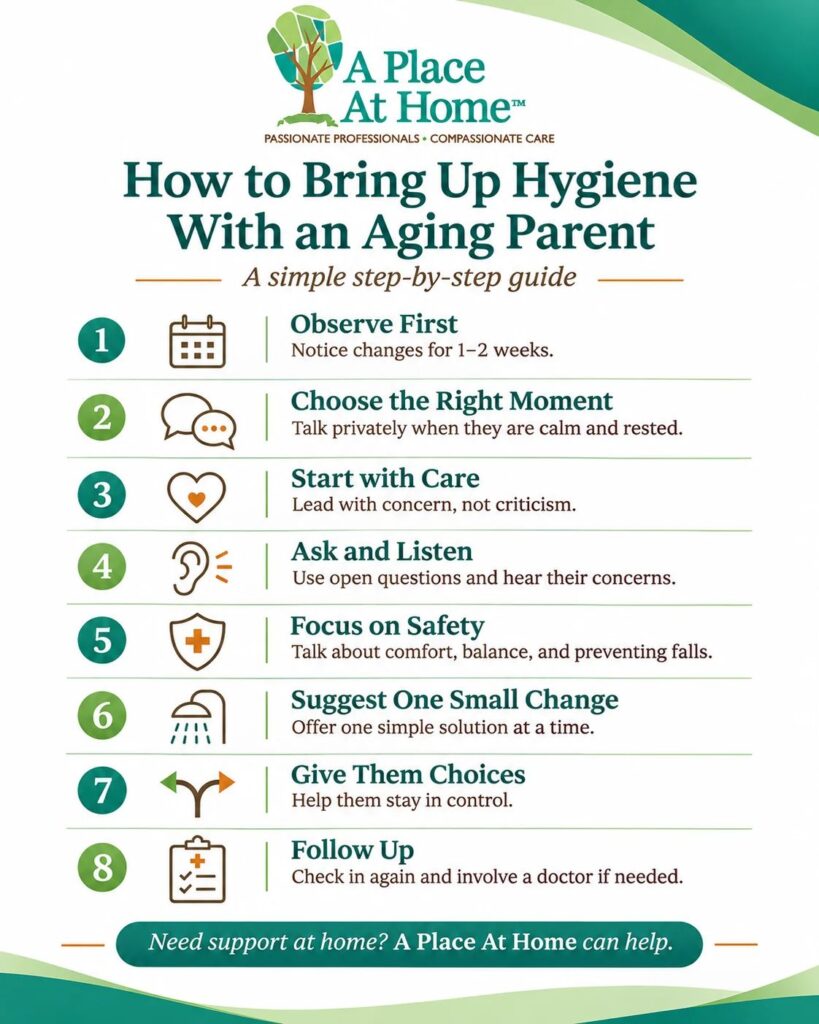
How to bring up hygiene with an aging parent, step by step
- Watch for a week or two before you speak. Note what’s actually changed. Is it bathing, laundry, teeth, toileting, or all of it? Is the shower chair still in the box? Are towels dry every morning? Specifics help you pick the real cause and keep you from exaggerating later.
- Pick the right moment and the right person. Talk in private, never in front of grandkids or at a holiday dinner. Choose a calm time of day when your parent is rested. Sometimes the right messenger isn’t you. A sibling they’re close to, their doctor, or a faith leader may get a better hearing.
- Open with care, not the problem. Start with something true and warm. “I’ve noticed you seem more tired lately, and I’ve been worried about you.” That lets them talk before they feel accused.
- Ask, then listen. Try an open question like “How are showers going these days?” and let the silence sit. If they say the tub feels slippery or they get dizzy, you’ve found your fix.
- Make it about safety and comfort. “I don’t want you slipping getting out of the tub” lands far better than “You need to shower more.” Most parents will accept help that protects their independence long before they’ll accept a comment about how they smell.
- Offer one small, concrete change. A grab bar. A shower chair. A warmer bathroom. Washing at night instead of morning. Don’t hand them a ten-point plan.
- Let them keep control. Give choices (“Would you rather try the shower bench or a sponge bath on busy days?”). The Alzheimer’s Association suggests encouraging the person “to do as much as possible” and being ready to help only where needed. That advice works for parents without dementia too.
- Follow up, and don’t expect one talk to fix it. Check back in a week. If nothing’s changed, the cause may be medical, and that’s a conversation for their doctor.
How to Make a Difficult Conversation About Hygiene Easier
Words matter more than usual here. A single “you smell” can make a proud parent dig in for months.
| Instead of this | Try this |
|---|---|
| “You smell.” | “I’ve been worried you’re not feeling like yourself lately.” |
| “You need to take a shower.” | “Let’s wash up before the doctor’s visit.” |
| “When’s the last time you bathed?” | “How are showers going? Is the tub getting harder to step over?” |
| “You’re being stubborn.” | “What would make it easier?” |
| “I’m hiring someone to bathe you.” | “Would it help to have someone here a couple of mornings a week, so you’re not alone in the bathroom?” |
A few other habits help. Use “I” statements so it’s about your worry, not their failure. Keep your voice low and your sentences short. And tie washing to something they look forward to, like church, a lunch out, or a visit from the grandkids.
If your parent has dementia, skip the reasoning entirely. Arguing about whether they showered yesterday goes nowhere. The Alzheimer’s Association suggests saying “Let’s wash up” rather than “Let’s take a bath,” and handing the person a washcloth so they have a job to do.
How to Make Daily Hygiene Easier for an Aging Parent
Once you know the reason, the fix is often physical. Change the bathroom and the routine, and a lot of the resistance fades on its own.
- Make the bathroom safe. The CDC recommends non-slip strips in the tub or shower and grab bars inside and outside it, plus grab bars next to the toilet. Add a shower chair or tub transfer bench, a hand-held showerhead so they can sit the whole time, and a nightlight for 2 a.m. trips.
- Make it warm. Heat the room before they undress. A small space heater (kept well away from water) or simply running the hot water for a minute first can change the whole experience. Keep towels and a robe within reach.
- Prevent scalds. Older skin burns faster, and some people stop sensing heat well. Turning the water heater down to 120°F is a common safety step, and the Alzheimer’s Association also advises lowering the thermostat to prevent scalding.
- Lower the bar for “clean.” Most older adults don’t need a full shower every day. Two or three good baths a week, with a washcloth wash of the face, underarms and private areas in between, is enough for many people. No-rinse soap and bathing wipes are fine on tired days.
- Split the job up. Wash hair on a different day from bathing, or wash one part of the body each day.
- Keep the same time. Bathing at the hour your parent is used to, morning or night, cuts down on pushback.
- Don’t forget the rest of hygiene. Teeth, dentures, nails, laundry and incontinence care all slip together. Easy-on clothes, an electric toothbrush, and a laundry day you handle can take a lot off their plate.
When Should You Consider In-Home Care for Your Parent?
If your parent is having trouble bathing, changing clothes, brushing their teeth, or keeping up with daily hygiene, they may need more help than you can provide during occasional visits.
Consider bringing in an in-home caregiver when:
- Bathing has become difficult or unsafe: Your parent struggles to get in and out of the shower, stand for long periods, or maintain balance.
- They need help with daily personal care: They are having trouble dressing, grooming, brushing their teeth, or using the bathroom independently.
- They keep skipping hygiene routines: Reminders from family members aren’t helping, and they need someone to provide regular assistance.
- They have limited mobility or strength: Arthritis, Parkinson’s disease, recovery from surgery, or other conditions make everyday activities harder.
- You cannot visit often enough: You live far away or have work and family responsibilities that make daily assistance difficult.
- They need more supervision: Memory problems or dementia make it difficult for them to remember personal hygiene routines or recognize potential bathroom hazards.
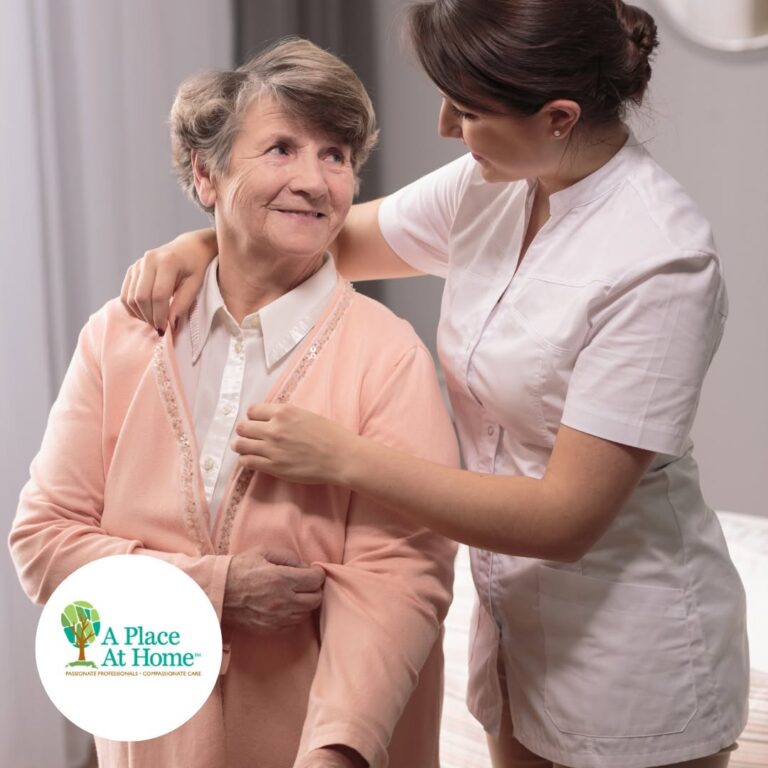
An in-home caregiver can assist with bathing, grooming, dressing, toileting, and other personal care tasks while respecting your parent’s privacy and preferences. Even a few visits each week can help your parent maintain a regular hygiene routine.
If you’re noticing these changes in your parent, A Place at Home – Los Alamitos can help you understand what type of in-home support may be appropriate. Reach out to our team to discuss elderly home care services in Los Alamitos, CA and how a caregiver can help your loved one with daily activities at home.
Need to Talk? Call Now
If you’re concerned about your parent’s health, personal hygiene, or ability to manage daily activities, we’re here to listen. Call A Place at Home – Los Alamitos at (562) 620-4197 to talk with our team about your concerns and learn how in-home care may help your loved one.
FAQs
How do you tell an elderly parent they smell?
Don’t lead with the smell. Talk privately, say you’ve been worried about them, and ask how showers are going. Frame any change around safety and comfort, like a shower chair or warmer bathroom. If you need to mention odor, keep it brief and kind, and pair it with an offer of help.
Why does my elderly parent refuse to bathe?
The most common reasons are fear of falling, fatigue, feeling cold, depression, memory loss, and embarrassment about needing help. CDC data shows about two-thirds of bathroom injuries happen in the tub or shower, so the fear is often well founded.
Can I force my elderly parent to shower?
No. A mentally capable adult has the right to make their own choices, even ones you disagree with. Focus on removing the barriers. If you think memory loss or depression is affecting their judgment, involve their doctor.
What if my parent has dementia and won’t bathe?
Keep the same bathing time, say “let’s wash up” instead of “bath,” warm the room first, and give them a small task like holding the washcloth. Sponge baths between showers are fine. If bathing turns into a daily fight, a trained dementia caregiver can help.
Is poor hygiene in the elderly a sign of something serious?
It can be. A sudden drop in personal care can signal depression, early dementia, an infection, or medication side effects. It’s worth a doctor’s visit, especially if it comes with confusion, weight loss, or withdrawal.
How often should an 80-year-old person shower?
Two or three full showers or baths a week is enough for most 80-year-olds, as long as they wash the face, underarms, groin and feet with a washcloth on the days in between. Daily hot showers can dry out thinner, older skin and add more trips in and out of the tub, which is where most bathroom falls happen. Bathe more often after incontinence episodes or heavy sweating, or if their doctor recommends it for a skin or wound problem.
What stage of dementia causes problems with hygiene?
Hygiene problems usually show up in the middle (moderate) stage of dementia. The Alzheimer’s Association lists refusing to bathe, needing help choosing clothes, and trouble controlling bladder and bowels among middle-stage changes, and notes this is typically the longest stage, lasting years. On the FAST scale clinicians use, stage 6 is where people need help dressing (6a), then bathing (6b), then toileting (6c), followed by incontinence. In the late stage, they need around-the-clock help with personal care. Stages overlap, so skipped showers can appear earlier, sometimes before a diagnosis.
