Senior Fall Prevention Services in Kirkland, WA
Falls are one of the leading causes of injury among older adults. At A Place at Home, we provide expert fall prevention services to help seniors stay safe, confident, and independent in their own homes. Serving Kirkland, WA, our team focuses on proactive measures that reduce the risk of falls and give families peace of mind.
Why Fall Prevention is Important for Seniors
Falls are one of the most frequent and dangerous hazards to older people, causing injuries, stress, and economic problems. An accident caused by a slip may lead to injuries and immobility, which may affect the older individual’s level of independence. In addition to injuries, falls can also affect the confidence of the older individual, hindering them from carrying out home, social, and daily activities.
“Preventing falls isn’t just a matter of safety—it’s also essential in helping seniors maintain their quality of life.” With the appropriate help, home adjustments, and care, seniors can easily stay active, confident, and independent while lessening the risk of accidents in their home environment.
Common Causes of Falls Among Seniors
Understanding why falls happen is the first step toward preventing injuries and helping seniors maintain their independence. Falls often occur due to a combination of home hazards, health conditions, and everyday lifestyle factors. Below are some of the most common causes of falls—and practical ways to reduce the risk.
Loose Rugs, Cords, and Cluttered Walkways
Tripping over loose rugs, electrical cords, or cluttered walkways is one of the leading reasons of falls in the home. Simple steps like take away obstacles, securing rugs with non-slip pads, and keeping pathways clear can seriously reduce fall risks.
Poor Lighting or Uneven Flooring
Dim lighting and rough flooring can make it hard for seniors to see potential hazards. Improving lighting in hallways, staircases, and bathrooms, along with adding night lights in bedrooms and bathrooms, helps better visibility and overall safety.
Slippery Bathroom and Kitchen Surfaces
Bathrooms and kitchens are high-risk areas due to wet or smooth floors. Installing grab bars, using non-slip mats, and adding rails can provide extra support and help avoid slips and falls.
Balance or Mobility Challenges
Age-related changes such as muscle weakness, joint pain, or reduced balance can make everyday movements more challenging. Gentle strength and balance exercises, physical therapy, and mobility aids like walkers or canes can help seniors move more safely and confidently.
Medication Side Effects
Some medications—such as blood pressure drugs, sedatives, or medications that cause dizziness—can increase the risk of falls. Regularly checking medications with a healthcare provider can help identify side effects and adjust when needed.
Vision or Hearing Impairments
Changes in vision or hearing may prevent seniors from observing hazards around them. Regular eye and hearing exams, along with corrective aids like glasses or hearing devices, can significantly improve awareness and safety.
Chronic Health Conditions
Conditions such as arthritis, diabetes, or neurological disorders can affect strength, coordination, and reflexes. With proper home care planning and medical support, these risks can be managed more efficiently.
Who Benefits From a Fall Prevention Program?
Our fall prevention services can benefit seniors who experience:
Mobility or balance challenges, including unsteady walking or weakness
Difficulty with activities of daily living (ADLs) such as bathing, dressing, or transferring
Memory loss conditions, including Alzheimer’s disease or other forms of dementia
Medication management concerns, such as missed doses or side effects that increase fall risk
Social isolation or need for companionship, which can affect physical and mental well-being
Recovery after surgery, illness, or rehabilitation, when strength and balance may be reduced
Temporary health issues, such as the flu, infections, or short-term medical setbacks
Respite care needs, giving family caregivers time to rest and recharge
Help with errands and transportation, including shopping and attending medical appointments

Want Help Reducing Fall Risk at Home? We’re Here for You
Fall prevention is not just about removing rugs or adding grab bars—it’s about supporting strength, routines, and daily safety in a way that protects independence. If you’re noticing balance changes, repeat falls, or increased fear of walking, getting support sooner can prevent a crisis later. Whether you need short-term help after hospitalization or ongoing support, the right plan can make home safer and life less stressful for everyone involved.
Just Came Home From the Hospital?
Returning home after a hospital stay can be more challenging than expected. Older adults often experience low energy, balance issues, and difficulty adjusting to new medications. These challenges are most noticeable during the first one to two weeks, when everyday tasks like bathing, moving safely, and following routines may require extra support. Having the right assistance during this transition can promote safer recovery and help avoid setbacks.
Preventing falls with elder care services
We provide specialized geriatric care designed to address the unique health needs and challenges that come with aging.
Fall Prevention & Senior Home Care FAQs
How does in-home care help prevent falls for seniors?
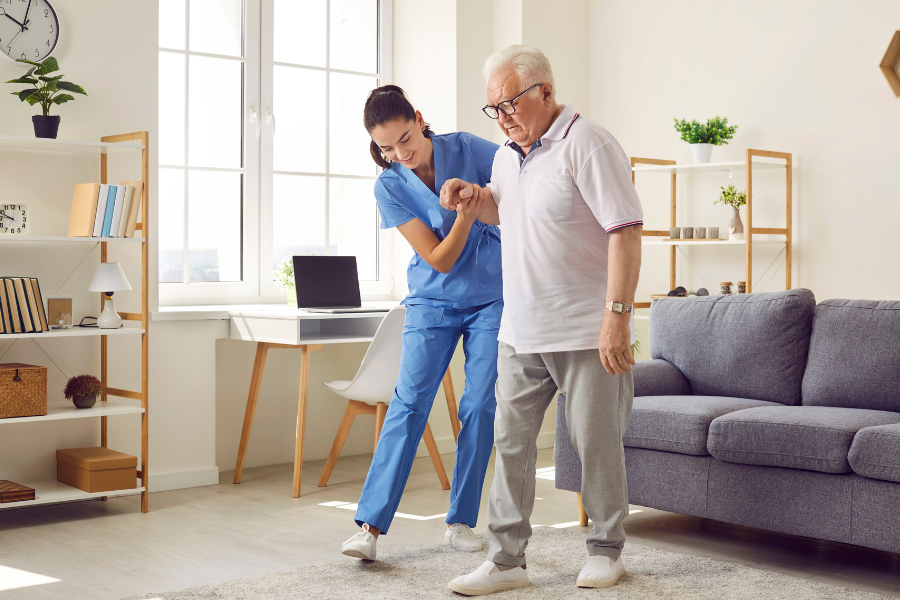
In-home caregivers help reduce fall risks by monitoring mobility, keeping walkways clear, assisting with walking and transfers, and providing supervision during high-risk activities like bathing, dressing, or using stairs.
Can a caregiver help with balance and mobility at home?
Yes. Caregivers assist with safe walking, transfers from bed or chairs, proper use of walkers or canes, and can encourage light exercises recommended by a healthcare provider to improve balance and strength.
Is fall prevention only for seniors who have already fallen?
No. Fall prevention is most effective when started early. Seniors who feel unsteady, tire easily, or have had near-falls can benefit from proactive support before an injury occurs.
Is fall prevention care covered by insurance or Medicare?
Non-medical in-home care is typically private pay, but some long-term care insurance policies may offer coverage. We can help families review their options.
How do I know if my loved one needs fall prevention support?
Signs include unsteady walking, recent near-falls, difficulty standing up, fear of moving around the home, increased fatigue, or recovering from illness or surgery.
In-Home Care in Kirkland, WA and Surrounding Areas
Schedule a Free Dementia Care Consultation
If your loved one is living with Alzheimer’s or dementia, our experienced caregivers provide compassionate, personalized support to help them stay safe, comfortable, and well-cared for in the familiarity of their own home. Our memory care services focus on compassion, dignity, and individualized care, giving you confidence that your loved one’s needs are fully met.
Contact A Place At Home – Kirkland at (425) 553-3677 to learn more about our Alzheimer’s and dementia care services in Kirkland, WA, and throughout King County.