
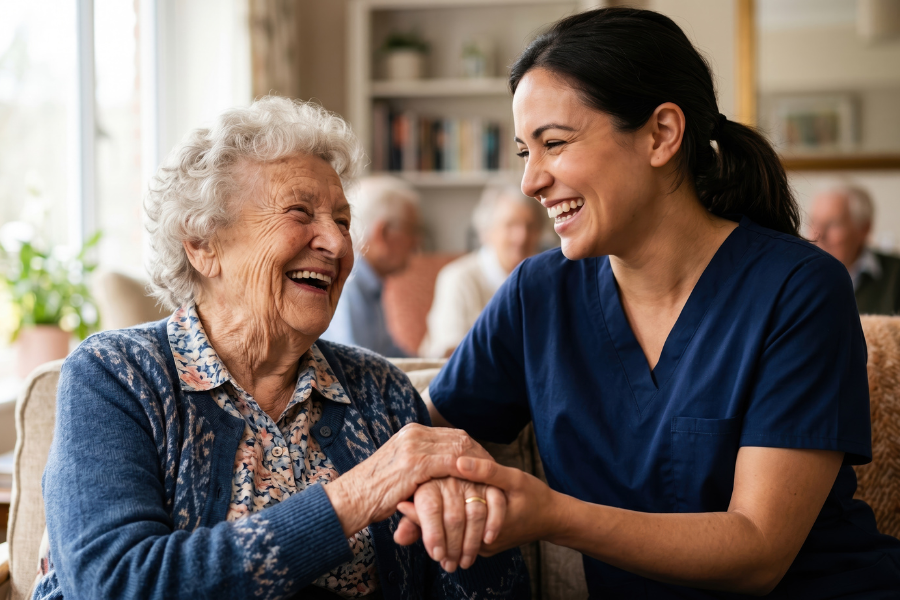
If you’ve spent time around older adults who are thriving — genuinely thriving, not just managing — one of the things you’ll almost always notice is that they laugh. They have humor about their situation. They enjoy moments. They are engaged with the people around them in ways that are reciprocal and alive.
This is not a coincidence or a side note. Emotional wellbeing is a fundamental component of health — particularly for aging adults — and joy is not a luxury to be addressed after the clinical priorities are handled. It belongs in the care plan from the beginning.
What the Research Actually Shows
Laughter and positive emotion have documented physiological effects: reduced cortisol levels, lower blood pressure, improved immune function, and better sleep. For older adults managing chronic conditions, these effects are not trivial. Regular positive social engagement is also associated with significantly better cognitive outcomes over time — people who laugh, converse, and interact regularly maintain sharper mental function longer.
Perhaps more practically: seniors who enjoy their days are more likely to eat well, take their medications, engage in physical activity, and maintain the daily routines that underpin their health. Emotional wellbeing and physical wellbeing reinforce each other continuously.
What Happens When Joy Disappears
When an older adult loses access to the things that brought them pleasure — activities they can no longer do, friends who have passed away, independence that has narrowed — the emotional consequences are real and have physical effects. Depression among older adults is both common and commonly underdiagnosed. It shows up as appetite loss, sleep disruption, withdrawal from activities, and a flattening of engagement that families often mistake for simple aging.
It is not simply aging. And it responds to intervention — particularly to consistent, warm, attentive human presence.
What Caregivers Bring Beyond Tasks
The tasks a caregiver performs are real and important. But what we hear most often from families is not about the tasks. It’s about the relationship. The way a caregiver notices what a client finds funny and leans into it. The shared conversation over a meal. The fact that there is someone who shows up reliably and genuinely looks forward to being there. That relationship is part of what makes aging at home not just possible, but genuinely good.
We believe that care should improve quality of life — not just extend it. If you’d like to talk about what that could look like for your family, we’d love to hear from you. Call A Place At Home – Fairfield South at (203) 301-8700.