
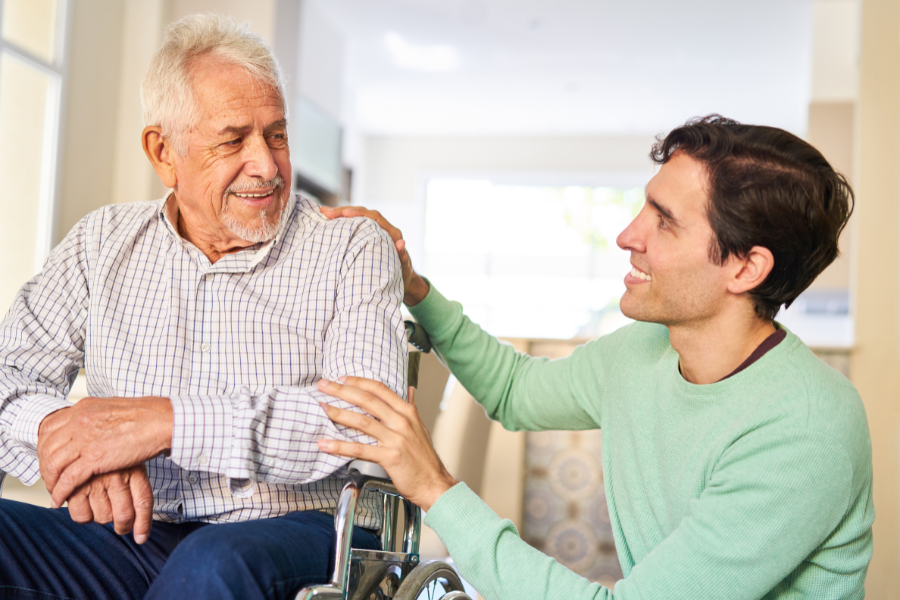
Most families approach aging in place as a single decision: yes, we want Mom to stay home. What they discover over time is that it’s not one decision — it’s six ongoing commitments, each requiring active attention. When all six are working, aging at home goes beautifully. When one weakens, the whole structure becomes unstable.
We think of these as six pillars. None of them is glamorous. All of them are essential.
- Safe Mobility
Movement is the foundation of almost everything else — mood, circulation, strength, cognitive function, and sleep. Seniors who move regularly, even modestly, tend to maintain their capabilities far longer than those who gradually become sedentary. The challenge is that fear of falling often creates a vicious cycle: the less someone moves, the weaker they become, and the greater the risk of falling. A caregiver who provides steady, confident support during movement — getting up from a chair, walking to another room, navigating stairs — can break that cycle.
- Nutrition and Hydration
Cooking a real meal is more demanding than it looks, especially when energy is limited and appetite is reduced. Seniors living alone frequently skip meals, rely on convenience food, and drink far less water than they need. Dehydration alone can cause confusion, dizziness, and falls. Regular meal preparation and gentle hydration reminders are among the simplest and highest-impact things a caregiver can do.
- Medication Support
The average older adult with multiple chronic conditions may be managing five or more prescriptions at different times of day, with different instructions, at varying doses. Missed doses and double doses both cause harm. Medication management in the home setting is one of the most common sources of preventable health complications — and one of the most consistent areas where professional caregivers can help prevent them.
- Home Safety
A home that felt perfectly safe at sixty may have accumulated real hazards by seventy-five. Loose rugs, dim lighting, a bathroom without grab bars, a step threshold at the front door — these things become dangerous in ways that are hard to see when you’ve lived with them for years. A fresh set of eyes, looking at a home through the lens of current mobility and strength, can identify and address risks before they cause an incident.
- Social Connection
Isolation is not just an emotional problem — it is a medical one. Chronic loneliness has been associated with significantly elevated risks of cognitive decline, heart disease, and overall mortality. Seniors who live alone and have limited daily interaction can deteriorate in ways that are almost entirely preventable with consistent, meaningful human contact. A caregiver’s presence addresses this directly.
- Care Coordination
Managing appointments, communicating with providers, helping families understand what’s happening with a loved one’s health — these coordination functions are time-consuming and stressful. When they fall through the cracks, care gaps develop. A professional caregiver who can serve as a consistent observer and communicator keeps everyone informed and connected.
A Place At Home supports all six pillars simultaneously — through steady, daily presence rather than dramatic interventions. If you’d like to talk through which pillars feel most at risk for your loved one, we’re happy to help. Call (203) 301-8700.