
Most older adults have lived in their homes for a long time. The familiarity is part of what makes home feel safe. But familiarity can obscure risk in ways that are genuinely dangerous — because the home that worked perfectly at sixty-five may have real hazards at seventy-five, and most of those hazards have been invisible for so long that no one notices them anymore.
One of the most consistent findings in research on aging in place is the gap between how safe seniors believe their homes to be and how safe those homes actually are. The overwhelming majority of older adults feel confident about their home environment. A much smaller fraction have homes that genuinely support aging safely.
What Changes, Even When the House Doesn’t
The house doesn’t change. The person does. Reaction time slows. Balance becomes less reliable. Vision, especially in low light, deteriorates. Strength decreases in ways that make previously effortless tasks — getting up from the floor after a fall, catching a grab rail in time — suddenly matter enormously.
A loose bath mat that seemed slightly annoying at sixty is a genuine fall hazard at seventy-eight. A step at the front door that you’ve navigated thousands of times is different when your gait has changed. A dimly lit hallway at midnight is a different proposition when you’re taking a medication that affects balance or blood pressure.
The Rooms That Matter Most
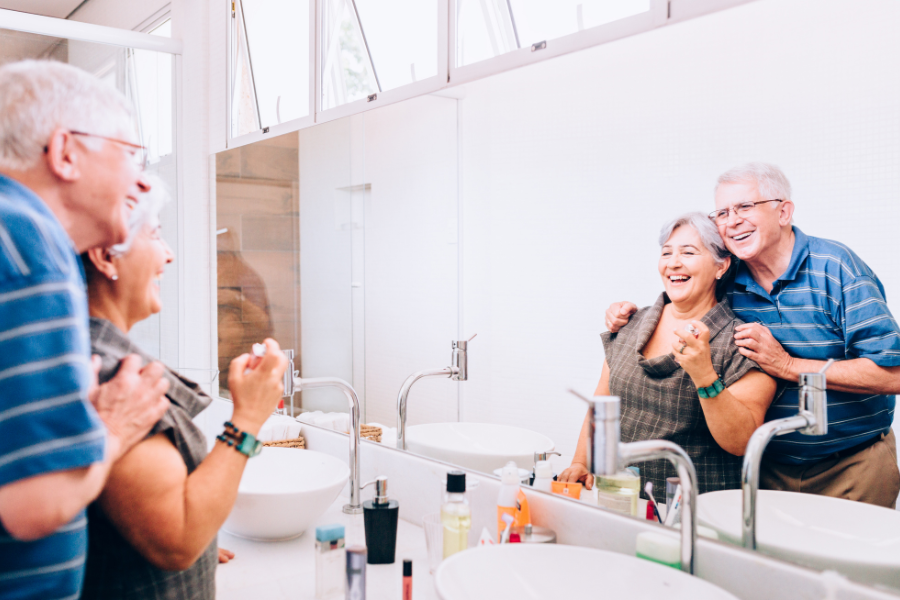
Bathrooms are the highest-risk room in almost any home for an older adult — the combination of wet surfaces, frequent nighttime use, and the physical demands of getting in and out of the tub or shower creates conditions where falls are common and often serious. The bedroom matters too: getting in and out of bed safely, navigating in low light, and reaching for things without losing balance all deserve attention. Entryways — thresholds, steps, lighting — are the first test of the home’s safety every time someone comes or goes.
A Fresh Set of Eyes
The most effective thing families can do is have someone with experience look at the home from the perspective of current and anticipated mobility — not the perspective of someone who has lived there for thirty years. A professional home safety assessment identifies specific, concrete hazards and recommends targeted modifications, many of which are inexpensive and easy to implement.
We offer complimentary home safety assessments for seniors and their families in Fairfield County. It’s a no-pressure, practical conversation about how to make home safer now — and plan ahead for the future. Call A Place At Home – Fairfield South at (203) 301-8700 to schedule yours.