
Is My Senior Parent Depressed or Just Lonely? How to Tell the Difference

Seniors who become confused or agitated at night may be experiencing sundowning syndrome, a common symptom associated with dementia. This condition can trigger a range of behaviors, including anxiety, disorientation, and restlessness. Understanding why sundowning occurs helps caregivers provide better support and comfort to their elderly loved ones.

Alzheimer’s disease and other forms of dementia cause cognitive changes that can lead to sundowning, also referred to as sundowning syndrome. While the exact cause is not fully understood, sundowning is not a disease itself but rather a recognizable pattern of symptoms that often appears in the late afternoon or evening.

What Is the Difference Between Nighttime Confusion and Sundowning?

Nighttime confusion broadly refers to disorientation, agitation, or restlessness that appears after dark. Sundowning is a dementia-related form of nighttime confusion where symptoms worsen specifically in the late afternoon or evening.

A simple distinction:

  • Nighttime confusion = the symptom
  • Sundowning = dementia-related cause of those symptoms
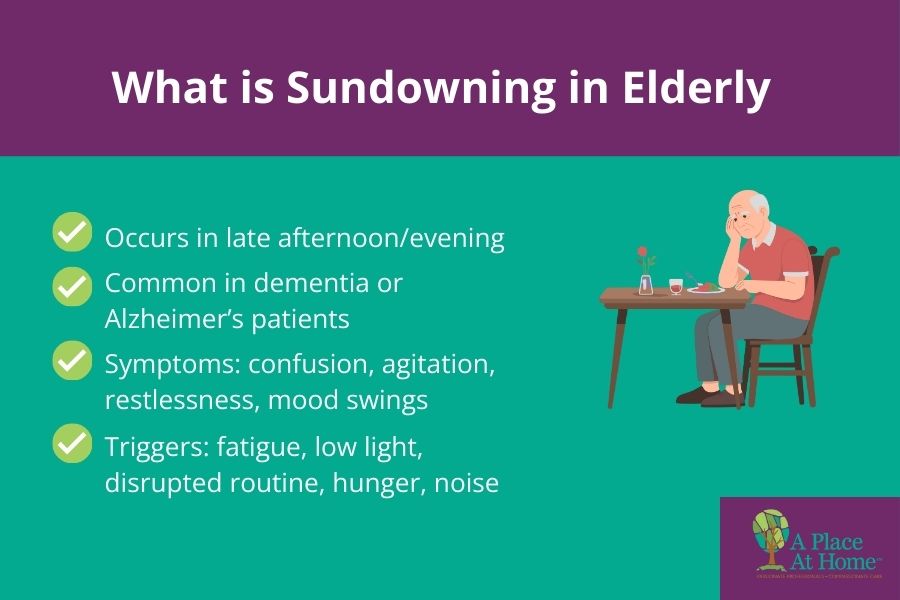
What are symptoms of sundowning?

Confusion and anxiety can arise in older adults diagnosed with dementia when the sun sets. In addition to acting confused, they may cry, pace, rock in their chair, or hallucinate. Trouble distinguished dreams from reality is another common symptom of sundowning.

Aging people experiencing sundowning may shadow their caregiver (follow them around wherever they go). Wandering, difficulty sleeping, and yelling are also symptoms. As the sun dips below the horizon, the dementia patient may even lash out violently at caregivers and other individuals.

What Time Does Sundowning Usually Start?

Most families notice symptoms beginning in the late afternoon or early evening, typically between 4 p.m. and 8 p.m. As outdoor light fades, fatigue increases and the environment becomes quieter, which can intensify confusion.

Can Nighttime Confusion Happen Without Dementia?

Yes. While sundowning is strongly linked to dementia, seniors without dementia may also become confused at night due to:

  • Medication side effects
  • Sleep apnea
  • Dehydration
  • Infections such as UTIs
  • Hospital environments
  • Anxiety or loneliness
  • Vision changes after dark

If you’re unsure whether these changes reflect normal memory loss or a form of dementia, this guide on the differences between memory care and dementia care offers clear explanations and signs to look for: Memory Care vs. Dementia Care

What triggers confusion in the elderly?

As mentioned, the cause of sundowning is unknown. However, experts believe the symptoms worsen when seniors are sleep deprived. Older adults need less sleep, but poor sleep quality contributes to sundowning. Dreaming during sleep can disorient them, causing confusion between dreams and reality.

Dementia affects the brain’s internal clock, disrupting their circadian rhythm and causing them to confuse day and night. Nighttime shadows and low light can strike fear and confusion in the elderly and increase their confusion. Sleep apnea, a condition that reduces oxygen, is also a culprit.

Confusion may arise when the older adult navigates or sleeps in an unfamiliar place, such as a hospital. If the senior is bored or lonely, the lack of stimulation can worsen symptoms. Urinary tract infections (UTIs) and other underlying health conditions also create confusion in aging people.

A senior who is hungry, tired or has other unmet needs may respond with confusion at night. Similarly, confusion can develop when the older adult needs to use the toilet and, due to dementia, they forget where the bathroom is located or are unable to process their urge to urinate.

Some medications, like sedatives, also create confusion in seniors. This is due to side effects or the drug wearing off closer to bedtime. Certain statins prescribed to control cholesterol levels as well as common heart medications disrupt sleep and cognitive function, leading to confusion and delirium.

Dehydration is a known but easily overlooked contributor to confusion in elderly individuals. Due to naturally decreased thirst sensations, older people may not recognize that they are thirsty and become dehydrated. Or mobility challenges can interfere with their access to daily fluids.

How Long Does Nighttime Confusion Last?

Episodes may last anywhere from a few minutes to several hours. In dementia, sundowning may happen some evenings but not others. Consistency in routine, lighting, and sleep patterns can reduce the duration.

When Should Families Call a Doctor?

Contact a healthcare provider if nighttime confusion:

  • Appears suddenly
  • Worsens quickly
  • Includes fever, pain, or hallucinations
  • Causes aggressive or unsafe behavior
  • Prevents the senior from eating, drinking, or sleeping

How do caregivers lessen seniors’ confusion at night?

1. Avoid Caffeine

Confusion and other effects of sundowning can be mitigated with the right support. Caregivers help their elderly care recipients reduce symptoms by not serving caffeinated beverages after morning. Caffeine disrupts sleep, overstimulates the aging brain, and prevents seniors from relaxing.

2. Ensure Hydration

Hydration is critical to maintaining brain function and preventing confusion. Dehydration, conversely, worsens cognitive health and leads to increased confusion, especially at night when the elderly drink less fluids. Ensure the senior remains hydrated to support clear thinking and combat confusion at night.

3. Stick to Routine

Establish a schedule with regular times for waking up, eating meals and going to bed. A predictable routine reduces anxiety and signals to the body when to wind down. Daily structure offers the older adult comfort, security, and minimizes disorientation in the dark.

4. Arrange Daytime Activities

A senior with dementia is more alert during the day. Caregivers should schedule doctors’ appointments and activities in the morning hours to leverage dementia patients’ increased alertness. While at the physician’s office, ask about the best times of day for the senior to take medications.

5. Spend Time Outdoors

Caregivers can further reduce the elderly care recipient’s restlessness by taking leisurely walks outdoors. Sunlight is beneficial as it provides clear day and night cues, thereby reducing the senior’s disorientation and other sundowning symptoms. It also promotes daytime alertness and nighttime sleep.

6. Increase Indoor Lighting

Since nighttime shadows provoke confusion in seniors with dementia, keep the home well-lit in the evening. Identify and pursue calming activities with the older adult, like flipping through a family photo album, watching a beloved movie, or listening to soothing music.

7. Promote Nighttime Rest

If sleeping restfully at night is difficult, limit the senior’s daytime naps. In the evenings, create a relaxing environment to promote sleep. Reduce stimulations, such as loud music, television and screen time, which can distract the elderly person and create more confusion.

Overnight Care from A Place At Home

Nighttime can spur confusion in seniors with dementia. Reduce their symptoms with the help of compassionate caregivers from A Place At Home. Our reputable home care agency supports the unique needs of the elderly with a comprehensive range of non-medical in-home care services.

Families may prefer overnight care, where providers assist the senior with bedtime tasks. We help with personal hygiene, including toileting and dressing for bed. Our overnight caregivers are ready to provide mobility support when the senior needs to use the bathroom at night.

Arrangements may be made so overnight caregivers sleep in the same room with the older adult or occupy a nearby space with quick access to the senior. Caregivers are also trained to respond appropriately and swiftly to emergencies or urgent needs that develop at night.

Overnight care is the solution for seniors with dementia who experience confusion. Care options are flexible and can be scheduled for a few nights per week or regularly depending on needs.  Older people with vision impairment or who’ve returned from a hospital stay also benefit from our services.

A Place At Home is dedicated to providing dependable senior home care to older adults living in Carrollton, Texas. If the senior in your life needs support to achieve a quality night’s rest, we can help. Schedule a free in-home consultation today to learn more about our highly rated services.

FAQs

Yes. Shorter days, earlier sunsets, and less natural light during winter months can intensify sundowning symptoms. Many families notice more confusion, agitation, and restlessness in the late fall and winter.

Excessive or late-afternoon naps can disrupt a senior’s sleep cycle and contribute to restlessness or confusion in the evening. Short, early naps are usually better tolerated.

Sugary snacks, heavy meals, and caffeinated beverages especially in the afternoon may overstimulate seniors, cause indigestion, or interfere with sleep, contributing to confusion at night.

Yes. Fast-paced visuals, loud sounds, and screen light can overstimulate the brain, making it harder for seniors with dementia to wind down. Calming music or quiet conversation is a better alternative.

Yes. Disorientation and restlessness in the evening can cause seniors to walk aimlessly or attempt to leave the home. This is why close supervision and secured environments are important during sundowning periods.


Is My Senior Parent Depressed or Just Lonely? How to Tell the Difference

senior depression vs loneliness

Older adults rarely say, “I’m depressed” or “I’m lonely.” Many don’t want to appear weak or burdensome, and some come from a generation that kept personal struggles private. Instead, emotional distress often shows up in indirect ways: changes in sleep, loss of appetite, irritability, a messy home, or a growing disinterest in the world around them.

Because these signs often overlap with normal aging, chronic illness, or medication effects, families may not immediately recognize the emotional component. Yet emotional health in older adults influences everything from mobility and cognition to recovery from illness and the ability to remain independent at home. Understanding these differences can help families support their loved ones early, before emotional struggles begin affecting physical well-being or independence.

This guide takes a closer look at the emotional landscape of aging, offering clear, compassionate explanations and practical insights you can use as you monitor changes in your parent.

Understanding Depression in Older Adults

Depression is a medical condition that affects how a person thinks, feels, and functions. It is not simply sadness or an expected part of aging. In seniors, depression often presents differently than in younger people, which is why it can go unnoticed.

A depressed senior may withdraw from hobbies they once enjoyed or stop socializing. They might sleep far more or far less than usual. You may see a drop in personal grooming or household upkeep. Conversations may take on a hopeless tone or sound unusually negative. Some seniors describe ongoing fatigue, unexplained aches, or loss of appetite more than emotional sadness.

One of the biggest indicators is a noticeable decline in day-to-day functioning. Tasks that your parent handled easily before now seem overwhelming. Laundry piles up. Bills sit unopened. Meals are skipped or reduced to snacks. These changes are often a sign that the issue goes beyond ordinary loneliness.

What Loneliness Looks Like in Older Adults

Loneliness is a very different experience. It is the emotional pain of feeling disconnected, even if someone is not physically alone. A senior may feel forgotten, sidelined, or invisible when social contact becomes infrequent. This can happen after retirement, after the loss of friends or siblings, when mobility decreases, or when transportation becomes difficult.

A lonely parent may express boredom, talk more about the past, or mention that they rarely see anyone. They may depend heavily on television for company. The house might be quiet for long stretches except for appointments. The emotional tone is less about hopelessness and more about yearning. Loneliness often improves when meaningful human connection increases.

Unlike depression, lonely seniors usually remain able to function. They pay bills, tend to their home, and manage their health, although they may do so with less enthusiasm or energy.

Anxiety and the Constant Feeling of Fear or Uncertainty

Anxiety frequently accompanies aging as well. Older adults may worry about finances, health concerns, the fear of falling, losing independence, or changes in memory. Anxiety can cause restlessness, irritability, excessive phone calls, or avoidance of new situations. It may interfere with sleep and make daily responsibilities feel heavier.

An anxious senior might not appear sad. Instead, they may seem tense or overwhelmed. Anxiety can coexist with both depression and loneliness and often deepens these feelings by shrinking a senior’s social world even further.

The Weight of Grief in Later Life

When an older adult loses a spouse, the emotional impact can be profound. The surviving partner often faces an empty home, disrupted routines, and a deep sense of missing companionship. While grief is a natural response to loss, some seniors struggle to move forward. They may withdraw socially, lose interest in activities, or show a persistent sadness that does not ease with time.

A grieving parent may also experience memory lapses, sleep disturbances, or reduced motivation. This is especially true during the first year after the loss. Grief can blend with loneliness and depression, making it difficult for families to understand which issue they are actually seeing.

How to Tell the Difference: What Families Can Observe

You sense that something in your parent’s behavior has shifted, but you may not know whether you’re seeing depression, loneliness, anxiety, grief, or a blend of all of them. The best approach is to watch the everyday moments. Small details often reveal far more than formal definitions.

How they respond when someone gives them attention

Think about what happens when you stop by for a visit or call them more often than usual. A lonely parent usually warms up quickly. They talk more, their voice has more life in it, and you may even see a spark of their old personality. That response tells you they have the emotional capacity to connect; they just don’t get those opportunities often enough.

A parent who is depressed, however, often remains flat even in the presence of someone they care about. You can spend the entire afternoon together and still feel like you never truly reached them. Their energy and outlook do not shift much, no matter how much support or attention you offer. That kind of emotional unresponsiveness usually suggests something deeper than loneliness.

Whether their ability to function has changed noticeably

Loneliness can make someone sad or quiet, but most lonely seniors still manage their routines. They keep the house reasonably tidy, handle their medications, and maintain personal hygiene, even if they do so without much enthusiasm.

Depression tends to chip away at these abilities. Tasks that used to be simple now feel overwhelming. Laundry piles up, dishes sit undone, and the refrigerator slowly empties because cooking feels like too much effort. Mail may go unopened for weeks. These shifts in daily functioning are often the clearest signs that your parent is struggling with more than just a quiet spell.

How they talk about what lies ahead

Lonely seniors often express longing. They wish they had more company or miss activities they used to enjoy, but they still talk about upcoming events or show interest when family plans are mentioned. There is still a thread of anticipation in their thinking.

Depression tends to replace that anticipation with a sense of finality. You may hear statements like “There’s nothing left for me” or “I don’t see the point anymore.” Their worldview narrows until the future feels empty. This isn’t simply sadness. It is the absence of hope, which is more characteristic of depression than loneliness.

How long these changes have been present

Everyone goes through periods of emotional difficulty, especially after an illness, a fall, a hospitalization, or the loss of a spouse. Short-term withdrawal in response to stress or exhaustion is normal. But when the changes continue for several weeks or months and you see no real improvement, it is a sign that your parent’s emotional health needs attention.

Support That Makes a Meaningful Difference

Loved ones have more influence than they realize. You cannot erase depression or eliminate loneliness, but you can help create a healthier environment for your parent. Small, consistent actions often matter more than dramatic solutions.

Begin with a gentle, honest conversation

Choose a calm time and let your parent know what you’ve noticed in a way that is respectful, not accusatory. Many older adults open up only when they feel safe from judgment. A simple observation such as “I’ve noticed you seem quieter lately and I wanted to check in” can lead to a much deeper conversation. You may learn about worries, fears, or frustrations that they haven’t expressed before.

Include their doctor or care team if needed

Emotional changes can be tied to physical health, medication reactions, sleep problems, chronic pain, or cognitive changes. A primary care provider can help determine whether there is an underlying issue contributing to your parent’s mood. Sometimes a medication adjustment, physical therapy, or treatment for a medical condition results in clear emotional improvement.

Reintroduce structure and small, meaningful activities

Older adults often thrive when the day has a rhythm. This doesn’t require a strict schedule. It can be as simple as encouraging them to go outside each morning, attend a weekly class or church gathering, water plants, prepare a favorite meal, or work on a hobby. Social interaction does not need to be elaborate. A short visit, a routine phone call, or a virtual chat can anchor the day and give them something to expect.

Pay attention to the basics: sleep, meals, and movement

These three areas are deeply connected to emotional stability. Sharing meals together when possible, helping with grocery shopping, or encouraging light physical activity can make a noticeable difference. Even ten minutes of fresh air or a brief walk around the living room can help stabilize mood and reduce anxiety.

Exploring home care as a source of companionship and consistency

Sometimes what a parent needs most is not a major intervention but a steady, familiar person in their day. A home care professional can offer companionship, conversation, help with meals and hygiene, transportation to appointments or social activities, and gentle encouragement to stay engaged.

If you are just starting to explore care options, it can be hard to know what to ask or how to compare agencies. To make that process easier, we put together a helpful guide, Questions to Ask a Home Care Agency, so you can feel more confident in your decision as you look for support for your parent.

Reliable Senior Care - A Place At Home

Call A Place at Home Carrollton for In Home Companion Caregiver

If your loved one is showing signs of loneliness, depression, or declining independence, now is the right time to get support. A Place At Home–Carrollton provides dependable, personalized home care and companionship throughout Carrollton, Farmers Branch, Lewisville, Addison, and the Dallas area.

Reach out today and let A Place At Home–Carrollton make home a safer and more comforting place for your loved one. We offer free consultation.

Frequently Asked Questions

Is depression a normal part of aging?

No. Feeling sad after a loss or during an illness is expected, but persistent hopelessness, lack of motivation, or major changes in daily functioning are not normal signs of aging. These symptoms should be evaluated by a healthcare
professional.

Can loneliness turn into depression if it goes on too long?

Yes. Long-term loneliness can gradually shift into depression, especially if your
parent has limited social contact, mobility challenges, or recent losses. Emotional withdrawal becomes harder to reverse over time, which is why early engagement and routine interaction are so important.

Why does my parent seem more irritable instead of sad?

Older adults often express emotional distress through irritability, frustration,
or short-tempered behavior rather than tears or sadness. Physical discomfort, sleep issues, medication side effects, or anxiety can all contribute to this
change in temperament. Irritability can be a quieter sign of depression in
seniors.

Can depression affect a senior’s cognitive abilities?

Yes. Depression can cause slowed thinking, forgetfulness, and difficulty concentrating. These symptoms can sometimes resemble early dementia, which makes it even more important to have a medical evaluation. When depression is treated,
cognitive clarity often improves.

A Place at Home Carrollton Celebrates Friendsgiving and Community Giving

Friendsgiving Event A Place at Home Carrollton

At A Place at Home Carrollton, we take pride in serving seniors across Carrollton and surrounding communities, including Addison, Frisco, Lewisville, and Farmers Branch, Texas. This fall, we had the pleasure of co-hosting a Friendsgiving Networking Event with Assisted Living Locators and River Oaks Assisted Living & Memory Care.

The event brought together families, caregivers, and local partners to connect, share insights about senior care, and celebrate the spirit of giving. One of the highlights was collecting canned goods for Metrocrest Helps, supporting neighbors in need and reinforcing the importance of community support.

As a home care agency, our mission goes beyond providing compassionate in-home care. We strive to build meaningful connections and contribute positively to the communities we serve. Events like Friendsgiving allow us to engage directly with families and partners while making a tangible difference in people’s lives.

We are grateful to everyone who participated and helped make the event a success. Your generosity and support strengthen our community and help ensure seniors have the care and resources they need to live safely and comfortably at home.

If you’re looking for trusted, professional in-home care for yourself or a loved one in Carrollton, Addison, Frisco, Lewisville, or Farmers Branch, Texas, A Place at Home- Carrollton is here to provide compassionate care and support that meets your needs.

Contact us today to learn more about our in home care services and how we can help seniors live independently and with dignity.